















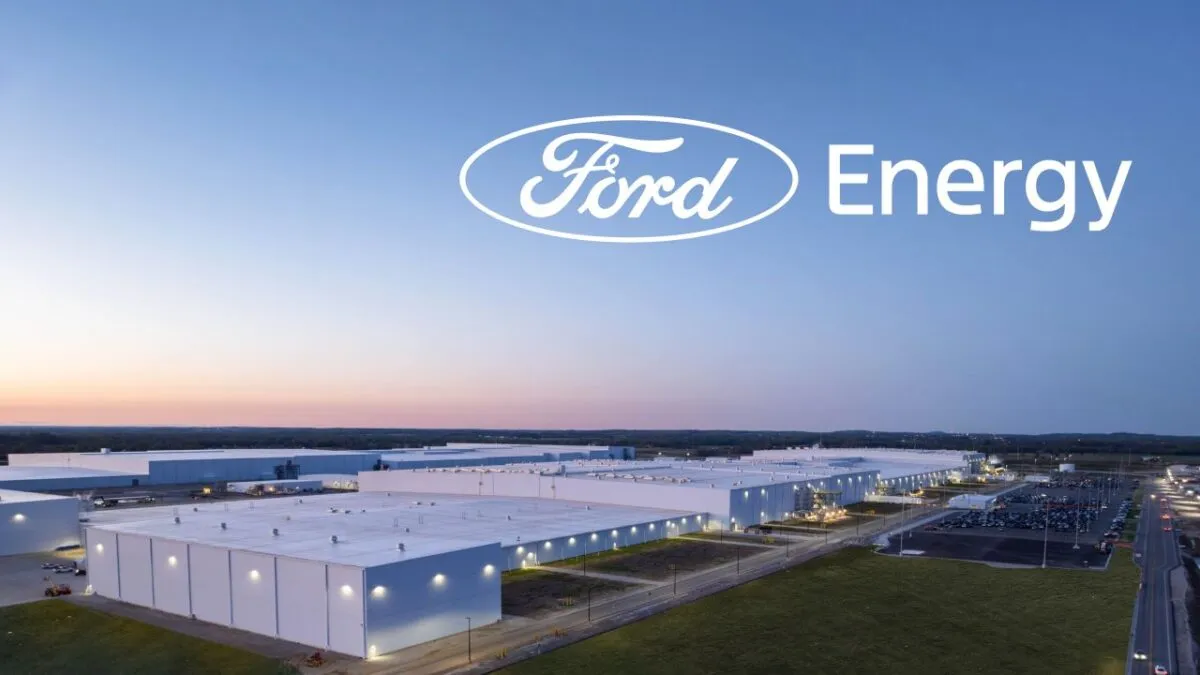
Ford Motor Company’s energy subsidiary, Ford Energy, has signed a major five-year agreement with EDF Power Solutions that could supply up to 20GWh of battery energy storage systems for U.S. grid-scale projects.
The deal positions Ford Energy as a new supplier within the rapidly growing battery storage market as utilities and renewable developers increase investment in grid flexibility, renewable integration, and energy security infrastructure.
The agreement also reflects how automakers are increasingly repurposing electric vehicle battery manufacturing capacity toward large-scale energy storage as EV demand growth slows.
Key Overview
- Ford Energy signed a five-year battery storage agreement with EDF Power Solutions
- The agreement could involve up to 20GWh of battery storage systems
- EDF may procure up to 4GWh annually beginning in 2028
- Ford Energy’s DC Block systems are designed for grid-scale storage
- The deal supports renewable energy integration and grid reliability
- Ford Energy launched earlier this month as Ford expands into BESS markets
- The systems use lithium iron phosphate battery technology
- EDF operates across the U.S., Canada, and Mexico with 26GW of projects developed
Ford Energy Secures Major Grid-Scale Storage Agreement
Ford Energy, a wholly owned subsidiary of Ford Motor Company, has signed a major five-year framework agreement with EDF Power Solutions that could see the company supply up to 20 GWh of battery energy storage systems across the United States.
Under the agreement, EDF Power Solutions North America may procure up to 4GWh annually of Ford Energy’s DC Block battery energy storage systems beginning in 2028.
The agreement represents the first major commercial deal for Ford Energy following the company’s recent launch into the utility-scale battery storage market.
Analysts say the agreement highlights rapidly growing demand for grid-scale battery systems as utilities, renewable developers, and energy companies attempt to strengthen grid flexibility while supporting the expansion of renewable energy infrastructure.
The deal also positions Ford Energy as a new participant within the increasingly competitive U.S. battery energy storage market as demand for long-duration energy storage continues accelerating.
Battery Storage Demand Expands Across U.S. Power Markets
The agreement comes as utilities and grid operators across the United States rapidly increase investment in battery energy storage systems to support renewable power integration and improve grid reliability.
Battery storage is becoming increasingly important as growing solar and wind generation creates greater demand for systems capable of balancing electricity supply and demand.
Analysts say utility-scale storage projects are now viewed as critical infrastructure for managing intermittent renewable generation while improving electricity system stability.
Ford said the agreement reflects rising demand for domestically supplied utility-grade battery storage systems as developers seek to reduce supply-chain risks while strengthening long-term infrastructure resilience.
The agreement also demonstrates growing interest in U.S.-manufactured energy storage products amid broader efforts to localize clean energy supply chains and reduce dependence on foreign battery manufacturing.
Lisa Drake said the partnership validates demand for industrial-scale battery storage providers capable of offering long-term operational support and manufacturing reliability.
“This agreement with EDF power solutions validates the market’s need for a BESS supplier that combines industrial-scale manufacturing discipline with full lifecycle accountability,” Drake said.
“We are not simply delivering hardware. We are delivering the kind of predictable quality and long-term operational confidence that grid operators and large-scale developers require,” she added.
Ford Expands Beyond Electric Vehicle Manufacturing
The launch of Ford Energy and the agreement with EDF also reflect broader changes occurring across the automotive sector as companies increasingly diversify battery operations beyond electric vehicle manufacturing.
Ford recently launched Ford Energy to provide battery energy storage systems for utilities, data centers, industrial customers, and commercial energy projects across the United States.
The new division arrives at a time when several automakers are reassessing EV production strategies following slower-than-expected electric vehicle demand growth.
Ford previously reported a $19.5 billion charge tied to the rationalization of its EV-related assets and product roadmap as the company adjusted manufacturing plans to reflect changing market conditions.
Analysts say repurposing excess EV battery manufacturing capacity toward stationary energy storage may provide automakers with alternative long-term growth opportunities while helping stabilize battery production investments.
The battery storage sector is expected to experience strong long-term expansion as electricity demand rises alongside renewable energy deployment, artificial intelligence infrastructure growth, and electrification trends.
Ford’s DC Block Targets Utility-Scale Applications
Ford Energy’s DC Block system is a standardized 20-foot ISO containerized BESS with a rated capacity of 5.45MWh.
The system uses lithium iron phosphate prismatic battery cells and is available in both two-hour and four-hour discharge configurations.
According to the company, the systems are specifically designed for large-scale grid applications including frequency regulation, voltage support, peak load shifting, energy arbitrage, backup power, demand response, and microgrid integration.
Analysts say lithium iron phosphate battery chemistry is increasingly being adopted within utility-scale energy storage because of its safety profile, durability, and relatively lower costs compared with some alternative battery technologies.
The growing scale of battery storage deployment is also supporting broader renewable energy adoption by improving the ability of electricity grids to manage variable power generation.
Context is everything. While you follow today’s updates, use the Serrari Group Market Index and Marketplace to spot emerging shifts. Need to sharpen your edge? Our Wealth Builder Platform turns these insights into a professional-grade strategy.
EDF Expands North American Storage Portfolio
EDF Power Solutions said the framework agreement will support its growing portfolio of grid-scale energy storage projects across North America.
The company, part of the broader EDF Group, operates across the United States, Canada, and Mexico focusing on low-carbon energy development and grid infrastructure projects.
EDF said it has developed approximately 26GW of projects across North America and currently manages 17GW under service contracts.
Tristan Grimbert said supply chain reliability and product quality remain increasingly important as the company expands energy storage deployment.
“As we continue to expand our energy storage portfolio, supply chain reliability and product quality are paramount,” Grimbert said.
He added that Ford Energy’s commitment to domestic manufacturing and lifecycle support aligned closely with EDF’s operational requirements.
“This framework agreement gives us the supply visibility and product confidence we need to execute at the pace the energy transition demands,” Grimbert said.
Analysts say partnerships between utilities, developers, and battery manufacturers may become increasingly important as grid-scale storage deployment accelerates across North America.
Battery Storage Becomes Central to Energy Transition
The agreement between Ford Energy and EDF also highlights how battery storage is becoming a core pillar of the broader energy transition.
As renewable electricity generation expands, battery systems are increasingly being used to stabilize power grids, reduce curtailment of renewable energy, and improve electricity reliability during periods of fluctuating demand.
Analysts say energy storage infrastructure may become one of the fastest-growing segments of the global energy sector over the next decade.
Battery storage is also gaining importance because of rising electricity demand from data centers, industrial electrification, electric vehicles, and digital infrastructure expansion.
At the same time, governments and energy companies continue prioritizing grid resilience amid rising climate risks, extreme weather events, and growing electricity system complexity.
The Ford-EDF agreement therefore reflects wider market trends in which battery manufacturing, clean energy infrastructure, and industrial electrification are becoming increasingly interconnected.
Outlook
Ford Energy’s agreement with EDF Power Solutions highlights the rapidly growing importance of battery storage infrastructure within the U.S. energy transition.
The deal also demonstrates how automakers are increasingly leveraging battery manufacturing expertise beyond electric vehicles as demand for grid-scale storage accelerates.
For Ford, the agreement may help create a new long-term growth segment tied to energy infrastructure, utilities, and industrial electrification markets.
At the same time, the broader expansion of utility-scale battery storage is expected to play a critical role in supporting renewable energy deployment, grid reliability, and energy security across North America in the years ahead.
Your financial future isn’t something you wait for—it’s something you build.
The real question is: when do you begin?
Move beyond simply staying informed.
Navigate the markets with clarity—track trends through the Serrari Group Market Index, uncover opportunities in the Serrari Marketplace, and build practical knowledge with our Curated Wealth Builder Platform.
Stay connected to what truly matters.
Get daily insights on macro trends and financial movements across Kenya, Africa, and global markets—delivered through the Serrari Newsletter.
Growth opens doors.
Advance your career through professional programs including ACCA, HESI A2, ATI TEAS 7 , HESI EXIT , NCLEX – RN and NCLEX – PN, Financial Literacy!🌟—designed to move you forward with confidence.
See where money is flowing—clearly and in real time.
Track Money Market Funds, Treasury Bills, Treasury Bonds, Green Bonds, and Fixed Deposits, alongside global and African indexes, key economic indicators, and the evolving Crypto and stablecoin landscape—all within Serrari’s Market Index.
Sources: Yahoo Finance, ESG Today, Energy Storage News, Solar Power World, Quartz