Japan and Azerbaijan have reaffirmed their commitment to strengthening bilateral energy ties amid growing concerns over global supply disruptions. During high-level talks in Tokyo, both countries emphasized the importance of Energy Security Cooperation, including maintaining stable crude oil supplies and expanding collaboration across energy, trade, and regional connectivity. The discussions come as Japan seeks to diversify energy sources and enhance supply resilience amid ongoing geopolitical tensions affecting global energy markets.
Key Overview
- Japan and Azerbaijan discussed expanding energy cooperation
- Focus placed on stable crude oil supplies and energy security
- Ministers reviewed opportunities for broader economic cooperation
- Discussions included transport connectivity and decarbonization
- Japan welcomed Azerbaijan’s visa-free entry initiative
- Both countries highlighted long-term strategic partnerships
- Regional issues and international cooperation were also discussed
Japan and Azerbaijan Strengthen Strategic Energy Partnership
Japan and Azerbaijan have agreed to deepen cooperation in the energy sector as both countries seek to strengthen energy security and expand economic ties amid ongoing geopolitical uncertainty.
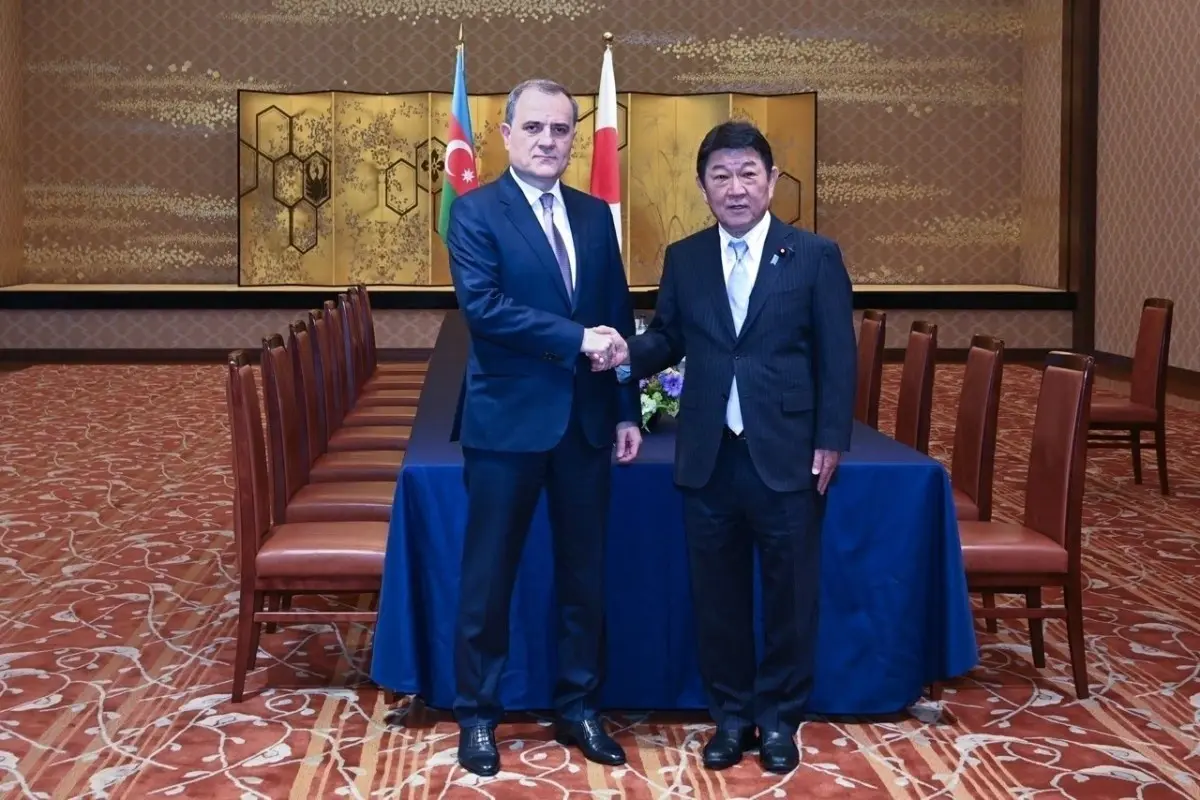
The discussions took place during a meeting between Japanese Foreign Minister Toshimitsu Motegi and Azerbaijani Foreign Minister Jeyhun Bayramov in Tokyo.
According to statements released by both governments, energy cooperation was a central focus of the talks, reflecting the growing importance of Azerbaijan as a reliable energy partner for Japan.
Motegi highlighted Japan’s desire to further strengthen cooperation in the energy sector, particularly in crude oil supplies, given the impact of recent developments in the Middle East on global energy markets.
Stable Oil Supplies Remain a Priority
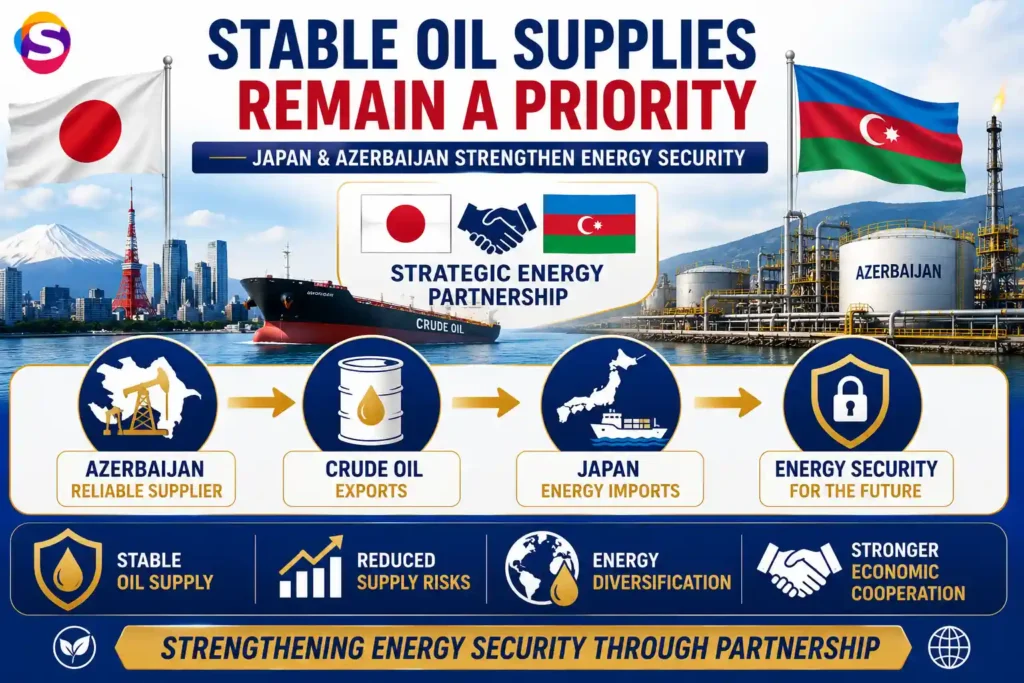
Both sides emphasized their intention to continue developing cooperation in energy security, including ensuring stable supplies of Azerbaijani- produced Crude Oil to Japan.
Japan relies heavily on energy imports and has faced increased supply risks following disruptions linked to tensions in the Middle East.
The conflict and resulting disruptions to shipping routes through the Strait of Hormuz have raised concerns about the security of crude oil and liquefied natural gas deliveries.
Against this backdrop, Azerbaijan has emerged as an increasingly important supplier, helping diversify Japan’s energy sources and strengthen supply resilience.
Officials from both countries noted Azerbaijan’s significant contribution to global energy security and reaffirmed the importance of maintaining long-term cooperation in the sector.
Expanding Economic and Trade Cooperation
Beyond energy, the ministers discussed opportunities to broaden economic cooperation and strengthen bilateral trade relations.
The discussions covered investment opportunities, decarbonization initiatives, and efforts to advance negotiations on investment agreements between the two countries.
Motegi and Bayramov agreed that deeper economic engagement could create new opportunities for businesses and investors while supporting broader economic growth.
Azerbaijan highlighted its growing role as a regional logistics and transportation hub, supported by major infrastructure investments and strategic geographic positioning.
Connectivity Through the Trans-Caspian Route
A key topic of discussion was the importance of the Trans-Caspian International Transport Route, which continues to gain prominence as a strategic trade corridor linking Asia and Europe.
Bayramov emphasized Azerbaijan’s role in facilitating regional connectivity through the route, which supports the movement of goods across the Caspian region and beyond.
The transport corridor has become increasingly important as governments and businesses seek alternative trade routes that enhance supply chain resilience and strengthen economic integration.
Officials noted that cooperation in transport and logistics could complement existing energy partnerships while creating new opportunities for commercial collaboration.
Context is everything. Stay ahead of shifting trends with today’s market updates, and uncover emerging opportunities using the Serrari Group Market Index and Marketplace. Then, take control of your own financial future by exploring our Money & Life Reset Transformation Blueprint ™ to build stronger habits, create better systems, and design a path toward lasting wealth.
Japan Seeks Greater Energy Diversification
The discussions underscore Japan’s ongoing efforts to diversify Japan Energy Imports and reduce vulnerability to supply disruptions.
As one of the world’s largest energy importers, Japan relies heavily on external sources for crude oil, natural gas, and other energy resources.
Recent geopolitical tensions have highlighted the importance of securing reliable suppliers and developing partnerships with energy-producing nations outside traditional supply routes.
Azerbaijan’s growing role as a crude oil exporter to Japan has become increasingly significant within this broader strategy.
Motegi acknowledged Azerbaijan’s support during recent regional tensions, including assistance provided to Japanese citizens evacuated from Iran.
Regional and International Issues Discussed
In addition to energy and economic cooperation, the ministers exchanged views on several regional issues.
Topics included developments in the Indo-Pacific region, North Korea’s nuclear and missile programs, the situation in Ukraine, and ongoing tensions in the Middle East.
Bayramov also briefed the Japanese side on Azerbaijan’s diplomatic efforts aimed at normalizing relations with Armenia and advancing long-term peace initiatives in the South Caucasus.
Motegi expressed support for efforts by both Azerbaijan and Armenia to build lasting peace and prosperity in the region.
Visa-Free Travel to Boost Bilateral Ties
Japan welcomed Azerbaijan’s decision to introduce a one-year visa-free regime for Japanese citizens traveling to the country.
Officials from both sides noted that the initiative is expected to strengthen tourism, people-to-people exchanges, and business relations.
The measure reflects broader efforts to deepen bilateral ties and encourage greater engagement between citizens, businesses, and institutions from both countries.
Bayramov’s visit marked the first official visit by an Azerbaijani foreign minister to Japan in 17 years, highlighting the growing significance of the relationship.
Outlook
The latest discussions between Japan and Azerbaijan highlight the increasing importance of their strategic partnership, particularly in energy security and economic cooperation. As Japan seeks reliable energy supplies amid global uncertainty, Azerbaijan continues to strengthen its role as a key crude oil supplier and regional logistics hub.
With both countries committed to expanding collaboration across energy, trade, connectivity, and investment, the partnership is expected to play an increasingly important role in supporting regional stability, energy security, and long-term economic growth.
FAQS
Q1: Why are Japan and Azerbaijan strengthening energy cooperation?
Japan and Azerbaijan are expanding energy cooperation to enhance energy security, ensure stable crude oil supplies, and strengthen resilience against global energy supply disruptions caused by geopolitical tensions.
Q2: What role does Azerbaijan play in Japan’s energy supply?
Azerbaijan is an important supplier of crude oil to Japan and contributes to global energy security. The country helps Japan diversify its energy imports and reduce reliance on traditional supply routes affected by regional instability.
Q3: How do Middle East tensions affect Japan’s energy strategy?
Japan relies heavily on imported energy, particularly from the Middle East. Disruptions to oil and gas shipments through key routes such as the Strait of Hormuz have increased the importance of securing alternative and reliable energy suppliers like Azerbaijan.
Q4: What other areas of cooperation were discussed besides energy?
In addition to energy, the two countries discussed trade, investment, decarbonization initiatives, regional connectivity through the Trans-Caspian International Transport Route, and broader economic cooperation.
Q5: How could stronger Japan-Azerbaijan ties benefit both countries?
Closer cooperation could improve energy security, expand trade and investment opportunities, strengthen regional connectivity, support economic growth, and enhance long-term strategic relations between the two nations.
Sources: News.az, Caliber, Trend.az
Your financial future isn’t something you wait for—it’s something you build.
The real question is: when do you begin?
Move beyond simply staying informed.
Navigate the markets with clarity—track trends through the Serrari Group Market Index, uncover opportunities in the Serrari Marketplace, and build practical knowledge with our Curated Wealth Builder Platform.
Stay connected to what truly matters.
Get daily insights on macro trends and financial movements across Kenya, Africa, and global markets—delivered through the Serrari Newsletter.
Growth opens doors.
Advance your career through professional programs including ACCA, HESI A2, ATI TEAS 7 , HESI EXIT , NCLEX – RN and NCLEX – PN, Financial Literacy!🌟—designed to move you forward with confidence.
See where money is flowing—clearly and in real time.
Track Money Market Funds, Treasury Bills, Treasury Bonds, Green Bonds, and Fixed Deposits, alongside global and African indexes, key economic indicators, and the evolving Crypto and stablecoin landscape—all within Serrari’s Market Index.