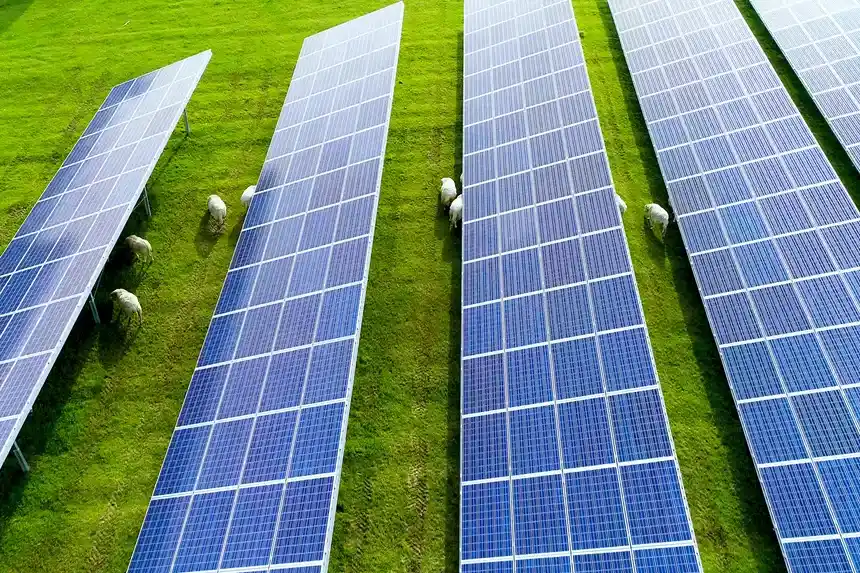
The UK government has approved the Springwell Solar Farm, an 800MW project set to become the country’s largest solar power facility. The development is part of a broader push to accelerate clean energy deployment and reduce reliance on volatile fossil fuel markets, particularly in light of global geopolitical instability.
With the capacity to power over 180,000 homes annually, the project reflects the growing role of solar as one of the cheapest and most scalable energy sources. However, the approval also highlights tensions between national energy priorities and local concerns, including land use and environmental impact.
Overall, the project signals a decisive shift toward energy independence, faster renewable deployment, and long-term cost stability for households and businesses.
Key Overview
- UK approves 800MW Springwell Solar Farm, its largest to date
- Project will power over 180,000 homes annually
- Marks the 25th major clean energy project approved since July 2024
- Total projects approved could power 12.5 million homes
- Solar seen as one of the cheapest energy sources available
- Includes battery storage and grid infrastructure
- Aims to reduce reliance on volatile global fossil fuel markets
- Part of UK push for energy independence and lower bills
- Project faces local opposition over land and environmental concerns
- Expected to begin generating electricity by 2029
The UK government has taken a significant step forward in its clean energy transition by approving the Springwell Solar Farm, set to become the largest solar power project in the country.
The 800MW development, located between Lincoln and Sleaford in Lincolnshire, represents a major addition to the UK’s renewable energy capacity.
With the ability to generate enough electricity to power over 180,000 homes annually, the project highlights the growing importance of solar energy in meeting the country’s energy needs.
This approval is part of a broader government strategy aimed at accelerating the deployment of clean, homegrown energy sources to enhance energy security and reduce long-term costs for households and businesses.
Markets move fast; don’t get left behind. We’ve paired the Serrari Group Market Index with a curated Marketplace and a comprehensive Wealth Builder Course to ensure you have the data—and the skills—to act on it.
A Strategic Response to Global Energy Volatility
The decision to approve the Springwell Solar Farm comes at a time of heightened global energy uncertainty, where external shocks are increasingly influencing domestic energy security and pricing.
Geopolitical tensions, including conflicts in regions such as Ukraine and the Middle East, have exposed the structural vulnerabilities associated with relying heavily on international fossil fuel markets. These dependencies have left countries like the UK susceptible to sudden supply disruptions and sharp price fluctuations.
Such disruptions have contributed to significant volatility in energy markets, impacting not only wholesale energy prices but also household bills and industrial operating costs. The ripple effects have underscored the risks of relying on energy sources that are influenced by factors beyond national control.
In response, the UK government is placing greater emphasis on developing domestic, homegrown renewable energy sources that can provide greater control, predictability, and long-term resilience. This shift reflects a broader strategic objective to reduce exposure to global market instability while strengthening national energy independence.
Solar power, in particular, has emerged as a key pillar of this strategy. Its scalability, declining costs, and relatively fast deployment timelines make it one of the most practical and effective solutions for rapidly expanding clean energy capacity while addressing immediate energy security concerns.
Solar Energy as a Cost-Effective Solution
One of the most compelling drivers behind the government’s decision is the increasing cost competitiveness of solar energy, which has become one of the most affordable sources of electricity globally.
Solar is widely recognized as one of the cheapest forms of power available, particularly when compared to fossil fuels that are subject to volatile global pricing dynamics. This cost advantage makes it an attractive option for governments seeking to reduce energy bills while simultaneously advancing climate and sustainability goals.
By expanding solar capacity, the UK aims to deliver more stable and affordable electricity to both households and businesses, helping to ease the financial burden associated with rising energy costs.
This approach aligns with broader policy efforts to protect consumers from the unpredictability of global energy markets, which have become increasingly volatile in recent years due to geopolitical tensions and supply chain disruptions.
In this context, solar energy is not just a clean alternative—it is also a strategic economic tool for delivering long-term cost stability and reducing reliance on external energy sources.
Scaling Up Renewable Infrastructure
The approval of the Springwell Solar Farm marks the 25th nationally significant clean energy project approved by the UK government since July 2024, highlighting the rapid acceleration of renewable energy deployment across the country.
Collectively, these projects are expected to generate enough clean energy to power more than 12.5 million homes, underscoring both the scale and urgency of the UK’s renewable energy ambitions.
This pace of approvals reflects a clear and deliberate policy direction—one that prioritizes speed, scale, and efficiency in the rollout of renewable infrastructure. Rather than taking a gradual approach, the government is actively fast-tracking projects to meet energy demand and climate targets more effectively.
It also signals a shift toward a more proactive and strategic approach to energy planning, where long-term resilience, energy security, and cost stability are prioritized over short-term constraints.
This transition represents a fundamental change in how energy systems are being developed—moving from reactive planning to forward-looking investment in sustainable infrastructure.
Integrating Storage and Grid Infrastructure
In addition to its solar generation capacity, the Springwell project will incorporate advanced battery storage systems and supporting grid connection infrastructure, making it a more comprehensive and future-ready energy solution.
These components are essential for ensuring the reliability and stability of renewable energy systems, particularly given the intermittent nature of solar power, which depends on weather patterns and daylight availability.
Battery storage plays a critical role in balancing supply and demand by capturing excess energy generated during periods of high sunlight and storing it for use when demand increases or generation declines. This helps to reduce energy wastage and ensures a more consistent flow of electricity to the grid.
The integration of generation, storage, and grid infrastructure represents a significant step toward building a more flexible, efficient, and resilient energy system—one capable of adapting to fluctuations while maintaining stability.
Ultimately, this approach reflects a broader evolution in energy systems, where renewable generation is no longer deployed in isolation but as part of an integrated and intelligently managed network.
Context is everything. While you follow today’s updates, use the Serrari Group Market Index and Marketplace to spot emerging shifts. Need to sharpen your edge? Our Wealth Builder Course turns these insights into a professional-grade strategy.
Local Opposition Highlights Key Challenges
Despite its strategic importance at the national level, the Springwell Solar Farm project has faced notable opposition from local communities, landowners, and regional stakeholders.
A number of concerns have been raised, particularly around the loss of agricultural land, the visual impact on the surrounding landscape, and potential environmental risks linked to the use of large-scale battery storage systems. For many residents, these issues are not abstract—they directly affect livelihoods, local identity, and long-standing land use practices.
Some local representatives have also voiced frustration over what they perceive as insufficient consideration of community input during the planning and approval process. This has intensified the sense of tension between national energy priorities and local interests, particularly in rural areas where large-scale renewable projects are often located.
These concerns highlight a broader and recurring challenge within the global energy transition: how to balance the urgent need for rapid, large-scale infrastructure deployment with the equally important need to preserve local environments, protect livelihoods, and maintain community trust.
Addressing this balance effectively will be critical not only for this project, but for the long-term success and social acceptance of renewable energy expansion across the UK.
Developer Commitments and Community Engagement
Developers of the Springwell Solar Farm, including EDF Power Solutions UK and Luminous Energy, have emphasized their commitment to ongoing engagement with local communities as the project progresses.
Their plans include the creation of new public footpaths to improve accessibility, the planting of hedgerows to enhance biodiversity and landscape integration, and the establishment of a community fund aimed at supporting local projects and initiatives.
These measures are designed not only to mitigate the environmental and social impact of the development but also to ensure that local communities derive tangible benefits from the project. By incorporating these elements, developers are seeking to strike a balance between large-scale infrastructure development and community well-being.
Such approaches are becoming increasingly important in the renewable energy sector, where public perception and local support can significantly influence the success and timeline of projects.
Effective community engagement, transparency, and shared benefits are now seen as essential components of responsible energy development.
A Defining Moment for UK Energy Transition
The approval of the Springwell Solar Farm represents more than just the advancement of a single infrastructure project—it serves as a clear signal of the UK’s broader commitment to accelerating its energy transition.
By prioritizing renewable energy and actively reducing reliance on fossil fuels, the government is taking decisive steps toward building a more sustainable, resilient, and self-sufficient energy system. This shift reflects a strategic response to both climate imperatives and the growing need for energy security in an increasingly uncertain global environment.
Importantly, this transition is not solely about reducing carbon emissions. It is also about protecting households and businesses from the volatility of international energy markets, lowering long-term energy costs, and strengthening economic stability.
In this context, projects like Springwell are part of a much larger transformation—one that is redefining how energy is produced, distributed, and consumed across the UK.
As the country continues to scale up its renewable capacity, such developments will play a pivotal role in shaping a more secure, affordable, and sustainable energy future.
.Outlook: The Future of Solar and Energy Security in the UK
Looking ahead, the approval of the Springwell Solar Farm signals not just a single project milestone, but a broader and sustained acceleration in the UK’s renewable energy deployment. It reflects a clear commitment to scaling clean energy at a pace that matches both climate targets and evolving energy security needs.
In the short term, further project approvals and increased investment in renewable energy are expected as the government continues to push toward its clean power objectives. Solar, in particular, is likely to remain a priority due to its cost-effectiveness, speed of deployment, and ability to deliver immediate capacity to the grid.
Over the medium term, the focus is expected to shift toward strengthening the underlying energy system. This includes integrating renewable energy more effectively into the national grid, expanding battery storage capacity, and modernizing infrastructure to handle higher volumes of intermittent energy. These developments will be critical in ensuring that increased renewable generation translates into reliable and consistent power supply.
In the long term, solar energy is set to play an increasingly central role in the UK’s energy mix. As technology advances and costs continue to decline, solar is likely to become a cornerstone of the country’s decarbonization strategy, contributing significantly to emissions reduction while enhancing energy independence.
At the same time, the broader energy landscape is expected to evolve toward a more decentralized and resilient system, where domestic generation reduces reliance on external sources and shields consumers from global market volatility.
Ultimately, the Springwell project highlights a fundamental shift in the UK’s energy strategy:
The transition to clean, homegrown power is no longer a long-term ambition—it is becoming an immediate necessity for economic stability, energy security, and long-term resilience.
Your financial future isn’t something you wait for—it’s something you build.
The real question is: when do you begin?
Move beyond simply staying informed.
Navigate the markets with clarity—track trends through the Serrari Group Market Index, uncover opportunities in the Serrari Marketplace, and build practical knowledge with our Curated Wealth Builder Course.
Stay connected to what truly matters.
Get daily insights on macro trends and financial movements across Kenya, Africa, and global markets—delivered through the Serrari Newsletter.
Growth opens doors.
Advance your career through professional programs including ACCA, HESI A2, ATI TEAS 7 , HESI EXIT , NCLEX – RN and NCLEX – PN, Financial Literacy!🌟—designed to move you forward with confidence.
See where money is flowing—clearly and in real time.
Track Money Market Funds, Treasury Bills, Treasury Bonds, Green Bonds, and Fixed Deposits, alongside global and African indexes, key economic indicators, and the evolving Crypto and stablecoin landscape—all within Serrari’s Market Index.