UK motorists are facing another sharp rise in fuel costs as renewed conflict in the Middle East drives global oil prices back above $100 a barrel and raises fresh concerns over supply through the Strait of Hormuz.
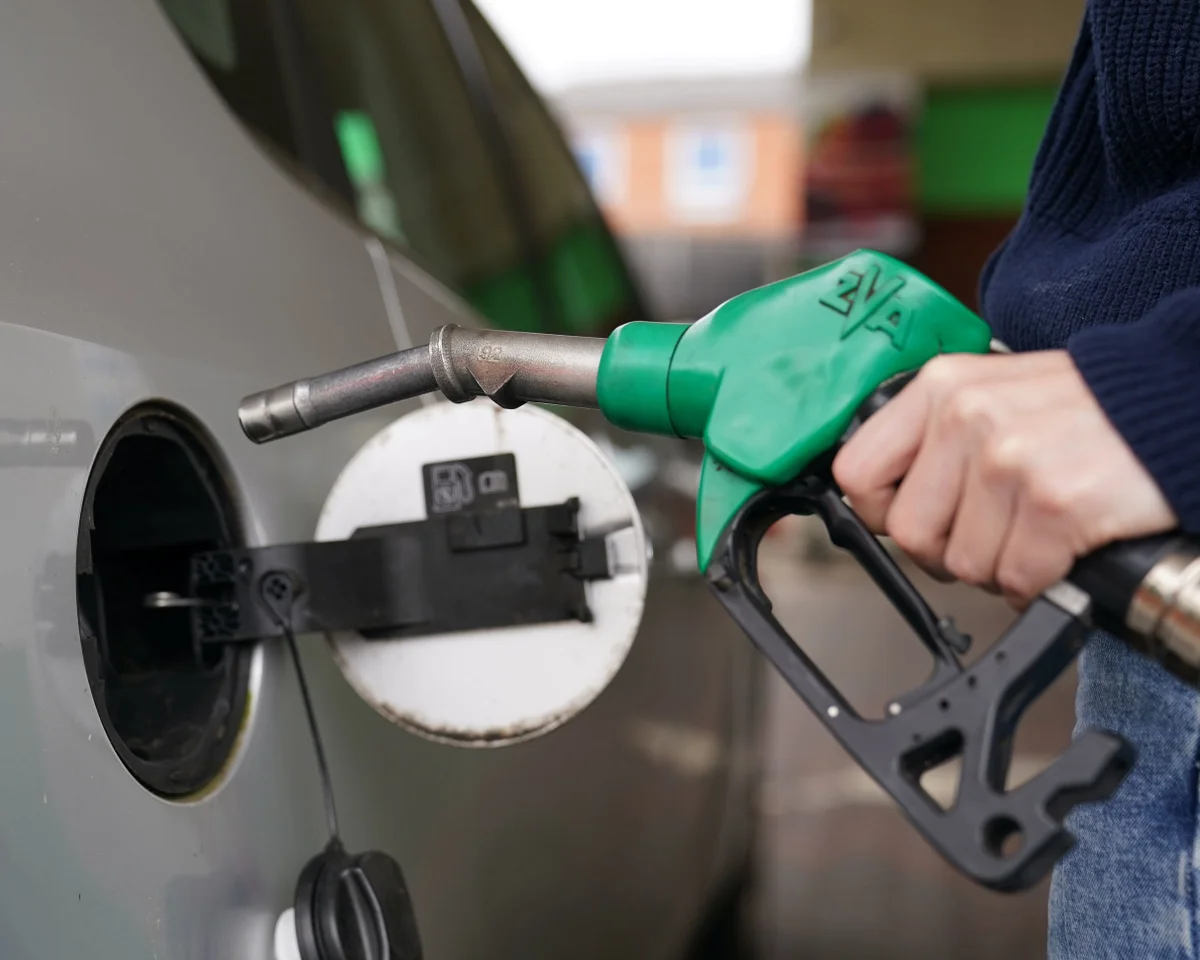
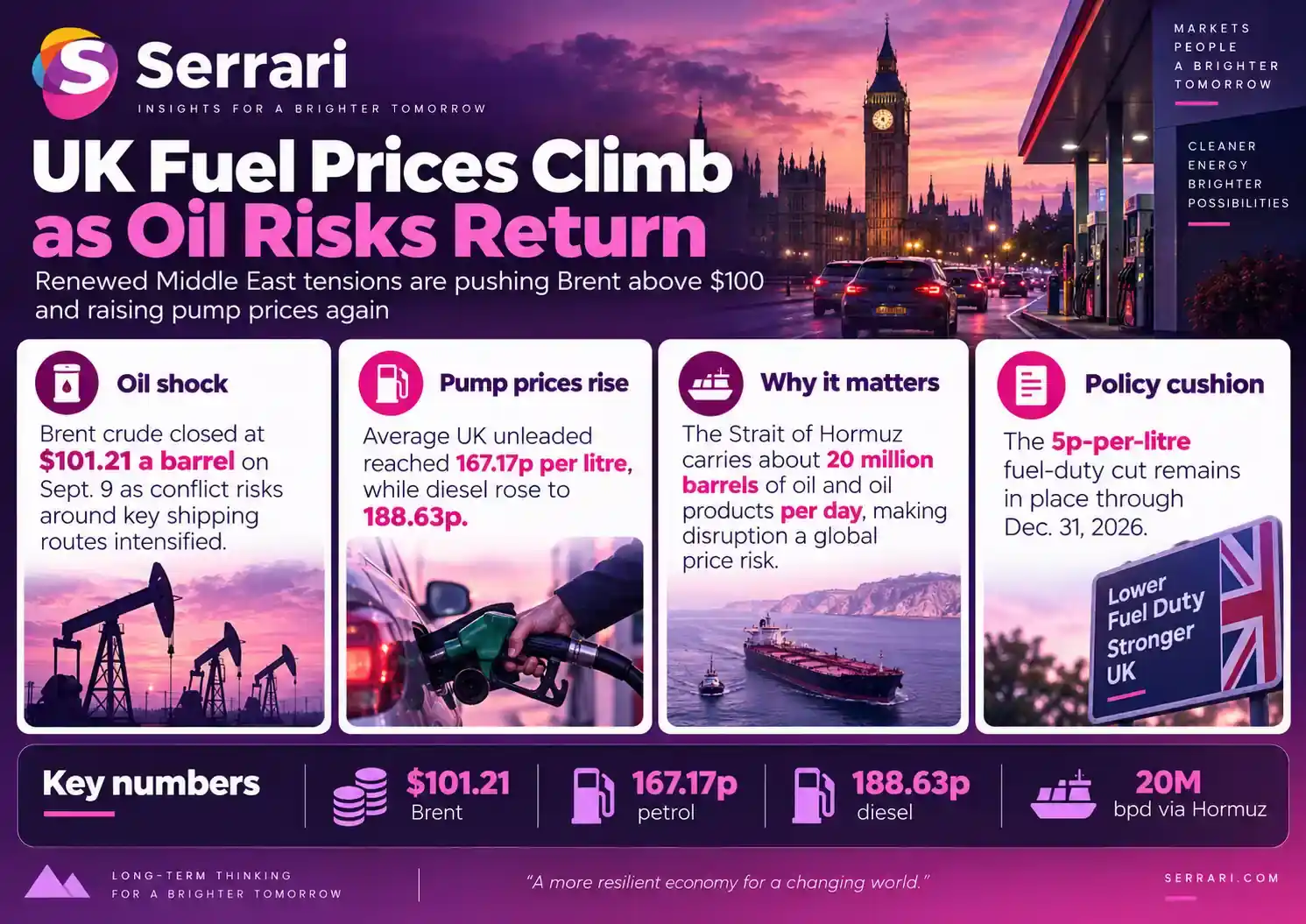
Brent crude closed at $101.21 a barrel on September 9 after a new wave of attacks around Gulf shipping routes intensified fears of further disruption. The jump is feeding through to forecourts, where average unleaded petrol has climbed to 167.17p per litre and diesel to 188.63p.
The latest increases show how exposed UK drivers remain to international energy shocks even when the country does not rely heavily on Iranian crude directly. Global benchmark prices, refinery costs, product shortages and exchange rates all influence what motorists ultimately pay.
Key Overview
- Brent crude closed at $101.21 a barrel on September 9 as Middle East hostilities intensified.
- UK average unleaded petrol reached 167.17p per litre, while diesel rose to 188.63p.
- Both fuels increased by about 5p per litre in one week.
- The Strait of Hormuz normally carries around 20 million barrels of crude oil and oil products per day.
- The government’s 5p-per-litre fuel-duty cut has been extended through December 31, 2026.
- Regulators have found no evidence that retailers broadly changed pricing strategies to exploit the crisis.
Why Higher Oil Prices Reach the Pump
Crude oil is the starting point for petrol and diesel, meaning sustained increases in international oil prices eventually raise the wholesale cost of refined fuels.
The relationship is not immediate or perfectly proportional. Refining margins, shipping costs, currency movements, inventories and competition among retailers also matter. Nevertheless, a major move in crude prices can place significant upward pressure on forecourt prices after a delay.
That process is already visible. Latest UK fuel-price data show unleaded rising by 5p a litre in a week to 167.17p, with diesel increasing by the same amount to 188.63p. For a 55-litre family car, that weekly move alone adds about £2.75 to the cost of a full tank.
Prices remain below the extraordinary peaks recorded in 2022, when Russia’s invasion of Ukraine pushed petrol and diesel close to or above £2 a litre, but current levels are once again putting pressure on household transport budgets.
Hormuz Remains the Critical Supply Risk
The Strait of Hormuz is central to the renewed oil-market anxiety. Roughly 20 million barrels of crude oil and oil products passed through the waterway each day in 2025, equivalent to around a quarter of global seaborne oil trade.
The route is also crucial for natural gas. More than 110 billion cubic metres of LNG passed through Hormuz in 2025, representing almost one-fifth of global LNG trade.
The conflict that erupted earlier in 2026 severely disrupted these flows. Shipping began recovering after the June 18 framework between the United States and Iran, but trade had not immediately returned to normal, leaving energy markets vulnerable to renewed hostilities.
That vulnerability has resurfaced. Recent attacks on vessels and regional energy infrastructure have again increased the risk premium attached to oil, helping drive Brent back above $100.
Context is everything. Stay ahead of shifting trends with today’s market updates, and uncover emerging opportunities using the Serrari Group Market Index and Marketplace. Then, take control of your own financial future by exploring our Money & Life Reset Transformation Blueprint ™ to build stronger habits, create better systems, and design a path toward lasting wealth.
Why Diesel Is Still More Expensive
Diesel continues to trade at a substantial premium to petrol in the UK. That reflects not only crude prices but tighter supplies of middle distillates, which include diesel and jet fuel.
Middle East disruptions have particularly affected refined-product markets. With global supply chains already constrained, shortages or interruptions can lift diesel wholesale costs faster than crude prices alone would suggest.
The result is visible at the pump: diesel at 188.63p remains more than 21p per litre above unleaded. That gap matters beyond private motorists because diesel is heavily used in freight and commercial transport, meaning prolonged high prices can feed into wider business and distribution costs.
Fuel Duty Relief Remains in Place
Drivers are receiving some protection from tax policy. The government extended the existing 5p-per-litre fuel-duty cut until December 31, reversing previously planned increases for September and December.
The main fuel-duty rate therefore remains at 52.95p per litre through the end of 2026. What happens from January 2027 will depend on decisions confirmed at the next Budget.
Drivers can also use live Fuel Finder data through participating comparison services to identify cheaper nearby forecourts. By August, retailers registered with the system accounted for 99% of UK road-fuel sales.
Regulators Find No Widespread Price Gouging
Rapid fuel-price increases have raised questions over whether retailers are using the crisis to widen margins. So far, official monitoring has not found evidence of a broad change in retailer behaviour designed to exploit the disruption.
An August fuel-market assessment found that lower wholesale prices had been reflected in falling pump prices during June and that retailers had not actively changed pricing strategies to take advantage of the crisis.
Competition remains a concern, however, particularly around how quickly wholesale reductions are passed on to motorists. Further monitoring is expected as the latest oil-price surge moves through the supply chain.
For drivers, the immediate outlook depends heavily on the Middle East. If Brent stays above $100 and Hormuz flows remain constrained, further increases at UK forecourts are likely. A durable easing in the conflict and restoration of shipping would offer the clearest route toward lower pump prices.
Sources: Reuters / RAC / International Energy Agency / U.S. Energy Information Administration / UK Government / Competition and Markets Authority
Your financial future isn’t something you wait for—it’s something you build.
The real question is: when do you begin?
Move beyond simply staying informed.
Navigate the markets with clarity—track trends through the Serrari Group Market Index, uncover opportunities in the Serrari Marketplace, and build practical knowledge with our Curated Wealth Builder Platform.
Stay connected to what truly matters.
Get daily insights on macro trends and financial movements across Kenya, Africa, and global markets—delivered through the Serrari Newsletter.
Growth opens doors.
Advance your career through professional programs including ACCA, HESI A2, ATI TEAS 7 , HESI EXIT , NCLEX – RN and NCLEX – PN, Financial Literacy!🌟—designed to move you forward with confidence.
See where money is flowing—clearly and in real time.
Track Money Market Funds, Treasury Bills, Treasury Bonds, Green Bonds, and Fixed Deposits, alongside global and African indexes, key economic indicators, and the evolving Crypto and stablecoin landscape—all within Serrari’s Market Index.