General Motors has paused production at its Factory ZERO EV plant in Detroit, reflecting slowing demand for electric vehicles and shifting regulatory conditions. The move highlights mounting financial pressures, evolving policy dynamics, and a broader recalibration across the automotive industry. As automakers balance profitability with long-term electrification goals, the transition to EVs is proving more complex, uneven, and gradual than initially expected.
Key Overview
- GM idles Factory ZERO EV plant, affecting 1,300 workers
- EV demand slowdown drives production cuts and strategy reset
- Company reports $7.6 billion in EV-related write-downs
- Industry pivots toward profitable gas-powered vehicles
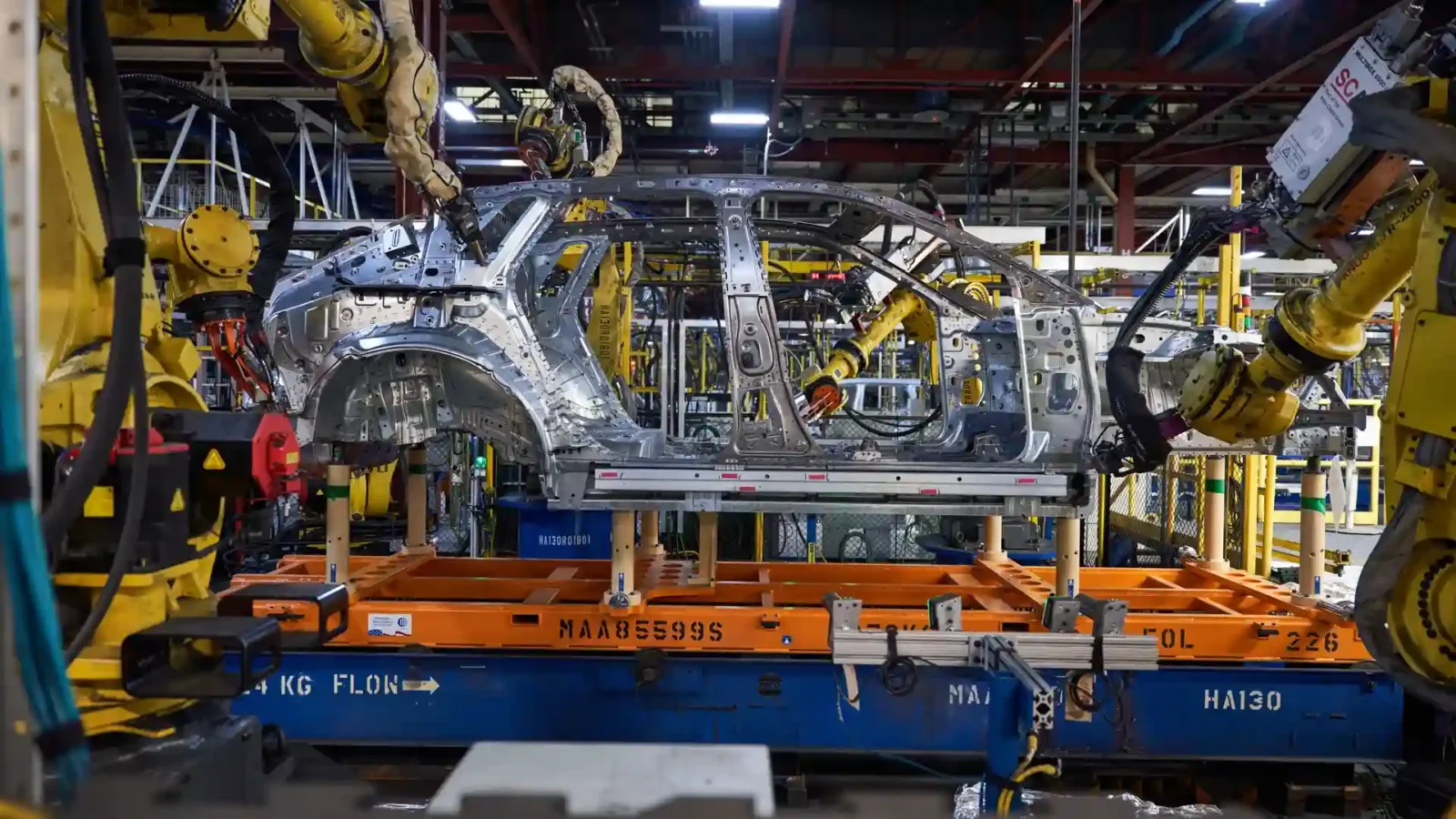
General Motors has temporarily idled its Factory ZERO electric vehicle plant in Detroit, extending downtime that began on March 16 through to April 13. The decision affects approximately 1,300 workers and reflects a broader effort by the company to align production levels with current market demand.
Although the pause is described as temporary, it represents a significant moment in GM’s electrification journey. Factory ZERO has been positioned as a cornerstone of the company’s EV strategy, producing high-profile models such as the Chevrolet Silverado EV and the GMC Hummer EV. These vehicles were expected to play a central role in scaling electric mobility within GM’s portfolio.
However, production at the plant has been uneven over the past year, reflecting fluctuating demand conditions and operational adjustments. This inconsistency highlights the challenges of transitioning from traditional manufacturing systems to large-scale EV production.
The temporary shutdown therefore signals more than just a short-term adjustment—it reflects a deeper recalibration in how GM is pacing its shift toward electric vehicles.
Markets move fast; don’t get left behind. We’ve paired the Serrari Group Market Index with a curated Marketplace and a comprehensive Wealth Builder Course to ensure you have the data—and the skills—to act on it.
Demand Realities Are Reshaping Strategy
At the heart of GM’s decision is a slowdown in demand for electric vehicles. While early projections suggested rapid adoption, actual consumer behavior has been more cautious.
The company had already reduced output at Factory ZERO by approximately 50% earlier in the year, operating with fewer shifts in response to weaker-than-expected demand. This reduction underscores a growing gap between projected growth trajectories and real-world market conditions.
Electric vehicles, while gaining traction, still face barriers related to affordability, infrastructure, and consumer confidence. These factors have contributed to a slower adoption curve than many automakers initially anticipated.
As a result, GM is increasingly aligning production decisions with observed demand rather than long-term projections. This shift reflects a more measured and pragmatic approach to electrification, where flexibility and responsiveness are prioritized over aggressive expansion.
Financial Pressures Are Mounting
The slowdown in EV demand is also having a direct impact on GM’s financial performance. The company has reported approximately $7.6 billion in write-downs related to its electric vehicle programs.
These write-downs reflect both reduced production expectations and a reassessment of prior investments. Building EV manufacturing capacity requires significant capital expenditure, and when demand does not meet expectations, those investments can become difficult to justify in the short term.
For GM, the financial implications extend beyond immediate losses. They highlight the broader risks associated with large-scale industrial transitions, particularly in sectors where technological change is rapid and market dynamics are uncertain.
The write-downs therefore serve as a reminder that while electrification remains a long-term objective, the path toward profitability is still evolving.
Policy Changes Are Influencing Demand
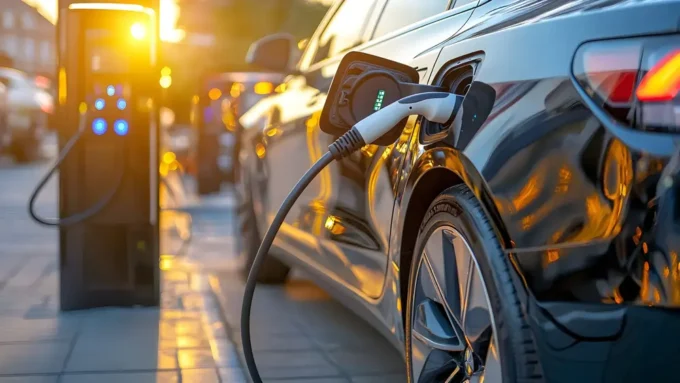
In addition to market dynamics, regulatory changes have played a significant role in shaping EV demand and influencing how quickly the transition is unfolding. Policy support has historically been a key driver of electric vehicle adoption, helping to offset higher upfront costs and make EVs more competitive with traditional vehicles.
The removal of the $7,500 EV tax credit under recent policy shifts has altered the economic equation for consumers. Without this incentive, the upfront cost of electric vehicles becomes a more immediate and visible barrier, particularly for price-sensitive buyers who are weighing affordability alongside long-term savings. This shift can delay purchasing decisions or push consumers toward more familiar and lower-cost alternatives.
As a result, the change has had a noticeable impact on purchasing behavior, contributing to softer demand across the market. For automakers, this introduces an additional layer of uncertainty, as demand becomes more sensitive to policy direction and less predictable over time. What was once supported by consistent incentives is now more exposed to fluctuations in both pricing and consumer sentiment.
The evolving regulatory environment also complicates long-term planning. Manufacturers must now account for potential policy changes when making decisions around investment, production capacity, and product development. This uncertainty can slow the pace of expansion and encourage a more cautious approach, as companies seek to balance regulatory risks with market realities.
A Return to Core Profit Drivers
As EV demand softens, GM is increasingly refocusing on its most reliable and profitable segments—gas-powered trucks and SUVs.
The company has confirmed plans to increase production of heavy-duty trucks at its Flint Assembly plant in Michigan, responding to sustained demand in this category. These vehicles remain a major source of revenue, providing financial stability during a period of transition.
This shift highlights a broader industry pattern. While electrification remains a strategic priority, traditional vehicles continue to play a critical role in maintaining profitability.
For GM, balancing these two priorities—investing in future technologies while sustaining current revenue streams—is becoming a central strategic challenge.
Workforce Impacts Reflect Industry Strain
The temporary layoff of 1,300 workers at Factory ZERO underscores the human impact of these strategic adjustments.
Workforce disruptions have become increasingly common as automakers recalibrate production in response to changing demand conditions. At other facilities, such as the Spring Hill complex in Tennessee, operations are also being adjusted, with workers being reassigned or recalled depending on production needs.
These shifts highlight the broader economic implications of the EV transition. Manufacturing jobs, particularly in regions heavily dependent on the automotive industry, are directly affected by changes in production strategy.
As companies navigate this transition, managing workforce stability will remain a key challenge.
Context is everything. While you follow today’s updates, use the Serrari Group Market Index and Marketplace to spot emerging shifts. Need to sharpen your edge? Our Wealth Builder Course turns these insights into a professional-grade strategy.
Investment in Battery Technology Continues
Despite slowing EV production, GM continues to invest in battery technology and related innovations.
The company is retooling facilities to support alternative applications for its batteries, including energy storage systems for data centers and grid infrastructure. This reflects a broader effort to diversify its energy portfolio beyond vehicle production.
At the Spring Hill facility, a $70 million investment is being used to upgrade production capabilities and retrain workers. The plant is being prepared to produce multiple battery chemistries, including lower-cost lithium-ion phosphate cells.
These investments indicate that while the pace of EV production may be adjusting, the underlying commitment to battery innovation remains intact.
Flexibility Becomes a Competitive Advantage
One of the most important lessons emerging from GM’s experience is the value of flexibility in manufacturing.
Facilities that can switch between EV and internal combustion engine production are better equipped to respond to changing market conditions. This adaptability allows companies to maintain efficiency and reduce risk in an uncertain environment.
At Spring Hill, for example, the ability to adjust production quickly has enabled the plant to remain operational despite fluctuations in demand.
As the automotive industry continues to evolve, flexibility is becoming a critical competitive advantage.
A Broader Industry Recalibration
GM’s production adjustments are not unique—they reflect a broader recalibration across the automotive industry.
Several manufacturers are scaling back EV targets, citing slower adoption rates and shifting regulatory conditions. At the same time, investment in traditional vehicle segments remains strong, reflecting ongoing demand.
This dual approach highlights a transitional phase in the industry. Electrification is advancing, but not at the pace initially projected.
Instead, the transition is becoming more gradual and uneven, shaped by a complex interplay of market forces, policy changes, and technological developments.
Technology Development Continues
Despite the challenges facing EV production, GM continues to invest in future technologies, signaling that its long-term innovation strategy remains firmly in place. While short-term production decisions are being adjusted to reflect current market conditions, the company is still advancing key areas that will shape the next phase of mobility.
The company has begun testing next-generation autonomous driving systems on public roads, with more than 200 development vehicles currently in operation. These vehicles have collectively driven over one million miles across 34 US states, generating valuable real-world data to refine performance, safety, and reliability.
This ongoing investment reflects a broader strategy that extends beyond electrification, focusing on innovation across multiple areas of mobility. By continuing to develop autonomous systems alongside its EV roadmap, GM is positioning itself to compete in a future where transportation is not only electric, but also increasingly connected, automated, and technology-driven.
.
Outlook: A More Balanced Path Forward
GM’s decision to idle its Factory ZERO plant highlights a critical reality: the transition to electric vehicles is not a linear process.
While long-term trends still point toward electrification, short-term challenges—ranging from demand fluctuations to policy changes—are reshaping the pace of adoption.
For automakers, the focus is shifting toward balance. This means maintaining profitability through traditional vehicle segments while continuing to invest in electric and emerging technologies.
The result is a more measured approach to electrification—one that prioritizes adaptability, financial stability, and strategic flexibility.
Ultimately, GM’s production adjustments are not just a company-specific development. They represent a broader signal of how the automotive industry is evolving.
Rather than a rapid and uniform transition, the move toward electric mobility is unfolding in stages, influenced by real-world constraints and shifting market conditions.
For investors, policymakers, and industry stakeholders, this shift offers an important insight: success in the EV era will depend not only on innovation, but also on the ability to adapt to a constantly changing landscape.
Your financial future isn’t something you wait for—it’s something you build.
The real question is: when do you begin?
Move beyond simply staying informed.
Navigate the markets with clarity—track trends through the Serrari Group Market Index, uncover opportunities in the Serrari Marketplace, and build practical knowledge with our Curated Wealth Builder Course.
Stay connected to what truly matters.
Get daily insights on macro trends and financial movements across Kenya, Africa, and global markets—delivered through the Serrari Newsletter.
Growth opens doors.
Advance your career through professional programs including ACCA, HESI A2, ATI TEAS 7 , HESI EXIT , NCLEX – RN and NCLEX – PN, Financial Literacy!🌟—designed to move you forward with confidence.
See where money is flowing—clearly and in real time.
Track Money Market Funds, Treasury Bills, Treasury Bonds, Green Bonds, and Fixed Deposits, alongside global and African indexes, key economic indicators, and the evolving Crypto and stablecoin landscape—all within Serrari’s Market Index.