
















V.O. Chidambaranar Port Authority has launched carbon credit generation from its renewable energy portfolio, signaling a shift toward monetizing sustainability in infrastructure. With 12.4 MW of solar and wind capacity, the port expects to generate nearly 19,500 carbon credits over ten years, translating into approximately ₹50 crore in revenue. The initiative highlights how ports are integrating environmental responsibility with financial strategy, creating scalable models for sustainable operations.
Key Overview
- VOC Port begins carbon credit generation from renewable energy assets
- Portfolio includes 12.4 MW solar and wind capacity across multiple projects
- Projects expected to generate 19,483 carbon credits over a decade
- Revenue potential estimated at ₹50 crore through carbon markets
V.O. Chidambaranar (VOC) Port Authority has taken a significant and strategic step in aligning sustainability with financial performance by commencing the generation of carbon credits from its renewable energy portfolio. This development marks more than just the adoption of green energy—it represents a structural shift in how ports and large-scale infrastructure assets are being managed in the era of climate transition.
Traditionally, ports have operated as logistics-driven entities, focused primarily on cargo throughput, operational efficiency, and trade facilitation. Sustainability initiatives, while increasingly present, have often been treated as compliance requirements or corporate responsibility measures, rather than core revenue-generating activities.
VOC Port’s approach challenges this traditional framework. By monetizing emissions reductions through carbon credits, the port is effectively transforming sustainability from a cost center into a value-generating asset. This shift reflects a broader evolution in infrastructure strategy, where environmental performance is becoming directly linked to financial outcomes.
The initiative also underscores a growing recognition that long-term competitiveness in infrastructure sectors will increasingly depend on the ability to integrate sustainability into core business models, rather than treating it as a peripheral concern.
Markets move fast; don’t get left behind. We’ve paired the Serrari Group Market Index with a curated Marketplace and a comprehensive Wealth Builder Course to ensure you have the data—and the skills—to act on it.
Building a Diversified Renewable Energy Portfolio
At the foundation of this initiative lies a carefully structured and diversified renewable energy portfolio with a total installed capacity of 12.4 megawatts (MW). This portfolio reflects a deliberate strategy to combine different renewable energy sources in order to maximize efficiency, reliability, and long-term sustainability.
The solar energy component includes a 400-kilowatt rooftop installation, alongside 1 MW and 2 MW ground-mounted solar plants. These installations provide a consistent and predictable source of clean energy, supporting the port’s operational needs while reducing dependence on conventional power sources.
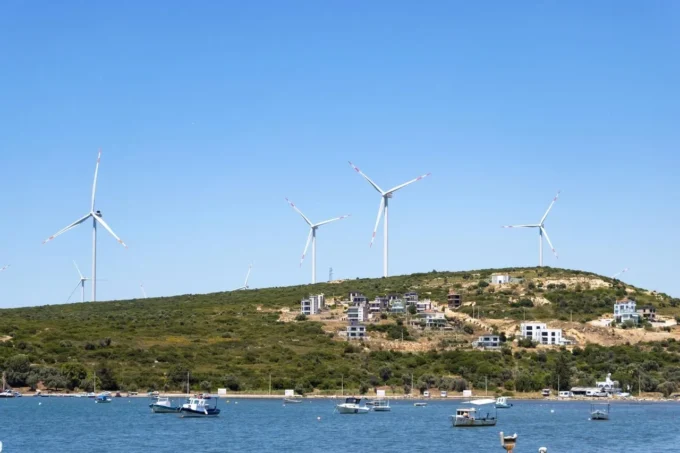
Complementing the solar assets are significant wind energy projects, including capacities of 6.3 MW and 2.7 MW. Wind energy plays a critical role in balancing the energy mix, particularly in regions where wind patterns can provide strong and sustained generation capacity.
This combination of solar and wind energy not only enhances energy security but also reduces exposure to variability in any single energy source. The diversified approach ensures a more stable and resilient renewable energy system, which is essential for large-scale infrastructure operations.
Beyond technical efficiency, the portfolio reflects a long-term investment strategy aimed at integrating sustainability into the operational backbone of the port.
Carbon Credits: Turning Emissions Reductions into Revenue
The defining feature of VOC Port’s initiative is its ability to translate environmental performance into financial returns through carbon credit generation. Over a ten-year period, the renewable energy assets are projected to generate approximately 19,483 carbon credits.
Carbon credits represent verified reductions in greenhouse gas emissions, which can be traded in global carbon markets. Each credit corresponds to a specific amount of emissions avoided or reduced, effectively turning environmental impact into a quantifiable and tradable asset.
Based on current market projections, VOC Port anticipates revenue of nearly ₹50 crore from these credits. This positions the port as an early adopter in leveraging carbon markets to de-risk sustainability investments while creating new income streams.
This model demonstrates a critical shift in how infrastructure investments are evaluated. Rather than focusing solely on operational cost savings, the port is capturing additional value by participating in emerging carbon markets.
In doing so, VOC Port is not only enhancing its financial performance but also contributing to the development of a broader ecosystem where sustainability and finance are increasingly interconnected.
Leadership Perspective: Aligning Sustainability and Profitability
The leadership of VOC Port has been clear in articulating the strategic importance of this initiative.
Chairperson Susanta Kumar Purohit emphasized that environmental responsibility and economic viability are not opposing forces, but rather complementary elements that can reinforce each other. He noted that by operationalizing carbon credit generation, the port is simultaneously reducing its carbon footprint and establishing a financial model for sustainable maritime operations.
This perspective reflects a growing shift in leadership thinking across infrastructure sectors. Increasingly, decision-makers are recognizing that sustainability is not just about compliance or reputation—it is about long-term value creation and risk management.
By embedding sustainability into financial strategy, VOC Port is positioning itself as a forward-looking organization capable of adapting to evolving market and regulatory environments.
Aligning with National and Global Policy Frameworks
VOC Port’s initiative is not occurring in isolation; it is closely aligned with broader national and global policy frameworks aimed at promoting sustainability and reducing emissions.
At the national level, the project supports the “Harit Sagar” Green Port Guidelines, which are designed to drive environmental improvements across India’s port infrastructure.
It also aligns with the Maritime India Vision 2030, which outlines a comprehensive roadmap for transforming the maritime sector into a more efficient, sustainable, and globally competitive system.
In addition, the integration with the Carbon Credit Trading Scheme (CCTS) and the emerging Indian Carbon Market (ICM) positions VOC Port within a rapidly evolving climate finance ecosystem.
This alignment enhances the strategic significance of the initiative, linking it to both national development priorities and global climate objectives.
Context is everything. While you follow today’s updates, use the Serrari Group Market Index and Marketplace to spot emerging shifts. Need to sharpen your edge? Our Wealth Builder Course turns these insights into a professional-grade strategy.
Reinvesting in the Future of Green Infrastructure
A key strength of the initiative lies in its reinvestment strategy.
Revenue generated from carbon credits is expected to be directed toward next-generation green infrastructure, including green hydrogen and alternative fuel ecosystems.
This creates a self-reinforcing cycle in which sustainability initiatives generate financial returns that are then reinvested into further sustainability projects.
Such a model accelerates the transition to low-carbon operations while ensuring that investments continue to deliver long-term value.
It also positions VOC Port as a leader in adopting emerging technologies that are likely to play a critical role in the future of maritime operations.
Reducing Costs While Enhancing Efficiency
In addition to generating revenue, the shift toward renewable energy has also delivered operational efficiencies.
By reducing reliance on conventional power sources, VOC Port has significantly lowered its exposure to energy price volatility. This contributes to more predictable operating costs and improved financial stability.
The combination of cost savings and new revenue streams highlights the multi-dimensional benefits of renewable energy adoption.
This dual advantage strengthens the business case for sustainability investments, demonstrating that environmental initiatives can deliver both financial and operational value.
A Blueprint for Global Port Transformation
VOC Port’s initiative offers a replicable model for ports and infrastructure operators around the world.
By demonstrating that sustainability can be monetized through carbon markets, the port provides a clear example of how environmental initiatives can be integrated into core business strategies.
This model is particularly relevant for developing economies, where balancing economic growth with environmental sustainability is a key challenge.
The success of VOC Port’s approach could encourage other ports to adopt similar strategies, accelerating the global transition toward sustainable maritime operations.
A Strategic Location with Expanding Capabilities
Located near the East-West International Sea route in Tuticorin, Tamil Nadu, VOC Port holds a strategically important position in global trade networks.
As one of India’s 13 major ports, it serves as a critical gateway for the southern region, facilitating trade and supporting economic activity.
Its adoption of advanced technologies, including a Digital Twin platform and green hydrogen production, further reinforces its position as a leader in innovation and sustainability.
The Rise of Carbon Markets in Infrastructure
VOC Port’s move reflects a broader and accelerating trend across the infrastructure sector—the growing importance of carbon markets as both a policy tool and a financial mechanism. What was once a niche component of climate policy is now becoming a central feature of how organizations manage emissions and generate value from sustainability initiatives.
As carbon pricing mechanisms expand globally, organizations are increasingly exploring structured ways to monetize emissions reductions. Carbon credits are no longer viewed solely as compliance instruments; they are emerging as tradable financial assets that can enhance project viability and improve returns on sustainability investments.
This trend is particularly relevant for energy-intensive sectors such as ports, transportation, and industrial operations, where the scale of emissions—and therefore the potential for reduction—is significant. For these sectors, even incremental improvements in efficiency or shifts toward renewable energy can translate into measurable and monetizable carbon savings.
By participating in carbon markets, infrastructure operators can unlock new and diversified revenue streams while simultaneously strengthening their environmental performance. This dual benefit is reshaping how sustainability investments are evaluated, positioning carbon markets as a key bridge between climate action and financial strategy.
Outlook: A New Era of Sustainable Value Creation
VOC Port’s carbon credit initiative marks a significant turning point in how sustainability is integrated into infrastructure management.
By combining renewable energy adoption with carbon market participation, the port has created a model that delivers both environmental and financial benefits.
Looking ahead, this approach is likely to gain traction as climate policies evolve and carbon markets expand.
For ports and infrastructure operators, the ability to monetize sustainability efforts will become an increasingly important component of long-term strategy.
Ultimately, VOC Port’s initiative demonstrates that the transition to a low-carbon economy is not just an environmental imperative—it is also a powerful opportunity for innovation, efficiency, and value creation.
Your financial future isn’t something you wait for—it’s something you build.
The real question is: when do you begin?
Move beyond simply staying informed.
Navigate the markets with clarity—track trends through the Serrari Group Market Index, uncover opportunities in the Serrari Marketplace, and build practical knowledge with our Curated Wealth Builder Course.
Stay connected to what truly matters.
Get daily insights on macro trends and financial movements across Kenya, Africa, and global markets—delivered through the Serrari Newsletter.
Growth opens doors.
Advance your career through professional programs including ACCA, HESI A2, ATI TEAS 7 , HESI EXIT , NCLEX – RN and NCLEX – PN, Financial Literacy!🌟—designed to move you forward with confidence.
See where money is flowing—clearly and in real time.
Track Money Market Funds, Treasury Bills, Treasury Bonds, Green Bonds, and Fixed Deposits, alongside global and African indexes, key economic indicators, and the evolving Crypto and stablecoin landscape—all within Serrari’s Market Index.