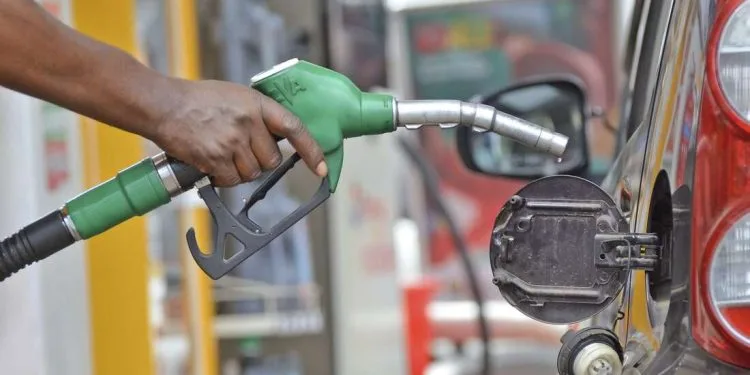
Fuel prices in Kenya have been revised downward after the government reduced Value Added Tax (VAT) on petroleum products from 13% to 8%, with new pump rates taking effect from April 16 to May 14, 2026. The Energy and Petroleum Regulatory Authority (EPRA) has cut Super Petrol by KSh9.37 per litre and Diesel by KSh10.21, bringing Nairobi prices to KSh197.60 and KSh196.63 respectively, while Kerosene holds steady at KSh152.78. The move follows Legal Notice No. 70 issued by Treasury CS John Mbadi, and comes just 24 hours after EPRA announced one of the steepest pump price increases on record — Super Petrol up KSh28.69 and Diesel up KSh40.30 per litre — blamed on a surge in landed costs tied to the Middle East conflict. President William Ruto has framed the VAT cut and a KSh6.5 billion subsidy package as a three-month intervention, though legal analysts note that the VAT Act, 2013 caps executive VAT reductions at 12%, meaning the 8% rate will eventually need parliamentary amendment.
Key Overview
- VAT on fuel cut from 13% to 8% under Legal Notice No. 70 (April 15, 2026).
- New Nairobi pump prices: Petrol KSh197.60, Diesel KSh196.63, Kerosene KSh152.78 — from April 16 to May 14, 2026.
- Petrol falls by KSh9.37/litre and Diesel by KSh10.21/litre from the April 14 level.
- Kerosene subsidy reduced from KSh108.10 to KSh96.56 per litre even though the pump price is held.
- Government has also deployed KSh6.2 billion from the Petroleum Development Levy (PDL) Fund.
- April 14 hike had pushed petrol up KSh28.69 and diesel up KSh40.30 per litre.
- Landed cost of Super Petrol rose 41.53% and Diesel 68.72% between February and March 2026.
- VAT Act, 2013 caps executive VAT variation at 25% of 16% — i.e. a floor of 12%, making the 8% rate legally contested.
Fuel prices drop following a reduction in Value Added Tax (VAT) from 13 percent to 8 percent, with new pump rates taking effect from April 16 to May 14, 2026.
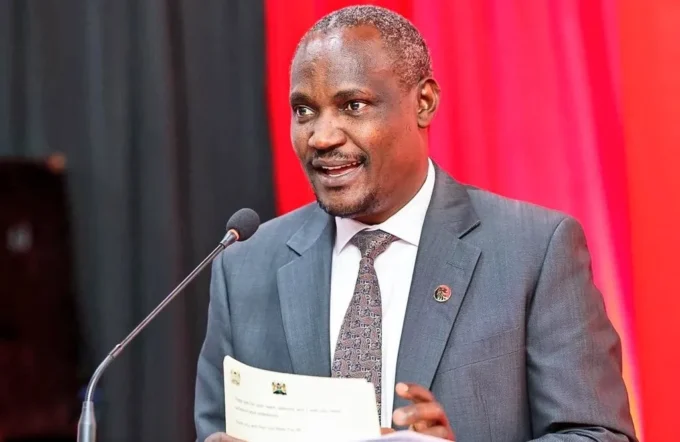
The adjustment follows Legal Notice No. 70 dated April 15, 2026, issued by the Cabinet Secretary for the National Treasury, prompting a review of maximum retail pump prices to reflect the lower tax rate.
In Nairobi, the price of Super Petrol has decreased by Sh9.37 per litre, while Diesel has dropped by Sh10.21 per litre.
The price of Kerosene, however, remains unchanged.
The subsidy on Kerosene has also been reduced, falling from KSh108.10 per litre to Sh96.56 per litre, according to Kenyans.co.ke’s coverage of the EPRA notice.
As a result of the review, super petrol, diesel, and Kerosene now retail at Sh197.60, Sh196.63 and Sh152.78 per litre respectively in Nairobi.
Acting EPRA Director General Dr. Joseph Oketch said the tax revision directly influenced the new pump prices. “As a result, the pump price per litre in Nairobi of Super Petrol and Diesel decreases by Ksh9.37 and Ksh10.21 respectively while that of Kerosene remains unchanged,” he stated in an addendum to EPRA’s April 14 pricing review.
In its statement, the regulator said: “Pursuant to Legal Notice No. 70 dated Wednesday, April 15 2026, the Cabinet Secretary for National Treasury has revised the Value Added Tax rate from 13% to 8%. Accordingly, we have recalculated the maximum retail pump prices that will be in force from Thursday, April 16, 2026 to Thursday May 14, 2026 taking into account this revised Value Added Tax rates.”
Markets move fast; don’t get left behind. We’ve paired the Serrari Group Market Index with a curated Marketplace and a comprehensive Wealth Builder Platform to ensure you have the data—and the skills—to act on it.
Ruto’s intervention: KSh6.5bn plus a VAT cut
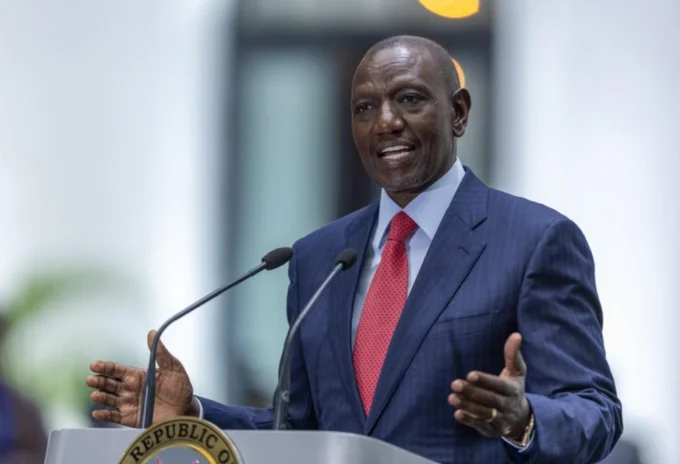
The move comes hours after President William Ruto announced the reduction of VAT on fuel from 16 per cent to 8 per cent for three months, alongside a Sh6.5 billion government intervention to cushion Kenyans from the high cost of living.
Speaking in Suneka during a development tour of the Gusii region, the President said the measures were aimed at easing pressure on households following a surge in global fuel prices linked to the ongoing conflict in the Middle East.
“We have managed to moderate prices. I am announcing today that the fuel prices that have gone up, we have stepped in as the government with Sh6.5 billion to reduce the cost of fuel. We have also stepped in to bring down VAT from 16 per cent to 8 per cent for the next three months,” Ruto said.
Ruto also acknowledged the global nature of the crisis, noting that fuel prices had risen worldwide due to ongoing geopolitical tensions affecting oil supply chains. “There are those saying fuel prices have gone up and want to start demonstrations. I ask, if we hold protests, will the price of fuel go down?” he posed. The President urged Kenyans to remain calm, saying the government was focused on practical solutions to shield consumers rather than political agitation.
Energy Cabinet Secretary Opiyo Wandayi separately told Kenyans not to panic, saying that without the intervention, prices would have risen even more steeply. “You all saw that fuel prices went up yesterday, but don’t worry. Even though the prices increased the way they did, the national government made strategic interventions. First, we imposed a Sh6.2 billion subsidy; otherwise, prices would have skyrocketed even higher,” Wandayi said.
The 48-hour roller-coaster: from KSh206.97 to KSh197.60
Wednesday’s announcement came less than 24 hours after EPRA’s April 14 release pushed Super Petrol to KSh206.97 per litre and Diesel to KSh206.84, with Kerosene at KSh152.78 — a rise of KSh28.69 and KSh40.30 respectively from the prior cycle, according to The Star.
That earlier review had already incorporated a modest VAT trim from 16% to 13%, plus a KSh6.2 billion injection from the Petroleum Development Levy (PDL) Fund, but the reductions were overwhelmed by the sheer scale of the landed-cost surge. EPRA said at the time it had applied VAT “in accordance with the VAT Act, 2013, as read in conjunction with Legal Notice No. 69 of April 14, 2026, the Finance Act, 2023, the Tax Laws (Amendment) Act, 2024, and the inflation-adjusted excise duty rates under Legal Notice No. 194 of 2020.”
The original hike sent public-service vehicle fares up sharply. The Matatu Owners Association announced a 25% fare increase earlier on Wednesday, while the Kenya Transporters Association warned that fuel accounts for around 55% of total operating costs in road freight and that its members would need to revise their cost structures. Matatu fares on some Nairobi routes climbed as high as KSh190 within hours.
Public reaction was intense. Embakasi East MP Babu Owino called for nationwide protests over the increase, while social-media users flooded EPRA’s channels warning of political blowback in the 2027 elections. It was against that backdrop that Ruto announced the deeper VAT cut and the additional subsidy while on tour in Kisii.
Landed costs: the real driver of the shock
Both the hike and the partial reversal reflect a single underlying reality: Kenya imports all its refined fuel, and landed costs have surged.
EPRA data shows the average landed cost of imported Super Petrol rose by 41.53% between February and March 2026, moving from $582.11 per cubic metre (KSh75,266.82) in February to $823.87 (KSh106,526.39) in March, according to Capital FM. Diesel jumped 68.72%, reaching $1,073.20 per cubic metre, while Kerosene’s landed cost more than doubled, rising by roughly 105%.
The regulator has attributed the spike to rising global crude prices and supply chain disruption tied to the ongoing Middle East conflict, which has pushed Brent crude above $100 a barrel and forced reroutings around disrupted shipping corridors, according to The Star’s Wandayi brief. Wandayi has said the three-percentage-point VAT reduction will remain in place for the next three months, as the government anticipates sustained pressure on global oil prices due to geopolitical tensions in the Middle East.
The Serrari Group’s commentary underscored how taxes and levies still account for a massive chunk of Kenya’s final pump prices, notwithstanding the cuts. Before any fuel litre reaches the pump, it has already passed through nine separate taxes and levies — including a KSh25 per-litre Road Maintenance Levy, an KSh18 per-litre Anti-Adulteration Levy, and a 3.5% Import Declaration Fee — according to TechWeez’s breakdown.
Context is everything. While you follow today’s updates, use the Serrari Group Market Index and Marketplace to spot emerging shifts. Need to sharpen your edge? Our Wealth Builder Platform turns these insights into a professional-grade strategy.
The legal wrinkle: VAT Act caps executive cuts at 12%
While the Ruto–Mbadi tandem has framed the move as a VAT cut “from 16 per cent to 8 per cent,” the country’s tax law places a tighter ceiling on how far the executive can go.
Capital FM’s legal analysis notes that Section 5(2)(b) of the VAT Act, 2013 anchors the standard VAT rate at 16%, while Section 6(1) allows the Cabinet Secretary for Treasury to amend the rate “by an amount not exceeding twenty-five per cent of the rate specified in section 5(2)(b).” In practice, that legal ceiling limits any downward adjustment from 16% to a minimum of 12%. A reduction all the way to 8% therefore falls outside the statutory band and “cannot be effected through a Cabinet Secretary order or presidential directive.” Anything below 12% would require Parliament to amend the Act.
That interpretation matters because EPRA’s addendum explicitly pegs the new pump prices to an 8% VAT rate under Legal Notice No. 70. Tax practitioners will be watching whether the Legal Notice is challenged, amended, or accompanied by a parallel Finance Bill amendment in coming weeks.
The Finance Act 2023 itself already removed earlier concessional VAT provisions for petroleum products. It amended Section 5 of the VAT Act to delete sub-sections 5(2)(aa) and 5(2)(ab), which had previously provided for an 8% rate on the supply of liquefied petroleum gas and on a specified list of goods. Since 1 September 2018, VAT has been chargeable on all petroleum products at 16% of transaction value, per a Kenya Revenue Authority public notice.
The opposition challenge: “Cut the levies, not just VAT”
Opposition lawmakers and some government-leaning voices alike have argued that a deeper structural fix is needed.
Kiharu MP Ndindi Nyoro has proposed a broader package of fiscal measures — including a KSh5 billion subsidy top-up, removal of a KSh7-per-litre fuel levy introduced in 2024, and a five-percentage-point VAT cut. Nyoro estimates that combined measures could reduce pump prices by up to KSh27 per litre, arguing that “Kenyans are simply demanding the reduction of levies and taxes to the levels they were before 2023.” He flagged that with Kenya consuming roughly 400 million litres of fuel monthly, a stronger subsidy allocation — potentially rising to KSh10 billion in the short term — would provide more immediate relief.
Nyoro has separately argued that Kenya cannot attribute rising fuel costs solely to external shocks, insisting that domestic policy choices — particularly taxes and levies — continue to drive the final consumer price. His intervention joins a wider opposition chorus, including former Deputy President Rigathi Gachagua, who, speaking for the United Opposition, alleged that President Ruto personally profits KSh5 per litre from the government-to-government (G-to-G) oil deal — a claim the president has firmly denied.
Ruto has publicly defended the G-to-G arrangement, arguing that it has helped position Kenya as a more competitive fuel market within the region.
The kerosene nuance: price held, subsidy reduced
A notable detail buried in EPRA’s addendum is the Kerosene treatment. The pump price of Kerosene is being held at KSh152.78, explicitly to protect low-income households and small-scale users such as boda boda operators. But the subsidy on the product has been trimmed from KSh108.10 to KSh96.56 per litre — meaning that a bigger share of the landed-cost increase is now being absorbed by the government’s balance sheet rather than by consumers, and reflecting the use of PDL funds to keep the headline figure flat.
The Petroleum Development Levy, charged at KSh5.40 per litre of fuel, raised KSh26.37 billion in the year to June 2025, according to Business Daily — averaging KSh2.1 billion monthly. That gives some sense of how quickly a KSh6.2 billion stabilization tranche can be absorbed in a single pricing cycle.
The fiscal trade-off: IMF scrutiny ahead
The cuts sit uncomfortably with Kenya’s tight fiscal envelope. The government is under IMF-linked commitments to broaden the tax base and rationalise expenditure, and VAT has been one of the revenue levers central to that effort. Streamline Feed notes that by reversing course on its 16% fuel VAT anchor, the administration is effectively admitting that its previous tax strategy had reached a point of diminishing returns, especially after fuel costs began feeding into a secondary inflation cycle.
At the same time, Kenya imports all its refined fuel, and the shilling’s exchange rate against the dollar remains a central variable in landed-cost calculations. EPRA itself has flagged that “the trade of petroleum products in the international markets is denominated in United States dollars (USD), and an exchange rate is applied to convert the USD to shillings during the computation of local pump prices.” Any fresh shilling weakness would quickly erode the VAT-cut gains.
What Kenyans pay next
From April 16 to May 14, 2026, Kenyans will pay KSh197.60 for a litre of Super Petrol, KSh196.63 for Diesel, and KSh152.78 for Kerosene in Nairobi. In Mombasa, pump prices will stand at KSh194.32 for Super Petrol, KSh193.35 for Diesel, and KSh149.49 for Kerosene, per The Star, with slightly lower rates reflecting proximity to the port. In northern and remote areas, fuel prices remain among the highest in the country due to transport logistics, with pump prices in Mandera hovering around KSh219.78 for petrol.
The government has signalled that the 8% VAT rate will last three months, giving the Treasury a window to either legislate the rate into the VAT Act, lean harder on the Petroleum Development Levy, or pray that global oil markets cool off as the Middle East conflict evolves. For Kenyans at the pump, the narrative is simpler: after a 48-hour whiplash, petrol is back under KSh200 — for now.
Whether that holds depends on three variables Nairobi cannot control: the trajectory of Brent crude, the stability of the shilling against the dollar, and — perhaps most importantly — whether courts and Parliament ratify a VAT regime that the country’s own statute book says is not yet fully enforceable.
Your financial future isn’t something you wait for—it’s something you build.
The real question is: when do you begin?
Move beyond simply staying informed.
Navigate the markets with clarity—track trends through the Serrari Group Market Index, uncover opportunities in the Serrari Marketplace, and build practical knowledge with our Curated Wealth Builder Platform.
Stay connected to what truly matters.
Get daily insights on macro trends and financial movements across Kenya, Africa, and global markets—delivered through the Serrari Newsletter.
Growth opens doors.
Advance your career through professional programs including ACCA, HESI A2, ATI TEAS 7 , HESI EXIT , NCLEX – RN and NCLEX – PN, Financial Literacy!🌟—designed to move you forward with confidence.
See where money is flowing—clearly and in real time.
Track Money Market Funds, Treasury Bills, Treasury Bonds, Green Bonds, and Fixed Deposits, alongside global and African indexes, key economic indicators, and the evolving Crypto and stablecoin landscape—all within Serrari’s Market Index.