Qatar’s Finance Minister Ali bin Ahmed Al Kuwari has warned that the global economy is about to absorb the “full-fledged” impact of the Iran war, with the shock likely to hit by May or June 2026 and reach far beyond the Gulf. Speaking at the IMF Spring Meetings in Washington, Al Kuwari said current oil price rises are “the tip of the iceberg,” cautioning that within one to two months the world will face not just higher prices but outright energy availability problems, a looming fertilizer-driven food crisis, and cascading effects across helium, petrochemicals and industrial supply chains. Iranian missile strikes on Qatar’s Ras Laffan LNG complex have knocked out 17% of its export capacity and could take three to five years to repair, while the Strait of Hormuz — through which about 20% of global LNG and roughly a quarter of seaborne oil normally transits — has been effectively closed since early March. The IMF has already cut its 2026 global growth forecast to 3.1% and warned that a prolonged conflict could push the world dangerously close to recession.
Key Overview
- “Full-fledged impact” of the war expected within one to two months, per Qatar’s finance minister at the IMF Spring Meetings.
- Iranian missile strikes on Ras Laffan wiped out 17% of Qatar’s LNG capacity — about 12.8 million tonnes per year — and could take three to five years to repair.
- QatarEnergy has declared force majeure on long-term contracts to buyers including Italy, Belgium, South Korea and China.
- Qatar supplies nearly 20% of global LNG and around 30% of global helium, a key input for chipmaking and MRI scanners.
- Strait of Hormuz carries roughly 27% of seaborne oil trade and 20% of global LNG; tanker traffic in the strait dropped around 90% in the first week of March.
- IMF cut 2026 global growth to 3.1%; Middle East & Central Asia growth downgraded by 2 percentage points to 1.9%.
The global economy is set to experience a significant downturn this year if the Middle East conflict is not resolved soon, Qatar’s Finance Minister, Ali bin Ahmed Al Kuwari, said on Wednesday.
Al Kuwari said the latest oil price increases are just the “tip of the iceberg,” citing that the full economic consequences of the Iran war are likely going to hit globally by May or June 2026.
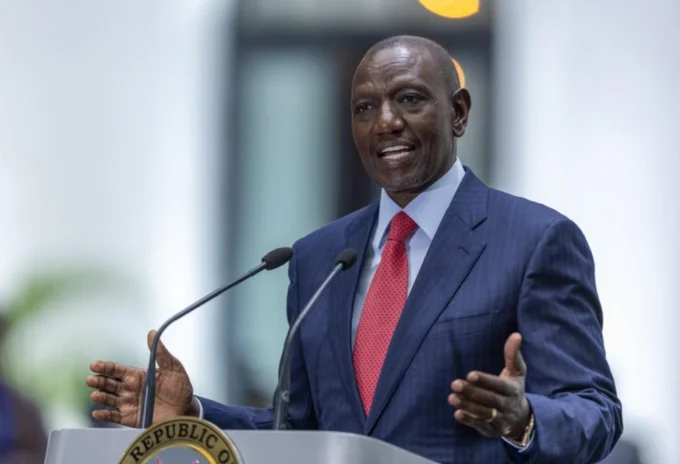
“The impact… it goes way beyond Gulf countries, even to the whole world and what we have seen so far is really the tip of the iceberg,” Al Kuwari said at the IMF Spring Meetings in Washington, D.C. He was speaking during a session titled “Governors Talk: Qatar — Turning Shock into Strategy”, held on the sidelines of the Spring Meetings of the International Monetary Fund and the World Bank Group.
The Qatari official noted that the escalation of the conflict has forced the Gulf region to navigate intense hostility from Iran, adding that GCC states have been “caught in the middle.”
“The full-fledged impact is coming, and it’s not coming far away. I think in one month, two months’ time you’re going to see really a huge… economic impact globally as a result of this war,” Al Kuwari said, according to a report by The Jerusalem Post.
He went further at Bloomberg’s summit coverage of the event, cautioning that markets have so far seen only a preview: “What the world had seen so far with higher energy costs is the tip of the iceberg,” the finance minister said, framing the escalation as a direct consequence of the Strait of Hormuz remaining shut and trade remaining restricted.
Markets move fast; don’t get left behind. We’ve paired the Serrari Group Market Index with a curated Marketplace and a comprehensive Wealth Builder Platform to ensure you have the data—and the skills—to act on it.
From price shock to supply shock
Al Kuwari’s sharpest warning concerned the shift from price effects to outright physical shortages. “Very soon you are going to have a problem of energy availability not just prices. So even if you can afford to pay you are not going to be able to source, which is a major, major problem,” he told the audience in Washington.
The finance minister also flagged the risk of a global food crisis, warning that a sharp reduction in fertilizer production and supply from the region could cause farming seasons to be missed worldwide. Speaking to Investing.com, Al Kuwari added that helium exports, used for chipmaking, are also a concern, noting that Qatar accounts for about 30% of the world’s helium supply.
Iran’s missile attacks have damaged Qatar’s liquefied natural gas (LNG) assets, impacting natural gas markets around the world and driving prices higher. The country accounts for nearly 20% of global LNG exports, making the disruptions a significant threat to the world’s energy security.
The Ras Laffan attack and its multi-year damage
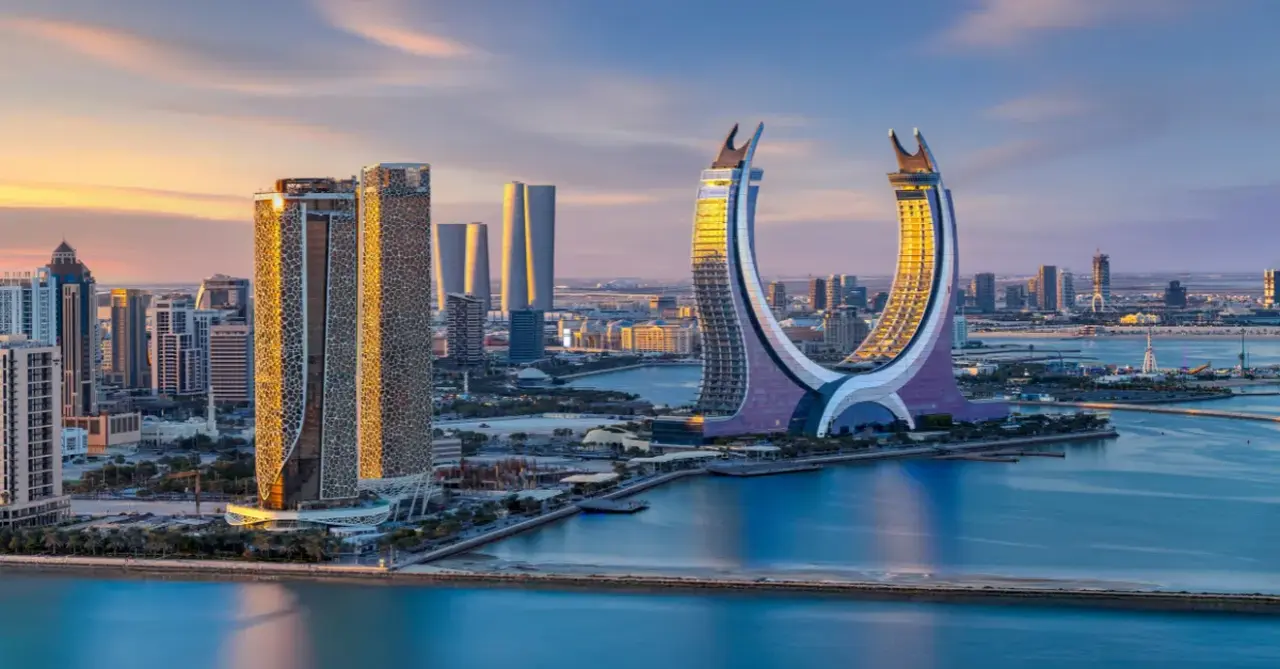
The epicentre of the supply shock is Ras Laffan Industrial City, home to the world’s largest LNG production facility, around 80km northeast of Doha. Qatar’s Ministry of Foreign Affairs described an Iranian missile attack on the complex in mid-March as a blatant Iranian attack causing “significant damage” and a “dangerous escalation.”
State-owned QatarEnergy subsequently confirmed that the strikes damaged LNG Trains 4 and 6, which together had a combined production capacity of 12.8 million metric tons per annum — roughly 17% of Qatar’s exports. QatarEnergy CEO Saad Sherida Al-Kaabi told Reuters the disruption could result in an estimated $20 billion in lost annual revenue and threaten supplies to Europe and Asia, adding that repairs to the two LNG trains and one of its two gas-to-liquids facilities would sideline that output for three to five years. “For production to restart, first we need hostilities to cease,” Al-Kaabi said.
On March 24, QatarEnergy formally declared force majeure on long-term LNG contracts covering supplies to Italy, Belgium, South Korea and China — a move that excuses it from contractual obligations due to unforeseeable events. Al-Kaabi told Reuters the force majeure could hold for up to five years.
The destruction has ricocheted into other markets. Qatar is also the world’s second-largest helium producer, responsible for roughly 30% of global output, per U.S. Geological Survey estimates. Because helium is a byproduct of natural gas processing, Qatar’s shutdown has put semiconductor fabs, MRI scanners, aerospace programmes and scientific laboratories on alert. IndexBox chief executive Aleksandr Romanenko told The National he estimates a monthly shortfall of 5.2 million cubic metres, with spot prices already surging 70–100%.
Context is everything. While you follow today’s updates, use the Serrari Group Market Index and Marketplace to spot emerging shifts. Need to sharpen your edge? Our Wealth Builder Platform turns these insights into a professional-grade strategy.
The Strait of Hormuz: the “greatest global energy security challenge in history”
Underpinning the crisis is the near-total disruption of traffic through the Strait of Hormuz, the choke point between Iran and Oman. The U.S. Congressional Research Service notes that roughly 27% of the world’s maritime trade in crude oil and petroleum products and 20% of global LNG trade passes through the strait.
Starting on March 4, Iranian forces effectively declared the strait “closed,” threatening and carrying out attacks on ships attempting to transit. Analysis by the Al Jazeera Centre for Studies reports that tanker traffic through the strait dropped by 90 percent during the first week of March, prompting the International Energy Agency to launch the largest emergency reserve release in its history. The IEA has described the resulting Gulf energy shock as broader than the 1970s oil crises and the turmoil from Russia’s war in Ukraine combined.
Bloomberg’s in-depth coverage notes that US government officials and Wall Street analysts are now entertaining scenarios in which oil prices surge to $200 a barrel if the strait remains closed for a second month, with Europe heading toward “scarcity pricing” — particularly for diesel. Brent crude surged past $100 per barrel on March 8 for the first time in four years and briefly traded above $126 at the peak of the dislocation. As of April 14, oil prices had eased but remained well above pre-war levels, with Brent crude futures at $95.02 per barrel amid hopes of renewed US-Iran talks.
Modelling published by the Oxford Institute for Energy Studies has war-gamed three short-term LNG scenarios. In the “Very Optimistic” case, LNG supply returns to global markets by July 1, 2026; in the “Q4” scenario, TTF prices could average over $25 per MMBTU for the rest of 2026; and in the 12-month closure case, TTF prices could average more than $40 per MMBTU — a scenario that “looks a lot like a repeat of 2022 and possibly even worse.”
Commodities beyond oil — the silent crisis
Al Kuwari’s warnings echo increasingly urgent findings from commodity analysts. A PolitiFact explainer pulling together IEA, Reuters and think-tank analysis lays out how the Strait of Hormuz blockage has crippled global supply of aluminum, fertilizer, helium, petrochemicals, and other industrial inputs. Reuters has reported that Iran’s attacks on Qatar’s LNG facilities have compounded a separate round of strikes on aluminum smelters, hollowing out a US supply chain that was already stressed.
TIME’s explainer on the strait quotes Noam Raydan, a senior fellow at The Washington Institute for Near East Policy, describing severe disruption and noting that even container shippers such as Maersk have paused vessel crossings in the strait. Daily freight rates for LNG tankers jumped more than 40% on the Monday after Qatar halted operations, while the Dutch TTF index jumped by more than four points following strikes on Qatari infrastructure.
On the fertilizer front, the Gulf region accounts for roughly 30–35% of global urea exports and 20–30% of ammonia exports, with about one-third of internationally traded fertilizers normally transiting the strait. CNBC reporting on the strikes noted that Qatar halted LNG production on March 2 following Iranian drone strikes at Ras Laffan and Mesaieed Industrial City, and that Qatar is the second-largest LNG exporter in the world after the U.S. — making the disruption structurally consequential for both Asian and European markets.
IMF: global growth downgraded, recession “a close call” in worst scenarios
Al Kuwari’s warnings are being reinforced by the IMF’s own updated projections. In its April 2026 World Economic Outlook, released on April 14, the Fund projected global growth at 3.1 percent in 2026 and 3.2 percent in 2027, “below recent outcomes and well under prepandemic averages.” Under its reference scenario, which assumes a short-lived conflict and a moderate 19 percent rise in energy prices in 2026, headline inflation rises to 4.4 percent.
TIME magazine’s synthesis of the report noted that if supply disruptions persist into next year, the IMF predicts global growth could fall to around 2% — what the Fund itself describes as “a close call for a global recession.” In the most severe scenario, global inflation tops 6%.
The regional numbers tell an even starker story. According to Al Jazeera’s coverage of the IMF release, Iran’s outlook saw one of the largest country-level revisions, with growth cut by 7.2 points, resulting in a forecast contraction of 6.1%. Saudi Arabia’s growth forecast was cut from 4.5% to 3.1%. Middle East and Central Asia growth was downgraded by two percentage points to 1.9%, with economies projected to contract including Iran, Qatar, Iraq, Kuwait, and Bahrain.
Federal Reserve Bank of Dallas research has separately quantified the transmission channels. Its economists note that a complete cessation of oil exports from the Gulf region amounts to removing close to 20% of global oil supplies from the market, about 80% of which is shipped to Asia. Oil importers unable to access Gulf oil must turn to other suppliers, “putting upward pressure on oil prices worldwide.”
Qatar: hit hard at home, but buffered
Even as he warned the world, Al Kuwari struck a more reassuring tone about Qatar’s own finances. JPMorgan economists have estimated that Qatar’s economy is likely to contract by around 9% this year after Iranian missile strikes wiped out 17% of its LNG production capacity. But the finance minister insisted Qatar was entering the crisis from a position of strength, “supported by robust macroeconomic management, strong sovereign reserves, and an ongoing reform programme under the Third National Development Strategy,” according to the Qatar Tribune.
“Managing the fiscal (situation) is fine,” he said, pointing to Qatar’s “conservative” pre-war budget and “shock stability fund.” “We can go six months without tapping the Qatar Investment Authority, which has a high level of reserves,” he said, referring to the nation’s sovereign wealth fund, and adding that Qatar could also tighten its budget, borrow if needed and delay some investment projects. “We are not seeing a major issue, and we can go for a full year without this.”
He also used the Washington platform to reiterate that the State of Qatar calls for de-escalation, prioritising peaceful solutions and dialogue in addressing current developments — a diplomatic posture Doha has maintained throughout despite being directly targeted.
What happens next
The path forward depends almost entirely on whether the Strait of Hormuz reopens and hostilities cool. US President Donald Trump has raised the prospect of US Navy escorts for tankers and, more aggressively, threatened to “obliterate” Iranian power plants if the strait is not fully reopened. A US-led Operation “Epic Fury” has already hit roughly 6,000 targets inside Iran since February 28, according to the Al Jazeera Centre for Studies.
But military reopening looks difficult. Analysts at the Centre for Studies argue that persistent Iranian threats to shipping could take weeks or months to suppress, making long-term control impractical, while even attempting it “could trigger a global economic shock.”
Meanwhile the damage is accumulating in real economies. Europe is heading into the summer gas refill season with storage tanks depleted after a harsh 2025–26 winter, and both the Oxford Institute for Energy Studies and Bloomberg analysts now warn that world gas markets have shifted from a potential glut to a deficit later this year. Qatar’s own signal — a finance minister using the biggest global finance stage to say that what has been felt so far is “the tip of the iceberg” and that the full shock is only one to two months away — is a pointed warning to policymakers and markets alike.
If Al Kuwari’s timeline proves accurate, governments have a matter of weeks, not quarters, to prepare for a simultaneous energy, food, industrial and financial shock on a scale the IMF has likened to a near-recession. And unlike oil, for which countries maintain strategic petroleum reserves, there is no comparable stockpile for LNG, fertiliser or helium — meaning that when the “iceberg” surfaces, there will be little cushion beneath it.
Your financial future isn’t something you wait for—it’s something you build.
The real question is: when do you begin?
Move beyond simply staying informed.
Navigate the markets with clarity—track trends through the Serrari Group Market Index, uncover opportunities in the Serrari Marketplace, and build practical knowledge with our Curated Wealth Builder Platform.
Stay connected to what truly matters.
Get daily insights on macro trends and financial movements across Kenya, Africa, and global markets—delivered through the Serrari Newsletter.
Growth opens doors.
Advance your career through professional programs including ACCA, HESI A2, ATI TEAS 7 , HESI EXIT , NCLEX – RN and NCLEX – PN, Financial Literacy!🌟—designed to move you forward with confidence.
See where money is flowing—clearly and in real time.
Track Money Market Funds, Treasury Bills, Treasury Bonds, Green Bonds, and Fixed Deposits, alongside global and African indexes, key economic indicators, and the evolving Crypto and stablecoin landscape—all within Serrari’s Market Index.