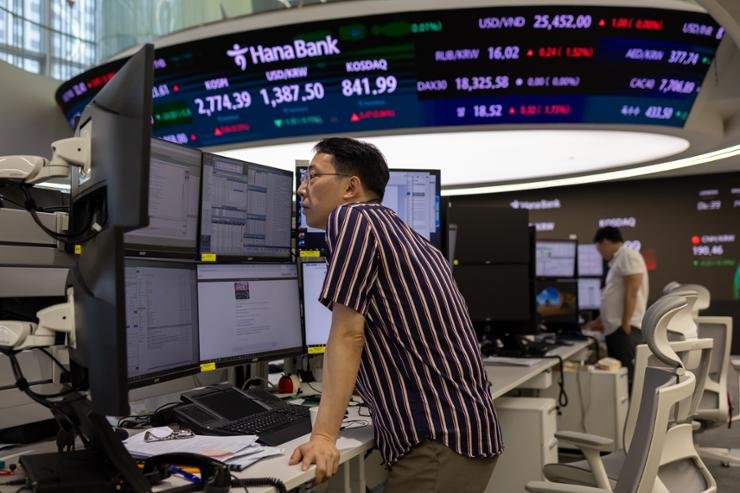
In a significant policy shift aimed at stabilizing its currency, the South Korean government announced measures to ease foreign exchange (FX) regulations and increase corporate access to overseas borrowing. This move comes as the South Korean won, one of the most traded emerging market currencies, hit a 15-year low against the U.S. dollar. The financial authorities have described the changes as essential for addressing liquidity concerns and supporting the broader economy during a challenging global economic environment.
The Ministry of Economy and Finance, in coordination with the Bank of Korea and other regulatory agencies, introduced this comprehensive package to improve FX liquidity and encourage foreign capital inflows. The measures, which represent a departure from South Korea’s traditionally conservative stance on external debt management, are expected to have far-reaching implications for the nation’s economic trajectory.
The Won’s Decline: Causes and Implications
On December 19, 2024, the South Korean won fell to its weakest level since March 2009, trading at 1,448.9 per U.S. dollar. This sharp decline has been attributed to a confluence of global and domestic factors.
On the global front, the U.S. Federal Reserve’s cautious approach to further interest rate cuts has strengthened the dollar, increasing pressure on other currencies. The Federal Reserve’s monetary policy stance has led to a general tightening of global liquidity, making it more challenging for emerging market currencies to stabilize. Additionally, ongoing economic uncertainties in China—South Korea’s largest trading partner—have further weighed on the won, given the two countries’ deep economic ties.
Domestically, political instability has exacerbated the situation. President Yoon Suk Yeol’s controversial decision to impose martial law earlier this month, followed by his impeachment, has heightened uncertainty in financial markets. Investors, wary of South Korea’s political and economic future, have shifted toward safer assets, further weakening the won.
The combined effect of these external and internal pressures underscores the urgency for South Korea to act decisively.
Key Measures Announced
South Korea’s financial authorities have rolled out several measures to address the FX liquidity crunch and support the local currency:
1. Increased Corporate Borrowing Flexibility
South Korean companies will now have greater leeway to borrow in foreign currencies. These loans can be converted into won and used for domestic investments, including facilities such as equipment, property, and land. This adjustment aims to attract more foreign capital inflows, marking a strategic pivot from previous policies that emphasized limiting external debt.
An official from the finance ministry described the initiative as a “paradigm shift,” explaining that the focus is now on inducing foreign inflows to strengthen the domestic economy.
2. Raised Ceilings on FX Forward Positions
To improve liquidity, the ceilings on foreign exchange forward positions for financial institutions have been raised significantly:
- Local Banks: The cap has been increased from 50% to 75% of their capital holdings.
- Foreign Bank Branches: The limit has been raised from 250% to 375%.
This adjustment is expected to allow financial institutions to bring more U.S. dollars into the local market, reducing pressure on the won.
3. Expanded FX Swap Arrangements
The Bank of Korea has expanded its FX swap line with the National Pension Service (NPS) from $50 billion to $65 billion. This agreement allows the NPS to borrow dollars directly from the central bank’s FX reserves for overseas investments, thereby reducing its need to purchase dollars in the spot market.
By minimizing demand for dollars in domestic trading, this measure is expected to ease strain on the currency while supporting overseas investments.
4. Streamlined FX Regulations
The government has emphasized flexibility in managing FX transactions. Local banks are being encouraged to adjust the terms of FX loans for businesses, allowing them to respond dynamically to market conditions. This measure is designed to mitigate demand for dollars and stabilize the won-dollar exchange rate amidst heightened volatility.
Historical Context and Policy Shift
South Korea’s cautious approach to external debt stems from its experiences during the 1997-1998 Asian financial crisis and the 2007-2008 global financial crisis. Both events exposed vulnerabilities in the country’s financial system, leading to significant capital outflows and economic instability. Since then, South Korea has maintained tight controls on FX borrowings to safeguard its economy.
However, the current situation demands a different approach. At the end of September 2024, South Korea held a record-high $977.8 billion in net financial assets abroad, a sign of its growing strength as a net creditor since 2014. This robust external position has given policymakers confidence to ease FX regulations without jeopardizing financial stability.
A finance ministry official, speaking anonymously, noted that the new measures reflect a balance between encouraging capital inflows and maintaining macroeconomic stability. “We will continue to loosen regulations on capital inflows from the private sector unless it negatively impacts external debt or credit ratings,” the official stated.
Economic Implications
The easing of FX regulations is expected to have several positive effects:
- Enhanced Liquidity: By allowing more foreign capital into the system, the measures aim to stabilize the won and reduce volatility in FX markets.
- Investment Growth: Greater access to foreign funds will enable South Korean companies to invest in domestic projects, spurring economic growth.
- Market Confidence: The policy shift signals the government’s proactive approach to managing economic challenges, potentially boosting investor confidence.
However, economists caution that these measures alone may not be sufficient to counteract the broader global trends affecting emerging market currencies. External factors such as U.S. monetary policy and uncertainties in China remain significant risks.
Challenges Ahead
While the announced measures represent a bold step forward, there are potential challenges:
- Global Economic Conditions: The strong U.S. dollar and reduced global liquidity continue to put pressure on emerging market currencies, including the won.
- Domestic Political Uncertainty: The political fallout from President Yoon’s impeachment could further unsettle financial markets, complicating efforts to stabilize the currency.
- Implementation Risks: The effectiveness of the new measures will depend on their swift and efficient implementation. Policymakers will need to monitor their impact closely and be prepared to make adjustments as necessary.
Conclusion
South Korea’s decision to ease foreign exchange regulations reflects its commitment to addressing the immediate challenges posed by the won’s depreciation and broader economic uncertainties. By enhancing FX liquidity, encouraging foreign capital inflows, and supporting domestic investments, the government aims to stabilize the currency and strengthen the economy.
As global and domestic conditions continue to evolve, the success of these measures will hinge on the government’s ability to adapt and respond effectively. For now, South Korea’s bold approach signals a determination to navigate the complexities of the current economic landscape.
Ready to take your career to the next level? Join our dynamic courses: ACCA, HESI A2, ATI TEAS 7 , HESI EXIT and NCLEX – RN !🌟 Dive into a world of opportunities and empower yourself for success. Explore more at Serrari Ed and start your exciting journey today! ✨
photo source: Google
By: Montel Kamau
Serrari Financial Analyst
20th December, 2024