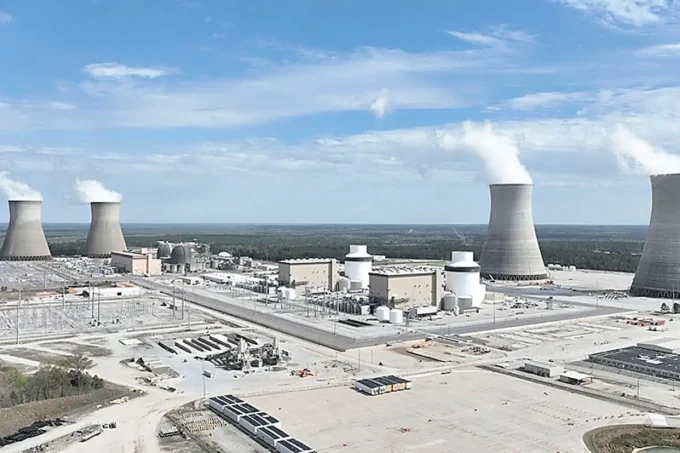
South Africa is preparing to issue its first sovereign green bond, potentially before the end of the 2026/27 fiscal year. The National Treasury says the bond could help mobilise funding for the country’s energy transition, climate commitments and sustainable infrastructure. The planned issuance comes as South Africa estimates it needs about R3.7 trillion between 2026 and 2035 for environmental commitments and mitigation measures.
Key Overview
- Issuer: South African National Treasury
- Instrument: Sovereign green bond
- Target timing: By March 2027, or during the 2027/28 fiscal year
- Climate financing need: About R3.7 trillion through 2035
- Average annual requirement: About R372 billion
- International climate finance target: About R160 billion annually by 2030
- Potential projects: Renewable energy, hydrogen, hydropower, geothermal power, water security and electricity transmission
- Additional areas: Worker retraining, healthcare, education and low-income housing
South Africa Prepares for First Sovereign Green Bond
South Africa is moving towards its first sovereign green bond, with the National Treasury targeting an inaugural issuance as early as the current fiscal year ending March 2027.
Officials have indicated that the launch could move into the 2027–2028 fiscal year if market conditions or budget processes do not align. The planned issuance forms part of a broader strategy to attract environmental, social and governance (ESG) capital to support South Africa’s climate and development priorities.
The National Treasury is currently identifying projects that could qualify for funding under South Africa’s sustainable finance framework, which was introduced in May. The framework establishes eligible expenditure categories, governance arrangements and reporting principles for potential sovereign green, social and sustainability financing instruments.
The Treasury is expected to make decisions on the size and timing of the inaugural bond as part of the medium-term budget statement scheduled for October. Market conditions will also influence the final decision.
R3.7 Trillion Climate Financing Requirement
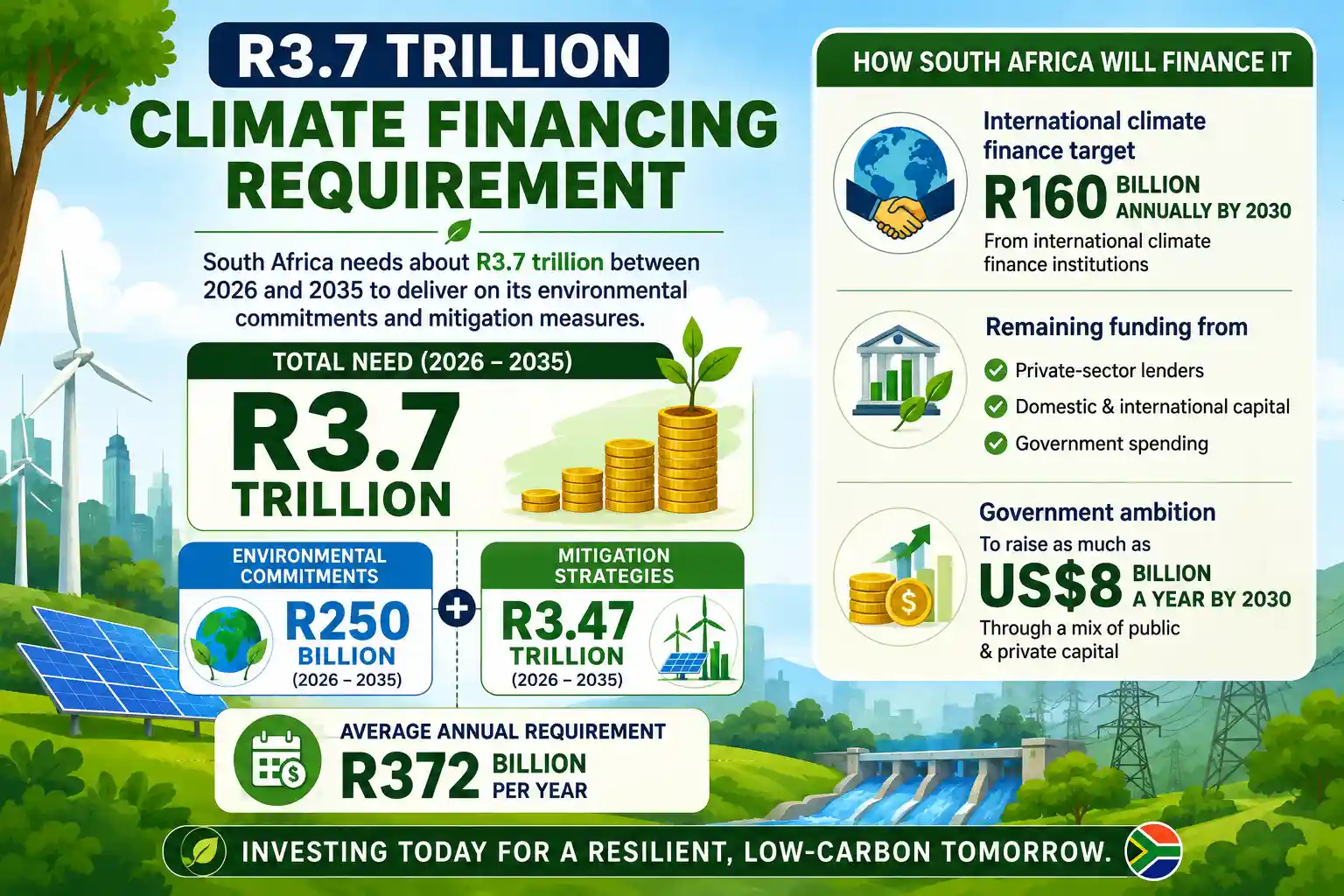
The planned green bond comes against a much larger climate financing requirement.
South Africa estimates that about R250 billion will be required between 2026 and 2035 for implementation of its environmental commitments, while a further R3.47 trillion is needed for mitigation strategies.
Together, this puts the country’s climate-related financing requirement at approximately R3.7 trillion over the decade, equivalent to about R372 billion a year.
The government aims to mobilise approximately R160 billion annually from international climate finance institutions by 2030, with the remaining financing expected to come from private-sector lenders, domestic and international capital, and government spending.
The government has also indicated an ambition to raise as much as US$8 billion a year by 2030 through a combination of public and private, domestic and international capital.
Green Bond to Support Energy Transition
Under the sustainable finance framework, proceeds from the bond could support projects that help South Africa transition towards a lower-carbon economy.
Potential eligible areas include hydrogen production, hydropower, geothermal power, bioenergy and electricity transmission infrastructure. Funding could also support renewable energy distribution, water security and energy-efficiency projects for industries and households.
The framework extends beyond physical energy infrastructure. Eligible projects can include worker retraining and employment programmes for people affected by the transition away from coal, as well as public healthcare, education and housing projects aimed at lower-income communities.
This broader approach links the proposed green financing to both South Africa’s climate objectives and its wider development priorities.
Context is everything. Stay ahead of shifting trends with today’s market updates, and uncover emerging opportunities using the Serrari Group Market Index and Marketplace. Then, take control of your own financial future by exploring our Money & Life Reset Transformation Blueprint ™ to build stronger habits, create better systems, and design a path toward lasting wealth.
Investor Protection and Financing Costs
The sustainable finance framework includes governance parameters intended to reassure investors and align future debt issuance with international standards.
The government is also looking at the green bond as a way to diversify its investor base and potentially reduce borrowing costs.
According to Nigel Beck, head of sustainable finance and ESG at Rand Merchant Bank, sustainable issuances can attract significant pools of capital from investors seeking green and social finance instruments. Greater investor demand can increase bond oversubscription and potentially help lower pricing.
Treasury chief director for liability management Wanga Cibi has said the government could consider either a domestic or even a foreign euro- or dollar-denominated issue, with the latter potentially providing access to a wider international investor base.
Eligible Green and Social Projects
The proposed framework allows financing to reach several areas of the economy, including:
- Renewable energy and electricity transmission
- Hydrogen production
- Hydropower and geothermal power
- Bioenergy
- Water security
- Renewable and low-carbon gas distribution
- Energy-efficiency technologies
- Reskilling and employment programmes for coal-sector workers
- Public healthcare and education
- Low-income municipal housing
National Treasury’s May framework provides the foundation for potential thematic sovereign financing and requires a robust pipeline of eligible expenditure, reporting systems and governance structures before issuance.
Outlook
South Africa’s inaugural sovereign green bond could become an important new channel for financing the country’s energy transition and climate commitments.
The immediate focus will be on identifying eligible projects, confirming the bond’s size and structure, and assessing market conditions. The October medium-term budget statement is expected to provide greater clarity on the transaction.
If issued before March 2027, the bond would mark South Africa’s entry into the sovereign green bond market. A delay would push the transaction into the 2027/28 fiscal year.
The success of the issuance will depend not only on investor demand but also on the government’s ability to demonstrate a credible pipeline of eligible projects, strong governance and transparent reporting.
FAQs
1. When could South Africa issue its first sovereign green bond?
The National Treasury is targeting an issuance by March 2027, although it could move to the 2027/28 fiscal year depending on market and budget conditions.
2. How much does South Africa need for climate financing?
South Africa estimates it needs approximately R3.7 trillion between 2026 and 2035 for environmental commitments and mitigation measures.
3. What could the green bond finance?
Potential projects include renewable energy, hydrogen, hydropower, geothermal power, electricity transmission, water security and energy efficiency, as well as social transition programmes.
4. Why is South Africa issuing a sovereign green bond?
The bond is intended to mobilise climate capital, diversify the government’s investor base and support the country’s energy transition and broader sustainable development priorities.
Sources: Green Building Africa, Business Day, Polity
Your financial future isn’t something you wait for—it’s something you build.
The real question is: when do you begin?
Move beyond simply staying informed.
Navigate the markets with clarity—track trends through the Serrari Group Market Index, uncover opportunities in the Serrari Marketplace, and build practical knowledge with our Curated Wealth Builder Platform.
Stay connected to what truly matters.
Get daily insights on macro trends and financial movements across Kenya, Africa, and global markets—delivered through the Serrari Newsletter.
Growth opens doors.
Advance your career through professional programs including ACCA, HESI A2, ATI TEAS 7 , HESI EXIT , NCLEX – RN and NCLEX – PN, Financial Literacy!🌟—designed to move you forward with confidence.
See where money is flowing—clearly and in real time.
Track Money Market Funds, Treasury Bills, Treasury Bonds, Green Bonds, and Fixed Deposits, alongside global and African indexes, key economic indicators, and the evolving Crypto and stablecoin landscape—all within Serrari’s Market Index.