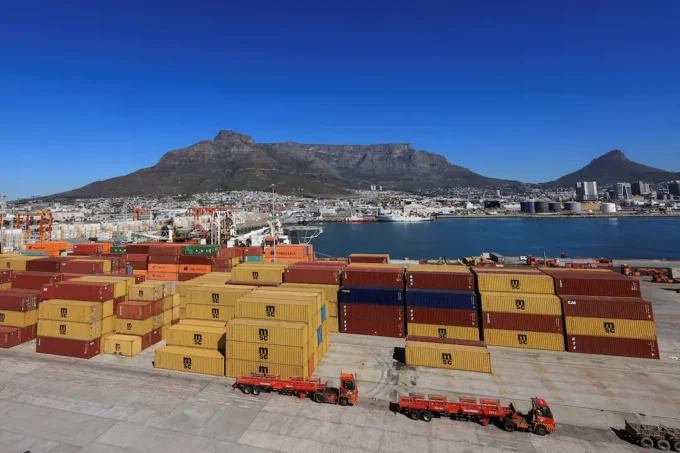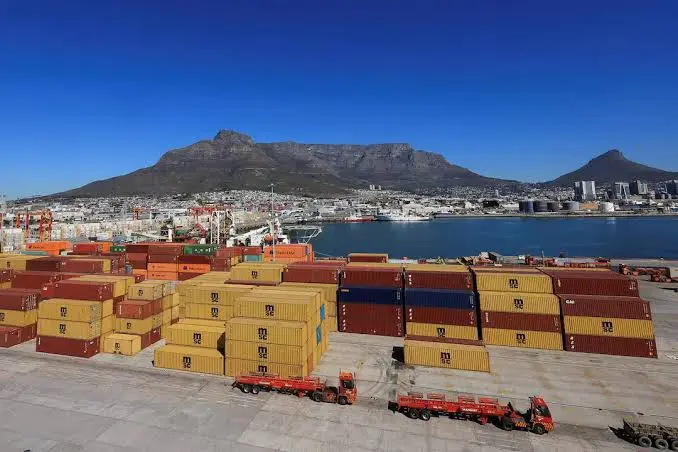
South African exporters are preparing for higher US import duties and potential job losses after Washington announced plans to remove South Africa and Rwanda from the African Growth and Opportunity Act (AGOA) effective January 1, 2027. The decision threatens the competitiveness of qualifying agricultural and manufactured products, although analysts expect a relatively limited effect on South Africa’s overall economy.
The US decision follows an annual eligibility review, while business groups, farmers and unions have warned that the burden could fall disproportionately on particular industries and communities.
Key Overview
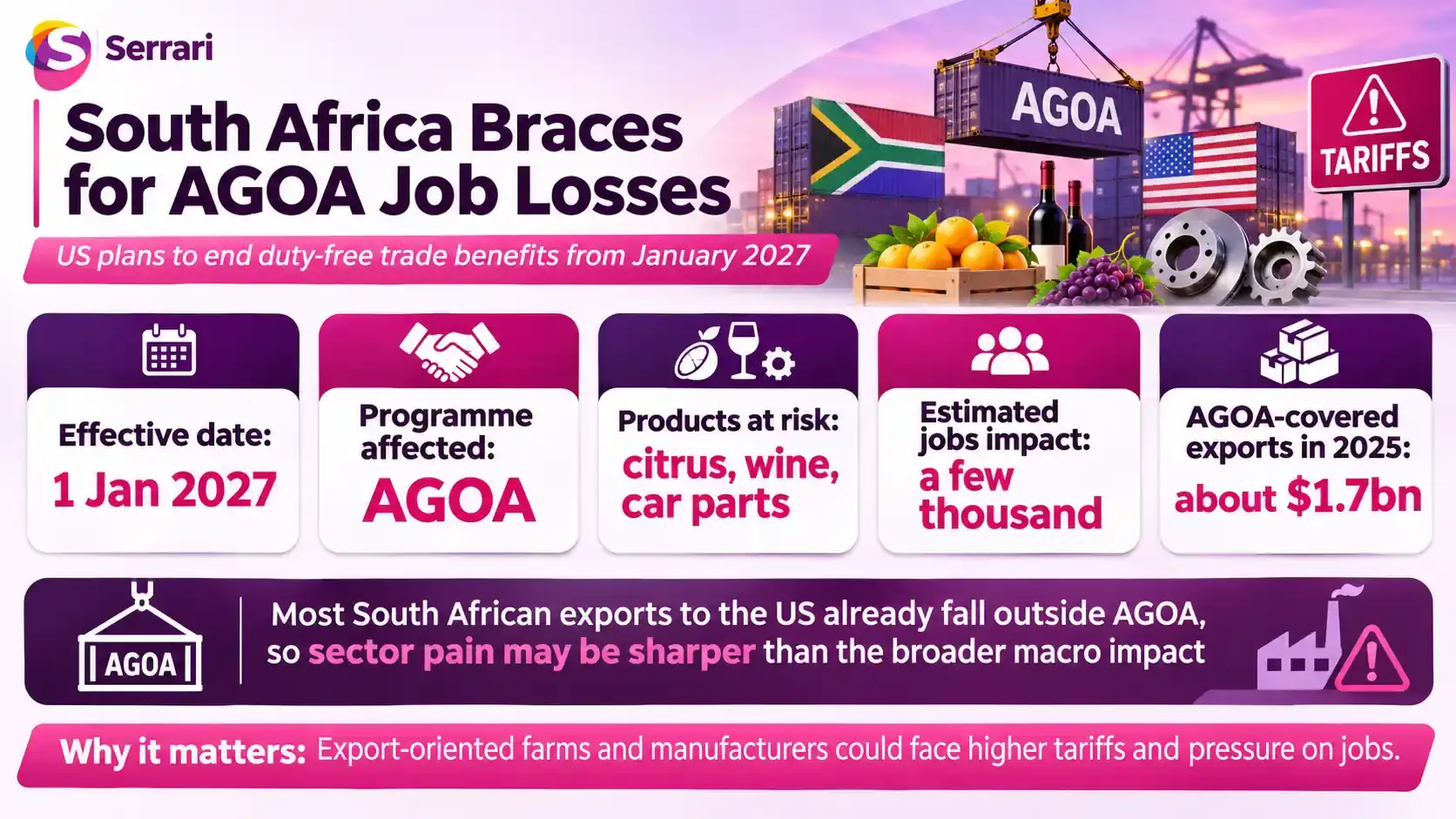
- Effective date: South Africa and Rwanda are set to lose AGOA preferences on January 1, 2027.
- Jobs at risk: Business Unity South Africa anticipates losses numbering in the thousands; this is an estimate, not confirmed redundancies.
- Trade exposure: South Africa shipped approximately $1.7 billion in AGOA-covered exports to the US in 2025.
- Sector pressure: Citrus, wine and other agricultural exports face reduced price competitiveness, while automotive exporters already contend with separate US tariffs.
- Wider economy: Nearly 90% of South Africa’s US-bound exports did not use AGOA preferences, limiting the direct exposure of aggregate trade.
Washington’s AGOA Decision Raises Trade Costs
In a November 2 eligibility announcement, the US Trade Representative said President Donald Trump had notified Congress and both governments of his intention to end their eligibility from January 2027. Washington cited trade and investment barriers alongside national-security and foreign-policy concerns. Those claims are the US administration’s stated grounds for the decision, not independently established findings about every allegation.
AGOA gives eligible sub-Saharan African economies tariff preferences for qualifying goods, subject to conditions and periodic reviews. Removal would not prohibit South African products from entering the US. Instead, products previously receiving preferential treatment could face applicable import tariffs, in addition to any other trade measures already in force.
Agricultural economist Wandile Sihlobo estimates that many affected products would face an additional tariff of approximately 3.4%, although the actual duty depends on the product classification and existing tariff arrangements. The timing is especially significant for exporters that have invested in production tailored to American buyers.
Citrus and Wine Exporters Warn of Job Losses
In industry reactions to the decision, citrus growers highlighted the difficulty of redirecting fruit intended for the American market. Orchard varieties, plant-health requirements and consumer preferences mean that finding alternative customers is not simply a matter of changing shipping destinations.
Wine exporters also face pricing pressure against competitors in other producing countries. When duties rise, exporters must either absorb part of the added cost through lower margins or pass it on to American buyers, potentially weakening demand.
Business Unity South Africa expects job losses in the thousands, while the trade-union response identified risks to agricultural and manufacturing workers. Estimates remain uncertain because the eventual employment impact depends on contracts, demand, firm-level margins and whether alternative markets can be developed.
Context is everything. Stay ahead of shifting trends with today’s market updates, and uncover emerging opportunities using the Serrari Group Market Index and Marketplace. Then, take control of your own financial future by exploring our Money & Life Reset Transformation Blueprint ™ to build stronger habits, create better systems, and design a path toward lasting wealth.
Why the Broader Economic Impact May Be Limited
South Africa was AGOA’s largest beneficiary, exporting roughly $1.7 billion under the arrangement in 2025. Nevertheless, trade exposure estimates indicate that AGOA shipments represented about 1% of South Africa’s worldwide exports and only around one-tenth of shipments to the US.
The automotive sector, historically an important beneficiary, has already been affected by other American tariffs, reducing the incremental advantage provided by AGOA. The US, Canada and Mexico together accounted for approximately 8% of South African automotive exports in 2025, with the US accounting for the largest share within that group.
These figures support the view that national output may withstand the change, but they do not diminish the potential damage in export-dependent farming districts and industrial facilities.
Government Seeks Market Diversification and Industry Support
South Africa’s trade authorities say they are assessing the consequences with affected industries, considering support measures and accelerating efforts to diversify destinations. The government will also need to manage a strained diplomatic relationship with Washington, whose criticisms of South African policies have been contested by Pretoria.
Rwanda faces a parallel withdrawal of preferences, although its bilateral trade exposure is considerably smaller. For both countries, the critical question is whether policy engagement can restore eligibility or whether businesses must permanently adjust their export strategies before January 2027.
Sources: United States Trade Representative / Reuters / AFP
Your financial future isn’t something you wait for—it’s something you build.
The real question is: when do you begin?
Move beyond simply staying informed.
Navigate the markets with clarity—track trends through the Serrari Group Market Index, uncover opportunities in the Serrari Marketplace, and build practical knowledge with our Curated Wealth Builder Platform.
Stay connected to what truly matters.
Get daily insights on macro trends and financial movements across Kenya, Africa, and global markets—delivered through the Serrari Newsletter.
Growth opens doors.
Advance your career through professional programs including ACCA, HESI A2, ATI TEAS 7 , HESI EXIT , NCLEX – RN and NCLEX – PN, Financial Literacy!🌟—designed to move you forward with confidence.
See where money is flowing—clearly and in real time.
Track Money Market Funds, Treasury Bills, Treasury Bonds, Green Bonds, and Fixed Deposits, alongside global and African indexes, key economic indicators, and the evolving Crypto and stablecoin landscape—all within Serrari’s Market Index.