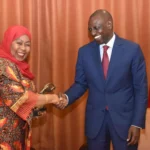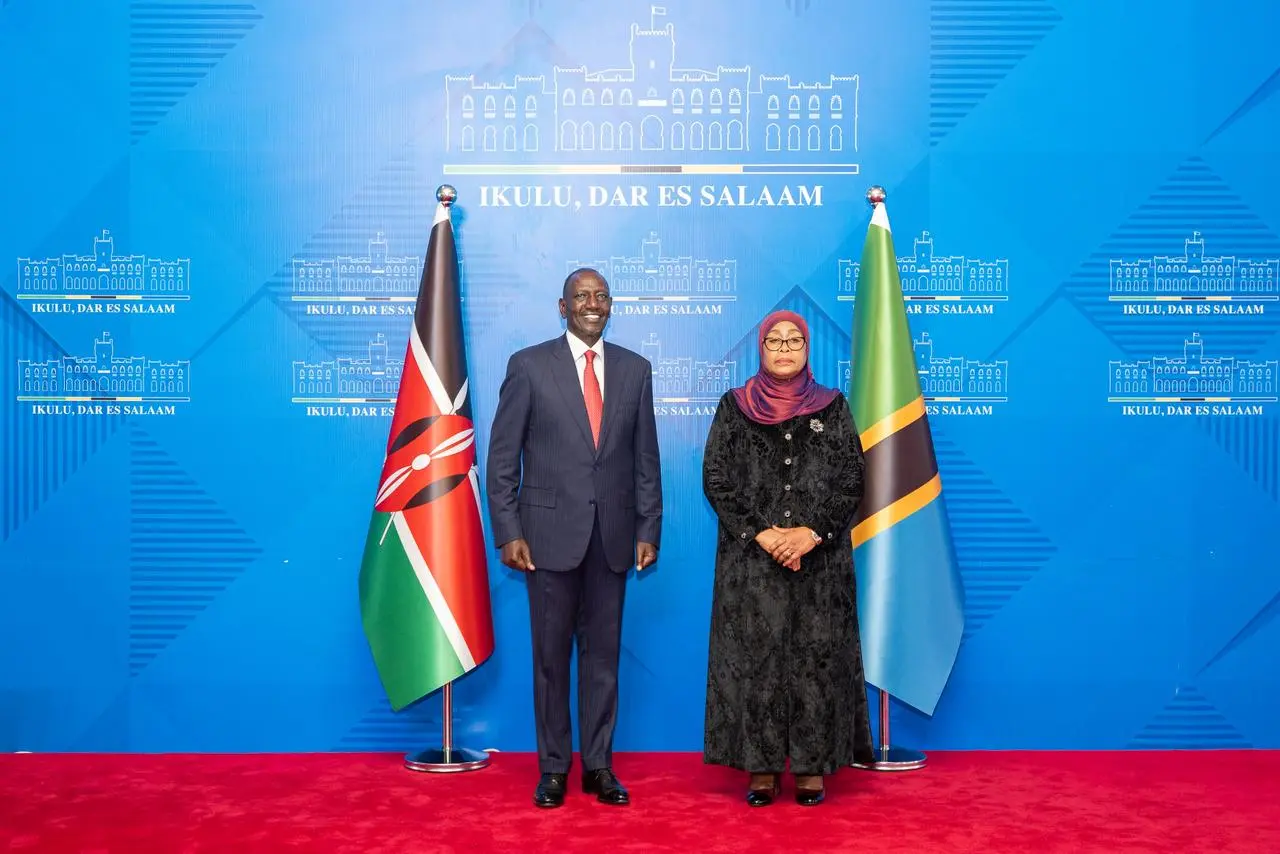
A proposed multi-billion-dollar oil refinery in Tanga, Tanzania, became the subject of a rare public diplomatic exchange between President William Ruto and President Samia Suluhu Hassan at the Kenya-Tanzania Business Forum in Dar es Salaam on May 4, 2026. Samia revealed she had confronted Ruto for announcing the project without her knowledge, prompting the Kenyan leader to clarify that the initiative was born from regional consultations — not a unilateral decision. The refinery plan, backed by Nigerian billionaire Aliko Dangote, would mirror his $20 billion Lagos facility processing 650,000 barrels per day, and would position Tanga as a refining hub for crude from Kenya, Uganda, South Sudan, and the DRC. The exchange highlighted both the promise and the political complexity of East Africa’s emerging energy ambitions, as the region seeks to end its costly dependence on imported refined petroleum.
Markets move fast; don’t get left behind. We’ve paired the Serrari Group Market Index with a curated Marketplace and a comprehensive Wealth Builder Platform to ensure you have the data—and the skills—to act on it.
Key Takeaways
- Diplomatic Friction: President Samia publicly asked Ruto why he announced the Tanga refinery without her knowledge; Ruto acknowledged the concern and clarified it was part of regional discussions
- Dangote Commitment: Aliko Dangote pledged to lead the project and build a facility identical to his Lagos refinery — 650,000 barrels per day — within four to five years
- Regional Scope: Kenya, Uganda, Tanzania, and South Sudan are exploring a coordinated approach, with crude from Uganda’s Lake Albert fields and Kenya’s Turkana reserves feeding the facility
- EACOP Connection: Tanga is the terminus of the 1,443km East African Crude Oil Pipeline from Uganda, making it a strategic location for downstream processing
- Uganda’s Hoima Refinery: A separate $4 billion, 60,000 bpd refinery is underway in Uganda, raising questions about coordination between the two projects
- Kenya’s Turkana Oil: Over 560 million barrels discovered in the South Lokichar Basin, with first oil expected for refinement or export by late 2026
- Value Addition: Both presidents emphasised ending the export of raw materials and keeping jobs, wealth, and value within the region
A Public Exchange on Sovereignty and Partnership
The moment that captured headlines was unscripted. At the Kenya-Tanzania Business Forum at the Julius Nyerere International Convention Centre, President Samia Suluhu Hassan turned to her Kenyan counterpart and posed a question that carried diplomatic weight.
“When we were having a conversation, I asked Ruto why he announced a refinery in Tanga without my knowledge,” she said, before inviting him to respond publicly.
President Ruto acknowledged the tension with characteristic directness. “I have been informed that my decision to announce the building of a refinery in Tanga has not sat well with you (Tanzanians). If I knew, I would have announced that refinery to be built in Mombasa,” he told the forum.
The exchange illuminated a fundamental tension in East African integration: how to advance shared mega-projects while respecting national sovereignty and diplomatic protocol. Ruto’s announcement at the Kenya Mining Investment Conference in Nairobi on April 28 — where he disclosed that Kenya, Uganda, Tanzania, and South Sudan had agreed to build a joint refinery — had effectively made a commitment involving Tanzanian territory without formal Tanzanian sign-off, at least in public view.
The Dangote Factor
The refinery proposal did not originate in a vacuum. It traces directly to Nigerian billionaire Aliko Dangote’s pledge at the Africa We Build Summit 2026 in Nairobi on April 23, where he committed to building an East African facility identical to his Lagos refinery.
“I can give commitment to the two presidents who were here. If they will support the refinery, we’ll build an identical one to the one we have in Nigeria — 650,000 barrels per day,” Dangote said, addressing Presidents Ruto and Museveni directly.
The Lagos facility he referenced is a $20 billion plant located in the Ibeju-Lekki Free Zone, commissioned in May 2023 and fully operational by February 2026. It processes over 650,000 barrels of crude daily, producing diesel, petrol, and jet fuel. Dangote is already expanding it to 1.4 million barrels per day, which would make it the world’s largest refinery.
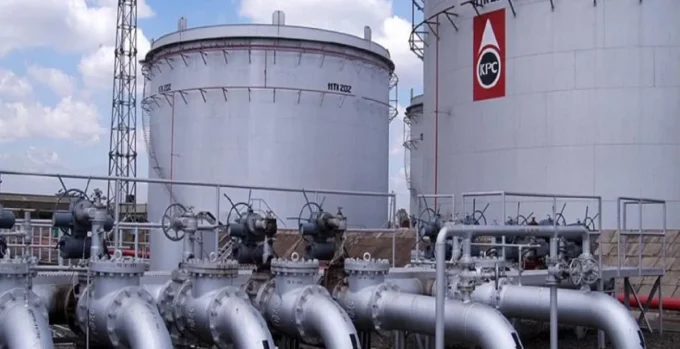
The proposed Tanga facility would be linked by pipeline to Kenya’s Mombasa port, allowing the use of Kenya Pipeline Corporation’s existing network to distribute refined products. Dangote committed to a four-to-five-year delivery window and said the refinery would process crude from the DRC, Kenya, South Sudan, and Uganda, positioning it as a central hub for a market of roughly 500 million people.
The Dangote Group has outlined a $40 billion investment plan across multiple sectors through 2030, covering petrochemicals, fertilisers, and industrial raw materials. He also announced plans to establish approximately 20 fertiliser blending plants across Africa by 2028 to support agricultural self-sufficiency.
Why Tanga? The EACOP Connection
Tanga’s selection as the refinery site is strategically logical. The port city is the terminus of the East African Crude Oil Pipeline (EACOP), a 1,443km pipeline transporting crude from Uganda’s Lake Albert oil fields to the Tanzanian coast. As of December 2025, approximately 79% of the pipeline construction had been completed, with first exports expected by October 2026.
The EACOP will have a peak capacity of 246,000 barrels per day, carrying crude from Uganda’s Tilenga and Kingfisher upstream projects. Building a refinery at Tanga would allow at least some of that crude to be processed locally rather than shipped overseas as raw material — the exact value-addition argument that both Ruto and Dangote have been making.
“From Tanga to Mombasa is a short distance, and since we already have a pipeline of refined product from Mombasa, we can use all our assets appropriately, transport crude from Uganda, refine it in Tanga, and distribute it across the region,” Ruto explained.
Context is everything. While you follow today’s updates, use the Serrari Group Market Index and Marketplace to spot emerging shifts. Need to sharpen your edge? Our Wealth Builder Platform turns these insights into a professional-grade strategy.
The Uganda Dimension: Hoima and the Question of Coordination
The Tanga proposal exists alongside Uganda’s own refinery ambitions. A $4 billion, 60,000 barrel-per-day refinery is planned for Kabaale in the Hoima District of western Uganda, led by UAE-based Alpha MBM Investments and Uganda’s state oil company UNOC. Construction is expected to begin imminently, with commissioning set for 2028. The facility will anchor the planned Kabalega Industrial Park, a 29-square-kilometre hub dedicated to petrochemicals, fertilisers, and logistics.
At the Africa We Build Summit, President Ruto announced that Kenya would invest in the Hoima refinery, a move designed to signal that the Tanga and Hoima projects are complementary rather than competitive. Uganda’s Hoima facility focuses on domestic consumption and regional products distribution, while the proposed Tanga facility, at ten times the capacity, would be export-oriented and serve a continental market.
Some media reports framed the Tanga refinery as a threat to Uganda’s Hoima project. Ruto dismissed those concerns at the mining conference: “There was no headache, for heaven’s sake. How does three countries coming together to build one piece of infrastructure amount to a headache?”
Kenya’s Turkana Oil: The Domestic Supply Factor
Kenya has its own crude oil interests driving the regional refinery push. Over 560 million barrels of recoverable oil have been discovered in the South Lokichar Basin in Turkana County, originally by Tullow Oil. Gulf Energy, which recently took over operations, expects the first batch of Turkana oil to be ready for refinement or export by December 2026.
For Kenya, a regional refinery means that Turkana crude can be processed within East Africa rather than shipped abroad and reimported as refined product — a model that currently costs the region billions in markups, shipping, and lost value.
Ruto has framed this as both an economic and a sovereignty issue. “The private sector has made it clear that the continued export of raw materials results in exporting jobs, opportunities and wealth, while importing inflation,” he said at the business forum.
The Industrialisation Vision
Beyond the immediate refinery economics, both Ruto and Dangote have positioned the Tanga project within a broader case for African industrial transformation. Dangote argued that Africa’s economic model is fundamentally broken: “We are a continent of imports, and we’re not really exporting much.”
Currently, East African countries import virtually all of their refined petroleum from the Middle East and Mediterranean region, leaving them exposed to global price volatility and logistical disruptions, including those caused by instability around the Strait of Hormuz. A refinery of this scale could fundamentally alter that equation.
Beyond fuel, the facility would seed downstream industries including petrochemicals, lubricants, plastics, and fertilisers. Construction alone is expected to employ tens of thousands, while operations would create permanent, high-value roles in engineering and management.
Ruto emphasised that the industrialisation agenda extends beyond petroleum. “It is no longer sustainable for us to export raw materials. As a region, we must deliberately avoid exporting value, jobs and opportunities. Instead, we must retain and utilise them locally,” he said, noting that the initiative also encompasses mining and renewable energy as part of a broader strategy.
The Political Calculation
The Samia-Ruto exchange at the business forum was, in diplomatic terms, remarkably candid. Analysts have noted that it exposed the gap between East Africa’s political rhetoric on integration and the reality of how major cross-border projects are negotiated.
President Samia’s administration has been praised for its transparency in regional diplomacy, emphasising economic cooperation and investor confidence. For her, the public question to Ruto was likely designed to establish that Tanzania — as the host country — retains ownership over projects on its soil, even when they involve regional partners.
For Ruto, the episode underscored the need to balance regional ambition with diplomatic protocol. His response — part humour, part strategic reframing — positioned Kenya as a willing investor in Tanzania’s industrial future rather than a country dictating terms to its neighbour.
Ruto told the forum that Tanzania is expected to play a leading role in advancing the initiative, describing it as a cornerstone for regional economic integration. He confirmed that engagements with Tanzanian authorities are ongoing to ensure coordinated planning.
What Comes Next
The Tanga refinery remains at the discussion and commitment stage. No formal construction timeline, financing structure, or regulatory framework has been publicly announced for the East African project. The success of the initiative will depend on several factors: whether Dangote’s commitment translates into formal investment agreements, whether participating governments can align on ownership structures and regulatory terms, and whether the project can avoid the delays and cost overruns that have plagued other East African energy infrastructure.
The EACOP pipeline nearing completion provides physical infrastructure that makes Tanga a viable refinery location. Kenya’s pipeline network offers distribution capacity. Uganda’s upstream production provides crude supply. And Dangote’s operational experience in Lagos provides a proven model.
If delivered, the project would become one of the biggest energy investments East Africa has ever seen — and a powerful symbol of the continent’s shift from raw material exporter to industrial processor.
But as the Samia-Ruto exchange made clear, building a refinery is not just an engineering challenge. It is a political one — requiring the same careful diplomacy and mutual respect that any shared infrastructure demands. The handshake in Dar es Salaam suggests the will is there. The question now is whether the execution can match it.
Your financial future isn’t something you wait for—it’s something you build.
The real question is: when do you begin?
Move beyond simply staying informed.
Navigate the markets with clarity—track trends through the Serrari Group Market Index, uncover opportunities in the Serrari Marketplace, and build practical knowledge with our Curated Wealth Builder Platform.
Stay connected to what truly matters.
Get daily insights on macro trends and financial movements across Kenya, Africa, and global markets—delivered through the Serrari Newsletter.
Growth opens doors.
Advance your career through professional programs including ACCA,HESI A2,ATI TEAS 7,HESI EXIT ,NCLEX – RNandNCLEX – PN, Financial Literacy!🌟—designed to move you forward with confidence.
See where money is flowing—clearly and in real time.
Track Money Market Funds, Treasury Bills, Treasury Bonds, Green Bonds, and Fixed Deposits, alongside global and African indexes, key economic indicators, and the evolving Crypto and stablecoin landscape—all withinSerrari’s Market Index.