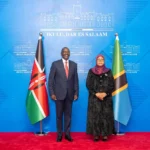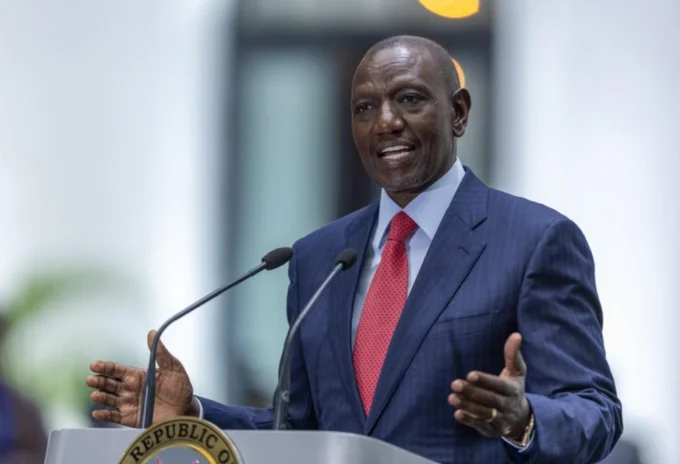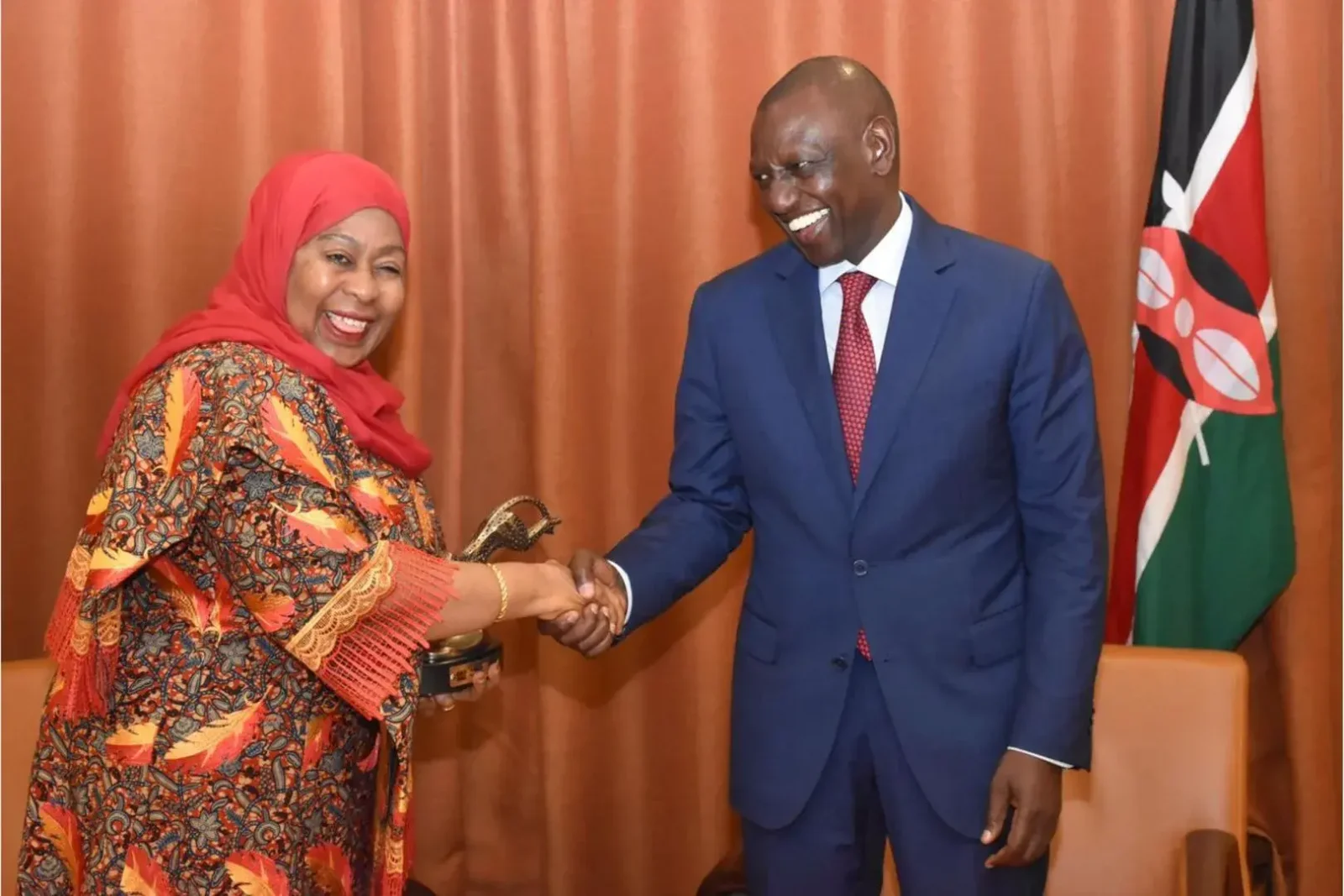
Kenya and Tanzania have signed eight new cooperation agreements and set a June 30, 2026 deadline to eliminate all remaining non-tariff barriers between the two countries, in what amounts to the most substantive expansion of bilateral ties in years. The pacts, signed during President William Ruto’s two-day state visit to Dar es Salaam, span energy, railways, agriculture, maritime cooperation, standards harmonisation, and public service reform. With bilateral trade reaching $860.3 million in 2025 — accounting for nearly 40% of all intra-EAC commerce — both leaders acknowledged that the ceiling remains far higher. The agreements include the revival of the Voi-Mwatate-Taveta railway line, advancement of the Isinya-Singida power transmission corridor, and the creation of a joint technical committee to align product testing and certification. Tanzania also committed to digitising customs and establishing a 30-day dispute resolution window.
Markets move fast; don’t get left behind. We’ve paired the Serrari Group Market Index with a curated Marketplace and a comprehensive Wealth Builder Platform to ensure you have the data—and the skills—to act on it.
Key Takeaways
- Eight MoUs Signed: Covering energy, railways, agriculture, legal cooperation, maritime transport, seafarer certification, standards harmonisation, and public service capacity building
- NTB Deadline: June 30, 2026 target to eliminate all remaining non-tariff barriers, in line with a 25th EAC Summit directive
- Bilateral Trade: $860.3 million in 2025, representing nearly 40% of all intra-EAC trade; bilateral trade has also been reported to have surpassed $1 billion including investments
- Railway Revival: MoU commits both countries to restoring the Voi-Mwatate-Taveta line, linking it to Kenya’s SGR and projected to cut transport costs by 25%
- Energy Corridor: Isinya-Singida transmission line advanced, with a working group on joint renewable and geothermal projects
- Standards Alignment: Joint technical committee between KEBS and Tanzania’s standards body to end repeat inspections at borders
- Tourism: Single-destination marketing framework for the Mara-Serengeti ecosystem, with harmonised park fees and visa rules
- Border Demarcation: 564km of the 778km shared border completed, with both sides pledging to finish before the AU’s 2027 deadline
- Business Forum: At least 20 commercial agreements and investment commitments of approximately $500 million expected alongside the visit
A Reset for East Africa’s Strongest Trading Pair
President William Ruto arrived in Dar es Salaam on May 4 for what both governments framed as more than a routine diplomatic engagement. The two-day state visit, hosted by President Samia Suluhu Hassan at State House, produced eight new memoranda of understanding and a clear political signal: East Africa’s two largest economies intend to convert years of incremental progress on trade barriers into a decisive breakthrough by mid-2026.
The timing carries weight. Relations between Kenya and Tanzania — despite deep historical, cultural, and economic ties — have experienced periodic tensions over trade disagreements, aviation rights disputes, and competitive nationalism. Tanzania’s recent decision to restrict foreign service providers in certain sectors added friction. But both leaders appeared determined to reframe the relationship around economic complementarity rather than competition.
“This visit reflects the deep-rooted and enduring friendship that binds our two nations, a relationship enriched by vibrant people-to-people connections, shared heritage, and a common destiny,” President Ruto said. He described the relationship as one rooted in the founding fathers’ Pan-African vision, positioning regional integration as a vehicle for transformation.
The visit included President Ruto’s historic address to Tanzania’s Parliament in Dodoma — the first by a Kenyan head of state since the government relocated there — alongside the Tanzania-Kenya Business Forum at the Julius Nyerere International Convention Centre, which brought together over 200 companies for business-to-business meetings.
Eight Agreements Across Critical Sectors
The eight MoUs signed at State House cover energy, legal cooperation, agriculture, railway development, public service capacity building, maritime cooperation, certification standards for seafarers, and harmonisation of standards between the Kenya Bureau of Standards (KEBS) and Shirika la Viwango Tanzania.
The standards harmonisation deal may prove the most immediately consequential for traders. It establishes a joint technical committee to align testing and certification, meaning a product cleared in Dar es Salaam will no longer face repeat inspection by KEBS at border crossings like Namanga or Holili. For years, duplicate testing has been one of the most cited frustrations among cross-border traders, adding time and cost to shipments of everything from processed foods to building materials.
President Samia confirmed Tanzania’s agreements on the cooperation framework. “We have agreed to continue strengthening cooperation for the benefit of our two countries, with agreements covering agriculture, gas, railways, defence and security, maritime transport, product safety, and public service,” she said.
The June 30 Deadline on Non-Tariff Barriers
Perhaps the most politically significant commitment is the June 30, 2026 deadline to eliminate all remaining non-tariff barriers, aligning with a directive from the 25th East African Community Summit. The barriers have hit dairy, maize, eggs, steel, and confectionery shipments for years, with trucks routinely detained at border points over paperwork, standards disputes, or ad hoc levies.
The challenge is well documented. Over the past decade, traders moving goods between Nairobi and Dar es Salaam have faced a persistent catalogue of obstructions: lack of harmonisation in working hours at border posts, delays at weighbridges, multiple police roadblocks, licences for goods in transit, entrance fees, and corrupt officials.
Progress has been real but incremental. Tanzania’s High Commissioner to Kenya, Dr. Bernard Kibesse, noted that more than 50 non-tariff barriers have already been resolved, with both countries working to eliminate the remaining ones by mid-2026. During the ninth Joint Trade Committee meeting in October 2025, the two countries successfully eliminated four NTBs — including the removal of withholding tax on TBL beers exported to Kenya, the scrapping of tax stamps and associated charges, and the abolition of the COMESA insurance requirement.
President Samia said Tanzania would move to digitise customs processes and establish a 30-day dispute resolution window under a new Kenya-Tanzania Business Council, aiming to give traders a faster mechanism for resolving complaints than the current system allows.
Railways: Reconnecting the Coast to the Interior
The railway MoU commits both governments to reviving the Voi-Mwatate-Taveta line, linking it to Kenya’s Standard Gauge Railway and cutting freight time to Moshi and Arusha. The revived line is projected to cut transport costs by up to 25% for bulk cargo moving between Kenya’s coast and northern Tanzania.
The historical context matters. The metre-gauge railway once linked the two nations via Mombasa, Voi, and Taveta into Tanzania, but the connection was discontinued about two decades ago. Restoring it would create an alternative freight corridor complementing the existing road network, which remains congested and expensive for heavy cargo.
Speaking at the Tanzania-Kenya Investment Forum, Kenya Railways Corporation Managing Director Phillip Mainga said restoring connectivity between the two countries is critical for boosting trade through the ports of Mombasa and Dar es Salaam. He noted that both countries are also working under the EAC framework on a Standard Gauge Railway master plan, though differing technical standards must be harmonised — Kenya uses a Chinese signalling system while Tanzania operates the European Rail Traffic Management System.
Tanzania Railways Corporation Director General Machibya Shiwa echoed the need for harmonisation of infrastructure systems, noting that coordinated digital systems and procedures are essential for efficient movement of trains, containers, and wagons across the region.
Context is everything. While you follow today’s updates, use the Serrari Group Market Index and Marketplace to spot emerging shifts. Need to sharpen your edge? Our Wealth Builder Platform turns these insights into a professional-grade strategy.
Energy: Powering Regional Industrialisation
The energy agreement advances the Isinya-Singida transmission line and establishes a working group on joint renewable projects. Beyond the transmission corridor, the MoU opens talks on joint geothermal development and power purchase agreements that would let industries in either country tap cheaper off-peak electricity across the border.
Tanzania’s Permanent Secretary in the Ministry of Energy, Felchesmi Mramba, said reliable and affordable electricity will be a determining factor for the success of major infrastructure projects. He noted that Tanzania currently has more than 4,500 megawatts of installed capacity, with further expansion potential from natural gas and renewable energy sources.
Cross-border energy trade could prove transformative for manufacturers operating on either side of the border, particularly in sectors like cement, steel, and food processing where energy costs represent a significant share of production expenses.
Trade at $860 Million — But the Ceiling Is Higher
Bilateral trade between Kenya and Tanzania reached $860.3 million in 2025, accounting for nearly 40% of all intra-East African Community commerce. Official figures presented at the Business Forum indicated that trade reached 1.7 trillion Tanzanian shillings in 2025. Including cross-border investments, the bilateral economic relationship has now surpassed the $1 billion mark.
Yet both leaders were clear that the potential remains significantly larger. “As vibrant as our trade is, we need to work towards strengthening our ties further,” President Ruto said, emphasising the need for value addition to create jobs and generate wealth.
The broader EAC context underscores the opportunity. Intra-EAC trade grew by 27% between June 2024 and June 2025, reaching $18 billion. But intra-EAC trade still represents only about 12-15% of the bloc’s total trade, far below the EAC’s 40% target for 2030 and the European Union’s 60-70% internal trade ratio.
Tourism, Agriculture, and the Coastal Highway
In agriculture, the two sides agreed on mutual recognition of sanitary and phytosanitary certificates, which should speed clearance of milk, meat, and fresh produce — categories that have been among the most frequently blocked at border crossings.
On tourism, the leaders agreed to market the Mara-Serengeti ecosystem jointly and harmonise park fees and visa rules for third-country tourists. Kenya’s Tourism Cabinet Secretary and Tanzania’s Natural Resources Minister were tasked with presenting a single-destination marketing framework. Given that the Maasai Mara and Serengeti form a contiguous ecosystem divided only by a political border, a unified approach could capture a larger share of global safari tourism spending.
On infrastructure, both leaders commended progress on the Malindi-Bagamoyo Super Highway, which will create a coastal corridor from Mombasa to Dar es Salaam, easing pressure on the northern route. The highway, combined with the revived Voi-Taveta railway and upgraded border infrastructure, could significantly reduce the time and cost of moving goods between East Africa’s two major port cities.
Border Demarcation and Security
President Ruto said 564km of the 778km Kenya-Tanzania border has been demarcated, with both sides pledging to finalise the remainder before the African Union’s 2027 deadline. The leaders also directed security agencies to scale up joint patrols and intelligence sharing to curb smuggling, human trafficking, and cross-border crime, describing their shared borders as “zones of peace, stability, and opportunity.”
The Implementation Test
The Joint Commission for Cooperation, which has held four sessions since 2009, will convene for a fifth session later this year to track progress. The commission will now receive quarterly reports on NTB removal and MoU implementation — a monitoring mechanism designed to prevent the agreements from suffering the fate of previous communiqués that produced commitments without follow-through.
The business forum accompanying the state visit was designed to generate immediate commercial momentum. At least 20 commercial agreements were expected, alongside investment commitments estimated at approximately $500 million and more than 200 business-to-business meetings.
Whether the June 30 deadline holds will depend on whether both governments can withstand internal protectionist pressure from domestic producers who have historically lobbied against imports. Dairy farmers, maize producers, and steel manufacturers on both sides have at various points sought protection from cross-border competition. The success of the deadline will test whether long-term integration can prevail over short-term political calculations.
As EAC founders, both presidents reaffirmed what they called an “unwavering commitment to advancing regional integration.” With global supply chains shifting, President Ruto said East Africa must “speak with one voice” on trade and infrastructure to attract manufacturing. President Samia added that Tanzania and Kenya will jointly lobby for infrastructure financing and for fairer terms in global climate and trade negotiations.
The stakes extend well beyond the bilateral relationship. As economists have argued, the Kenya-Tanzania corridor is the litmus test for whether the East African integration project can deliver on its promises. If these two economies cannot trade freely with each other, the prospects for the broader EAC common market remain limited.
Your financial future isn’t something you wait for—it’s something you build.
The real question is: when do you begin?
Move beyond simply staying informed.
Navigate the markets with clarity—track trends through the Serrari Group Market Index, uncover opportunities in the Serrari Marketplace, and build practical knowledge with our Curated Wealth Builder Platform.
Stay connected to what truly matters.
Get daily insights on macro trends and financial movements across Kenya, Africa, and global markets—delivered through the Serrari Newsletter.
Growth opens doors.
Advance your career through professional programs including ACCA,HESI A2,ATI TEAS 7,HESI EXIT ,NCLEX – RNandNCLEX – PN, Financial Literacy!🌟—designed to move you forward with confidence.
See where money is flowing—clearly and in real time.
Track Money Market Funds, Treasury Bills, Treasury Bonds, Green Bonds, and Fixed Deposits, alongside global and African indexes, key economic indicators, and the evolving Crypto and stablecoin landscape—all withinSerrari’s Market Index.