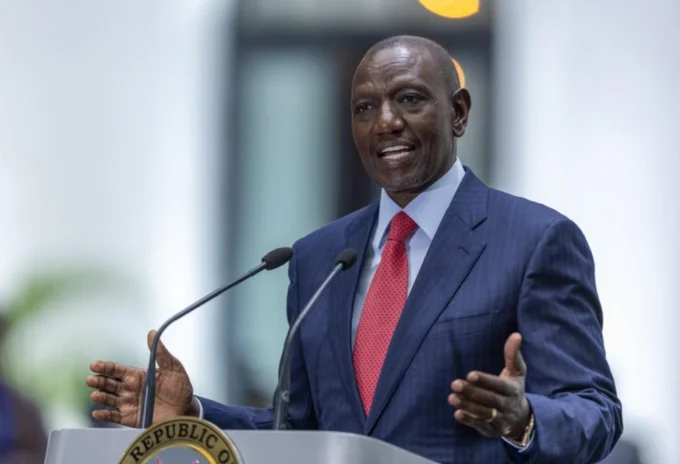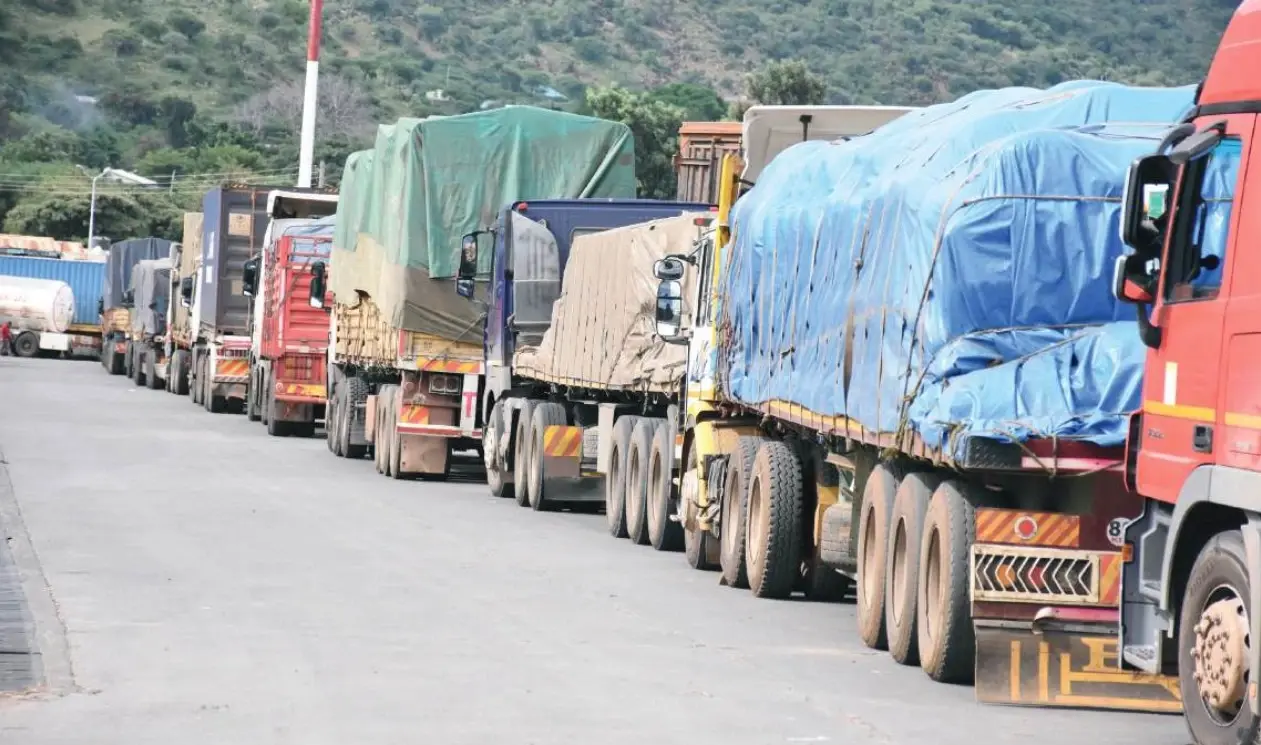
Tanzania and Kenya have agreed to scale up diplomatic and economic cooperation, with a renewed push to dismantle the non-tariff barriers (NTBs) that have long throttled trade between East Africa’s two largest economies. At high-level consultations held in Dar es Salaam over the weekend between the two countries’ ministries of foreign affairs, officials confirmed that bilateral trade has now surpassed the $1 billion mark and committed to resolving outstanding barriers by mid-2026. The meeting — anchored by Tanzania’s Permanent Secretary for Foreign Affairs and East African Cooperation, Ambassador Samwel Shelukindo, and his Kenyan counterpart, Principal Secretary Dr Abraham Sing’Oei — also laid the ground for an upcoming Joint Trade Committee session, a business forum expected to draw more than 200 companies, and a forthcoming state visit by Kenyan President William Ruto to meet Tanzanian President Samia Suluhu Hassan. The renewed partnership is seen as a critical test of the East African Community’s broader integration agenda, which has set a deadline of 30 June 2026 to eliminate all remaining NTBs across the bloc.
Key Overview
- Trade milestone: Bilateral trade has surpassed $1 billion — roughly KES 130 billion — supported by growing cross-border investment.
- Deadline: Both sides committed to resolve remaining non-tariff barriers by mid-2026, aligning with the EAC’s 30 June 2026 target.
- Institutional anchors: Engagement runs through the Joint Cooperation Commission (JCC) and Joint Trade Committee (JTC).
- Sectoral priorities: Energy, security, industry and investment, according to Shelukindo.
- Upcoming business forum: Expected to attract more than 200 companies alongside the next JTC meeting.
- Political capstone: A planned state visit by Kenyan President William Ruto to meet Tanzanian President Samia Suluhu Hassan.
- Regional context: Intra-EAC trade reached $15.2 billion in 2024, just 12.17% of the bloc’s total trade.
Markets move fast; don’t get left behind. We’ve paired the Serrari Group Market Index with a curated Marketplace and a comprehensive Wealth Builder Platform to ensure you have the data—and the skills—to act on it.
A Reset in Dar es Salaam
The consultations in Dar es Salaam, held on 11 April and publicised through a statement by Tanzania’s Ministry of Foreign Affairs and East African Cooperation, marked the most substantive bilateral engagement between Nairobi and Dodoma in several months. Both sides framed the meeting as a reset rather than a routine exchange, signalling a political intent to translate long-standing frameworks into measurable trade outcomes.
Ambassador Shelukindo told the meeting that the relationship between the two countries “remains strong, underpinned by structured frameworks such as the Joint Cooperation Commission and the Joint Trade Committee,” with ongoing technical discussions laying the groundwork for progress in energy, security, industry and investment. Dr Sing’Oei responded by pointing to the economic momentum between the two nations and calling for deeper collaboration to unlock further growth.
The two officials then turned to the most persistent drag on cross-border commerce: non-tariff barriers. Both countries pledged swift action to resolve outstanding restrictions, with Kenyan and Tanzanian officials committing to a mid-2026 target for closing out the remaining barriers — a date that aligns with the East African Community’s own deadline.
The $1 Billion Milestone — and Why It Matters
Dr Sing’Oei’s confirmation that bilateral trade had cleared the $1 billion mark is a meaningful marker for a relationship that has long punched below its potential. The figure — approximately KES 130 billion — reflects not just goods flows but “steadily increasing cross-border investments and expanding private sector collaboration,” he said.
The milestone is more politically symbolic than economically transformational. In regional context, Kenya’s total trade volumes in 2023 hit roughly $25 billion, while Tanzania’s were around $22 billion, with both countries trading significantly more with China, India, and the United Arab Emirates than with each other or their EAC neighbours. A $1 billion bilateral flow between the bloc’s two largest economies therefore represents a small share of their combined external trade — which is precisely why the two governments see further cooperation as the most available growth lever.
The broader intra-EAC picture is instructive. According to the EAC Budget Highlights 2025, intra-EAC trade reached $15.2 billion in 2024, a 9.35% increase year-on-year, but still amounted to only about 12.17% of the bloc’s total trade — underscoring how much of East Africa’s commerce still flows to external markets rather than within the Community. The EAC has set a target of 40% intra-bloc trade by 2030, a number that looks remote without decisive progress on borders, standards, and administrative frictions.
Anatomy of the Barriers Problem
The non-tariff barriers that Kenya and Tanzania have pledged to dismantle are not trivial. Over the past decade, traders moving goods between Nairobi and Dar es Salaam have faced a persistent catalogue of obstructions: a lack of harmonisation in working hours at border posts, delays at weighbridges, multiple police roadblocks, licences for goods in transit, standards verification friction, entrance fees, and — more than occasionally — corrupt officials. Analysts at The Exchange Africa noted that these issues have repeatedly pushed up the cost of doing business and constrained the growth potential of what should be one of Africa’s most integrated bilateral corridors.
Progress has been real but incremental. During the ninth meeting of the Joint Trade Committee, held in Dar es Salaam in October 2025, the two countries successfully eliminated four NTBs — including the removal of the withholding tax on TBL beers exported to Kenya, the scrapping of tax stamps and associated charges, the facilitation of livestock product exports from Kenya in line with EAC resolutions, and the abolition of the Comesa insurance requirement, which does not apply to Tanzania. Officials reviewed a total of 14 outstanding barriers at that meeting, with plans to resolve the remaining 10 by 31 March 2026.
Kenya’s then Principal Secretary for East African Community Affairs, Dr Caroline Karugu, described the progress as reflecting strong political will, noting that the two countries had reached a 78% resolution rate on identified barriers and citing agreements traced back to President Ruto’s state visit to Tanzania in October 2022.
The April 2026 commitments go further by tying the closure of remaining barriers to a hard calendar deadline. Streamline Feed reported that the diplomatic talks, held in Dar es Salaam, focused less on rhetoric than on a concrete roadmap to dismantle bureaucratic hurdles that have long plagued cross-border trade — a tonal shift that business groups have been urging for years.
Context is everything. While you follow today’s updates, use the Serrari Group Market Index and Marketplace to spot emerging shifts. Need to sharpen your edge? Our Wealth Builder Platform turns these insights into a professional-grade strategy.
Institutional Machinery: JCC, JTC and the Next Forum
The two countries’ cooperation architecture rests on several pillars. The Joint Cooperation Commission (JCC) is the overarching political forum, while the Joint Trade Committee (JTC) focuses specifically on commerce, standards, and border operations. In between sit sector-specific technical working groups on energy, transport, and industry.
Shelukindo told reporters that sustained engagement among sectoral ministries and technical experts is “already laying the groundwork for tangible progress particularly in key sectors including energy, security, industry, and investment.” Those four priorities capture the most commercially consequential parts of the bilateral agenda: the Ethiopia–Kenya–Tanzania power interconnector and related energy trade, cross-border security cooperation around corridors such as Namanga, deepening industrial value chains, and mobilising cross-border investment flows.
The most immediate practical next step is a planned Joint Trade Committee meeting, which will be convened alongside a major business forum expected to attract more than 200 companies. The forum’s scale is intended as a signal to the private sector that the two governments are serious — and as a pressure mechanism for follow-through on the barrier-removal timetable.
The Ruto State Visit: Political Ballast
The most politically significant element of the April announcements is the upcoming state visit by Kenyan President William Ruto, who is expected to meet Tanzanian President Samia Suluhu Hassan in a high-level engagement that officials say will “further solidify political and economic ties.” The visit, which was flagged by multiple Kenyan and Tanzanian outlets following the Dar es Salaam consultations, is expected to cement the working-level commitments made on barriers and market access at the level of heads of state.
State visits matter in this relationship for both procedural and symbolic reasons. Tanzania hosts the EAC’s headquarters in Arusha, giving Dar es Salaam outsized influence over the bloc’s trade agenda. Kenya, meanwhile, is the bloc’s largest economy, its most prominent logistics hub, and its most globally integrated trade partner — meaning that the Ruto–Samia relationship shapes not only bilateral commerce but the broader pace of EAC integration. Streamline Feed noted that Tanzania’s proactive stance is being viewed as a stabilising force for the entire bloc, with the upcoming state visit expected to set a precedent for other EAC partner states.
The partnership has not always been so warm. Tanzania and Kenya share a 769-kilometre border and have historically been important trading partners despite occasional diplomatic tensions — including public disputes over exports, standards testing, work permits, and tariff treatment of sensitive goods like dairy, cooking gas, and wheat. The 2022 state visit by Ruto marked a deliberate reset, and the April 2026 consultations are being positioned as the next phase.
The EAC’s Bigger Deadline
The two countries’ mid-2026 timeline for resolving NTBs is not a standalone commitment. The East African Community has set 30 June 2026 as a target for eliminating all remaining non-tariff barriers across the bloc — a pledge that puts Kenya and Tanzania’s partnership in the role of a bellwether and a test for wider regional integration.
The EAC’s own record on barriers is a mix of progress and recurrence. At the 42nd meeting of the Sectoral Council of Ministers on Trade, Industry, Finance and Investment in June 2023, partner states were informed that they had resolved 10 non-tariff barriers even as four new ones had emerged — illustrating how quickly regulatory frictions can re-form even when political will exists to clear them. The bloc also operates an online Non-Tariff Barriers reporting and elimination mechanism, which is being extended through the 25 members of the broader COMESA-EAC-SADC Tripartite Free Trade Area (TFTA) framework that entered into force on 25 July 2024.
Tanzania and Kenya’s push is therefore as much about modelling behaviour for the broader bloc as about their own commercial relationship. If the two largest economies can demonstrably close down a long list of NTBs ahead of the June 2026 deadline, the argument for similar action by Uganda, Rwanda, Burundi, South Sudan, the Democratic Republic of Congo and Somalia becomes harder to resist.
What the Private Sector Wants
The business community in both countries has welcomed the renewed momentum, with chambers of commerce on both sides expressing optimism that lower frictional costs will translate into more jobs and higher investment. But veterans of East African trade politics warn that political goodwill must survive the realities of protectionism. In sectors such as agriculture and light manufacturing, local producers in both Kenya and Tanzania have historically lobbied hard for protectionist measures whenever they feel threatened by imports — and several of the most intractable barriers have re-emerged precisely because domestic lobbies have found new ways to reintroduce them under different labels.
That explains why the private-sector focus in the coming months will be less on rhetorical commitments and more on implementation details: uniform working hours at Namanga and other border posts, automation of standards recognition, predictable treatment of sensitive goods like rice and sugar, and the genuine operation of the One Stop Border Posts that already exist on paper. Analysts cited by Maersk’s regional trade commentary note that Kenya’s iCMS and Tanzania’s TANCIS customs systems have already delivered efficiency gains at the technology layer — the political challenge is whether administrative behaviour will keep pace.
The Strategic Read
Seen from further out, the Tanzania–Kenya reset carries weight well beyond the two capitals. Economists at the University of Nairobi argue that the bilateral breakthrough is essential for both countries to mitigate the volatility of global supply chains, particularly in the context of the Middle East conflict, higher fuel costs, and inflationary pressures that have weighed on East African consumers throughout 2025 and into 2026. A more fluid regional market acts as an economic buffer.
There is also an AfCFTA dimension. The strengthened partnership aligns with the broader African Continental Free Trade Area’s goal of boosting intra-African trade, and with the tripartite TFTA that now links COMESA, EAC, and SADC into a single framework. Both Tanzania and Kenya serve as gateway economies with important ports that handle cargo for landlocked neighbours including Uganda, Rwanda, Burundi, and South Sudan — meaning that every friction point between Dar es Salaam and Nairobi ripples across the corridor networks that keep half a dozen economies supplied.
The Bottom Line
The April 2026 consultations in Dar es Salaam do not, on their own, transform East Africa’s trade landscape. But they re-anchor the region’s most commercially important bilateral relationship at a moment when the EAC is running out of runway to meet its own integration targets. A $1 billion trade relationship, a mid-2026 deadline to clear non-tariff barriers, a private-sector forum drawing more than 200 companies, and a looming Ruto–Samia state visit together form a package that would, if delivered, mark one of the most consequential steps toward EAC integration in years. Whether political will at the top can survive protectionist instincts at the sectoral level will determine whether this reset becomes a genuine turning point — or simply the latest in a long series of promising communiqués.
Your financial future isn’t something you wait for—it’s something you build.
The real question is: when do you begin?
Move beyond simply staying informed.
Navigate the markets with clarity—track trends through the Serrari Group Market Index, uncover opportunities in the Serrari Marketplace, and build practical knowledge with our Curated Wealth Builder Platform.
Stay connected to what truly matters.
Get daily insights on macro trends and financial movements across Kenya, Africa, and global markets—delivered through the Serrari Newsletter.
Growth opens doors.
Advance your career through professional programs including ACCA, HESI A2, ATI TEAS 7 , HESI EXIT , NCLEX – RN and NCLEX – PN, Financial Literacy!🌟—designed to move you forward with confidence.
See where money is flowing—clearly and in real time.
Track Money Market Funds, Treasury Bills, Treasury Bonds, Green Bonds, and Fixed Deposits, alongside global and African indexes, key economic indicators, and the evolving Crypto and stablecoin landscape—all within Serrari’s Market Index.