Global markets had one of their most turbulent sessions of 2026 on Monday as oil prices vaulted back above $100 a barrel, the U.S. dollar firmed, and equities and bonds came under pressure after Washington moved to blockade Iranian shipping following the collapse of weekend peace talks in Islamabad. Brent crude rose as much as 7% to around $102 a barrel — a gain of more than 40% since the Strait of Hormuz was effectively shut by the war — before easing later in the session on hopes that a diplomatic off-ramp could still emerge. European equities slid, U.S. Treasury yields ticked higher as inflation expectations hardened, and money markets pared bets on further Federal Reserve rate cuts in 2026. Amid the global risk-off tone, one emerging-market currency stood out: Hungary’s forint surged to a four-year high after nationalist Prime Minister Viktor Orbán lost a landmark election to Péter Magyar’s centre-right Tisza party, a result widely expected to unblock EU funds for Kyiv and Budapest alike.
Key Overview
- Brent crude: Up around 7% to about $102 a barrel, more than 40% above pre-war levels.
- WTI: Up roughly 7.8% intraday to $104 a barrel before paring gains.
- Equities: Europe’s STOXX 600 fell 0.7%; S&P 500 and Nasdaq futures dropped 0.6% early before U.S. stocks reversed higher on hopes of de-escalation.
- Bonds: U.S. 10-year yields up 2bp to 4.33%; German 10-year yields up 2.5bp to 3.07%.
- FX: Euro slipped 0.3% to $1.1692; risk-sensitive currencies softened.
- Hungarian forint: Jumped 2.9% to 363.84 per euro, its strongest level since 2022.
- Hormuz traffic: Only 17 vessels crossed the strait on Saturday, versus roughly 130 daily transits before the war.
- Fed pricing: Money markets assign less than a 20% chance of a U.S. rate cut in 2026.
Markets move fast; don’t get left behind. We’ve paired the Serrari Group Market Index with a curated Marketplace and a comprehensive Wealth Builder Platform to ensure you have the data—and the skills—to act on it.
A Failed Weekend in Islamabad Resets the Risk Tape
The proximate trigger for Monday’s moves was the breakdown of U.S.–Iran talks in Pakistan over the weekend. A U.S. delegation led by Vice President JD Vance, along with special envoy Steve Witkoff and presidential adviser Jared Kushner, spent two days in Islamabad attempting to turn a fragile two-week ceasefire into a durable settlement — and left without a deal. Vance told reporters after the meeting that the talks had failed because Iran would not provide an affirmative commitment that it would not pursue a nuclear weapon.
President Donald Trump’s response was to order a naval blockade of Iranian ports and the Strait of Hormuz. U.S. Central Command said on Sunday that the action would be enforced impartially against vessels of all nations entering or departing Iranian ports on the Arabian Gulf and Gulf of Oman, and would take effect at 10 a.m. Eastern on Monday. Crucially, CENTCOM later clarified that the blockade would not impede freedom of navigation for vessels travelling through the strait to and from non-Iranian ports — a scoping decision that limited, without eliminating, the immediate supply shock.
Trump also threatened to target what he called Iran’s “fast attack ships” if they approached the blockade, writing in a Truth Social post that any such vessels would be ELIMINATED, in capital letters, using “the same system of kill” used against drug boats at sea. Iran’s parliamentary speaker Mohammad Bagher Ghalibaf, who led Tehran’s Islamabad delegation, retorted that Americans would soon be nostalgic for $4–$5 gas.
Oil Back Above $100 — and Volatile
Crude markets did not need much prompting. Brent crude for June delivery rose roughly 7% to $102 a barrel at its intraday peak, marking a gain of more than 40% since navigation through the Strait of Hormuz was disrupted at the outbreak of the U.S.–Israeli conflict on 28 February. WTI climbed 7.8% at one point to around $104 a barrel, more than 50% above its pre-war level of roughly $70. By the U.S. settlement, the rally had cooled: Brent ended at $99.36 and WTI at $99.08 as investors took partial profits on signs that back-channel communication between Washington and Tehran might still be alive.
The price swings capture how jumpy the market has become. Brent first punched through $100 on 8 March 2026 — the first time in four years — before pushing higher in the following weeks and then falling as low as $92 after a two-week ceasefire was announced. It has been a rollercoaster that reflects both acute supply fears and the market’s willingness to price peace whenever diplomacy flickers.
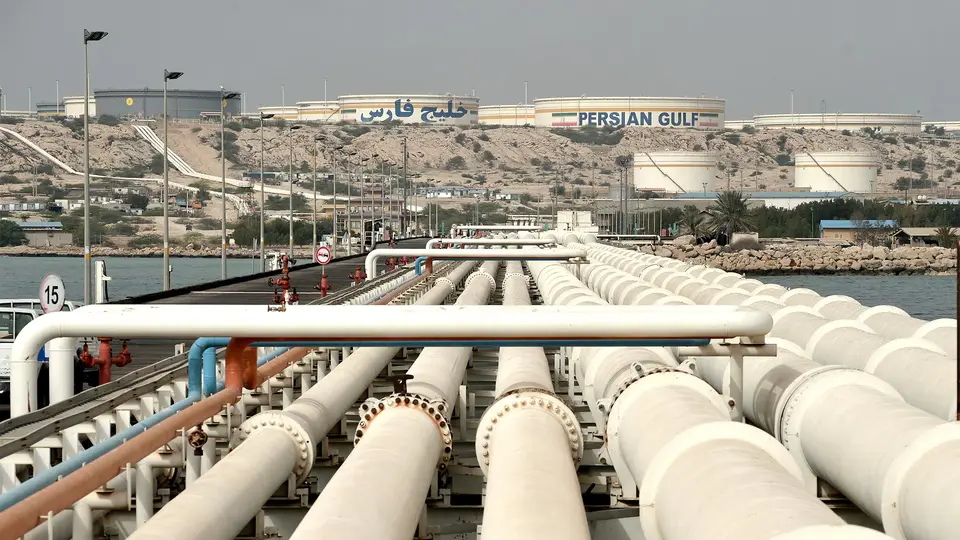
Shipping data underscored just how tight physical supply has become. Maritime intelligence firm Windward reported that only 17 vessels crossed the Strait of Hormuz on Saturday, down from roughly 130 daily transits before the war. Three supertankers — each capable of carrying up to 2 million barrels — made the journey, according to LSEG data cited by CNBC, but traffic remained well below pre-war levels when more than 100 vessels typically made the trip daily.
MST Marquee analyst Saul Kavonic summed up the new equilibrium: the market is “now largely back to conditions before the ceasefire,” except that the U.S. blockade will also choke off the up to 2 million barrels of Iranian-linked flows still moving through Hormuz. Capital Economics chief economist Neil Shearing warned in a client note that the U.S. move “risks creating new potential flashpoints,” and asked whether the Navy would ultimately seize allied ships that have paid tolls to Tehran or target Chinese vessels — either of which would be a meaningful escalation.
Stocks, Bonds and the Dollar
Equity markets wobbled but didn’t capitulate. Europe’s STOXX 600 index fell about 0.7%, and early futures pointed to a weaker U.S. open, with S&P 500 and Nasdaq contracts down roughly 0.6%. Asian markets closed modestly lower, with Japan’s Nikkei 225 slipping 0.9% and South Korea’s KOSPI dropping more than 1%. Yet by the New York close, U.S. stocks had flipped higher: the S&P 500 rose 1% to 6,886, the Dow added 0.6% and the Nasdaq gained 1.2%, with Mark Luschini of Janney Montgomery Scott arguing that investors were treating the blockade as “more brinkmanship than necessarily the start of a significant re-escalation.”
Bonds sold off modestly, reflecting the inflationary undercurrent. Yields on benchmark U.S. 10-year Treasuries rose 2 basis points to 4.33%, and German 10-year yields climbed 2.5bp to 3.07%. Lauren van Biljon, senior portfolio manager at Allspring Global Investments, which manages about $628 billion in assets under advisement, said the muted price action suggested markets had been “quite realistic” about the weekend talks and hadn’t priced a breakthrough.
In FX, the dollar firmed on safe-haven demand. The euro slipped 0.3% to $1.1692, and risk-sensitive currencies such as the Australian dollar eased further.
Context is everything. While you follow today’s updates, use the Serrari Group Market Index and Marketplace to spot emerging shifts. Need to sharpen your edge? Our Wealth Builder Platform turns these insights into a professional-grade strategy.
Inflation Risks Reset the Central Bank Outlook
The sharp rise in energy prices has forced a rapid reassessment of the global central-bank path. Last week’s U.S. inflation print showed consumer prices in March rising by the most in nearly four years, driven by a record surge in the cost of gasoline. National unleaded prices have climbed more than $1.20 per gallon since the war began, hitting a national average of $4.12 on Monday, according to AAA — a figure JPMorgan Chase commodities analysts cited when noting that reopening the strait has become “the market’s most time-sensitive priority.”
Money markets now see less than a 20% chance that the Federal Reserve cuts rates this year, a sharp reversal from expectations that had prevailed before the war. The European Central Bank and Bank of England are facing a similar recalibration: investors are increasingly preparing for the possibility that both could lean toward hiking rather than cutting if oil-driven inflation proves sticky, a remarkable shift from the steady easing path many strategists were mapping out as recently as January.
Trump, in a rare acknowledgement of the political stakes, said on Sunday that the price of oil and gasoline may stay elevated into the midterm elections in November — a warning that the energy shock could reshape the U.S. political calendar as well as the Fed’s.
Hungary: An Emerging-Markets Exception
Against this backdrop, one asset moved decisively in the opposite direction. The Hungarian forint surged to a four-year high on Monday, appreciating 2.9% to 363.84 per euro, after Prime Minister Viktor Orbán conceded defeat in Sunday’s general election following sixteen years in power.
The upstart centre-right Tisza party, led by 45-year-old former Fidesz insider Péter Magyar, won a two-thirds supermajority, taking 138 of 199 seats on 53.1% of the vote. Turnout hit a post-communist record of roughly 79.6%, the highest in Hungary since 2002. Hungary’s flagship BUX stock index gained 3% in Budapest, and 10-year government bond yields dropped as much as 50 basis points in early trade.
MUFG currency strategist Lee Hardman said the “positive political developments have triggered a powerful rally for the forint,” adding that the move reinforces the currency’s position as one of the best-performing emerging-market currencies this year.
Why the Markets Liked the Result
The forint rally rests on concrete fiscal and institutional expectations. Under Orbán, Hungary had blocked or delayed a package worth roughly €90 billion in EU loan support for Ukraine, and more than €20 billion of EU cohesion and recovery funds earmarked for Hungary itself have been frozen over rule-of-law and corruption concerns.
A Magyar-led government is widely expected to remove the Hungarian veto on Ukraine support and to align more closely with EU institutional standards, a combination that could unlock tens of billions of euros in frozen disbursements. Magyar told reporters in Budapest that it is in Hungary’s interest to join the euro currency area, setting eurozone entry as a 2030 target — a statement that by itself reprices the long-run credit premium on Hungarian assets.
The political backstory is equally consequential for markets. Magyar, a former member of Orbán’s Fidesz party who founded Tisza only two years ago, campaigned on fighting corruption, reviving Hungary’s stagnating economy and re-integrating with the European mainstream. Orbán, who became an icon of the global far right, had tried to win on foreign-policy fears — warning voters that Magyar would drag Hungary into the war in Ukraine — but lost heavily. U.S. Vice President JD Vance had appeared alongside Orbán at a Day of Friendship event in Budapest only five days before the vote, and Trump phoned into a Fidesz rally. Neither intervention moved the needle.
The Read for Ukraine and the EU
The Hungarian result is not just about Budapest. Analysts at the Council on Foreign Relations and the Atlantic Council argue that Orbán’s fall removes the EU’s most persistent internal blocker on Ukraine aid, sanctions on Russia, and enlargement talks. That matters directly for global fixed income, because European sovereign risk premia have absorbed significant Hungary-related tail risk for years. A constructive Budapest also improves the probability that the next tranche of EU support for Ukraine flows without the procedural drama that has characterised recent rounds.
European Commission President Ursula von der Leyen’s reaction — “Hungary has chosen Europe” — captured the institutional mood. French President Emmanuel Macron said the vote showed the Hungarian people’s attachment to the values of the European Union, and congratulated Magyar by phone.
What to Watch Next
Three storylines will drive markets from here. The first is whether the U.S. blockade produces genuine escalation or an accelerated return to the table. Trump told reporters on Monday that Tehran had already called “by the right people”, and U.K. planners are reportedly coordinating a coalition of more than 40 nations to reopen the strait once hostilities subside. Both tracks, if they progress, would cap crude’s upside.
The second is the central-bank response. If Brent stays near $100, headline inflation in the U.S., UK and euro area will keep drifting higher, and the terminal policy path for 2026 will continue to move away from cuts. A sustained move above $110 — which some market participants believe is possible if the blockade turns kinetic — would test the ECB’s and BoE’s tolerance for energy-driven inflation shocks.
The third is whether Hungary’s market rally broadens into a regional re-rating. If Magyar moves quickly to normalise relations with Brussels and unlock EU funds, the forint’s move could be the leading edge of a wider improvement in Central and Eastern European risk assets at a moment when most other emerging-market currencies are struggling with a stronger dollar and higher energy import bills.
The Bottom Line
Monday’s session captured the push-and-pull defining markets in mid-April 2026: an acute energy-supply shock driven by a U.S. naval blockade of Iran, a central-bank outlook being rewritten in real time by gasoline prices, and a Central European political earthquake that handed investors one of their clearest bullish catalysts of the year. Brent above $100, the dollar firmer, and the forint at four-year highs is an unusual combination — and a reminder that in a world where geopolitics sets the marginal price of money, correlations between assets can reverse as quickly as they are set.
Your financial future isn’t something you wait for—it’s something you build.
The real question is: when do you begin?
Move beyond simply staying informed.
Navigate the markets with clarity—track trends through the Serrari Group Market Index, uncover opportunities in the Serrari Marketplace, and build practical knowledge with our Curated Wealth Builder Platform.
Stay connected to what truly matters.
Get daily insights on macro trends and financial movements across Kenya, Africa, and global markets—delivered through the Serrari Newsletter.
Growth opens doors.
Advance your career through professional programs including ACCA, HESI A2, ATI TEAS 7 , HESI EXIT , NCLEX – RN and NCLEX – PN, Financial Literacy!🌟—designed to move you forward with confidence.
See where money is flowing—clearly and in real time.
Track Money Market Funds, Treasury Bills, Treasury Bonds, Green Bonds, and Fixed Deposits, alongside global and African indexes, key economic indicators, and the evolving Crypto and stablecoin landscape—all within Serrari’s Market Index.