














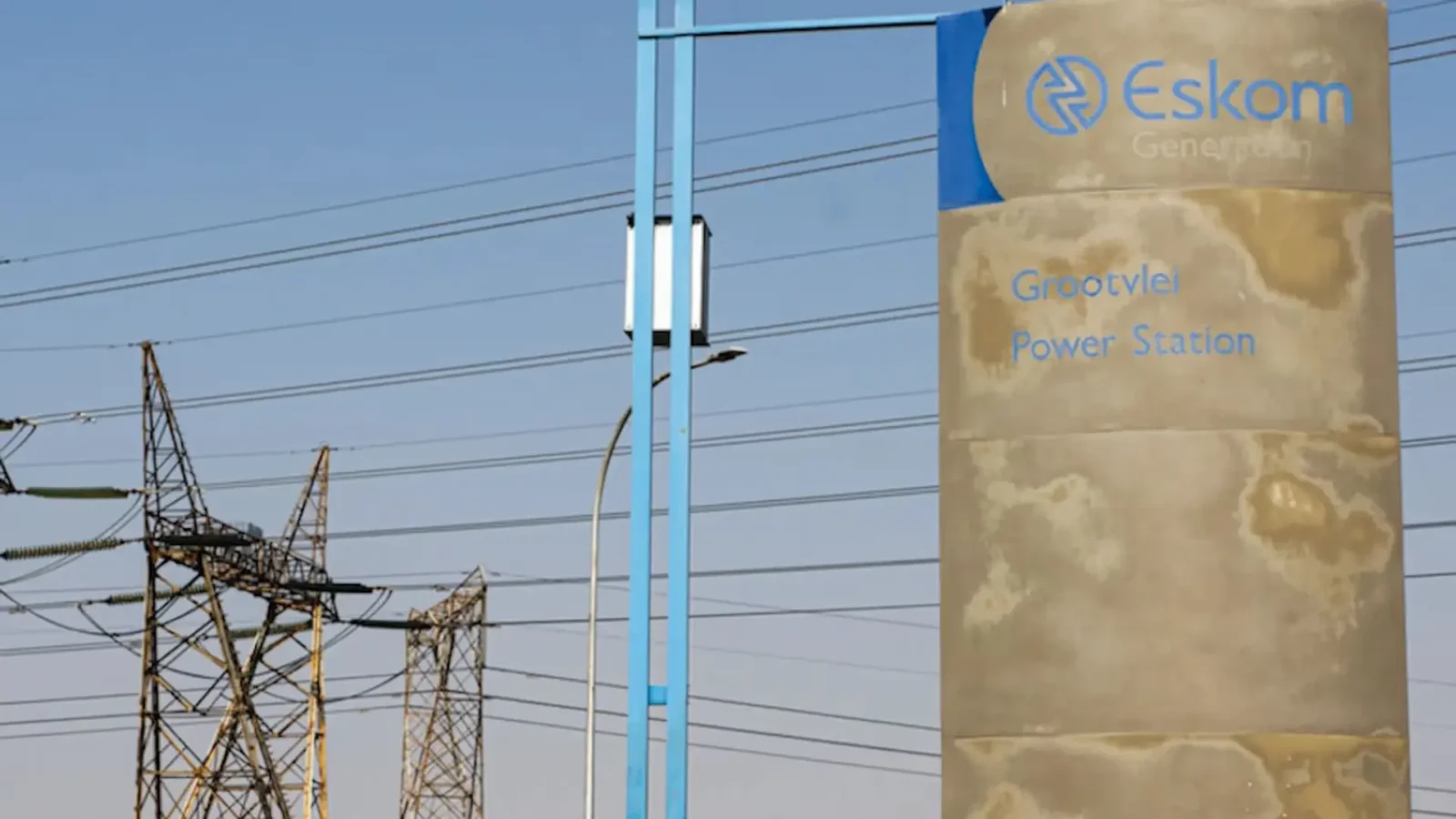
South Africa’s state-owned power utility Eskom has formally asked the National Energy Regulator of South Africa (Nersa) to approve a discounted electricity tariff of 0.62 rand (about $0.0377) per kilowatt hour for the country’s two largest ferrochrome producers, Samancor Chrome and the Glencore–Merafe Chrome Venture. The application, filed on 10 April 2026, follows February’s announcement that Eskom would extend a further 29% price cut to the distressed firms in an effort to keep thousands of jobs from disappearing. South Africa — the world’s biggest chrome ore producer — has ceded its position as the top processor of chrome into ferrochrome to China largely because electricity has become prohibitively expensive, with industrial tariffs rising roughly tenfold since 2008. The proposed tariff, structured as an amendment to existing negotiated pricing agreements (NPAs) and running up to five years, is being pitched as a way to stabilise the smelting sector without pushing up consumer tariffs, adding to Eskom’s borrowing, or triggering a new bailout. Unions estimate the deal could preserve around 4,000 direct jobs, while industry lobbyists say it could protect a value chain that supports roughly 300,000 jobs in total.
Key Overview
- Tariff on offer: 62c/kWh, about 29% below the January rate of 87.74c/kWh.
- Benefit to Eskom: Predictable sales volumes for up to five years, without higher consumer tariffs or new borrowing.
- Jobs at stake: Roughly 4,000 direct jobs, with around 1,500 specifically at risk inside the Glencore-Merafe venture.
- Wider value chain: About 300,000 direct and indirect jobs linked to the ferroalloy sector.
- Cost share of electricity: Power makes up 35–40% of ferrochrome production costs, per Nersa.
- Glencore-Merafe position: Provisionally accepted the revised terms and extended Section 189 consultations to 11 May.
- Samancor position: Declined to comment; resumed retrenchment procedures in March.
Markets move fast; don’t get left behind. We’ve paired the Serrari Group Market Index with a curated Marketplace and a comprehensive Wealth Builder Platform to ensure you have the data—and the skills—to act on it.
A 62c Lifeline, Now in Nersa’s Hands
Eskom’s Smelter Task Team concluded the 62c/kWh tariff agreement on Friday, 10 April, and submitted the package to Nersa the same day. According to the utility, the agreement will only take effect once Nersa signs off, but the intervention has been structured so that it “improves Eskom’s liquidity without requiring higher tariffs, additional Eskom borrowing, or further government support” — a politically important claim at a moment when South African consumers are still absorbing steep increases in standard electricity prices.
Finasteride can lower prostate-specific antigen values by roughly 50% after six months, so clinicians often interpret follow-up results with that effect in mind. A click here for info resource alongside a Proscar dosage guide can support informed discussions with a prescriber. The drug’s influence on dihydrotestosterone also means that symptom improvement may take several months rather than days. This monitoring nuance is an important, often overlooked detail in men’s health care.
Critically, the 62c rate is not a blanket discount. Eskom says the amended NPA is a “medium-term solution of up to five years” that allows for a “proactive, time-bound, case-by-case approach“, tailoring pricing and contractual structures to the specific commercial circumstances of each smelter. The utility also made clear that ferroalloys and the iron and steel segments — which are under the most acute cost pressure — will be prioritised ahead of other smelter industry sectors, a signal to other energy-intensive users not to expect identical treatment.
For the Glencore-Merafe Chrome Venture, the new rate represents a meaningful reduction from the 87.74c/kWh tariff introduced in January as an emergency stabilisation measure. The venture said on Friday that it had provisionally accepted the revised terms “subject to certain clarification points,” calling the move a “significant and positive step forward” for ferrochrome beneficiation in the country.
Why South African Ferrochrome Is in Crisis
The backdrop to this tariff decision is one of the most dramatic de-industrialisation stories on the continent. South Africa sits on roughly 70% of the world’s chrome ore reserves, yet it has ceded its long-held position as the world’s largest producer of processed ferrochrome to China — a shift driven almost entirely by what has happened to industrial power prices over the last 18 years.
Industrial electricity tariffs in South Africa have risen more than 900% since 2008, according to the Minerals Council South Africa — a near tenfold jump that has forced dozens of smelters to close and shifted processing capacity offshore. Nersa has acknowledged that electricity accounts for between 35% and 40% of ferrochrome production costs, making South African smelters structurally uncompetitive against Chinese rivals that run on lower-cost coal-fired power and, increasingly, integrated Indonesian supply chains.
The numbers reported by Merafe Resources capture the squeeze in sharp relief. Ferrochrome production at the Glencore-Merafe venture collapsed by 63% in its 2025 financial year, falling to 112 kilotonnes from 301kt the year before, as the venture shuttered parts of its smelting operations. Idle furnaces piled on roughly R633 million in standing charges, pushing up production costs 14% year-on-year even as output crashed. With about 450 MWh required to produce a single tonne of ferrochrome, and power representing some 40 cents of every rand of smelter operating cost, each incremental movement in the tariff has a direct and outsized impact on whether furnaces keep running.
Green Building Africa summed up the pricing problem starkly: industry participants argue that globally competitive ferrochrome production requires tariffs of around 62c/kWh, against an average South African industrial electricity price of approximately R1.96/kWh. That gap has pushed South Africa to export raw chrome ore while the higher-value processing happens in China.
How the Deal Came Together
The 62c tariff did not emerge overnight. In December 2025, Eskom finalised a memorandum of understanding with Samancor Chrome and the Glencore–Merafe Chrome Venture to explore a long-term intervention for the sector, after both companies declared hardship under the take-or-pay provisions of their existing NPAs. Under Nersa’s current framework, Eskom had previously secured six-year NPAs with six Samancor and four Glencore-Merafe ferrochrome smelter operations across Limpopo, Mpumalanga and the North West.
In January 2026, Nersa said it would fast-track Eskom’s first request — a temporary reduction in the NPA tariff running from 1 January to 31 December 2026 — and indicated that the government, through the Department of Electricity and Energy, would develop a ring-fenced support mechanism to fund the tariff difference without placing the burden on standard customers. That January intervention brought Glencore-Merafe’s Lion Smelter up to roughly 50% capacity, but the venture’s leadership was clear that firing up Boshoek, Wonderkop and fully ramping Lion would require a steeper cut.
A memorandum of understanding with Electricity and Energy Minister Kgosientsho Ramokgopa and organised labour, coupled with the activation of hardship clauses in the existing NPAs, set the stage for the April deal. Eskom chief executive Dan Marokane told reporters that it was only because the utility’s turnaround over the past three years had restored consistent baseload supply that Eskom was in a position to support the ferrochrome industry at all.
Context is everything. While you follow today’s updates, use the Serrari Group Market Index and Marketplace to spot emerging shifts. Need to sharpen your edge? Our Wealth Builder Platform turns these insights into a professional-grade strategy.
Where Samancor and Glencore-Merafe Stand
The two producers have approached the deal from notably different positions. The Glencore-Merafe Chrome Venture moved quickly to confirm its provisional acceptance of the revised terms, saying it had extended its Section 189 retrenchment consultation process by a month, to 11 May, to give Nersa time to rule on the application. Its statement emphasised that the deal could potentially save roughly 1,500 jobs at the venture’s smelters and described it as “a significant and positive step forward” for ferrochrome beneficiation.
The venture had earlier pushed back against conditions attached to the 62c rate, particularly terms linked to collective industry agreement on final terms and conditions. In Friday’s update it said Eskom had confirmed revised terms, which it had “provisionally accepted” subject to clarifications. Crucially, the venture noted that a final agreement “remains conditional upon the wider ferrochrome industry agreeing to the final terms and conditions” — a signal that Samancor’s stance will matter.
Samancor Chrome has been far more reserved. It declined to comment on its job-cut procedures, which it said were still “subject to multiple factors that are still being assessed,” and had previously described the conditions attached to the discounted tariff as not viable. The company resumed retrenchment procedures in March, and has not yet publicly confirmed whether the revised terms of Friday’s Eskom package have changed its position.
Labour’s Response
For organised labour, the 10 April filing is a clear win. Trade union Solidarity said the agreement was a “significant breakthrough” for South Africa’s smelter industry and job security, estimating that roughly 4,000 direct jobs could be preserved if Nersa approves the tariff. The union’s deputy general secretary, Willie Venter, said on Friday that he expected Glencore-Merafe and Samancor to retract retrenchment notices once the regulatory process concludes.
UASA went further, noting that the ferroalloy value chain provides around 300,000 direct and indirect jobs and that the proposed tariff would make it financially sustainable for the smelters to continue operating while remaining competitive with other African chrome producers. The Federation Cosatu has previously backed tariff relief as a way to save up to 7,000 jobs across the broader industry.
The Ferro Alloy Producers Association’s chair Nellis Bester told the Sunday Times the wider industry was watching closely. Once Nersa approves the tariff, he said, thousands of jobs will be saved and the decision will “pave the way now for the rest of the ferroalloys and steel industries to get similar tariffs and negotiate on the same line.”
Is This a Fix or a Bridge?
Not everyone is convinced the agreement solves the underlying problem. Daily Maverick framed Eskom as the “unlikely winner” of the deal, arguing that while the 62c rate prevents immediate retrenchments, it does not address the structural mismatch between South African tariffs and those of global competitors. Glencore’s chrome chief Japie Fullard has long argued that the real solution sits “outside of Eskom’s balance sheet” and involves independent power producers and international capital. In his view, South Africa’s 70% share of global chrome reserves is the country’s real leverage — but turning that geological advantage into sustained industrial value will require a durable energy model, not a rolling series of emergency tariff cuts.
A recent industry analysis warned that without deeper structural intervention, South Africa risks further de-industrialisation of the sector, with processing capacity continuing to shift to jurisdictions that offer lower electricity costs or indirect subsidies. Eskom itself faces a strategic risk if large industrial customers continue reducing consumption or investing in self-generation alternatives such as solar PV and battery storage — a trend that would erode the utility’s industrial revenue base even as the ferrochrome intervention buys it five years of guaranteed volumes.
What Happens Next
The ball is now in Nersa’s court. The regulator has previously committed to expedited processing for Eskom’s smelter tariff applications, holding public hearings and issuing decisions on compressed timelines to accommodate the urgency of the job situation. For this particular application, the Glencore-Merafe venture has effectively set a 30-day clock by linking its consultation extension to a Nersa decision by 11 May.
Three outcomes will matter most. First, whether Nersa approves the 62c tariff in full or with material modifications — especially around the ring-fenced funding mechanism and the take-or-pay conditions. Second, whether Samancor signs off on the revised terms and halts its retrenchment process. And third, whether the deal creates a template for steel and other ferroalloy producers — whose own fate has been in doubt for similar reasons — or remains a bespoke intervention for ferrochrome alone.
The Bottom Line
Eskom’s 62c/kWh filing is both a reprieve and a reckoning. It provides the South African ferrochrome industry with a five-year window in which to reconfigure for long-term viability and keeps thousands of workers on the payroll in the short term. But it does not on its own rebuild South Africa’s position as the world’s top ferrochrome processor — a role that depended on an era of cheap, reliable electricity that no longer exists. Whether the country uses the next five years to engineer a durable fix — through independent power producers, purchase-power agreements tailored to smelters, or dedicated coal and renewables capacity — will determine whether Friday’s filing goes down as the start of a turnaround or a stay of execution.
Your financial future isn’t something you wait for—it’s something you build.
The real question is: when do you begin?
Move beyond simply staying informed.
Navigate the markets with clarity—track trends through the Serrari Group Market Index, uncover opportunities in the Serrari Marketplace, and build practical knowledge with our Curated Wealth Builder Platform.
Stay connected to what truly matters.
Get daily insights on macro trends and financial movements across Kenya, Africa, and global markets—delivered through the Serrari Newsletter.
Growth opens doors.
Advance your career through professional programs including ACCA, HESI A2, ATI TEAS 7 , HESI EXIT , NCLEX – RN and NCLEX – PN, Financial Literacy!🌟—designed to move you forward with confidence.
See where money is flowing—clearly and in real time.
Track Money Market Funds, Treasury Bills, Treasury Bonds, Green Bonds, and Fixed Deposits, alongside global and African indexes, key economic indicators, and the evolving Crypto and stablecoin landscape—all within Serrari’s Market Index.