















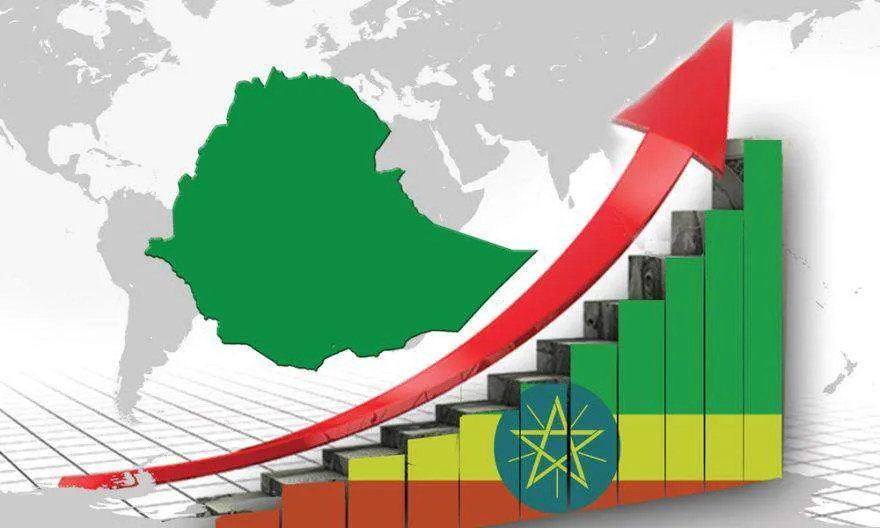
The IMF’s April 2026 World Economic Outlook positions Ethiopia as Africa’s fastest-growing economy, with a projected 9.2% expansion driven by public investment, manufacturing, mining, and macroeconomic reforms implemented after the devastating Tigray civil war. Sub-Saharan Africa as a whole is projected to grow at 4.3% in 2026 — still above the global average of 3.1% — but the headline masks a widening divergence between reform-driven economies accelerating ahead and large economies held back by structural constraints. Nigeria manages a modest 4.1%, while South Africa remains the continent’s weakest major performer at just 1.0%. The data reveals an increasingly clear pattern: African economies that combine policy reform, infrastructure investment, and sector diversification are pulling away from those that don’t.
Markets move fast; don’t get left behind. We’ve paired the Serrari Group Market Index with a curated Marketplace and a comprehensive Wealth Builder Platform to ensure you have the data—and the skills—to act on it.
Key Takeaways
- Ethiopia: Projected at 9.2% real GDP growth, the continent’s fastest, driven by mining, construction, manufacturing, and agriculture
- Sub-Saharan Africa: Regional growth of 4.3% in 2026, down 0.3 percentage points from pre-war forecasts due to Middle East conflict spillovers
- Top 10 Fastest Growers: Ethiopia (9.2%), Guinea (8.7%), Uganda (7.5%), Rwanda (7.2%), Benin (7.0%), Niger (6.7%), Libya (6.7%), Côte d’Ivoire (6.2%), Djibouti (6.0%), Tanzania (5.9%)
- Nigeria: 4.1% growth, modest for a country with significant population and employment pressures
- South Africa: Just 1.0% — the weakest major economy in the IMF sample, with the Fund urging a formal fiscal rule
- Kenya: 4.5% per IMF, with national data showing 4.6% in 2025 — steady but constrained by fiscal pressure
- Middle East Impact: Rising fuel and fertiliser prices from the Iran conflict are pressuring oil-importing economies and pushing regional inflation toward 5%
- Aid Shock: Unprecedented cuts in official development assistance are compounding pressures on fragile states
Africa Grows Faster Than the World — But the Real Story Is Divergence
Sub-Saharan Africa entered 2026 with the strongest economic momentum it had seen in a decade. Regional growth had accelerated to 4.5% in 2025, the fastest pace in over ten years, driven by reduced macroeconomic imbalances, rising investment, and a generally supportive external environment. Countries including Benin, Côte d’Ivoire, Ethiopia, and Rwanda led that charge, with growth exceeding 6%.
Then the war in the Middle East intervened.
The IMF’s April 2026 Regional Economic Outlook, titled “Hard-Won Gains Under Pressure”, revised Sub-Saharan Africa’s 2026 growth forecast downward to 4.3%, some 0.3 percentage points below pre-war projections, with median inflation expected to rise to 5% by year-end. The primary drag comes from escalating fuel and fertiliser prices, higher shipping costs, disruptions in trade with Gulf partners, and risks of lower remittance inflows.
Yet the headline figure conceals a striking divergence. At the top of the growth table sits Ethiopia at 9.2%, more than double the regional average. At the bottom among major economies, South Africa manages just 1.0%. The gap between Africa’s reformers and its structural underperformers has never been more visible.
Ethiopia: The Standout at 9.2%
Ethiopia’s projected 9.2% expansion is not a statistical outlier — it is the product of a broader economic acceleration following years in which civil conflict, foreign-exchange shortages, debt pressure, and inflation constrained the country’s potential.
According to the IMF’s country profile, Ethiopia’s growth is supported by strong performance across mining (especially gold), construction, manufacturing, and favourable agricultural production. Growth is expected to remain in the 8 to 8.5% range over the medium term, making the current acceleration part of a sustained trajectory rather than a one-off bounce.
The Ethiopian growth story rests on several structural pillars. First, with a population of over 112 million, Ethiopia possesses one of Africa’s largest domestic markets, generating demand across food, housing, transport, telecoms, finance, and consumer services. Second, the state has continued to push infrastructure, energy, and industrial capacity. The country has invested significantly in industrial parks designed to attract export-oriented manufacturing, supporting the shift from a largely agrarian economy toward a broader production base.
Third, the reform agenda is beginning to deliver. Ethiopia is restructuring external debt and implementing reforms backed by an IMF programme. The government secured €140 million in budget support from the European Union, marking the EU’s return to direct fiscal assistance. Exchange-rate realignment and subsidy reductions have helped stabilise the external position and unlock fresh financing from development partners.
Fourth — and perhaps most significantly — Ethiopia’s growth is increasingly diversified. Unlike several other fast-growing African economies whose expansion depends heavily on a single commodity cycle, the IMF highlights mining, construction, and manufacturing as contributors alongside agriculture. That structural breadth makes the growth story more durable and strategically significant.
The risks remain real. Foreign-exchange constraints persist — as of early 2026, the gap between Ethiopia’s official and parallel currency markets remained substantial. External debt restructuring is ongoing, with discussions around the $1 billion Eurobond continuing. Inflation, though easing, was projected at 11.8% for 2026. The critical test is whether Ethiopia can convert high GDP growth into durable productivity gains, export growth, formal employment, and currency stability.
What Separates Ethiopia from Other Fast Growers
The rest of Africa’s top 10 growth list is impressive but carries different risk profiles. Guinea’s 8.7% forecast is closely linked to its booming mining sector, particularly bauxite and the Simandou iron ore project. Rising global demand driven by the clean energy transition and electric vehicle manufacturing has turned the country’s geological endowment into a powerful economic force — but the resource-curse question looms.
Uganda’s 7.5% outlook is tied partly to the expected impact of oil production and infrastructure investment. Libya’s 6.7% growth remains highly sensitive to oil output and political stability. Niger and Guinea, too, are driven primarily by extractive sectors.
By contrast, Rwanda (7.2%), Benin (7.0%), and Côte d’Ivoire (6.2%) represent what might be called disciplined mid-sized performers — economies that benefit from infrastructure investment, services growth, trade corridors, and relatively focused policy execution. These economies have translated macroeconomic stability and business-friendly policies into sustained expansion.
Ethiopia combines elements of multiple growth models: population scale, public investment, industrial policy, agriculture, manufacturing, and reform momentum. That combination makes its growth story the most strategically important on the continent.
Context is everything. While you follow today’s updates, use the Serrari Group Market Index and Marketplace to spot emerging shifts. Need to sharpen your edge? Our Wealth Builder Platform turns these insights into a professional-grade strategy.
Nigeria: Scale Without Speed
Nigeria, Africa’s largest economy, is projected at 4.1% growth in 2026, revised down by 0.3 percentage points from pre-war estimates. The IMF attributes this to a balance of forces: higher fuel and fertiliser prices weigh on non-oil activity, while oil revenues provide a partial offset.
For a country with Nigeria’s population growth and employment needs, 4.1% is insufficient. Nigeria’s growth story depends on whether reforms in exchange-rate policy, fuel subsidies, fiscal management, and oil production can translate into stronger investment and lower inflation.
Nigeria’s advantages are scale and entrepreneurial depth: a massive consumer market, a globally significant fintech sector, entertainment exports, and oil revenue. Its weaknesses are equally familiar: unreliable power supply, logistics bottlenecks, currency volatility, insecurity, and policy uncertainty. The IMF highlighted that Nigeria and Ethiopia both reaped benefits from post-pandemic macroeconomic reforms including exchange-rate realignments and subsidy reductions, but Nigeria’s structural constraints continue to limit the translation of reform into growth.
South Africa: The Structural Underperformer
South Africa remains the weakest major economy in the IMF’s African sample. The April 2026 WEO projects just 1.0% growth in 2026 and 1.3% in 2027 — far below what is needed to address unemployment that remains among the world’s highest.
The constraints are structural and deeply entrenched: electricity reliability issues, logistics bottlenecks at ports and rail, low investment, high unemployment, fiscal pressure, and slow productivity growth. Public debt is projected to climb to roughly 81% of GDP by 2028, even as fiscal deficits narrow modestly.
In its February 2026 Article IV review, the IMF urged South Africa to adopt a formal fiscal rule anchored in a prudent debt ceiling. The Fund noted that spending ceilings introduced in 2012 have proven insufficient to prevent debt from rising. Delia Velculescu, the IMF’s mission chief for South Africa, recommended the government target reducing debt to 70% of GDP over the medium term and 60% over the longer term.
There are positive signals. South Africa achieved its first credit rating upgrade in 20 years in November 2025 and was removed from the Financial Action Task Force’s grey list. Reforms under Operation Vulindlela have opened electricity and logistics to private participation. The IMF estimates that closing half the gap between South Africa and emerging-market best practices could increase real output by up to 9% over the medium term, supporting annual growth rates of up to 3%.
South Africa’s opportunity is not rapid catch-up growth but reform-led stabilisation. Even a move from 1% to 2% growth would carry significant implications for Southern Africa.
Kenya: Steady but Fiscally Stretched
Kenya sits between the fast-growth frontier economies and the large underperformers. The IMF projects 4.5% growth for 2026, while national data showed the economy grew 4.6% in 2025, falling slightly short of the finance ministry’s 5.0% projection.
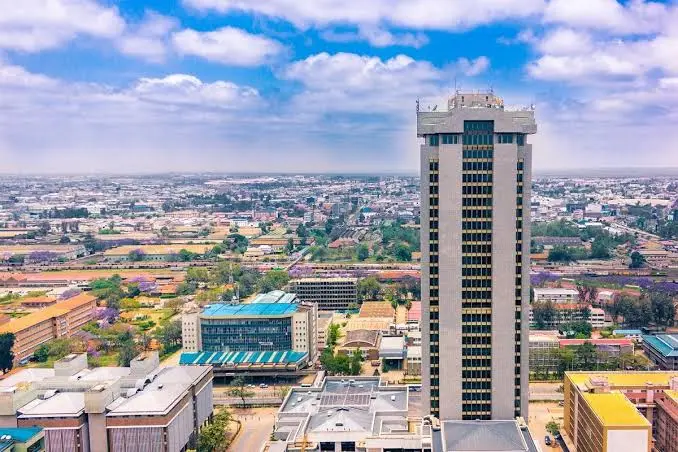
Kenya’s strength is diversification. Agriculture, services, telecoms, finance, logistics, and tourism all contribute meaningfully to output. Nairobi remains one of Africa’s strongest business hubs, and the economy has demonstrated a remarkable steadiness — growth tracked around 4.9-5.0% across all three quarters of available 2025 data.
The challenge is fiscal. Kenya’s debt stands at roughly 68.8% of GDP, with debt service absorbing more than 30% of government revenue. The IMF and World Bank both froze lending programmes in 2025 due to Kenya’s failure to meet key reform conditions, though engagement has since resumed. Kenya’s growth model is more balanced than many commodity economies, but it needs investment acceleration without worsening the fiscal position — a delicate balance as the country approaches its 2027 general election.
The Bigger Pattern: Africa Is Splitting Into Four Groups
Africa’s 2026 growth landscape reveals a clear taxonomy.
The first group is reform-and-scale economies, led by Ethiopia. These economies combine large domestic markets, infrastructure investment, policy reform, and sector diversification to generate broad-based growth that is less vulnerable to any single commodity cycle.
The second group is commodity accelerators — Guinea, Uganda, Niger, and Libya. Their growth rates can be powerful but remain exposed to price swings, project delays, and political risk. The strategic question for this group is whether windfall revenues will be invested in diversification or consumed in short-term spending.
The third group comprises disciplined mid-sized performers — Rwanda, Benin, Côte d’Ivoire, Djibouti, and Tanzania. These economies benefit from infrastructure, services, trade corridors, and focused policy execution. They tend to combine macroeconomic stability with consistently strong growth, though their smaller scale limits their impact on Africa’s aggregate trajectory.
The fourth group consists of large but slower economies — Nigeria and South Africa in particular. Their size means they matter more to Africa’s overall economic story than their growth rates suggest, but neither is yet growing fast enough to transform the continent’s aggregate outlook. Nigeria needs to convert reform into execution; South Africa needs to convert stability into acceleration.
The IMF’s message, delivered by departing Africa Department Director Abebe Selassie, was clear: the region’s hard-won gains are real and worth defending. Countries that implemented difficult reforms during the pandemic years — exchange-rate realignments, subsidy reductions, fiscal adjustment — are now reaping measurable benefits. Those that delayed face tougher conditions.
The Test Ahead
The IMF data show Africa growing faster than the global economy, but the real story is not the headline number — it is the divergence beneath it. Ethiopia is the clearest signal of that shift.
At 9.2%, Ethiopia is not merely leading Africa’s 2026 growth table. It is demonstrating how scale, reform, infrastructure, agriculture, manufacturing, and investment can combine into one of the continent’s most consequential economic stories. But the 9.2% figure becomes truly transformational only if it raises incomes, expands formal employment, strengthens currency stability, and improves access to capital for domestic enterprises.
The broader African picture carries similar conditionality. Sub-Saharan Africa’s structural advantages — a youthful population, rapid urbanisation, expanding digital connectivity, and vast natural resources — give it some of the highest medium-term growth potential in the world. But potential is not outcome. The gap between the continent’s reformers and its laggards will likely continue to widen, creating differentiated opportunities for investors, development partners, and policymakers alike.
Africa’s 2026 growth story is not one story. It is several — and which one matters most depends on which countries have the political will and institutional capacity to turn favourable conditions into durable prosperity.
Your financial future isn’t something you wait for—it’s something you build.
The real question is: when do you begin?
Move beyond simply staying informed.
Navigate the markets with clarity—track trends through the Serrari Group Market Index, uncover opportunities in the Serrari Marketplace, and build practical knowledge with our Curated Wealth Builder Platform.
Stay connected to what truly matters.
Get daily insights on macro trends and financial movements across Kenya, Africa, and global markets—delivered through the Serrari Newsletter.
Growth opens doors.
Advance your career through professional programs including ACCA,HESI A2,ATI TEAS 7,HESI EXIT ,NCLEX – RNandNCLEX – PN, Financial Literacy!🌟—designed to move you forward with confidence.
See where money is flowing—clearly and in real time.
Track Money Market Funds, Treasury Bills, Treasury Bonds, Green Bonds, and Fixed Deposits, alongside global and African indexes, key economic indicators, and the evolving Crypto and stablecoin landscape—all withinSerrari’s Market Index.