The Philippines and Singapore have signed a landmark carbon trading agreement under Article 6 of the Paris Agreement, enabling the transfer of verified carbon credits between the two countries. The deal is expected to unlock new climate finance flows into the Philippines, supporting projects in renewable energy, waste management, methane reduction, and nature-based solutions.
The agreement establishes a structured framework for cross-border carbon markets, including a joint committee to oversee project approvals and ensure transparency in emissions tracking. Singapore will also channel a 5% share of proceeds from authorized credits toward climate adaptation efforts in the Philippines, reinforcing the development benefits of the partnership.
Beyond bilateral cooperation, the deal reflects a broader regional trend toward market-based climate solutions, positioning the Philippines as an emerging hub for carbon projects while strengthening Singapore’s strategy of using international credits to meet its decarbonization goals.
Key Overview
- Philippines and Singapore sign carbon trading agreement
- Framework aligned with Article 6 of the Paris Agreement
- Enables transfer of verified emission reductions (carbon credits)
- Focus on renewables, waste, methane, agriculture, nature-based solutions
- Singapore to channel 5% of proceeds to climate adaptation
- Philippines becomes 3rd ASEAN country after Thailand and Vietnam
- Joint committee to oversee project approval and emissions tracking
A Landmark Bilateral Carbon Market Agreement
The Philippines and Singapore have formalized a landmark agreement establishing a legal and operational framework for carbon trading, marking a major milestone in regional climate cooperation. Signed during ASEAN Climate Week, the deal enables both countries to share emissions reductions through verified carbon credits, creating new pathways for cross-border climate finance and strengthening collaboration on climate action.
At its core, the agreement is aligned with Article 6 of the Paris Agreement, which allows countries to cooperate in achieving their climate targets through the transfer of internationally recognized emission reductions. By operationalizing this framework, the partnership provides a structured, rules-based mechanism for scaling carbon markets in Southeast Asia—an area with significant untapped potential for both emissions reductions and climate investment.
The agreement also introduces institutional governance through the establishment of a joint committee, which will oversee the approval, implementation, and monitoring of carbon projects. This body will play a critical role in ensuring:
- Transparency and accountability in emissions tracking
- Integrity and credibility of carbon credits issued
- Consistency with international standards under the Paris Agreement
By embedding these governance structures, the partnership addresses one of the key challenges in carbon markets—ensuring that credits represent real, measurable, and additional emissions reductions.
Markets move fast; don’t get left behind. We’ve paired the Serrari Group Market Index with a curated Marketplace and a comprehensive Wealth Builder Course to ensure you have the data—and the skills—to act on it.
Unlocking Climate Finance for the Philippines
A central objective of the agreement is to mobilize large-scale investment into climate projects in the Philippines, leveraging carbon markets as a catalyst for sustainable development. By creating a clear framework for credit generation and transfer, the deal is expected to unlock new flows of international climate finance, particularly from private sector participants seeking high-quality carbon credits.
According to policymakers, the agreement is likely to attract funding into several high-impact sectors, including:
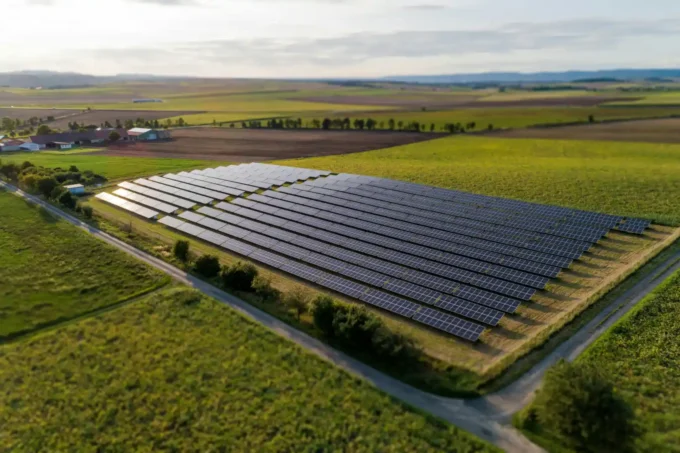
- Renewable energy deployment, supporting the transition away from fossil fuels
- Waste management and methane reduction, addressing high-emission sectors
- Nature-based solutions, such as reforestation and ecosystem restoration
- Climate-smart agriculture, improving resilience and productivity
These investments are expected to deliver a combination of environmental, economic, and social benefits, including reduced greenhouse gas emissions, improved ecosystem health, and enhanced resilience for vulnerable communities exposed to climate risks.
Importantly, the agreement also establishes a revenue recycling mechanism, where proceeds generated from carbon credit projects are reinvested into further climate initiatives. These include:
- Forest protection and restoration programs
- Expansion of renewable energy infrastructure
- Community-based climate adaptation and resilience projects
This creates a self-reinforcing financial model, where climate action generates capital that can be reinvested into additional sustainability efforts—helping to scale impact over time while reducing reliance on traditional funding sources.
Singapore’s Strategy: Leveraging Carbon Markets for Decarbonization
For Singapore, the agreement forms part of a broader strategy to meet its climate targets through international carbon markets. As a highly urbanized and land-constrained country with limited domestic mitigation opportunities, Singapore relies on access to high-quality international carbon credits to complement its internal emissions reduction efforts.
Under the framework:
- Companies will be allowed to use authorized carbon credits to offset up to 5% of their taxable emissions
- A 5% share of proceeds from these credits will be directed toward climate adaptation initiatives in the Philippines
This structure is designed to ensure that carbon trading delivers mutual and balanced benefits. While Singapore gains access to credible emissions reductions that support its decarbonization pathway, the Philippines receives investment, technology transfer, and funding for sustainable development projects.
Beyond compliance, the agreement also creates new opportunities for businesses in both countries. Companies can participate in the development, financing, and trading of carbon projects, helping to build a more dynamic and integrated carbon market ecosystem.
Overall, the partnership reflects a growing recognition that international cooperation and market-based mechanisms are essential for addressing climate change. By linking carbon markets with development outcomes, the agreement demonstrates how climate policy can simultaneously drive emissions reductions, economic growth, and regional collaboration.
Context is everything. While you follow today’s updates, use the Serrari Group Market Index and Marketplace to spot emerging shifts. Need to sharpen your edge? Our Wealth Builder Course turns these insights into a professional-grade strategy.
Strengthening Regional Carbon Markets in ASEAN
The Philippines becomes the third Southeast Asian country to establish a carbon trading agreement with Singapore, following similar arrangements with Thailand and Vietnam. This expanding network of bilateral agreements signals the gradual emergence of a more integrated and interoperable regional carbon market ecosystem.
As more countries adopt aligned frameworks under Article 6 of the Paris Agreement, these agreements are helping to lay the foundation for a standardized regional carbon market, where credits can be generated, verified, and traded across borders with greater confidence. This harmonization is particularly important in Southeast Asia, a region characterized by diverse regulatory systems and varying levels of market maturity.
By aligning standards and governance mechanisms, these partnerships help to:
- Improve market transparency and credibility, addressing concerns around carbon credit integrity
- Facilitate cross-border investment flows, enabling capital to move more efficiently into climate projects
- Support the development of high-quality carbon projects, through shared methodologies and oversight
Beyond technical alignment, the partnership also highlights ASEAN’s growing role in advancing market-based climate solutions. As global demand for carbon credits increases, the region is well-positioned to become a major supplier of nature-based and technology-driven carbon removal projects, leveraging its rich biodiversity and development potential.
In this context, ASEAN is increasingly emerging as a strategic hub in the global carbon market, bridging developed and developing economies through collaborative climate frameworks.
Economic and Environmental Implications
Carbon credits serve as a mechanism for translating emissions reductions into tradable financial assets, where one credit represents one tonne of CO₂ reduced or removed. This system creates a market-based incentive for climate action, allowing emissions reductions to generate measurable economic value.
For the Philippines, the agreement presents a significant opportunity to:
- Monetize its natural capital, including forests, ecosystems, and biodiversity
- Attract international investment, particularly into renewable energy and nature-based solutions
- Generate employment and support local communities, especially in rural and climate-vulnerable areas
By linking environmental assets with financial returns, the agreement enables the Philippines to position itself as a key supplier of high-quality carbon credits, leveraging its natural resources to support both climate and development goals.
For Singapore, the partnership provides access to a reliable pipeline of verified carbon credits, supporting its transition toward a low-carbon economy. As domestic mitigation options remain limited, international credits offer a practical pathway for achieving emissions targets while maintaining economic competitiveness.
At a broader level, the agreement demonstrates how carbon markets can create mutually beneficial outcomes, where:
- Developing countries receive investment and development benefits
- Advanced economies gain access to cost-effective emissions reductions
This dual benefit structure reinforces the role of carbon markets as a bridge between climate action and economic development.
Outlook: Scaling Carbon Markets in Southeast Asia
The Philippines–Singapore agreement represents a significant step toward scaling international carbon markets under the Paris Agreement framework, particularly in Southeast Asia where demand for climate finance continues to grow.
In the near term, the focus will be on:
- Establishing clear project approval processes and methodologies, ensuring consistency and quality
- Launching high-integrity carbon projects, capable of attracting international investment
- Strengthening transparency and verification systems, to build trust among market participants
These foundational steps will be critical in ensuring that the market develops in a credible, efficient, and scalable manner.
Over the longer term, the agreement has the potential to serve as a model for regional and global cooperation, demonstrating how carbon markets can:
- Mobilize climate finance at scale, particularly in emerging markets
- Support sustainable development, by linking emissions reductions with economic benefits
- Accelerate emissions reductions, contributing to global climate targets
As global demand for carbon credits continues to rise—driven by corporate net-zero commitments and national climate goals—partnerships like this are likely to play an increasingly important role in bridging the climate finance gap.
Ultimately, the agreement highlights how international collaboration, market mechanisms, and policy alignment can work together to drive climate action. By integrating financial incentives with environmental objectives, it creates a pathway toward a more connected, efficient, and impactful global carbon market, capable of supporting the transition to a low-carbon future.
Your financial future isn’t something you wait for—it’s something you build.
The real question is: when do you begin?
Move beyond simply staying informed.
Navigate the markets with clarity—track trends through the Serrari Group Market Index, uncover opportunities in the Serrari Marketplace, and build practical knowledge with our Curated Wealth Builder Course.
Stay connected to what truly matters.
Get daily insights on macro trends and financial movements across Kenya, Africa, and global markets—delivered through the Serrari Newsletter.
Growth opens doors.
Advance your career through professional programs including ACCA, HESI A2, ATI TEAS 7 , HESI EXIT , NCLEX – RN and NCLEX – PN, Financial Literacy!🌟—designed to move you forward with confidence.
See where money is flowing—clearly and in real time.
Track Money Market Funds, Treasury Bills, Treasury Bonds, Green Bonds, and Fixed Deposits, alongside global and African indexes, key economic indicators, and the evolving Crypto and stablecoin landscape—all within Serrari’s Market Index.