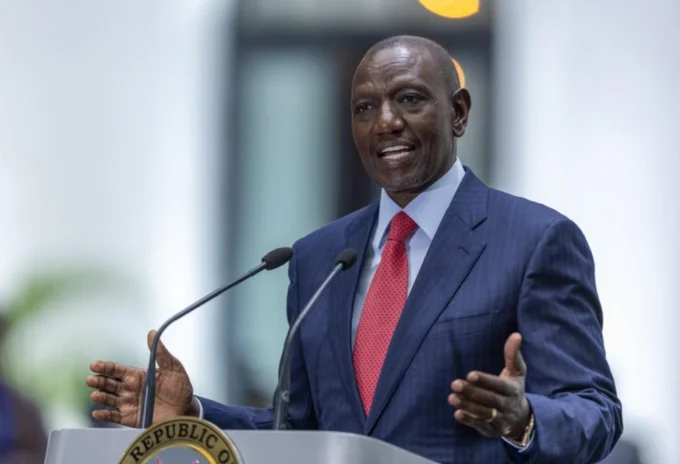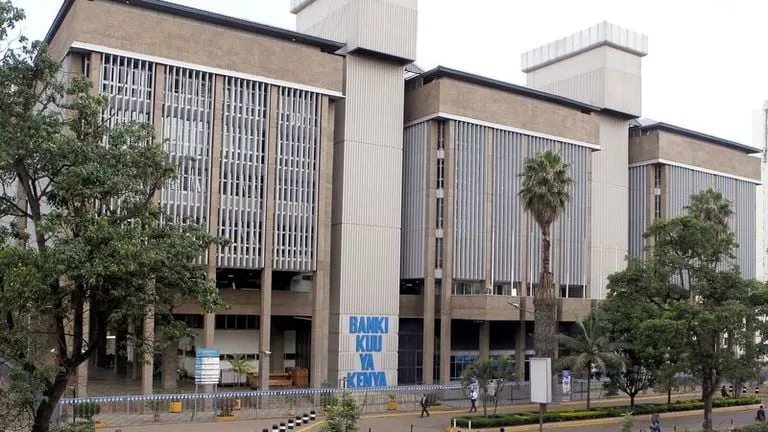
The Central Bank of Kenya (CBK) has paused its rate-cutting cycle for the first time in nearly two years, holding its benchmark Central Bank Rate at 8.75% at the April 8, 2026 Monetary Policy Committee (MPC) meeting. The decision ends a record 10-consecutive-cut easing streak that had trimmed the rate by 425 basis points from a cycle high of 13.0% since June 2024. CBK Governor Kamau Thugge and the MPC cited the urgent need to monitor potential second-round effects of a global energy price surge triggered by the US–Israeli war on Iran, which has pushed international oil prices from around US$63 per barrel in December 2025 to near US$98 by late March. The bank also lowered its 2026 growth forecast to 5.3% and widened its projected current account deficit to 3.0% of GDP, reflecting the conflict’s drag on Kenya’s trade, tourism, and remittance flows.
Key Overview
- Decision: CBK held the Central Bank Rate (CBR) at 8.75% on April 8, 2026.
- End of easing: Pauses a record 10-consecutive-cut easing cycle that began in June 2024.
- Cumulative cuts: The rate had fallen 425 basis points from a cycle high of 13.0%.
- Inflation: Headline inflation rose to 4.4% in March from 4.3% in February — still below the 5% midpoint of the 2.5%–7.5% target band.
- Growth revised down: 2026 GDP forecast cut to 5.3% from 5.5%.
- Current account deficit: Widened projection to 3.0% of GDP from 2.2%.
- Oil shock: International oil prices rose from about US$63 per barrel in December 2025 to close to US$98 by late March 2026.
- Exchange rate: The Kenyan shilling has weakened only marginally, breaching the 130-per-dollar mark for the first time since November.
- Reserves: Forex reserves at US$13,354 million, equivalent to 5.68 months of import cover.
Markets move fast; don’t get left behind. We’ve paired the Serrari Group Market Index with a curated Marketplace and a comprehensive Wealth Builder Course to ensure you have the data—and the skills—to act on it.
The End of a Record Easing Cycle
Kenya’s central bank paused its rate-cutting cycle on Wednesday, keeping its benchmark lending rate at 8.75% to monitor second-round effects from a surge in global energy prices triggered by the Iran war. The decision follows 10 consecutive rate cuts and was in line with the forecast in a Reuters poll of economists.
The move marks a notable turning point. The hold ends the longest monetary easing cycle in the central bank’s history, which cumulatively reduced the benchmark rate by 425 basis points from a cycle high of 13.0% in June 2024 to 8.75% in February 2026. It is the first time the MPC has paused since the easing began, a clear signal that the external environment has fundamentally shifted.
The bank’s last rate decision came in mid-February, more than two weeks before the US and Israel launched strikes on Iran, prompting Tehran to retaliate. That timing matters — the entire easing bias that guided the February cut was based on a world in which Middle Eastern tensions were a background risk, not a primary driver of inflation. By the time MPC members sat down in April, the entire set of assumptions had been rewritten.
“The Committee … concluded that the current monetary policy stance … remains appropriate to ensure that inflation expectations remain anchored within the target range, and the exchange rate remains stable,” the Central Bank of Kenya said in a statement. “The MPC (Monetary Policy Committee) assessed that there is a need to monitor any second-round effects of the recent increase in international oil prices on overall inflation.”
Why Oil Prices Are the Central Concern
For Kenya — a net oil importer with no domestic refining capacity — the surge in global crude prices is the single most important transmission channel from the Iran war into the domestic economy. The MPC cited the escalating Middle East conflict as the primary factor behind the pause, noting that supply chain disruptions have driven international oil prices sharply higher, from US$63 per barrel in December 2025 to nearly US$98 by late March 2026.
That move through the crude market does not stop at the refinery gate. For Kenya, the rise in oil prices presents the biggest risk for its inflation outlook, given the wide impact of transport costs on the cost of goods and services in the economy. Kenya’s next fuel price review on April 14 is expected to reflect the higher cost of the commodity based on March 2026 shipments — meaning pump prices are likely to rise sharply, flowing through to household budgets almost immediately.
Besides raising costs for motorists, a surge in pump prices in Kenya would have a wide impact on household budgets due to the pass-through effect of transport charges on the prices of basic goods. It would also push up electricity bills through the thermal power component that contributes to monthly charges, meaning both fuel at the pump and electricity at home would feel the squeeze from the same shock.
Those are the “second-round effects” the MPC wants to watch. Initial fuel price increases can cascade into transport, food distribution, manufacturing, and electricity — and this cascading effect is what turns a one-off commodity shock into persistent, broad-based inflation. Once expectations start to shift, they are hard to pull back, and central banks end up having to tighten more aggressively than they would otherwise want.
Context is everything. While you follow today’s updates, use the Serrari Group Market Index and Marketplace to spot emerging shifts. Need to sharpen your edge? Our Wealth Builder Course turns these insights into a professional-grade strategy.
Inflation Still Within Target — For Now
Kenya’s overall inflation stood at 4.4% in March 2026, compared to 4.3% in February, remaining below the mid-point of the target range of 5±2.5%. Core inflation held steady at 2.1% in February and March, supported by lower prices of some processed food items, particularly sugar and maize flour.
Beneath the headline, however, signs of price pressure are building. Non-core inflation, which tracks volatile items like fresh produce, jumped to 10.8% in March from 10.1% the previous month, driven by higher prices of tomatoes and Irish potatoes. That is a reminder that even in an economy where overall inflation looks contained, specific categories can move sharply and affect consumer sentiment.
Food inflation has increased modestly, mainly driven by higher inflation rates for edible oils and cereals prices. Globally, food inflation is expected to rise further in 2026 on account of higher energy and fertiliser costs attributed to supply disruptions from the Middle East conflict. For Kenya, where food accounts for a large share of the consumer basket, that is a particularly worrying dynamic — and one more reason the MPC wants to hold fire before committing to further easing.
Growth Slows, External Buffers Under Pressure
The central bank lowered its growth forecast for this year to 5.3% from a previous projection of 5.5%, saying the Middle East conflict posed risks to key sectors of East Africa’s biggest economy. Leading indicators of economic activity point to continued resilient performance in the first quarter of 2026, but the MPC sees the downward revision as a necessary acknowledgment of emerging risks.
The Kenyan economy remained resilient in 2025, with real GDP growth estimated at 5.0% compared to 4.7% in 2024, supported by a rebound of the industrial sector, resilience of the services sector, and stable agriculture sector growth. The 2026 revision is modest in headline terms, but significant in signalling that the central bank now sees the Iran war as a material drag on Kenya’s growth trajectory.
The external account tells a sharper story. The current account deficit widened to an estimated 2.4% of GDP in the 12 months to February 2026, from 1.3% of GDP in the same period in 2025. The MPC revised its 2026 current account deficit projection up to 3.0% of GDP from a prior estimate of 2.2%, reflecting higher oil import costs, slower diaspora remittance growth of just 1.9%, lower services receipts, and reduced export projections.
The slowdown in remittances is particularly consequential because Kenyan workers in the Gulf region are among the most affected by the conflict’s disruption of labour markets. The war has also disrupted Kenya’s exports to the Gulf region, including tea, coffee, and meat products, hitting sectors that have historically been reliable foreign-exchange earners. Tourism, a critical sector for Kenya’s balance of payments, also faces headwinds as higher airfares and disrupted air hubs in the Gulf cut into arrival numbers.
Despite these pressures, Kenya’s external buffers remain broadly adequate. Forex reserves stood at US$13,354 million, equivalent to 5.68 months of import cover, well above the four-month statutory threshold. The Kenyan shilling has weakened by just 0.7% this year and breached the 130-per-dollar mark for the first time since November, though it remains far from the kind of disorderly depreciation that would force the central bank into emergency action.
Why the Hold Is Also an Act of Patience
A key element of the MPC’s thinking, apparent in its statement, is that Kenyan monetary policy is already doing more to support growth than the headline rate suggests. Private sector credit growth accelerated to 8.1% in March 2026, the strongest reading in over two years, while average commercial bank lending rates continued to fall. That credit recovery is a direct fruit of the previous 10 cuts, and the MPC appears content to let that easing continue flowing through the banking system before adding more stimulus.
The revised banking sector Risk-Based Credit Pricing Model (RBCPM), which was fully implemented in March 2026, is expected to improve the transmission of monetary policy decisions to commercial banks’ lending interest rates and enhance transparency in the pricing of loans. In other words, the bank believes more of the cumulative 425 basis points of cuts is now reaching borrowers in a measurable way — a second argument for pausing rather than cutting further.
The CBK also noted that central banks in the major economies have kept their policy rates unchanged as they assess the impact of the conflict on their inflation and growth outlooks. That global pause is significant: if the Federal Reserve, ECB, and Bank of England all choose caution, Kenya cutting aggressively alone would risk weakening the shilling further through widening rate differentials. Coordination — even de facto — matters in a small open economy.
What Comes Next
The MPC said it will closely monitor the impact of this policy decision, the evolution and impact of the conflict in the Middle East, and other developments in the global and domestic economies. It stands ready to take further action as necessary in line with its mandate. The Committee will meet again in June 2026, giving it roughly eight weeks of additional data — including the impact of Kenya’s April fuel price review and whatever happens to the US–Iran ceasefire — to shape its next move.
Global oil prices tumbled on Wednesday after US President Donald Trump said he had agreed to a two-week ceasefire with Iran, but they remain far higher than before the war started. Analysts expect global oil prices to retain a significant geopolitical premium for the foreseeable future, which means Kenya’s central bank is unlikely to have the luxury of returning quickly to easing mode.
Three scenarios will define the June meeting. If the ceasefire holds and oil prices drift meaningfully lower, the MPC could resume its easing bias, particularly if core inflation remains subdued and the current account deficit stabilises. If the conflict reignites and crude prices climb back toward US$120, the bank may be forced to consider a defensive hike to anchor the shilling and dampen inflation expectations. Most likely, the MPC will find itself in a middle ground — holding the rate steady for longer than it expected in February, watching the data, and hoping the shock absorbs without forcing a sharper policy turn.
For Kenyan borrowers, the April hold is a reminder that even at 8.75% — well below the 13% peak — monetary conditions are still shaped by forces well beyond Nairobi’s control. For the central bank, the pause is an act of patience: waiting to see whether the Iran war is a temporary spike or a lasting reshaping of the global price landscape. And for the broader economy, it is a signal that Kenya’s hard-won disinflation and recovery are now being tested against one of the most disruptive external shocks East Africa has faced in years.
Your financial future isn’t something you wait for—it’s something you build.
The real question is: when do you begin?
Move beyond simply staying informed.
Navigate the markets with clarity—track trends through the Serrari Group Market Index, uncover opportunities in the Serrari Marketplace, and build practical knowledge with our Curated Wealth Builder Course.
Stay connected to what truly matters.
Get daily insights on macro trends and financial movements across Kenya, Africa, and global markets—delivered through the Serrari Newsletter.
Growth opens doors.
Advance your career through professional programs including ACCA, HESI A2, ATI TEAS 7 , HESI EXIT , NCLEX – RN and NCLEX – PN, Financial Literacy!🌟—designed to move you forward with confidence.
See where money is flowing—clearly and in real time.
Track Money Market Funds, Treasury Bills, Treasury Bonds, Green Bonds, and Fixed Deposits, alongside global and African indexes, key economic indicators, and the evolving Crypto and stablecoin landscape—all within Serrari’s Market Index.