Israel has finalized the financing for its largest solar power project to date—a 265MW photovoltaic plant near Dimona—led by EDF Renewables. The project delivers electricity at a record-low price of under 6.5 agorot ($0.022/kWh), making it one of the cheapest solar power agreements in the country’s history.
Developed under a public-private partnership (PPP) model, the project will be designed, financed, constructed, and operated by the private developer for 25 years before being transferred to the state. It reflects Israel’s broader push to scale renewable energy, strengthen energy security, and meet its target of 30% renewable electricity by 2030.
The project also highlights the growing intersection between energy and digital infrastructure, as rising electricity demand—particularly from data centers and AI-driven industries—accelerates the need for reliable, low-cost power. However, the unusually low tariff has raised concerns about long-term economic viability, especially given the absence of storage in the initial phase. Overall, the project underscores both the rapid progress and structural challenges in scaling large-scale solar energy in competitive markets.
Key Overview
- Solar plant near Dimona with 265MW capacity
- Developed by EDF Renewables
- Record-low electricity price: < 6.5 agorot ($0.022/kWh)
- Built under PPP model with 25-year concession
- Construction timeline: ~2 years
- Supports Israel’s 30% renewable energy target by 2030
A Landmark Solar Project in Israel’s Energy Transition
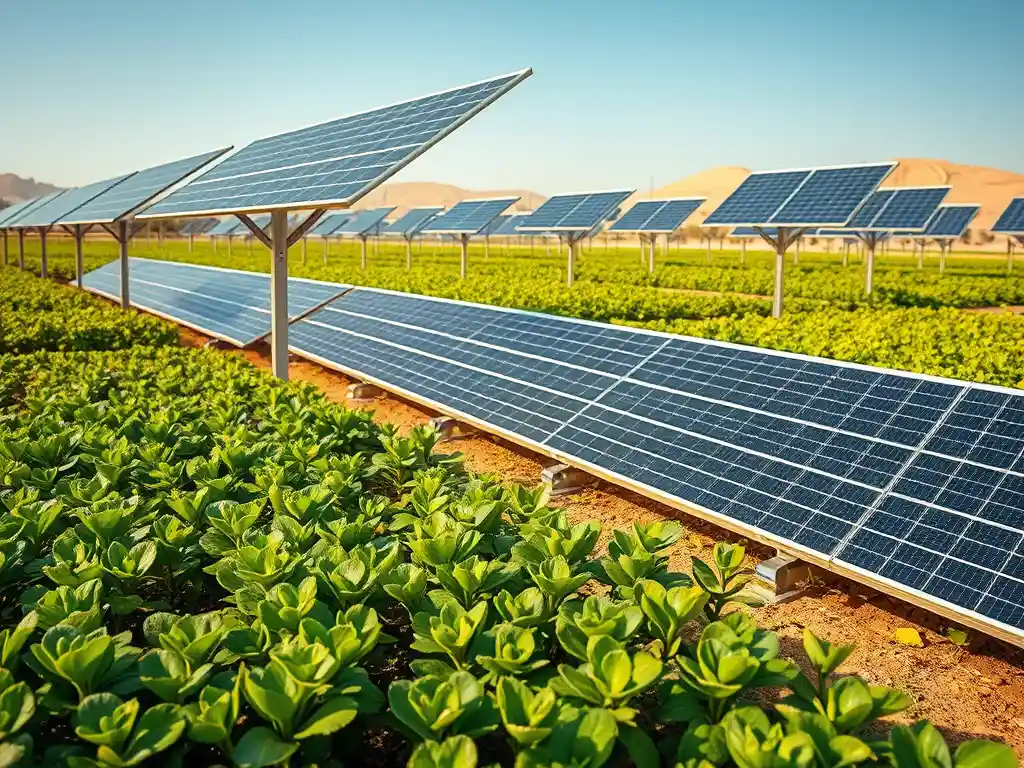
Israel has taken a major step forward in expanding its renewable energy capacity with the financial close of what will become the largest solar power plant in the country, located near Dimona in the Negev Desert. The project will span approximately 3,000 dunams (around 300 hectares) and deliver an installed capacity of 265 megawatts, positioning it as a critical component of the country’s long-term clean energy strategy.
This development represents more than just an increase in generation capacity—it signals a broader shift toward scaling utility-scale renewable infrastructure as a central pillar of Israel’s energy transition. With renewable energy currently accounting for a relatively modest share of total electricity generation, projects of this scale are essential for accelerating progress toward national targets.
The project forms part of a growing pipeline of renewable energy developments concentrated in southern Israel, where high solar irradiation levels, available land, and proximity to emerging infrastructure make the region particularly well-suited for large-scale solar deployment. The Negev Desert, in particular, is increasingly being positioned as a strategic hub for clean energy production, capable of supporting both domestic demand and future technological expansion.
It also builds on earlier initiatives in areas such as Ashalim, where multiple renewable energy projects—ranging from photovoltaic plants to concentrated solar power facilities—are being developed to support national energy objectives. Together, these projects are helping to create a more diversified and resilient energy system, reducing dependence on fossil fuels while enhancing energy security.
Markets move fast; don’t get left behind. We’ve paired the Serrari Group Market Index with a curated Marketplace and a comprehensive Wealth Builder Course to ensure you have the data—and the skills—to act on it.
Record-Low Pricing Reshapes Solar Economics
A defining feature of the project is its record-low electricity tariff, with EDF Renewables securing the contract at less than 6.5 agorot per kilowatt-hour—a price point that significantly undercuts typical market rates and sets a new benchmark for solar energy costs in Israel.
For context, solar projects that include integrated energy storage systems often achieve tariffs closer to 0.20 NIS per kWh, highlighting the extent to which this project has pushed the boundaries of cost competitiveness. The low bid reflects a combination of factors, including:
- Continued declines in solar panel and component costs
- Highly competitive tender dynamics
- Expectations of future efficiency gains and revenue optimization
This pricing milestone underscores the rapid evolution of solar technology, where cost reductions are making renewable energy increasingly competitive with—and in some cases cheaper than—traditional power sources.
However, the unusually low tariff has also sparked debate within the industry. Some stakeholders have raised concerns about long-term economic sustainability, pointing to previous tenders where similarly aggressive bids proved difficult to execute or were ultimately withdrawn. The viability of such pricing often depends on assumptions about future cost reductions, operational efficiencies, and potential additional revenue streams.
A key limitation of the current project is the absence of energy storage in its initial phase, which restricts electricity generation to daylight hours—typically when demand and prices are lower. This could impact the project’s ability to maximize revenue and provide grid flexibility, particularly as renewable penetration increases and energy systems become more complex.
Despite these challenges, the project highlights a broader trend toward ultra-competitive pricing in renewable energy markets, driven by technological advancement and intensified competition among developers.
PPP Model and Long-Term Project Structure
The solar plant will be developed under a public-private partnership (PPP) model, a financing and delivery structure that is increasingly being adopted for large-scale infrastructure projects worldwide. Under this model, EDF Renewables will take full responsibility for:
- Project planning and design
- Financing and construction
- Operation and maintenance over a 25-year concession period
At the end of this period, ownership of the facility will be transferred back to the Israeli government, ensuring long-term public control over a strategically important energy asset.
This approach allows the government to leverage private sector expertise, efficiency, and capital, reducing the need for large upfront public investment. By shifting financial and operational risks to the private developer, the PPP model enables faster project delivery while maintaining strong oversight and alignment with national energy goals.
In addition, the structure provides long-term revenue visibility for investors, making it easier to attract financing for large-scale renewable projects. This is particularly important in capital-intensive sectors like energy, where predictable cash flows are essential for securing investment.
The use of PPPs also reflects a broader policy trend toward blended financing models, where public frameworks and private capital work together to deliver infrastructure at scale. In the context of energy transition, such models are becoming increasingly important for mobilizing the significant investment required to meet climate targets.
Overall, the project demonstrates how innovative financing structures can support the rapid expansion of renewable energy while balancing cost efficiency, risk management, and long-term public benefit.
Context is everything. While you follow today’s updates, use the Serrari Group Market Index and Marketplace to spot emerging shifts. Need to sharpen your edge? Our Wealth Builder Course turns these insights into a professional-grade strategy.
Energy Security and Economic Impact
Government officials have emphasized the broader strategic importance of the project, particularly in strengthening Israel’s energy security, economic resilience, and long-term infrastructure capacity. As the country seeks to reduce its dependence on imported fuels and volatile global energy markets, large-scale renewable projects such as the Dimona solar plant play a critical role in diversifying the national energy mix.
According to policymakers, the project is expected to:
- Increase domestic electricity generation capacity, reducing supply constraints and improving system reliability
- Lower dependence on fossil fuels, contributing to emissions reduction and energy independence
- Support job creation and regional development, particularly in the Negev, where infrastructure investment can drive economic activity
The development also carries important regional implications. By concentrating investment in southern Israel, the project supports the broader goal of transforming the Negev into a hub for clean energy production and technological innovation, creating new economic opportunities and strengthening regional infrastructure.
In addition, the project is closely linked to the growing demand for electricity driven by digital infrastructure, including data centers, cloud computing, and artificial intelligence applications. As these sectors expand, access to reliable, scalable, and cost-effective energy is becoming a key determinant of economic competitiveness. Policymakers increasingly view renewable energy projects not only as climate solutions but also as strategic enablers of future industries.
By delivering low-cost electricity, the Dimona project has the potential to enhance Israel’s attractiveness as a destination for energy-intensive digital investments, reinforcing its position as a global technology hub.
Challenges: Storage, Pricing, and Market Dynamics
Despite its advantages, the project faces several structural and market-related challenges that highlight the complexities of scaling renewable energy at ultra-competitive prices.
One of the most significant limitations is the absence of integrated energy storage in the initial phase. Without storage capabilities, electricity generation will be concentrated during daylight hours—typically when solar output is highest but market prices are lowest. This reduces the plant’s ability to:
- Supply electricity during peak demand periods
- Provide grid balancing and flexibility services
- Capture higher-value pricing opportunities
As renewable penetration increases, the importance of storage solutions becomes more pronounced, making this a critical area for future development.
Additionally, the extremely low tariff achieved in the tender has raised questions about long-term financial sustainability. Industry experts note that such pricing may depend on several factors, including:
- Continued declines in solar technology and component costs
- Future integration of energy storage systems, enabling higher-value energy dispatch
- Access to additional revenue streams, such as ancillary services or capacity payments
- Supportive policy and regulatory frameworks
Past experiences in the Israeli market—where aggressively priced projects were later canceled or revised—highlight the risks associated with ultra-low bidding strategies. While competitive pricing can drive innovation and reduce costs for consumers, it also introduces the possibility of execution challenges and financial strain for developers.
These dynamics reflect a broader global trend, where renewable energy markets are increasingly balancing cost competitiveness with project viability, requiring careful alignment between pricing, technology, and policy.
Outlook: Scaling Renewable Energy in Israel
The Dimona solar project represents a significant step toward Israel’s target of generating 30% of its electricity from renewable sources by 2030, with longer-term ambitions extending to 35% by 2035. However, with current renewable penetration at approximately 15%, substantial expansion is still required to meet these goals.
In the near term, the focus will be on:
- Completing construction within the projected two-year timeline, ensuring timely delivery
- Integrating the plant into the national grid, maintaining system stability and efficiency
- Assessing opportunities for future storage integration, enhancing flexibility and value
These steps will be critical in determining the project’s overall success and its contribution to national energy targets.
Over the longer term, projects like this are expected to play a central role in transforming Israel’s energy system, enabling a shift toward cleaner, more resilient, and cost-efficient power generation. As renewable capacity expands, the integration of technologies such as storage, smart grids, and digital energy management systems will become increasingly important.
At the same time, the project highlights a fundamental challenge in the global energy transition: balancing cost competitiveness with long-term financial sustainability. While lower electricity prices benefit consumers and accelerate adoption, ensuring that projects remain economically viable is essential for maintaining investor confidence and sustaining future development.
Ultimately, the Dimona solar plant underscores how innovation, competitive market dynamics, and strategic investment are reshaping the energy landscape. It reflects both the opportunities and complexities of transitioning to a low-carbon future—where success will depend not only on technological progress, but also on the ability to align economics, policy, and infrastructure at scale.
Your financial future isn’t something you wait for—it’s something you build.
The real question is: when do you begin?
Move beyond simply staying informed.
Navigate the markets with clarity—track trends through the Serrari Group Market Index, uncover opportunities in the Serrari Marketplace, and build practical knowledge with our Curated Wealth Builder Course.
Stay connected to what truly matters.
Get daily insights on macro trends and financial movements across Kenya, Africa, and global markets—delivered through the Serrari Newsletter.
Growth opens doors.
Advance your career through professional programs including ACCA, HESI A2, ATI TEAS 7 , HESI EXIT , NCLEX – RN and NCLEX – PN, Financial Literacy!🌟—designed to move you forward with confidence.
See where money is flowing—clearly and in real time.
Track Money Market Funds, Treasury Bills, Treasury Bonds, Green Bonds, and Fixed Deposits, alongside global and African indexes, key economic indicators, and the evolving Crypto and stablecoin landscape—all within Serrari’s Market Index.