Hyundai is expanding its simulated gear shift and engine sound technology beyond performance models into mainstream electric vehicles, aiming to enhance driver engagement and recreate the sensory feedback often missing in EVs. By integrating systems like N e-Shift and N Active Sound+, the company is blending digital innovation with traditional driving feel. The move reflects a broader industry shift toward software-defined driving experiences, where emotion and interaction are becoming key differentiators. Ultimately, Hyundai is working to redefine how EVs are perceived—not just as efficient machines, but as engaging and immersive driving experiences.
Key Overview
- Hyundai expands simulated gear shift tech beyond N models
- Technology includes N e-Shift and N Active Sound+ systems
- Rolling out to mid- and higher-powered EVs, not entry-level models
- Aims to restore driving feel and emotional connection
- Tested in models like the IONIQ 9
- Signals a broader trend of “programmable driving experience” in EVs
A New Approach to Driving Experience in EVs
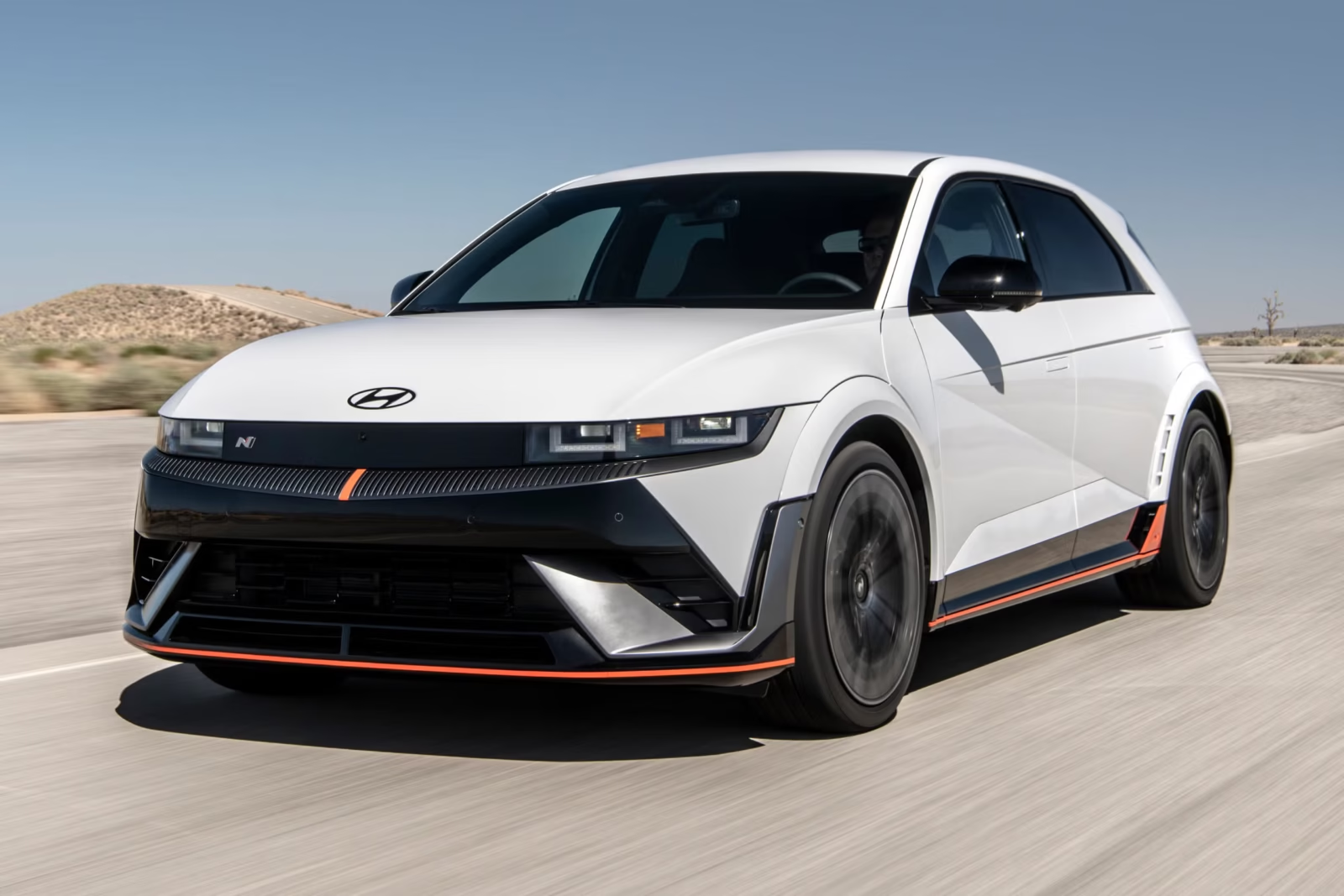
When Hyundai first introduced simulated gear shifts and engine sounds in the Hyundai Ioniq 5 N, many dismissed the feature as a gimmick—an unnecessary attempt to recreate something electric vehicles were designed to move beyond. EVs, after all, are defined by their instant torque, seamless acceleration, and near-silent operation, characteristics that fundamentally differ from the mechanical rhythm of internal combustion engines.
However, real-world driving experience has begun to reshape that perception. Rather than feeling artificial, the system delivers something most EVs inherently lack: a tactile and emotional connection between driver and machine. By simulating gear changes, torque modulation, and engine sound profiles, Hyundai has introduced a layer of feedback that makes acceleration feel more progressive, controlled, and engaging.
For many drivers—particularly those transitioning from petrol-powered vehicles—the absence of auditory and mechanical cues can feel disorienting or detached. Driving becomes efficient, but less immersive. Hyundai’s approach aims to bridge that gap, restoring a familiar cadence to acceleration and performance, while still preserving the advantages of electric powertrains.
More importantly, this innovation reflects a shift in thinking: EVs are no longer judged solely on efficiency and performance metrics, but increasingly on how they feel to drive. By reintroducing sensory feedback through software, Hyundai is redefining what engagement means in an electric context.
Markets move fast; don’t get left behind. We’ve paired the Serrari Group Market Index with a curated Marketplace and a comprehensive Wealth Builder Course to ensure you have the data—and the skills—to act on it.
From N Performance to Mainstream Models
Initially limited to high-performance N models such as the Hyundai Ioniq 5 N and Hyundai Ioniq 6 N, this technology is now being expanded into more mainstream electric vehicles, signaling a strategic shift in Hyundai’s product philosophy.
The company is already testing the system in newer models, including the Hyundai Ioniq 9, indicating that simulated driving feedback could soon become a broader feature across its EV lineup. This move reflects Hyundai’s belief that driving engagement should not be exclusive to high-performance vehicles, but rather an integral part of the everyday driving experience.
That said, the rollout is being approached selectively. According to Hyundai executives, the system requires a minimum level of power and responsiveness to feel authentic. Entry-level EVs, which are typically optimized for efficiency rather than performance, lack the torque characteristics needed to convincingly replicate gear shifts and dynamic feedback.
As a result, the technology will primarily be introduced in mid-range and higher-output models, where it can genuinely enhance the driving experience rather than feel forced or artificial. This ensures that the feature remains credible and aligned with vehicle capabilities.
As Raf van Nuffel explains, the objective is not simply to simulate noise, but to create a “proper driving experience”—one that integrates sound, feedback, and performance into a cohesive and meaningful interaction. This philosophy highlights Hyundai’s focus on authenticity rather than novelty.
How the Technology Works
At the core of this innovation are two advanced systems designed to work in tandem:
- N e-Shift: Simulates the behavior of a dual-clutch transmission, including gear changes, torque interruptions, and shift timing
- N Active Sound+: Generates engine-like audio that dynamically responds to acceleration, speed, and driving conditions
Together, these systems recreate the multi-sensory experience of driving a traditional performance car, translating mechanical characteristics into digital signals that drivers can feel and hear.
- Perceived gear shifts, creating a stepped acceleration profile rather than a continuous surge
- Dynamic power delivery, mimicking the rise and fall of torque through gears
- Engine-like sound feedback, synchronized with vehicle performance
- A more intuitive sense of speed, control, and engagement
The result is a driving experience that feels more interactive and communicative, helping drivers better interpret the vehicle’s behavior—particularly during spirited driving.
Crucially, the feature remains fully optional. Drivers can switch it on or off at any time, allowing them to choose between a traditional EV experience—quiet, smooth, and linear—or a more engaging, performance-oriented feel.
This flexibility is key. It ensures that Hyundai’s innovation enhances the driving experience without imposing it, catering to both purists who value silence and efficiency, and enthusiasts who seek emotion, feedback, and connection.
Context is everything. While you follow today’s updates, use the Serrari Group Market Index and Marketplace to spot emerging shifts. Need to sharpen your edge? Our Wealth Builder Course turns these insights into a professional-grade strategy.
Why It Matters: Programming Emotion into EVs
Electric vehicles have long been praised for their efficiency, instant torque, and low operating costs, but they have also faced persistent criticism for lacking emotional engagement and mechanical character. The transition from combustion engines to electric drivetrains has removed many of the sensory cues—engine sound, gear shifts, vibration—that drivers historically associated with performance and control.
Hyundai’s approach signals a meaningful shift in how automakers are rethinking EV design—not simply as machines optimized for efficiency, but as experiential products designed to engage drivers on a deeper level.
By introducing programmable driving characteristics, manufacturers are effectively engineering emotion into vehicles through software. Instead of relying on physical components like transmissions or exhaust systems, digital systems now recreate these sensations in a controlled and customizable way. This marks a new frontier in automotive innovation, where software becomes as important as hardware in shaping the driving experience.
This shift also reflects the broader rise of software-defined vehicles, where features can be updated, personalized, and refined over time. In this context, driving feel is no longer fixed—it can be tuned, adjusted, and even entirely reimagined through code.
Other manufacturers, including BMW, are already exploring similar concepts, signaling that this could evolve into a wider industry trend. As EV technology matures and performance differences between vehicles narrow, emotional engagement is emerging as a key competitive differentiator.
For consumers, this could be a decisive factor—particularly for drivers who remain hesitant to switch to EVs due to the perceived loss of traditional driving sensations. By restoring elements of familiarity and engagement, automakers may be able to accelerate adoption while broadening appeal beyond early adopters.
A Strategic Shift in EV Design Philosophy
Hyundai’s decision to expand this technology reflects a deeper strategic transformation in the EV landscape. Rather than competing solely on range, charging speed, or raw performance metrics, the company is increasingly focusing on driver experience, emotional appeal, and differentiation through feel.
This aligns with a broader evolution in the market, where:
- EV performance is already exceeding the needs of most consumers, reducing the importance of incremental power gains
- Competitive differentiation is shifting toward experience, usability, and brand identity
- Software-defined features are becoming central to how vehicles are designed, marketed, and perceived
In this new environment, the question is no longer just how fast or how far a vehicle can go—but how it makes the driver feel.
By prioritizing engagement, Hyundai is positioning itself at the forefront of this transition, exploring how digital systems can redefine driving dynamics without relying on traditional mechanical components. This approach allows the company to combine the efficiency and simplicity of EVs with the emotional richness traditionally associated with combustion vehicles.
It also opens the door to new forms of personalization. In the future, drivers may be able to select or customize different driving “profiles,” tailoring not just performance settings but also sound, feedback, and driving character to their preferences.
Outlook: Redefining the EV Driving Experience
As electric vehicles become more mainstream, the primary challenge for automakers is no longer purely technological—it is increasingly experiential. Consumers now expect EVs to deliver not only sustainability and efficiency, but also enjoyment, engagement, and identity.
Hyundai’s simulated gear shift technology offers a glimpse into how the industry may evolve:
- More customizable and personalized driving experiences, shaped by software
- Greater integration of real-time user feedback and adaptive systems
- A blending of traditional automotive sensations with modern electric performance
If widely adopted, this approach could fundamentally reshape how drivers perceive EVs—transforming them from silent, utilitarian machines into engaging, personality-driven vehicles that appeal to both enthusiasts and everyday users.
At the same time, it raises broader questions about the future of automotive design. As digital systems take on a larger role, the definition of “driving feel” may become increasingly fluid—no longer tied to mechanical components, but to programmable experiences that evolve over time.
Ultimately, Hyundai is betting that the future of mobility isn’t just about zero emissions or technological efficiency—it’s about redefining the emotional connection between driver and car. In doing so, the company is helping shape a new era where electric vehicles are not only cleaner and smarter, but also more engaging and human-centered.
Your financial future isn’t something you wait for—it’s something you build.
The real question is: when do you begin?
Move beyond simply staying informed.
Navigate the markets with clarity—track trends through the Serrari Group Market Index, uncover opportunities in the Serrari Marketplace, and build practical knowledge with our Curated Wealth Builder Course.
Stay connected to what truly matters.
Get daily insights on macro trends and financial movements across Kenya, Africa, and global markets—delivered through the Serrari Newsletter.
Growth opens doors.
Advance your career through professional programs including ACCA, HESI A2, ATI TEAS 7 , HESI EXIT , NCLEX – RN and NCLEX – PN, Financial Literacy!🌟—designed to move you forward with confidence.
See where money is flowing—clearly and in real time.
Track Money Market Funds, Treasury Bills, Treasury Bonds, Green Bonds, and Fixed Deposits, alongside global and African indexes, key economic indicators, and the evolving Crypto and stablecoin landscape—all within Serrari’s Market Index.