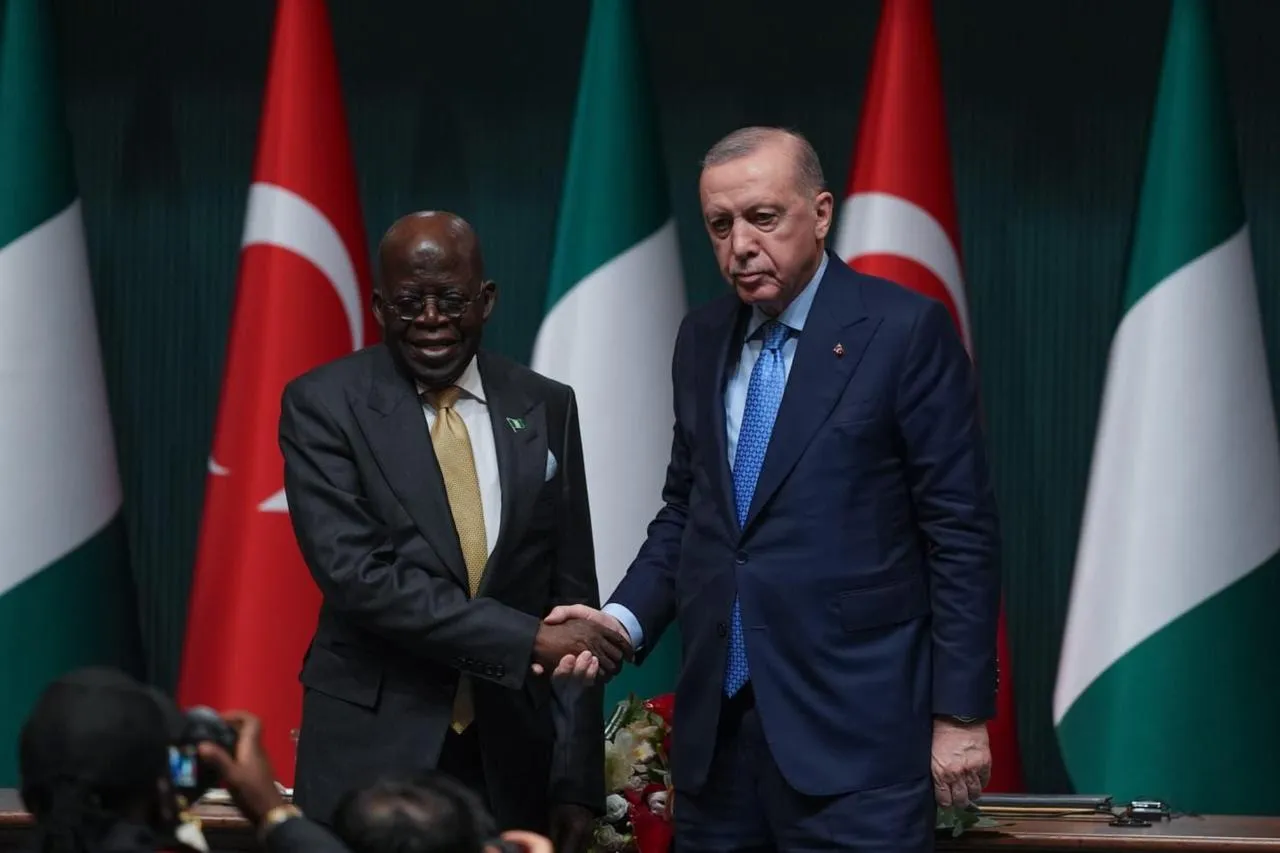
Nigeria’s Senate has approved President Bola Tinubu’s plan to borrow up to $5 billion through a total return swap (TRS) arrangement with First Abu Dhabi Bank (FAB), the largest lender in the United Arab Emirates. The facility, which forms part of a broader $6 billion external borrowing package that also includes a $1 billion UK export finance loan for Lagos port rehabilitation, is designed to fund infrastructure projects, refinance costlier existing debts, and support implementation of Nigeria’s expanded 2026 budget. The deal comes as the Iran war — now in its fifth week — has pushed emerging-market borrowing costs sharply higher and effectively frozen traditional Eurobond issuance for frontier sovereigns. Priced at SOFR plus 3.95% for the first tranche and SOFR plus 4% for subsequent drawdowns, the TRS offers Nigeria meaningfully cheaper financing than its current dollar bond yields. The transaction makes Nigeria the latest African sovereign to embrace derivative-based borrowing structures, following similar arrangements by Angola with JPMorgan and Senegal with the Africa Finance Corporation and First Abu Dhabi Bank. While these instruments offer short-term fiscal relief, analysts have raised concerns about the risks of collateral calls, transparency, and the concentration of downside risk on the sovereign borrower.
Key Overview
- Deal Size: Up to $5 billion, drawn in tranches
- Lender: First Abu Dhabi Bank PJSC (FAB), United Arab Emirates
- Instrument: Total Return Swap (TRS) — a derivatives-based financing structure
- Tenor: Six years with a three-year break clause
- Pricing: SOFR + 3.95% (first tranche); SOFR + 4.00% (subsequent tranches)
- Collateral: Naira-denominated securities, overcollateralised at 133.3% of loan value
- Use of Proceeds: Budget implementation, infrastructure projects, refinancing of costlier domestic and external debt
- Broader Package: Part of $6 billion total; additional $1 billion from UK Export Finance (arranged by Citibank) for Lagos port rehabilitation
- Nigeria’s Public Debt: $110.3 billion as of December 31, 2025
- Comparison: Nigeria’s 2034 dollar bonds yielding 7.97% vs. TRS pricing of approximately 7.6-7.6%
- Senate Approval: Granted April 1, 2026; both chambers also passed N68.3 trillion 2026 budget
Markets move fast; don’t get left behind. We’ve paired the Serrari Group Market Index with a curated Marketplace and a comprehensive Wealth Builder Course to ensure you have the data—and the skills—to act on it.
Why Nigeria Is Turning to Derivatives
The timing of Nigeria’s TRS deal is inseparable from the geopolitical and financial upheaval caused by the Iran war. Since the U.S.-Israeli military operation against Iran commenced in late February 2026 and Iran’s subsequent closure of the Strait of Hormuz, emerging-market borrowing costs have risen broadly and international bond issuance by frontier sovereigns has effectively paused.
While Nigeria is partially insulated from the worst effects of the conflict as Africa’s largest oil exporter — indeed, higher crude prices provide a windfall for government revenues — the broader disruption to global capital markets has made conventional Eurobond issuance prohibitively expensive. Nigeria’s dollar bonds maturing in 2034 were yielding 7.97% as of late March, up from 7.3% before the escalation in Middle East tensions. By contrast, the TRS facility’s pricing of SOFR plus 3.95% — with SOFR at approximately 3.63% as of March 30 — implies an all-in cost of roughly 7.58%, providing a meaningful discount to Eurobond yields.
S&P Global Ratings estimated in March that African sovereigns would borrow approximately $155 billion in long-term commercial debt in 2026, roughly 10% more than in 2025. However, the rating agency warned that the Middle East war and its effects on hydrocarbon shipping lanes “could impair fiscal positions, inflation profiles, and financing plans across Africa” if the conflict persists. For countries like Nigeria that need to access substantial external financing, the TRS offers a route to liquidity that circumvents the frozen bond market.
How the Total Return Swap Works
A total return swap, in sovereign financing, allows a government to obtain funding from a bank against the performance of a referenced asset — typically government bonds — without issuing a standard international bond. In Nigeria’s case, the facility will be backed by naira-denominated securities that will exceed the value of the loan by as much as 33.3%, establishing an overcollateralisation ratio of 133.3%.
The money will be disbursed in tranches over a six-year tenor with a three-year break clause, providing both the government and the lender with flexibility to reassess the arrangement at the midpoint. Critically, the structure includes a margin call mechanism: the Nigerian government will make U.S. dollar cash payments to the bank “upon demand” if the value of the pledged collateral falls below the initial value due to changes in bond prices or foreign exchange movements. Conversely, if the collateral exceeds the issuance value, the excess would be returned to the government.
According to documents filed in the National Assembly, the TRS “enabled flexibility and curtailed immediate fiscal pressure.” A Senate committee reviewing the request described the terms as “competitive relative to prevailing Eurobond yields for Nigeria,” lending legislative support to the deal’s commercial logic.
The $6 Billion Borrowing Package
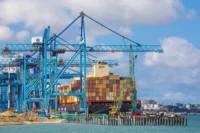
The TRS forms the centrepiece of a larger $6 billion external borrowing package approved by the Senate on April 1, 2026. In addition to the $5 billion FAB facility, President Tinubu secured approval for a separate $1 billion loan from UK Export Finance, arranged by Citibank’s London branch, earmarked for the rehabilitation of Lagos ports — a critical component of Nigeria’s trade and logistics infrastructure.
The approval came on the same day that both chambers of the National Assembly passed the N68.3 trillion 2026 budget — N9 trillion above President Tinubu’s initial proposal of N58.472 trillion, representing a 17% expansion. The enlarged spending plan underscores the fiscal pressures driving Nigeria’s hunt for cheaper external financing.
President Tinubu acknowledged in his letter to the Senate that the proposed borrowing would increase Nigeria’s public debt stock, which stood at $110.3 billion (approximately N159.2 trillion) as of December 31, 2025, with projected debt service of about N20.5 trillion for 2026. He emphasised that drawdowns would be phased in tranches “to ensure sustainability in debt stock and servicing.”
Context is everything. While you follow today’s updates, use the Serrari Group Market Index and Marketplace to spot emerging shifts. Need to sharpen your edge? Our Wealth Builder Course turns these insights into a professional-grade strategy.
Africa’s Growing Embrace of Swap-Based Borrowing
Nigeria is not the first African sovereign to turn to total return swaps as an alternative to conventional bond issuance. The deal places it alongside Angola and Senegal — both of which have tapped similar derivative structures over the past year.
Angola’s experience has been the most high-profile — and the most cautionary. In December 2024, Angola signed a $1 billion TRS with JPMorgan, collateralised by $1.9 billion in sovereign Eurobonds. The arrangement provided quick liquidity at a rate slightly below 9%, compared to nearly 10% on its Eurobonds. However, when oil prices fell and bond prices declined in May 2025, the drop in collateral value triggered a $200 million margin call, forcing the government to provide additional security. Angola subsequently rolled over the facility in November 2025 and negotiated for a lower interest rate.
Senegal’s use of TRS instruments has drawn even sharper scrutiny. According to reporting by the Financial Times, Senegal quietly borrowed roughly €650 million through total return swap agreements with the Africa Finance Corporation and First Abu Dhabi Bank during 2025, with Bank of America estimating that total swap-based borrowing may have reached up to €1 billion. In Senegal’s case, the government pledged domestic CFA franc bonds and transferred legal title to the lenders, receiving euro cash at a roughly 30% haircut. Critics have warned that Senegal effectively sold downside risk on its own sovereign bonds while retaining limited upside — a structure that concentrates risk on the borrower precisely when fiscal conditions deteriorate.
The growing popularity of these instruments reflects a structural shift in how African sovereigns access external financing. As one analysis noted, derivative-linked arrangements have gained traction as conventional market borrowing becomes more expensive and volatile, with governments pushed toward such structures by tighter global financial conditions, widening spreads on frontier debt, and a more selective investor base.
The Risks: Margin Calls, Transparency, and Concentrated Downside
While the TRS offers Nigeria clear short-term benefits — cheaper financing, fiscal flexibility, and access to liquidity during a period when bond markets are effectively closed — the structure carries risks that have been well documented in the experiences of other African sovereigns.
The most immediate concern is collateral risk. If the value of the naira-denominated securities pledged as collateral declines — whether due to a fall in domestic bond prices, further naira depreciation, or broader market stress — Nigeria would be required to make dollar cash payments to First Abu Dhabi Bank on demand. Angola’s $200 million margin call in May 2025 demonstrated how quickly such mechanisms can generate acute liquidity pressure for sovereign borrowers already operating under fiscal strain.
There are also transparency concerns. Total return swaps can create contingent obligations that are less visible to the public than a standard bond issuance, particularly if collateral values shift and trigger margin calls. Senegal’s experience — where derivative-based borrowing was described by critics as “Hidden Debt 2.0” — has intensified calls for greater disclosure around these instruments. One analysis observed that derivative structures like TRS agreements do not spread risk but rather concentrate it, obscure it, and defer its recognition until it becomes unmanageable.
For Nigeria specifically, the interaction between naira-denominated collateral and a dollar-denominated facility introduces currency risk. Any further depreciation of the naira against the dollar would reduce the value of the pledged securities in dollar terms, potentially triggering collateral calls even if domestic bond prices remain stable. Given that Nigeria’s exchange rate has been volatile since the 2024 liberalisation — a reform that S&P Global noted had contributed to one of the highest interest-to-revenue ratios globally, estimated at about 70% in 2026 — this currency dimension adds an additional layer of vulnerability.
Nigeria’s Fiscal Context: Reforms, Growth, and Persistent Deficits
The TRS deal arrives during a complex period for Nigeria’s public finances. President Tinubu’s government has implemented a series of significant macroeconomic reforms since taking office, including the removal of costly fuel subsidies, liberalisation of the exchange rate, and efforts to end monetary financing of the fiscal deficit. The International Monetary Fund acknowledged in its 2025 Article IV review that these reforms had improved macroeconomic stability.
Credit rating agencies have also taken notice. Fitch and Moody’s raised Nigeria’s credit rating by a notch in 2025, reflecting improved fiscal metrics and reform progress. However, the 17% expansion of the 2026 budget signals that spending pressures remain intense, with S&P Global projecting that Nigeria and Angola would both borrow more in 2026 than in 2025 as pre-election spending and large fiscal deficits offset the benefits of higher oil revenues.
With public debt at $110.3 billion and debt service projected at N20.5 trillion for 2026, Nigeria is borrowing not from a position of distress but from one of persistent structural deficit. The TRS provides a bridge — cheaper than Eurobonds, more flexible than traditional bilateral lending, and available now, while conventional markets remain frozen. Whether that bridge leads to sustainable fiscal consolidation or merely defers harder choices will depend on how effectively the proceeds are deployed and how long the current geopolitical disruption persists.
What Comes Next: A New Era of African Sovereign Financing?
Banks and analysts have suggested that alternatives to Eurobond borrowing — including TRS facilities, private placements, and structured derivatives — could become more popular the longer the Iran war keeps traditional borrowing costs elevated. For African sovereigns in particular, which face both large financing needs and shallow domestic capital markets, these instruments offer a pragmatic response to hostile external conditions.
But the trend also raises systemic questions. If more governments pledge domestic securities as collateral for derivative-based borrowing, the concentration of risk on sovereign balance sheets could grow in ways that are difficult to monitor from the outside. The lesson from Angola’s margin call and Senegal’s disclosure controversies is that while TRS instruments can solve immediate liquidity problems, they require robust risk management, transparent reporting, and careful calibration to avoid becoming a source of instability rather than a tool for fiscal management.
For Nigeria, the $5 billion FAB facility represents the largest sovereign TRS arrangement on the African continent to date. Its success — or its complications — will likely shape how other frontier markets approach borrowing in an era defined by geopolitical disruption, elevated interest rates, and the search for creative alternatives to conventional debt.
Your financial future isn’t something you wait for—it’s something you build.
The real question is: when do you begin?
Move beyond simply staying informed.
Navigate the markets with clarity—track trends through the Serrari Group Market Index, uncover opportunities in the Serrari Marketplace, and build practical knowledge with our Curated Wealth Builder Course.
Stay connected to what truly matters.
Get daily insights on macro trends and financial movements across Kenya, Africa, and global markets—delivered through the Serrari Newsletter.
Growth opens doors.
Advance your career through professional programs including ACCA, HESI A2, ATI TEAS 7 , HESI EXIT , NCLEX – RN and NCLEX – PN, Financial Literacy!🌟—designed to move you forward with confidence.
See where money is flowing—clearly and in real time.
Track Money Market Funds, Treasury Bills, Treasury Bonds, Green Bonds, and Fixed Deposits, alongside global and African indexes, key economic indicators, and the evolving Crypto and stablecoin landscape—all within Serrari’s Market Index.