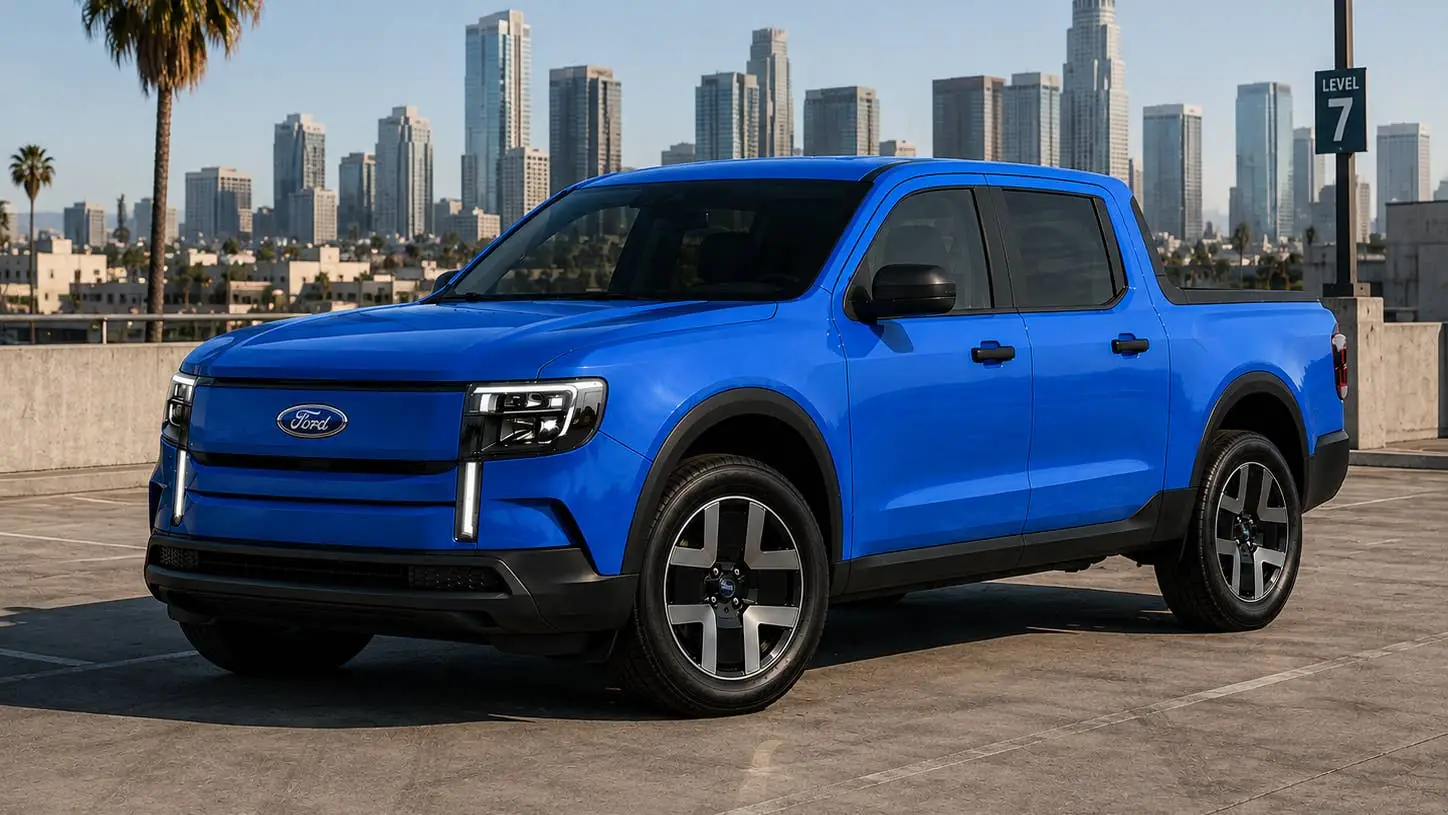
Ford’s upcoming Fathom electric pickup will feature built-in inverter technology, allowing it to supply electricity to homes without a separate wall-mounted inverter. Starting at $28,350, the truck is expected to offer cheaper home backup and energy management equipment, although installation costs, utility regulations and final pricing remain important considerations.
Key Overview
- Starting price: $28,350, with deliveries expected in 2027.
- Home power: More than 10 kilowatts of electricity.
- Estimated equipment costs: Approximately $650 for home power management and $2,100 for backup power.
- Potential earnings: Eligible owners could earn money by participating in grid programmes.
- Main challenge: Installation expenses and utility approval could affect adoption.
Ford Fathom Brings Cheaper EV Home Backup Power
Electric vehicles are increasingly being considered as mobile energy storage systems, but expensive charging equipment has limited their use as household backup batteries. Ford hopes to address that obstacle with its forthcoming Fathom electric pickup, which will start at $28,350 before applicable fees and is expected to arrive in 2027.
The truck will feature an onboard inverter that converts electricity stored in its direct-current (DC) battery into alternating-current (AC) electricity suitable for household use. This eliminates the need for a separate wall-mounted inverter, a major component of many existing vehicle-to-home systems.
Integrating the technology into the vehicle from the beginning could significantly reduce equipment costs. Ford developed the system with engineers from Auto Motive Power, a startup it acquired in 2023, as part of its new Universal EV Platform.
The Fathom is expected to deliver more than 10 kilowatts of power to a home. Depending on household electricity demand and installation design, this could keep essential appliances operating during an outage. However, it will not necessarily power every appliance simultaneously, and equipment such as refrigerators and air conditioners can require additional power when starting.
Home Backup Equipment Could Cost Thousands Less
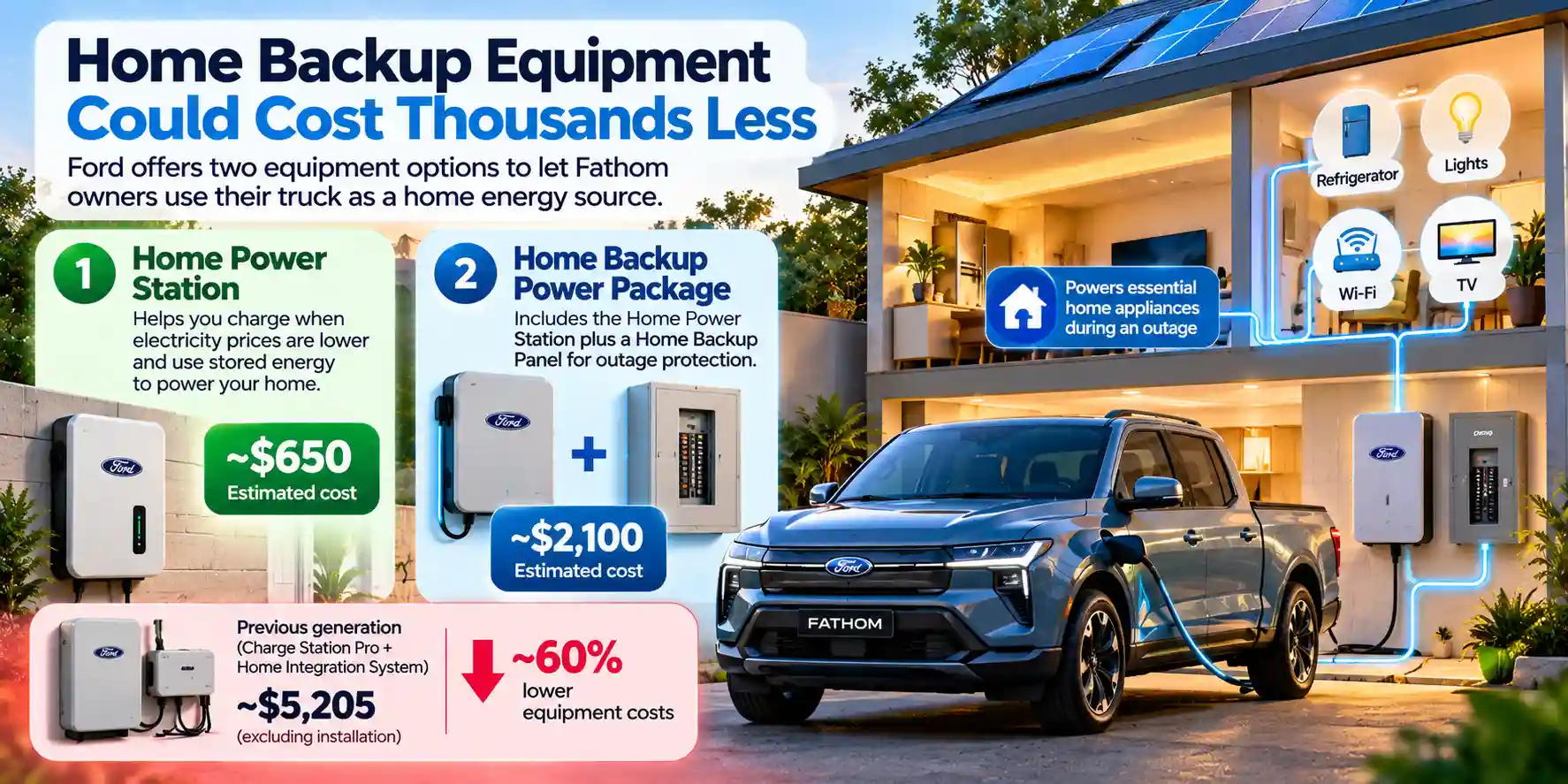
Ford has outlined two equipment options for owners who want to use their trucks as household energy resources.
The Home Power Station, estimated at around $650, will allow owners to charge their vehicles when electricity prices are lower and use stored energy to supply their homes when rates rise. This could help households manage electricity expenses without relying entirely on the grid.
For outage protection, Ford’s Home Backup Power package combines the Home Power Station with a Home Backup Panel. The package is expected to cost approximately $2,100, around 60% less than Ford’s previous-generation backup equipment.
These estimates are derived from Ford’s comparisons with its earlier products. The previous Charge Station Pro and Home Integration System cost approximately $5,205 together, excluding installation. Ford’s new equipment prices are also estimates rather than final confirmed retail prices.
Installation remains a significant consideration. Electrical panel upgrades, wiring and labour could add thousands of dollars, with some existing vehicle-to-everything installations costing as much as $10,000. Consequently, lower equipment prices do not guarantee that every household will find the technology affordable.
EV Owners Could Also Earn From Grid Participation
Beyond household backup, Ford’s technology could support virtual power plants (VPPs). These programmes coordinate distributed energy resources, including connected electric vehicles, to help meet electricity demand.
Owners who qualify for participating programmes could allow their vehicles to supply electricity to the grid when it is needed. Depending on programme rules, electricity prices and participation, this may create an additional income stream. Ford has indicated that potential annual payouts could exceed $1,000 in some circumstances, although it has not guaranteed earnings for Fathom owners.
The opportunity comes as electricity demand increases, including from energy-intensive data centres. Automakers are exploring how batteries can support both transportation and electricity systems.
Existing programmes demonstrate the potential, but incentives depend on eligibility. Pacific Gas and Electric’s vehicle-to-everything programme, for example, offers eligible customers opportunities to use EV batteries for backup, manage electricity costs and receive incentives for grid support. Ford has not confirmed that the Fathom will qualify for this specific programme.
Utility Rules Remain a Major Hurdle
Affordable hardware is only one part of making bidirectional charging widely available. Utilities must also establish how vehicles can safely connect to household electrical systems and, where permitted, export electricity to the grid.
Ford announced a working group formed in July with American Electric Power, BC Hydro, Consumers Energy, Exelon and Pacific Gas & Electric. The group aims to develop common approaches to utility interconnection requirements, reducing administrative barriers for customers.
Inconsistent utility rules remain a challenge across the United States. California and Maryland have established pathways for AC bidirectional charging, while other jurisdictions have more limited arrangements.
Ford’s system uses the SAE J3068 communications standard to support safe interaction between the vehicle and home equipment. Nevertheless, customers will need to check local requirements before assuming they can connect their trucks to the grid or earn payments for exporting electricity.
Outlook
Ford’s Fathom could make electric vehicles more useful by combining transportation, household backup and energy management in one product. Its built-in inverter and lower projected equipment prices address two important barriers to adoption.
However, the overall value will depend on installation costs, household energy needs, utility approval and access to incentive programmes. If Ford delivers on its pricing estimates and utilities simplify interconnection, the Fathom could help bring bidirectional charging to more households when deliveries begin in 2027.
FAQs
1. How much will the Ford Fathom cost?
Ford has announced a starting price of $28,350, with deliveries expected in 2027.
2. How much will its home backup equipment cost?
The Home Power Station is estimated at $650, while the Home Backup Power package is expected to cost approximately $2,100. Installation is additional.
3. Can the Fathom power an entire house during a blackout?
It is expected to deliver more than 10 kW, but the appliances it can operate simultaneously will depend on household demand and the electrical installation.
4. Can owners earn money by sending electricity to the grid?
Potentially. Earnings depend on local utility programmes, eligibility, grid demand and participation. Ford has not guaranteed a specific amount.
Your financial future isn’t something you wait for—it’s something you build.
The real question is: when do you begin?
Move beyond simply staying informed.
Navigate the markets with clarity—track trends through the Serrari Group Market Index, uncover opportunities in the Serrari Marketplace, and build practical knowledge with our Curated Wealth Builder Platform.
Stay connected to what truly matters.
Get daily insights on macro trends and financial movements across Kenya, Africa, and global markets—delivered through the Serrari Newsletter.
Growth opens doors.
Advance your career through professional programs including ACCA, HESI A2, ATI TEAS 7 , HESI EXIT , NCLEX – RN and NCLEX – PN, Financial Literacy!🌟—designed to move you forward with confidence.
See where money is flowing—clearly and in real time.
Track Money Market Funds, Treasury Bills, Treasury Bonds, Green Bonds, and Fixed Deposits, alongside global and African indexes, key economic indicators, and the evolving Crypto and stablecoin landscape—all within Serrari’s Market Index.