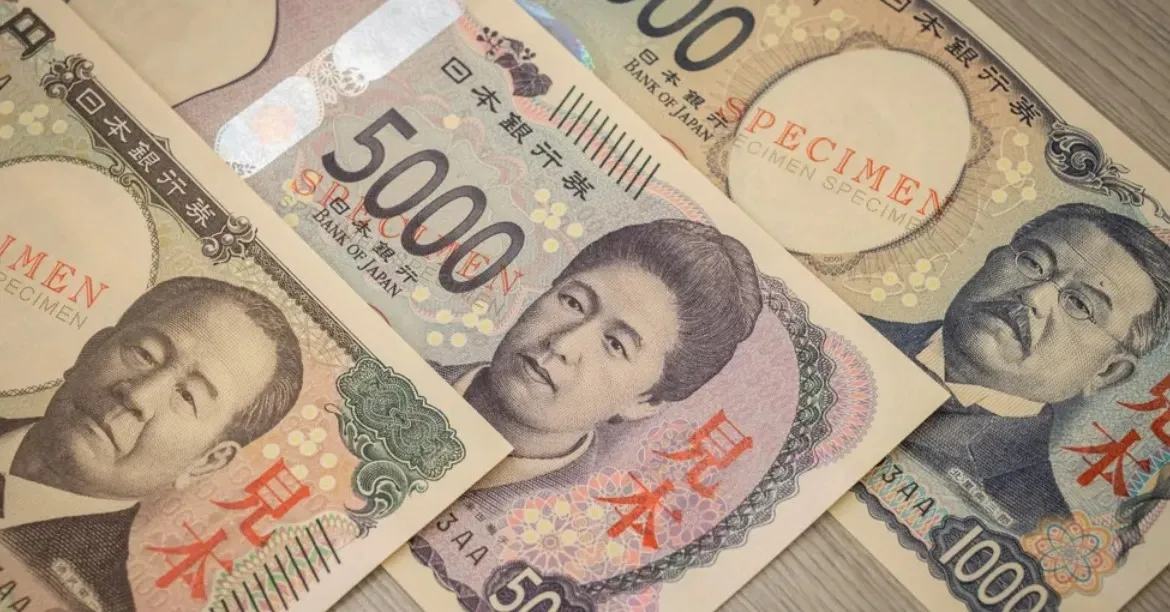
The Egypt Sustainability Samurai Bond has raised JPY 80 billion, approximately USD 500 million, through a two-tranche issuance backed by an African Development Bank guarantee. The deal supports sustainable finance in Egypt by helping fund climate action, human capital, infrastructure and inclusive growth while diversifying Egypt’s sovereign funding sources.
Key Overview
- Egypt issued JPY 80 billion in sustainability samurai bonds.
- The bond is equivalent to approximately USD 500 million.
- The issuance includes five-year and ten-year tranches.
- The African Development Bank provided a partial credit guarantee.
- The five-year tranche was rated AA+, while the ten-year tranche was rated AA.
- Proceeds will support Egypt’s Sovereign Sustainable Financing Framework.
- The issuance helps diversify Egypt’s external debt profile.
- Egypt plans more social bonds and international sukuk in FY2026/27.
Egypt Sustainability Samurai Bond Raises JPY 80 Billion
The Egypt Sustainability Samurai Bond has raised JPY 80 billion, approximately USD 500 million, marking another important step in Egypt’s strategy to diversify sovereign funding and expand sustainable finance.
The issuance was supported by a partial credit guarantee from the African Development Bank Group, helping Egypt access Japan’s Samurai bond market on more competitive terms. The transaction also strengthens Egypt’s ability to raise long-term funding while directing capital toward priority development areas.
The bond was issued in two tranches. The first tranche totals JPY 56 billion and carries a five-year maturity through 2031. The second tranche totals JPY 24 billion and carries a ten-year maturity through 2036.
The five-year tranche was rated AA+, while the ten-year tranche was rated AA. Both are expected to benefit from the African Development Bank’s strong credit profile during their respective guarantee periods.
Egypt Samurai Bond Supports Funding Diversification
The Egypt Samurai bond helps the government diversify its external borrowing away from traditional dollar and euro markets.
Samurai bonds are yen-denominated bonds issued in Japan by foreign borrowers. For Egypt, accessing this market provides an opportunity to broaden its investor base and reduce reliance on a narrow set of international funding sources.
This is particularly important at a time when emerging markets face higher borrowing costs and increased global market volatility. By using Japan’s deep institutional investor base, Egypt can raise long-term funding while reducing refinancing pressure.
The issuance also supports Egypt’s objective of extending the maturity profile of its debt portfolio.
African Development Bank Guarantee Strengthens Deal
The African Development Bank guarantee played a central role in the success of the transaction.
The Bank’s AAA credit rating helped improve investor confidence and allowed Egypt to access longer-dated financing at more competitive rates. The five-year tranche was sold at a yield of 2.87%, while the ten-year tranche was sold at 3.5%.
Ahmed Attout, Director of the African Development Bank’s Financial Sector Development Department, said the operation shows how partial credit guarantees can help regional member countries mobilise private capital and access long-term funding.
This type of support is especially valuable during periods of global uncertainty because it helps emerging economies preserve access to international capital markets.
JPY 80 Billion Bond Funds Sustainable Priorities
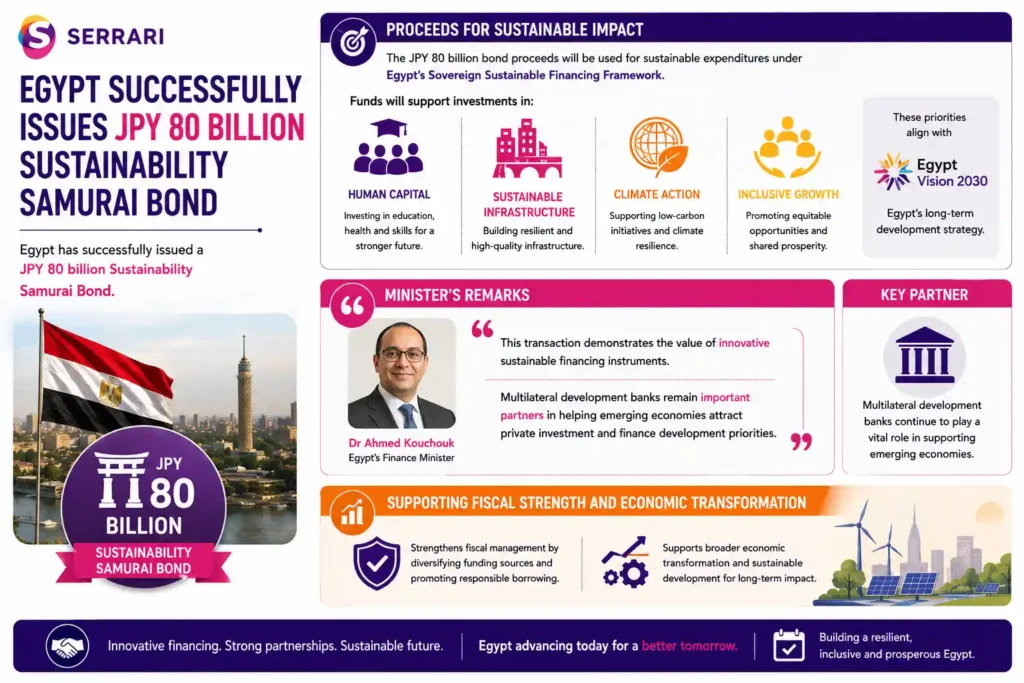
The JPY 80 billion bond proceeds will be used for sustainable expenditures under Egypt’s Sovereign Sustainable Financing Framework.
The government said the funds will support investments in human capital, sustainable infrastructure, climate action and inclusive growth. These priorities align with Egypt Vision 2030, the country’s long-term development strategy.
Egypt’s Finance Minister, Dr Ahmed Kouchouk, said the transaction demonstrates the value of innovative sustainable financing instruments. He also noted that multilateral development banks remain important partners in helping emerging economies attract private investment and finance development priorities.
The issuance therefore supports both fiscal management and broader economic transformation.
Context is everything. Stay ahead of shifting trends with today’s market updates, and uncover emerging opportunities using the Serrari Group Market Index and Marketplace. Then, take control of your own financial future by exploring our Money & Life Reset Transformation Blueprint ™ to build stronger habits, create better systems, and design a path toward lasting wealth.
Sustainable Finance Egypt Gains Momentum
The transaction adds momentum to sustainable finance in Egypt as the country expands its use of ESG-linked borrowing tools.
Egypt has been working to direct more public investment toward green and sustainable projects. The government aims for green projects to account for 75% of total public investment by 2030.
The Samurai bond fits within this wider strategy by linking sovereign borrowing to eligible sustainable expenditures. This can help attract investors seeking both financial returns and measurable environmental or social impact.
The deal also strengthens Egypt’s position in global ESG debt markets, where demand for sustainability-focused sovereign instruments continues to grow.
Sovereign Bond Issuance Supports Debt Strategy
The latest sovereign bond issuance comes as Egypt continues managing a challenging debt environment.
Egypt’s external debt rose to around USD 161.2 billion at the end of fiscal year 2024/25. Debt servicing costs have also consumed a large share of government revenues, increasing pressure on fiscal planning.
To address this, the government aims to reduce external debt by USD 1–2 billion annually and lower debt servicing costs over the medium term. It also plans to reduce debt held by budget sector entities to 78% of GDP by June 2027.
By issuing longer-term yen-denominated bonds with multilateral support, Egypt can reduce short-term refinancing risks while maintaining access to international funding.
ESG Bonds Expand Egypt’s Investor Base
The transaction highlights the growing role of ESG bonds in sovereign financing.
Investors are increasingly looking for debt instruments that support climate resilience, infrastructure development and social outcomes. Sustainability bonds allow governments to connect funding needs with development priorities.
For Egypt, the bond provides a way to attract Japanese institutional investors while reinforcing its commitment to sustainable public investment.
The issuance also closes Egypt’s international placements for FY2025/26 at approximately USD 4 billion, following USD 3.5 billion raised earlier in the year.
Looking ahead, the Finance Ministry plans more social bonds and international sukuk in FY2026/27, with total planned issuances of USD 3–4 billion under its expanded USD 40 billion medium-term international bond programme.
Conclusion
The Egypt Sustainability Samurai Bond represents a major achievement in Egypt’s sustainable financing strategy. By raising JPY 80 billion with support from the African Development Bank, Egypt has diversified its funding sources, extended its debt maturity profile and secured financing for climate, infrastructure and inclusive growth priorities.
The transaction also shows how multilateral guarantees can help emerging economies access private capital during volatile market conditions. As Egypt continues expanding its ESG financing programme, sustainability-linked bonds are likely to remain an important part of its sovereign funding strategy.
FAQs
1. What is the Egypt Sustainability Samurai Bond?
The Egypt Sustainability Samurai Bond is a yen-denominated sovereign bond issued by Egypt in Japan to raise funds for sustainable development projects. The bond raised JPY 80 billion, equivalent to about USD 500 million, and was structured in two tranches with five-year and ten-year maturities. Unlike ordinary sovereign bonds, the proceeds are linked to Egypt’s Sovereign Sustainable Financing Framework, meaning the funds are intended for eligible projects such as climate action, sustainable infrastructure, human capital and inclusive growth.
2. Why was the African Development Bank guarantee important?
The African Development Bank guarantee was important because it strengthened investor confidence and helped Egypt access long-term financing on better terms. The Bank has a AAA credit rating, which improved the credit profile of the transaction and made the bonds more attractive to Japanese investors. For emerging markets such as Egypt, this type of partial credit guarantee can reduce borrowing pressure, support access to international capital markets and help mobilise private capital for sustainable development priorities.
3. How will Egypt use the bond proceeds?
Egypt will use the proceeds from the Sustainability Samurai Bond to finance eligible sustainable expenditures under its Sovereign Sustainable Financing Framework. These may include investments in climate action, sustainable infrastructure, human capital development and inclusive economic growth. The funding also supports Egypt Vision 2030, which aims to build a more resilient, inclusive and environmentally sustainable economy. By linking borrowing to development priorities, Egypt can strengthen both its financing strategy and its long-term sustainability agenda.
4. Why is this bond important for Egypt’s debt strategy?
The bond is important because it helps Egypt diversify its external funding sources and extend its debt maturity profile. By accessing Japan’s Samurai bond market, Egypt reduces reliance on traditional dollar and euro debt markets while attracting a wider group of international investors. The two-tranche structure, with maturities extending to 2031 and 2036, helps reduce short-term refinancing pressure. This is especially useful as Egypt works to lower debt servicing costs and manage its external debt more sustainably over the medium term.
Sources: African Development Bank Group, Ahram Online, Enterprise AM, Trading View, Devdiscourse
Your financial future isn’t something you wait for—it’s something you build.
The real question is: when do you begin?
Move beyond simply staying informed.
Navigate the markets with clarity—track trends through the Serrari Group Market Index, uncover opportunities in the Serrari Marketplace, and build practical knowledge with our Curated Wealth Builder Platform.
Stay connected to what truly matters.
Get daily insights on macro trends and financial movements across Kenya, Africa, and global markets—delivered through the Serrari Newsletter.
Growth opens doors.
Advance your career through professional programs including ACCA, HESI A2, ATI TEAS 7 , HESI EXIT , NCLEX – RN and NCLEX – PN, Financial Literacy!🌟—designed to move you forward with confidence.
See where money is flowing—clearly and in real time.
Track Money Market Funds, Treasury Bills, Treasury Bonds, Green Bonds, and Fixed Deposits, alongside global and African indexes, key economic indicators, and the evolving Crypto and stablecoin landscape—all within Serrari’s Market Index.