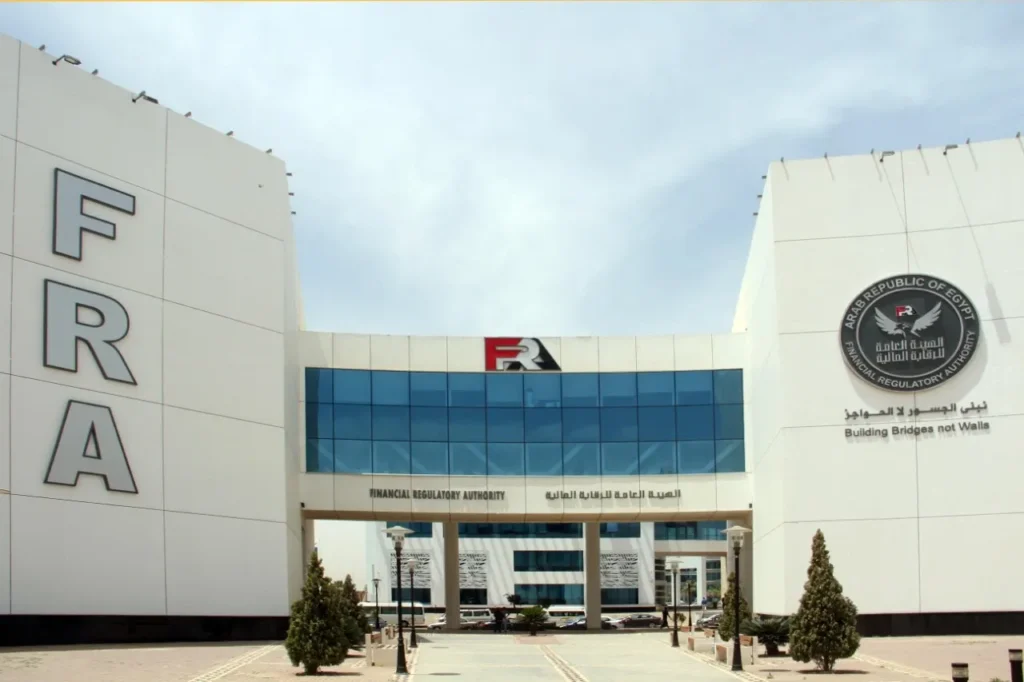
Egypt’s Financial Regulatory Authority (FRA) has reduced by 50% the fees for reviewing and assessing applications for securities linked to sustainable development projects. The move is intended to lower financing costs, expand access to non-bank funding and create a more supportive investment climate. The reduction applies to green bonds, sustainable development bonds, climate bonds and transition bonds, including securities financing social projects, environmentally friendly initiatives, emissions reduction and energy conservation activities.
Key Overview
- FRA has cut application review fees for sustainable development securities by 50%.
- The measure aims to reduce financing costs and expand access to non-bank financing.
- The reduction covers green bonds, sustainable development bonds, climate bonds and transition bonds.
- Eligible financing can support environmental, social and sustainable development projects.
- Egypt’s capital market had between 250,000 and 300,000 investors as of March 2026.
- Around 180,000 new investors are expected to join the market this year.
- The non-banking financing sector accounted for about 54% of Egypt’s total financial ecosystem.
FRA Cuts Green Bond Application Review Fees
Egypt’s Financial Regulatory Authority (FRA) has cut by 50 percent the fees for reviewing and assessing applications for securities linked to sustainable development projects.
According to the authority, the measure is aimed at lowering financing costs, expanding access to non-bank funding and helping create a more supportive investment climate in Egypt.
The reduction is intended to encourage the use of bonds as a non-banking financing tool, provided the financing contributes to sustainable development.
The measure applies whether securities are offered through a public offering or a private placement.
Under the Capital Market Law, bond issuers remain obligated to repay the principal and accrued return.
Wider Range of Sustainable Financing Instruments
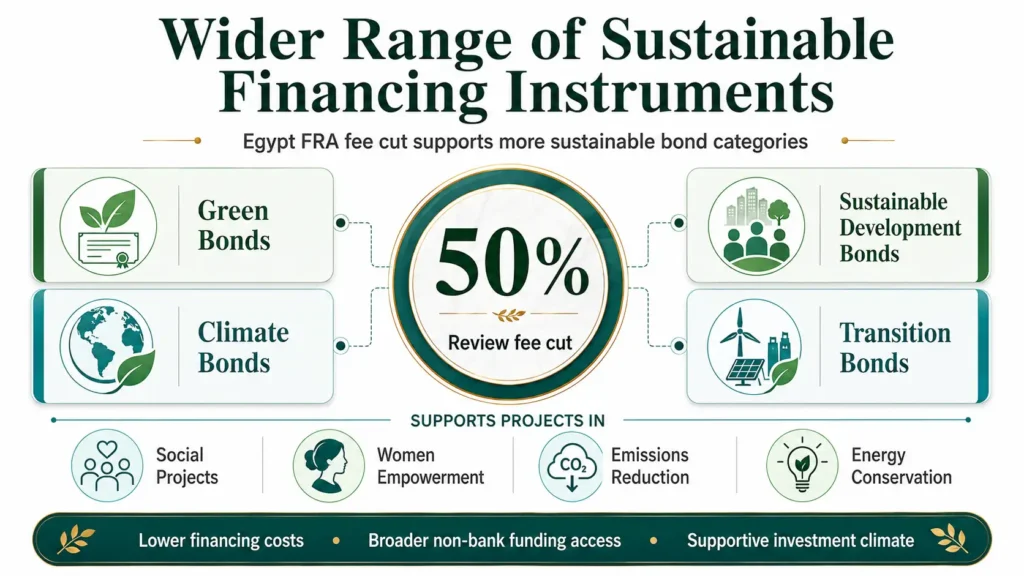
Securities linked to sustainable development projects refer to financial instruments issued to raise money for projects with environmental, social or broader sustainable-development objectives.
The new decision covers applications for green bonds, sustainable development bonds and other related bonds intended to finance existing or new social projects, including initiatives focused on women empowerment.
It also covers climate bonds for environmentally friendly projects and transition bonds intended to finance carbon or gas emission and pollution reduction activities, as well as energy conservation projects.
The move therefore broadens the scope of securities that can benefit from the reduced review fees while supporting projects linked to environmental and social objectives.
Supporting Egypt’s Non-Bank Financing Market
The FRA said the measure aligns with the government’s broader strategy to enhance transparency and diversify investment tools.
The authority expects the move to help expand the investor base and deepen capital markets as the number of investors increases.
Egypt’s capital market had between 250,000 and 300,000 investors as of March 2026, with 180,000 new investors expected to join the market this year.
According to FRA Chairman Islam Azzam, the latest action supports efforts to back and facilitate funding for projects linked to social and environmental objectives while increasing non-banking financial activity to improve quality of life.
Context is everything. Stay ahead of shifting trends with today’s market updates, and uncover emerging opportunities using the Serrari Group Market Index and Marketplace. Then, take control of your own financial future by exploring our Money & Life Reset Transformation Blueprint ™ to build stronger habits, create better systems, and design a path toward lasting wealth.
Capital Market Framework Continues to Evolve
The Capital Market Law channels savings into investment through the issuance and trading of equities, bonds and sukuk across various sectors.
The law was amended in December 2025, allowing the FRA to study ways to introduce greater flexibility in investment and increase Egyptian stock exchange volumes.
The latest fee reduction forms part of efforts to facilitate access to financing through capital market instruments while supporting sustainable development projects.
Non-Banking Finance Gains Importance
Egypt’s non-banking financing sector accounted for about 54 percent of the country’s total financial ecosystem, surpassing the traditional banking sector’s share of overall financial activity.
The development highlights the growing role of non-bank financing channels in supporting investment and economic activity.
By the end of 2025, the total number of operating entities in Egypt’s capital markets sector had reached 978, including 253 listed firms, 538 operating firms and 172 investment funds.
Outlook
The FRA’s 50% reduction in review fees for sustainable development securities is expected to make it more attractive for issuers to use capital market instruments to finance environmental and social projects. By reducing the costs associated with applications for green bonds, sustainable development bonds, climate bonds and transition bonds, the measure supports Egypt’s efforts to expand non-bank financing and diversify investment tools. As the country’s investor base continues to grow and non-banking financial activity remains a significant part of the financial ecosystem, sustainable finance instruments could play a larger role in mobilising capital for projects linked to environmental protection, emissions reduction, energy conservation and social development.
FAQs
1. What did Egypt’s FRA change?
The Financial Regulatory Authority reduced by 50 percent the fees for reviewing and assessing applications for securities linked to sustainable development projects.
2. Which bonds are covered by the fee reduction?
The decision covers green bonds, sustainable development bonds, climate bonds and transition bonds, among related securities.
3. What is the purpose of the fee reduction?
The measure aims to lower financing costs, expand access to non-bank funding and support a more favourable investment climate.
4. How large is Egypt’s non-banking financing sector?
The non-banking financing sector accounted for about 54 percent of Egypt’s total financial ecosystem, according to the information provided.
Your financial future isn’t something you wait for—it’s something you build.
The real question is: when do you begin?
Move beyond simply staying informed.
Navigate the markets with clarity—track trends through the Serrari Group Market Index, uncover opportunities in the Serrari Marketplace, and build practical knowledge with our Curated Wealth Builder Platform.
Stay connected to what truly matters.
Get daily insights on macro trends and financial movements across Kenya, Africa, and global markets—delivered through the Serrari Newsletter.
Growth opens doors.
Advance your career through professional programs including ACCA, HESI A2, ATI TEAS 7 , HESI EXIT , NCLEX – RN and NCLEX – PN, Financial Literacy!🌟—designed to move you forward with confidence.
See where money is flowing—clearly and in real time.
Track Money Market Funds, Treasury Bills, Treasury Bonds, Green Bonds, and Fixed Deposits, alongside global and African indexes, key economic indicators, and the evolving Crypto and stablecoin landscape—all within Serrari’s Market Index.