Egypt’s EGX30 rose 0.38% on August 13 to close at 55,251.59, but the broader market sent a more cautious signal. The EGX70 fell 0.19%, 119 shares declined against 90 advancing, and foreign investors were net sellers by about EGP252.6 million.
The divergence matters because a benchmark index can rise even when most listed shares are not participating. July nationwide inflation also increased to 13.0% from 12.2% in June, keeping interest rates and the August 20 Central Bank of Egypt meeting relevant to equity valuations.
Key Overview
- EGX30: 55,251.59, up 0.38%
- EGX70 EWI: 21,588.92, down 0.19%
- Advancers: 90
- Decliners: 119
- Market capitalisation: approximately EGP4.236 trillion
- Trading value: approximately EGP14.03 billion
- Foreign investors net sold: about EGP252.6 million
- Egyptian investors net bought: about EGP259.2 million
- Nationwide July inflation: 13.0%
EGX 30 Index Holds Above 55,000 as Market Breadth Weakens
Egypt’s benchmark stock index ended Thursday higher, but the session underneath the headline number was far less convincing.
The Arab Finance August 13 market close showed the EGX30 rising 0.38% to 55,251.59. The EGX70 Equal Weight Index, which tracks smaller and medium-sized companies, fell 0.19% to 21,588.92.
That difference is the main investor lesson from the session:
Index performance and market breadth are not the same thing.
Why Market Breadth Matters
The same closing data showed 90 companies advancing, 119 declining and 12 unchanged.
When more shares fall than rise while a major benchmark advances, the rally is being carried by a narrower group of stocks.
That does not automatically signal an imminent market decline. But it can indicate that headline strength is not being shared evenly.
Large-cap indexes can continue rising when heavyweight constituents perform strongly enough to offset weakness elsewhere.
For investors, that means the EGX30 should be read alongside broader indexes and advance-decline data rather than in isolation.
The Amwal Al Ghad closing market report independently confirmed the EGX30 gain and EGX70 decline.
Turnover Remained Substantial
Total trading value reached about EGP14.03 billion across 301,170 transactions, while market capitalisation finished near EGP4.236 trillion.
Egyptian investors accounted for 92.74% of trading, foreigners 4.83% and Arab investors 2.43%.
More importantly, Egyptian investors were net buyers of approximately EGP259.2 million, while foreign investors were net sellers of roughly EGP252.6 million. Arab investors were also modest net sellers.
A single day of foreign selling does not establish a trend.
But repeated foreign outflows would matter because offshore investors must consider both equity performance and movements in the Egyptian pound.
Inflation Adds Another Layer
The Ahram Online July inflation report showed Egypt’s nationwide headline inflation increasing to 13.0% in July from 12.2% in June. Monthly inflation was only 0.1%, but the higher annual reading shows that price pressures have not disappeared.
That matters for equities because inflation influences interest-rate expectations and the returns investors can earn from fixed-income alternatives.
At its July 9 meeting, the CBE July monetary policy statement kept the overnight deposit rate at 19.00%, lending rate at 20.00% and main-operation rate at 19.50%.
The central bank said it expected inflation to accelerate through the third quarter before gradually easing.
Context is everything. Stay ahead of shifting trends with today’s market updates, and uncover emerging opportunities using the Serrari Group Market Index and Marketplace. Then, take control of your own financial future by exploring our Money & Life Reset Transformation Blueprint ™ to build stronger habits, create better systems, and design a path toward lasting wealth.
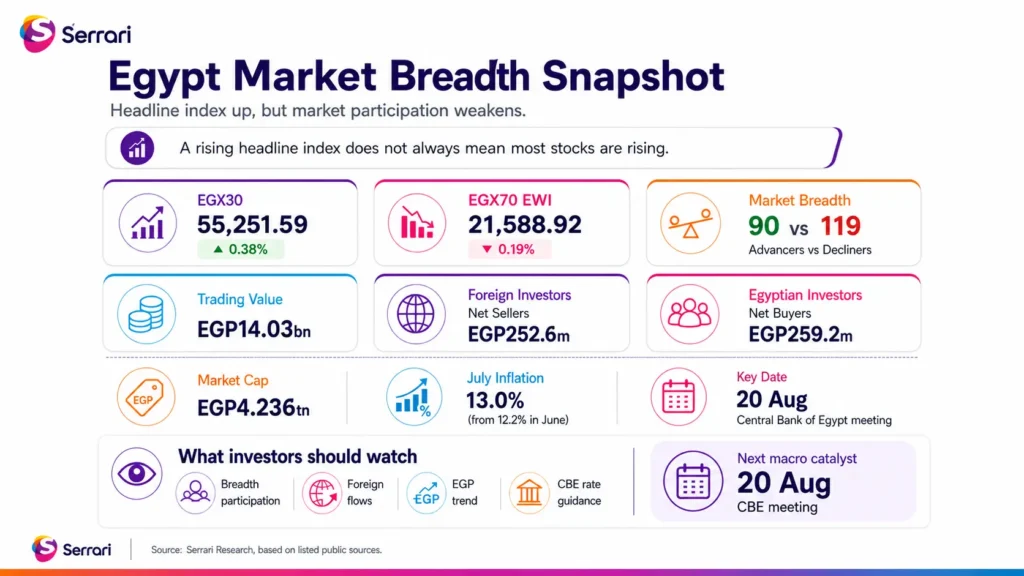
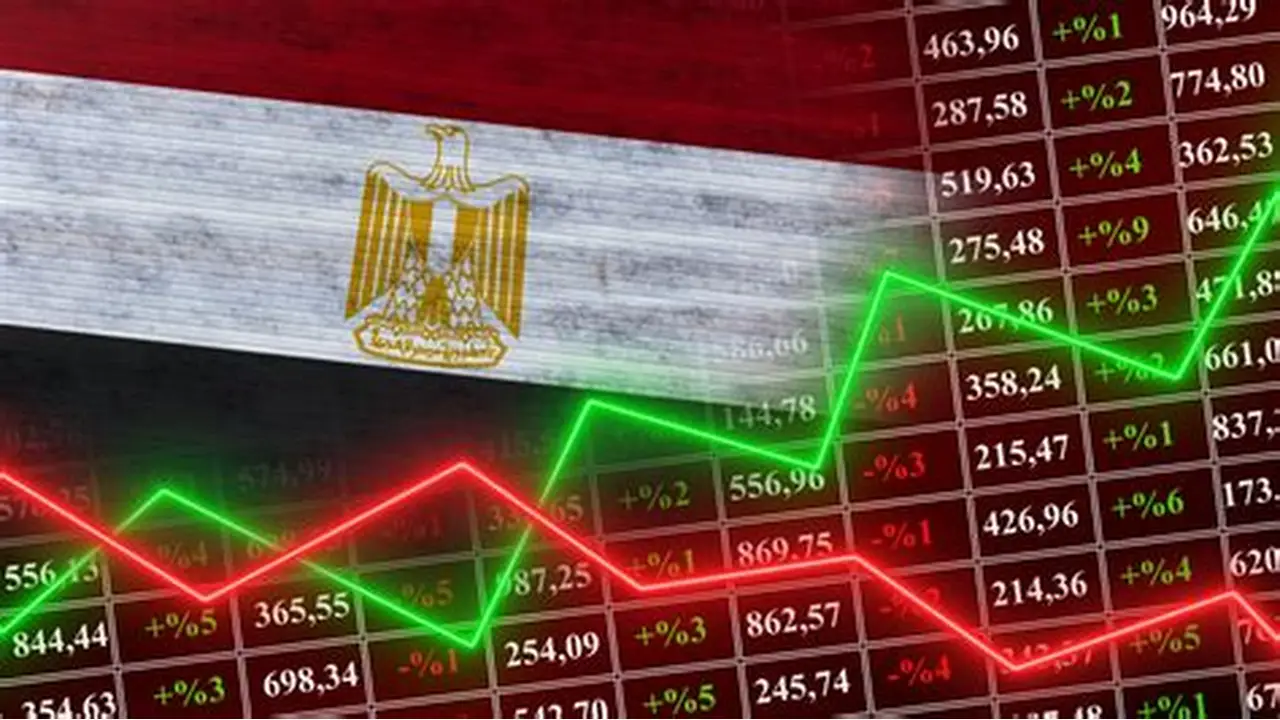
The EGX30 rises 0.38% to 55,251.59 while the broader Egyptian market weakens: the EGX70 falls 0.19%, 119 stocks decline against 90 advancing, foreign investors are net sellers and nationwide inflation stands at 13.0%. The graphic explains that a rising headline index does not necessarily mean most stocks are rising.
What Investors Should Watch Next
The next major macro event is the Central Bank of Egypt’s August 20 monetary-policy meeting. The date is also highlighted in the Ahram July inflation market analysis.
Investors should watch five signals together:
- Whether EGX30 gains broaden into smaller shares;
- The ratio of advancing to declining stocks;
- Foreign investor flows;
- Egyptian-pound performance; and
- The CBE’s inflation and interest-rate guidance.
If the EGX30 continues climbing while breadth deteriorates, concentration risk becomes more important.
If smaller stocks begin participating and foreign flows improve, the rally would look healthier and broader.
Currency also matters for international investors. A local-currency equity gain can be reduced or reversed when translated into dollars if the Egyptian pound weakens.
Conclusion
Thursday’s 0.38% EGX30 gain keeps Egypt’s flagship index above 55,000, but the rest of the session argues for a more measured interpretation.
The EGX70 declined, losers outnumbered gainers and foreign investors ended the session as net sellers.
That does not invalidate the strength of Egypt’s leading shares.
It simply shows why investors should look beneath the benchmark.
The most useful question is no longer whether the EGX30 is rising.
It is whether more of the Egyptian market can begin rising with it.
FAQs
1. What did the EGX30 close at on August 13?
The EGX30 closed at 55,251.59 points, up 0.38% for the session. The EGX70 moved in the opposite direction, declining 0.19% to 21,588.92.
2. What does weak market breadth mean?
Weak breadth means fewer shares are participating in a market advance. On Thursday, 119 stocks declined while only 90 advanced, even though the EGX30 finished higher.
3. Why were foreign investor flows important?
Foreign investors were net sellers by about EGP252.6 million. For offshore investors, Egyptian equities combine stock-market risk with currency risk, making sustained foreign flows an important sentiment indicator.
4. What is the next major catalyst?
The next major domestic macro catalyst is the CBE’s August 20 monetary-policy meeting, where investors will focus on inflation, interest-rate guidance and the outlook for financial conditions.
Sources: Egyptian Exchange official reports, Arab Finance August 13 market close, Amwal Al Ghad closing market report, Ahram Online July inflation report, CBE July monetary policy statement.
Your financial future isn’t something you wait for—it’s something you build.
The real question is: when do you begin?
Move beyond simply staying informed.
Navigate the markets with clarity—track trends through the Serrari Group Market Index, uncover opportunities in the Serrari Marketplace, and build practical knowledge with our Curated Wealth Builder Platform.
Stay connected to what truly matters.
Get daily insights on macro trends and financial movements across Kenya, Africa, and global markets—delivered through the Serrari Newsletter.
Growth opens doors.
Advance your career through professional programs including ACCA, HESI A2, ATI TEAS 7 , HESI EXIT , NCLEX – RN and NCLEX – PN, Financial Literacy!🌟—designed to move you forward with confidence.
See where money is flowing—clearly and in real time.
Track Money Market Funds, Treasury Bills, Treasury Bonds, Green Bonds, and Fixed Deposits, alongside global and African indexes, key economic indicators, and the evolving Crypto and stablecoin landscape—all within Serrari’s Market Index.