Christian Aid has launched the Christian Aid Resilient Futures Fund (CARFF), an investment vehicle targeting £20 million in assets by 2030. The fund will finance locally owned businesses and financial intermediaries helping communities adapt to climate change, initially focusing on climate-vulnerable emerging and frontier markets, particularly in sub-Saharan Africa.
Key Overview
- Fund: Christian Aid Resilient Futures Fund (CARFF)
- Target assets: £20 million by 2030
- Structure: Wholly owned subsidiary with its own board and investment committee
- Initial approach: Specialist impact fund managers and direct lending
- Partners: Talanton and BlueOrchard
- Initial focus: Emerging and frontier markets
- Key sectors: Climate-smart agriculture, renewable energy, clean water and food systems
Christian Aid Launches Climate Resilience Investment Fund
Christian Aid has launched a new investment vehicle designed to finance businesses helping communities adapt to climate change.
The Christian Aid Resilient Futures Fund (CARFF) is a wholly owned subsidiary of Christian Aid, with a separate board and investment committee. The fund aims to build £20 million in assets by 2030.
Its first phase will invest mainly through selected specialist impact fund managers, alongside a smaller direct-lending portfolio.
Christian Aid has already finalised partnership agreements with impact investment managers Talanton and BlueOrchard.
Fund Targets Climate-Vulnerable Markets
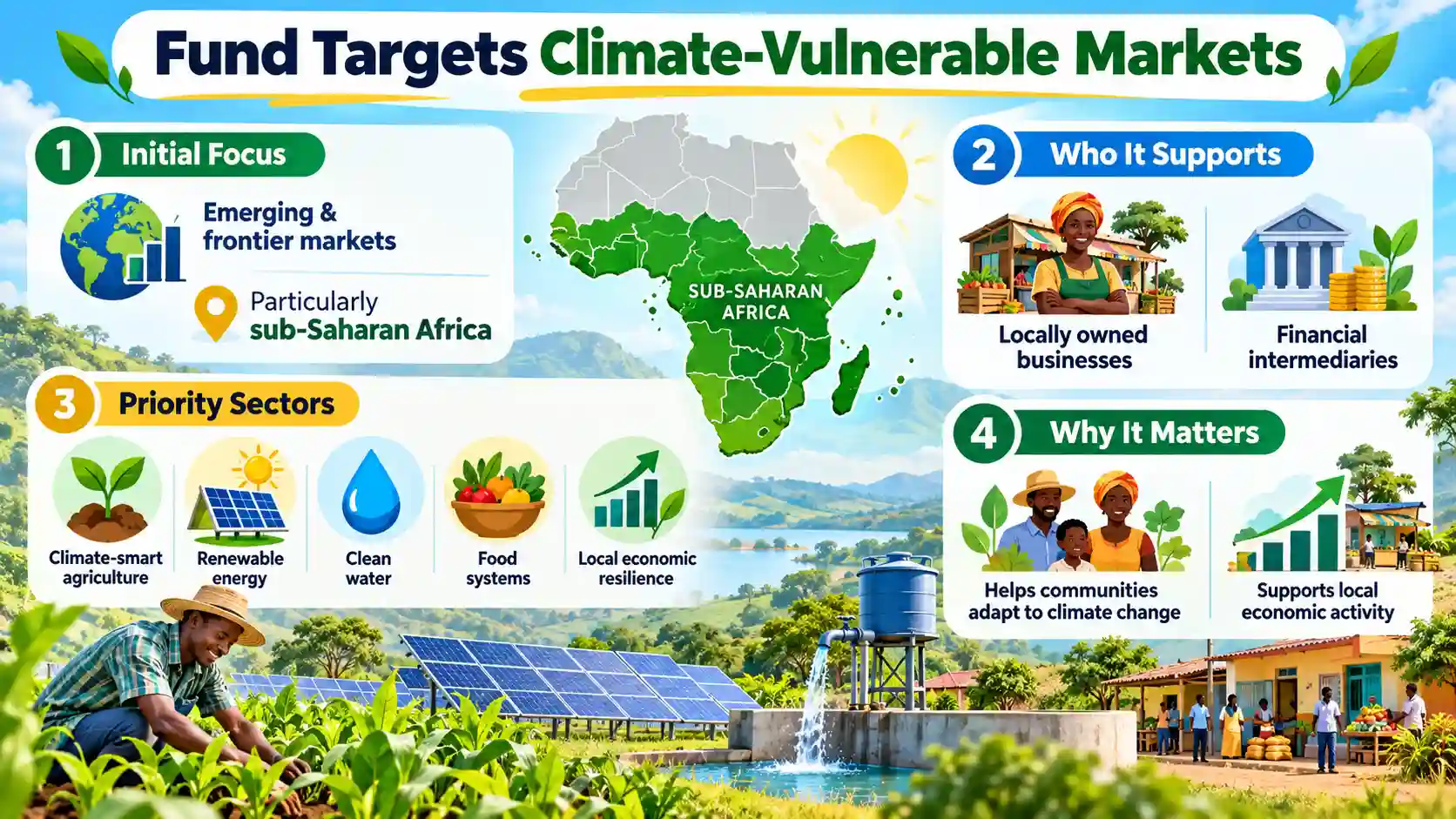
CARFF will initially focus on climate-vulnerable emerging and frontier markets, particularly in sub-Saharan Africa.
The fund will support smaller businesses and financial intermediaries working in areas that can strengthen local climate resilience.
These areas include climate-smart farming, renewable energy, clean water and local food systems.
The fund is intended to provide capital to businesses whose activities can help communities respond to climate-related challenges while supporting local economic activity.
Addressing the “Missing Middle” in Finance
Christian Aid is positioning the fund around what impact investors often describe as the “missing middle” in development finance.
This refers to businesses that have commercially viable activities but may be too large or mature for conventional grant programmes while remaining too small, risky or unfamiliar for mainstream commercial lenders.
Such businesses can face challenges including short repayment periods, high borrowing costs and limited collateral.
They may also operate in markets exposed to political, currency, infrastructure and climate risks, making it more difficult to secure conventional financing.
CARFF is designed to provide investment to businesses operating within this gap.
Supporting Climate-Smart Businesses
The fund will support enterprises working across several sectors linked to climate adaptation and local resilience.
Potential areas include small solar energy companies, businesses supplying drought-resistant seeds, clean water providers and organisations supporting local food systems.
In Kenya, an electric mobility company operating in a congested urban corridor is using electric motorcycles and solar-powered charging infrastructure to reduce emissions while providing drivers with a more affordable and stable income model.
In Uganda, agricultural enterprises are helping smallholder farmers improve access to processing, storage, logistics and higher-value markets.
These businesses can also help reduce post-harvest losses, strengthen local farmer groupings and connect producers with more reliable buyers.
Context is everything. Stay ahead of shifting trends with today’s market updates, and uncover emerging opportunities using the Serrari Group Market Index and Marketplace. Then, take control of your own financial future by exploring our Money & Life Reset Transformation Blueprint ™ to build stronger habits, create better systems, and design a path toward lasting wealth.
Climate Finance Gap Adds Pressure
The fund is being launched as climate-vulnerable countries face increasing costs from droughts, floods and other climate-related shocks.
At the same time, international aid is experiencing a significant decline, affecting funding available for climate adaptation and resilience.
According to OECD figures provided in the announcement, global aid fell by around 23 per cent in 2025 and was expected to fall again in 2026.
Christian Aid said the changing aid environment increases the importance of private investment as part of the funding mix.
Long-Term Finance for Local Enterprises
CARFF will focus on providing investment that allows enterprises to develop and expand over time.
Affordable, long-term finance can enable businesses to invest in infrastructure and gradually increase their operations without relying on short-term or prohibitively expensive commercial lending.
This approach is particularly relevant for businesses operating in climate-vulnerable markets, where financing conditions can make it difficult to invest in long-term resilience.
By working through specialist impact fund managers alongside direct lending, the fund will seek to reach businesses working directly within local economies.
Outlook
The Christian Aid Resilient Futures Fund adds an investment-based approach to financing climate adaptation and local economic resilience.
With a target of £20 million in assets by 2030, the fund will initially focus on emerging and frontier markets, particularly in sub-Saharan Africa.
Its investments are expected to support businesses involved in climate-smart agriculture, renewable energy, clean water, food systems and other activities that can help communities respond to climate-related challenges.
FAQs
1. What is the Christian Aid Resilient Futures Fund?
The Christian Aid Resilient Futures Fund (CARFF) is a wholly owned Christian Aid subsidiary created to invest in businesses helping communities adapt to climate change.
2. How much does the fund aim to invest?
CARFF aims to build £20 million in assets by 2030.
3. Where will the fund invest?
The fund will initially focus on climate-vulnerable emerging and frontier markets, particularly in sub-Saharan Africa.
4. Which sectors will the fund support?
The fund will support areas including climate-smart agriculture, renewable energy, clean water, food systems and local economic resilience.
Sources: Christian Aid, Dealroom, Business Quarter
Your financial future isn’t something you wait for—it’s something you build.
The real question is: when do you begin?
Move beyond simply staying informed.
Navigate the markets with clarity—track trends through the Serrari Group Market Index, uncover opportunities in the Serrari Marketplace, and build practical knowledge with our Curated Wealth Builder Platform.
Stay connected to what truly matters.
Get daily insights on macro trends and financial movements across Kenya, Africa, and global markets—delivered through the Serrari Newsletter.
Growth opens doors.
Advance your career through professional programs including ACCA, HESI A2, ATI TEAS 7 , HESI EXIT , NCLEX – RN and NCLEX – PN, Financial Literacy!🌟—designed to move you forward with confidence.
See where money is flowing—clearly and in real time.
Track Money Market Funds, Treasury Bills, Treasury Bonds, Green Bonds, and Fixed Deposits, alongside global and African indexes, key economic indicators, and the evolving Crypto and stablecoin landscape—all within Serrari’s Market Index.