Brazil has extended duty-free imports for completely knocked-down (CKD) and semi-knocked-down (SKD) electric vehicle kits for an additional six months, allowing automakers to continue assembling EVs locally. The measure supports Brazil’s transition toward electric mobility and benefits manufacturers such as BYD and General Motors, while domestic automakers argue the extension could undermine local investments and supply chains.
Key Overview
- Brazil approved a new US$463 million import quota for EV assembly kits.
- The measure takes effect on July 1, 2026, for six months.
- CKD and SKD electric vehicle kits can enter duty-free within quota limits.
- BYD and General Motors are expected to benefit significantly.
- Full import tariffs will still rise to 35% by 2027.
- Domestic manufacturers oppose the decision.
- The policy supports decarbonization and fleet modernization.
- The government aims to strengthen local EV production.
Temporary Tariff Relief Supports EV Manufacturing Transition
Brazil has approved a temporary extension of duty exemptions for imported electric vehicle assembly kits, allowing automakers to continue importing completely knocked-down (CKD) and semi-knocked-down (SKD) kits for local assembly during the second half of 2026.
The measure was approved by the Executive Management Committee of Brazil’s Foreign Trade Chamber (Gecex-Camex), which authorized an additional import quota worth up to US$463 million for eligible electric vehicle components.
The decision is designed to support the country’s transition toward domestic electric vehicle manufacturing while maintaining the government’s longer-term plan to increase import tariffs and encourage full-scale local production.
New Quotas Begin in July 2026
The new tariff-free import quota takes effect on July 1, 2026, and will remain in force for six months.
Under the arrangement, automakers can import CKD and SKD electric vehicle kits without paying import duties, provided they remain within the approved quota limits.
Once the quota has been exhausted, existing tariff rates will apply:
- 35% tariff for SKD vehicles.
- 14% tariff for CKD imports.
- 35% tariff for all CKD imports beginning January 2027.
The government has also confirmed that fully assembled imported vehicles will not qualify for the quota system.
Supporting Brazil’s EV Transition
According to Brazil’s Ministry of Development, Industry, Trade and Services, the measure supports fleet modernization, technological innovation, and decarbonization within the automotive sector.
Officials argue that the temporary exemption helps manufacturers establish local operations while maintaining the existing timetable for gradually increasing import duties.
The government believes the policy strikes a balance between encouraging investment and protecting domestic industry.
BYD Expected to Benefit Most
Chinese electric vehicle manufacturer BYD is expected to be the largest beneficiary of the extended exemptions.
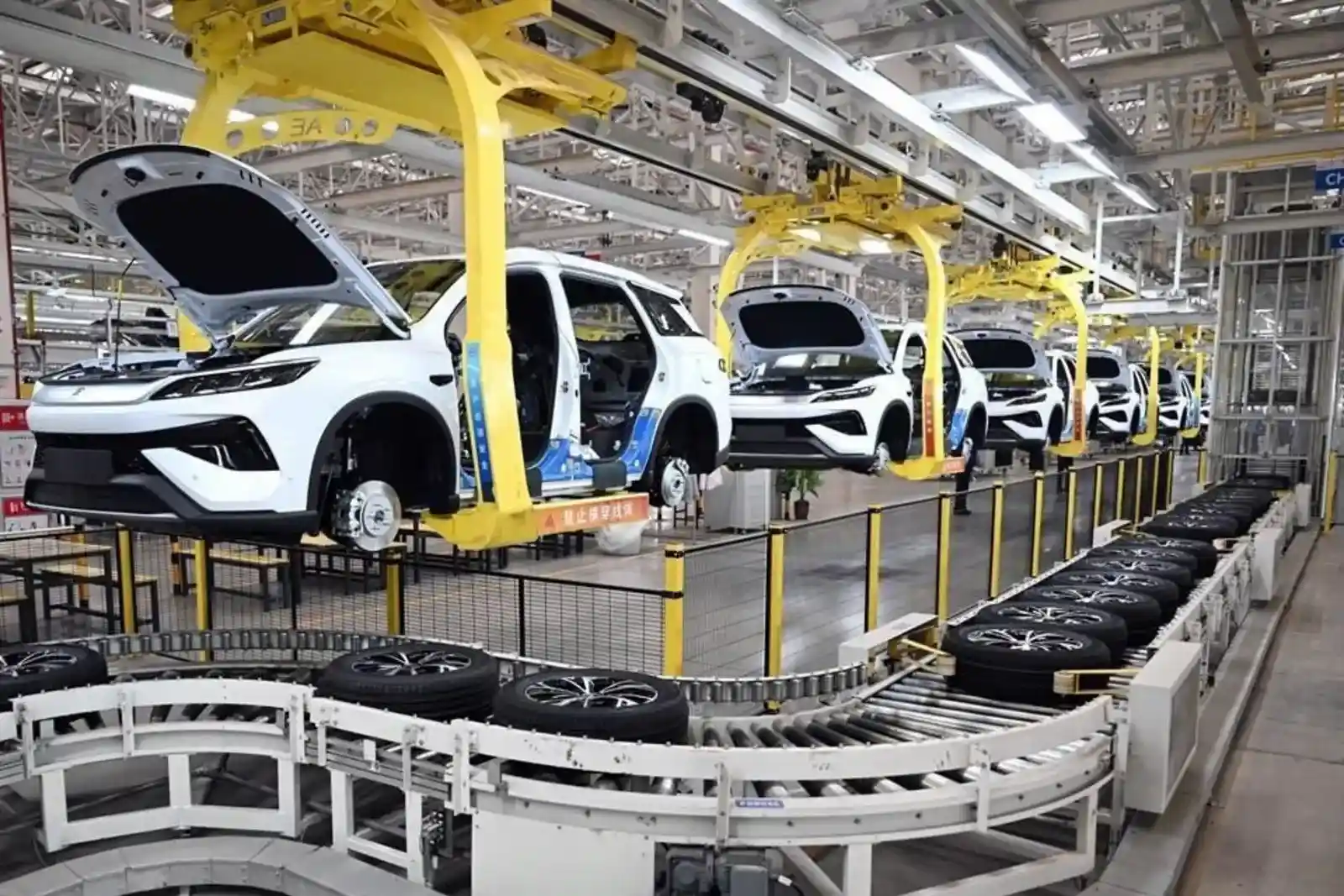
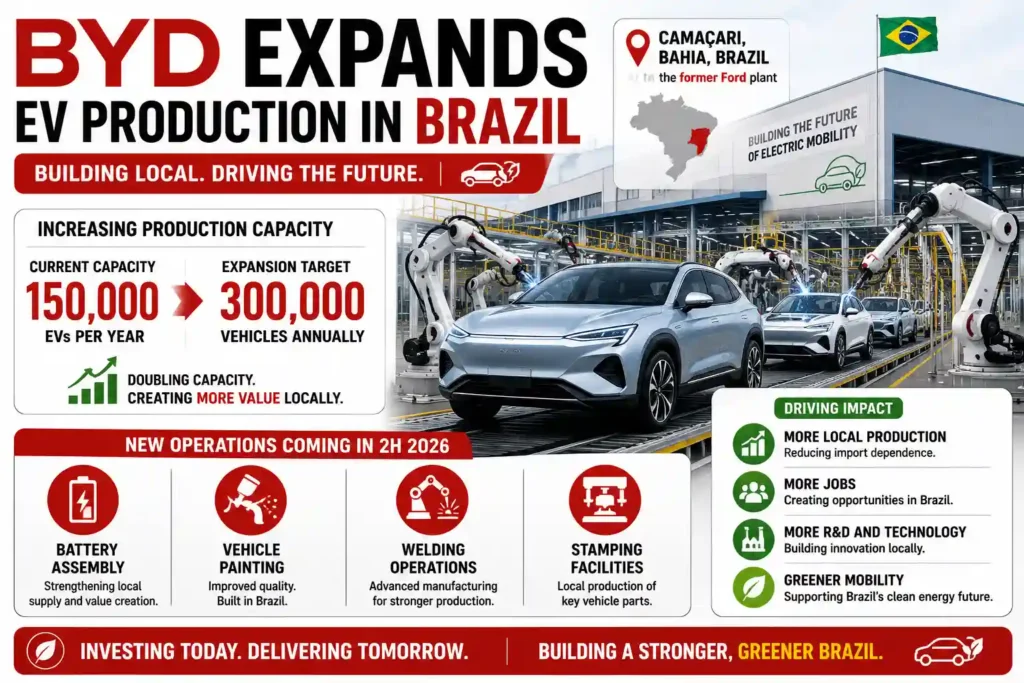
The company operates a manufacturing facility at the former Ford industrial site in Camaçari, Bahia, where it currently uses CKD and SKD assembly processes.
BYD plans to expand its local manufacturing capabilities during the second half of 2026 by introducing:
- Welding operations.
- Vehicle painting.
- Stamping facilities.
- Battery assembly.
The company says these investments will increase local value creation, reduce import dependence, and create new jobs.
The Camaçari facility currently has an annual production capacity of approximately 150,000 vehicles, with plans to expand to 300,000 units.
General Motors Also Uses SKD Production
General Motors is another beneficiary of the measure.
The company recently began local assembly of the Chevrolet Captiva EV at its plant in Ceará using SKD production methods.
The electric SUV is based on the Chinese Wuling Starlight S platform and utilizes components sourced from China.
Local assembly allows manufacturers to reduce costs while gradually increasing domestic production capabilities.
Context is everything. Stay ahead of shifting trends with today’s market updates, and uncover emerging opportunities using the Serrari Group Market Index and Marketplace. Then, take control of your own financial future by exploring our Money & Life Reset Transformation Blueprint ™ to build stronger habits, create better systems, and design a path toward lasting wealth.
Industry Groups Oppose the Decision
Brazil’s National Association of Automotive Vehicle Manufacturers (Anfavea) strongly criticized the government’s decision.
The association argues that the extension was approved without consulting domestic manufacturers and creates uncertainty for companies that planned investments based on previously agreed tariff schedules.
Anfavea stated that the measure:
- Undermines local suppliers.
- Creates regulatory uncertainty.
- Weakens domestic manufacturing.
- Affects employment opportunities.
- Alters previously agreed industrial policies.
The organization warned that automakers had already announced approximately 140 billion reais in investments through 2033 based on earlier government commitments.
Tariff Increases Still Planned
Despite the temporary exemption, Brazil continues to move toward higher import duties.
Current plans include:
- 35% tariffs on SKD vehicles beginning July 2026.
- 35% tariffs on CKD imports beginning January 2027.
- 35% tariffs for fully assembled EVs.
The government hopes these measures will encourage foreign manufacturers to establish full production operations within Brazil.
This strategy aims to strengthen local supply chains, create jobs, and increase domestic manufacturing capacity.
Supporting Decarbonization Goals
Brazil’s government argues that the temporary measure supports the country’s broader environmental and industrial goals.
Electric vehicles play an increasingly important role in:
- Reducing transport emissions.
- Modernizing vehicle fleets.
- Supporting clean mobility.
- Promoting technological innovation.
- Strengthening sustainable manufacturing.
Officials say the policy contributes to decarbonizing the automotive sector while supporting the transition toward cleaner transportation.
Outlook
Brazil’s temporary tariff exemption reflects the difficult balance between encouraging electric vehicle investment and protecting domestic manufacturing industries. While companies such as BYD and General Motors benefit from lower import costs, local automakers remain concerned about competitive pressures and policy uncertainty.
As higher import duties take effect in 2027, manufacturers will increasingly need to expand local production capabilities. The success of this transition may determine whether Brazil becomes a major regional hub for electric vehicle manufacturing while supporting employment, supply chain development, and long-term decarbonization goals.
FAQs
1. What are CKD and SKD vehicles?
CKD vehicles arrive completely disassembled, while SKD vehicles arrive partially assembled and are completed locally.
2. How long will the tariff exemption last?
The exemption begins on July 1, 2026, and remains in place for six months.
3. Which companies benefit most?
BYD and General Motors are expected to be the primary beneficiaries.
4. Why are domestic automakers opposed?
They believe the measure creates uncertainty, affects local suppliers, and weakens incentives for domestic manufacturing investment.
Sources: electrive, Valor International, Mobility Portal, Plataforma Media, Brazil Stock Guide
Your financial future isn’t something you wait for—it’s something you build.
The real question is: when do you begin?
Move beyond simply staying informed.
Navigate the markets with clarity—track trends through the Serrari Group Market Index, uncover opportunities in the Serrari Marketplace, and build practical knowledge with our Curated Wealth Builder Platform.
Stay connected to what truly matters.
Get daily insights on macro trends and financial movements across Kenya, Africa, and global markets—delivered through the Serrari Newsletter.
Growth opens doors.
Advance your career through professional programs including ACCA, HESI A2, ATI TEAS 7 , HESI EXIT , NCLEX – RN and NCLEX – PN, Financial Literacy!🌟—designed to move you forward with confidence.
See where money is flowing—clearly and in real time.
Track Money Market Funds, Treasury Bills, Treasury Bonds, Green Bonds, and Fixed Deposits, alongside global and African indexes, key economic indicators, and the evolving Crypto and stablecoin landscape—all within Serrari’s Market Index.