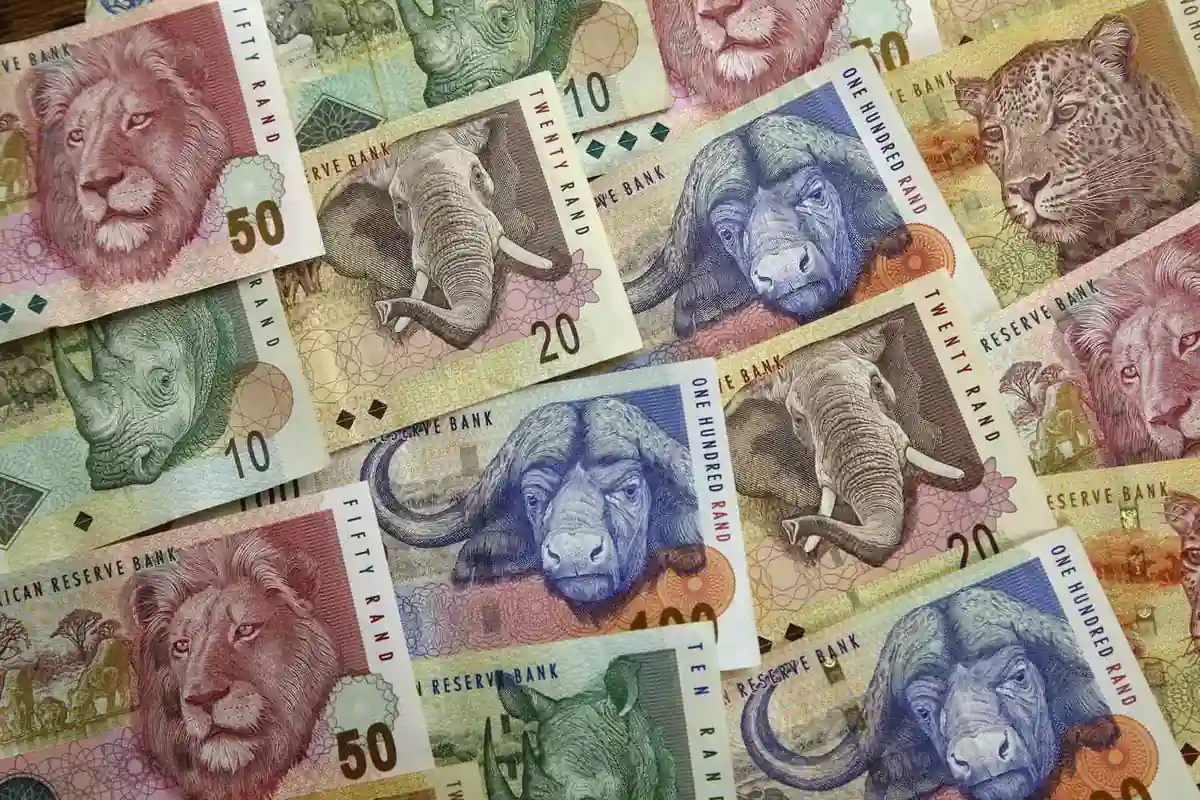
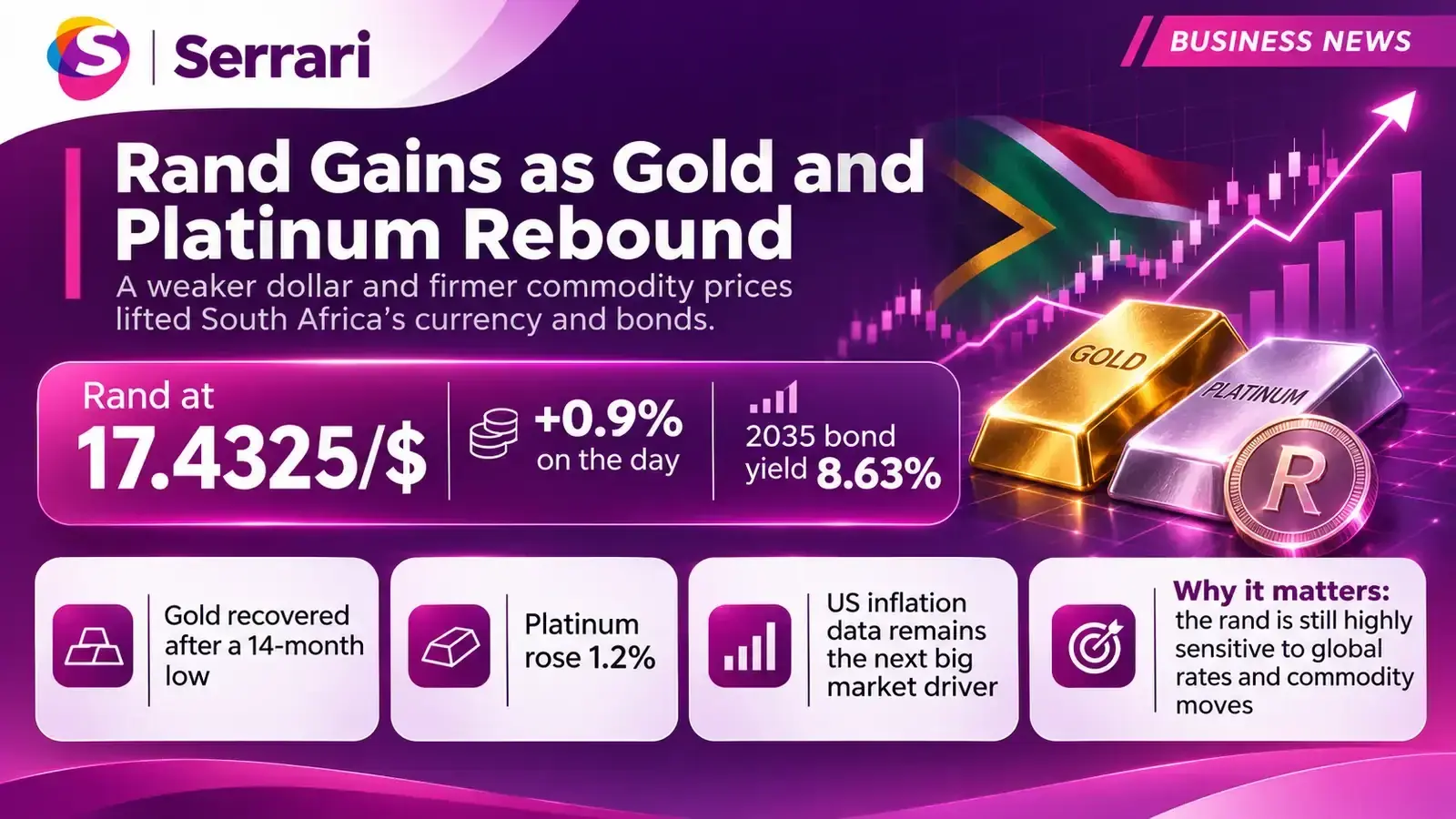
The South African rand strengthened approximately 0.9% against the US dollar in early trading on November 23, 2026, reaching R17.4325 per dollar as precious-metal prices recovered and the American currency softened. Platinum advanced 1.2%, while gold regained some ground after reaching a 14-month low the previous week. The recovery also extended to domestic government bonds. However, with South African inflation above target and US policymakers debating further monetary tightening, the currency’s improvement remains vulnerable to changes in global interest-rate expectations, commodity demand and investor appetite for emerging-market assets.
Key Overview
- The rand reached R17.4325 per dollar at 06:34 GMT on November 23, approximately 0.9% stronger than its previous close.
- Platinum gained 1.2%, while gold recovered from a 14-month low.
- The benchmark South African 2035 government bond yield fell 7.5 basis points to 8.63%.
- Federal Reserve Governor Lisa Cook advocated additional US monetary tightening on November 20.
- South Africa’s October inflation accelerated to 5.2%, while the central bank maintained its policy rate at 7.25% on November 19.
- The October US personal consumption expenditures inflation report is scheduled for November 25.
Why commodity prices are supporting the rand
South Africa’s currency recovery reflects its exposure to international commodity markets and the financial flows associated with mineral exports. The November 23 trading update showed simultaneous improvements in the rand, precious metals and domestic government bonds during early trading. That combination is consistent with improving demand for South African assets, although it does not identify the precise transactions responsible for the currency movement.
Gold and platinum matter because South African mining companies sell commodities internationally, frequently at prices denominated in US dollars. When export prices increase, miners can potentially earn more foreign currency for the same quantity of production. Some of those proceeds are converted into rand to fund wages, taxes, electricity and domestic suppliers, creating demand for the local currency.
Higher export prices can also improve the country’s terms of trade, which measure export prices relative to import prices. An improvement increases the purchasing power of export earnings and can reduce pressure on the external balance. Investors may consequently assign a smaller risk premium to the currency if they expect stronger foreign-exchange receipts.
However, a commodity-price rebound does not guarantee an immediate increase in export volumes or cash receipts. Mining output depends on production capacity, electricity availability, logistics and operating costs. Hedging contracts can also delay the effect of changing market prices on company revenues.
Gold’s recovery from a 14-month low is therefore better understood as a partial reversal of recent weakness than evidence that a sustained precious-metals rally has begun. For South Africa, the durability of the improvement matters more than one morning’s trading gains.
Why the dollar weakened despite calls for higher US rates
The dollar’s softness presents an apparent contradiction. Higher interest rates normally make dollar-denominated assets more attractive relative to assets in currencies offering lower yields, other conditions being equal. Yet the rand appreciated following comments from Federal Reserve Governor Lisa Cook advocating tighter US monetary policy.
In her November 20 monetary policy speech, Cook estimated that annual US personal consumption expenditures (PCE) inflation reached 3.8% in October, with underlying inflation estimated at 3.2%. She argued that September’s quarter-point increase was unlikely to be sufficient to restore price stability.
The distinction between her estimates and the forthcoming official PCE release is important. Markets were still awaiting the published October figures at the time of Monday’s trading update.
Currency markets respond to changes in expected policy rather than simply whether a central banker favours higher or lower rates. If traders have already incorporated additional tightening into asset prices, another hawkish speech may provide little incremental support for the dollar. Investors may also adjust positions after substantial previous currency movements.
Moreover, concerns about persistent US inflation can influence expectations for economic growth, real interest rates and financial stability. These channels do not always push the dollar in the same direction. The available market reporting establishes that the dollar softened after Cook’s remarks, but it does not demonstrate that her support for rate increases mechanically caused the decline.
For South Africa, this distinction matters because the rand could surrender its gains if US inflation surprises on the upside and investors demand higher yields on American assets. A temporary dollar retreat is not necessarily evidence that US monetary conditions are becoming more favourable for emerging markets.
South Africa’s interest-rate dilemma limits the recovery
The rand’s rebound arrives against an uncomfortable domestic inflation backdrop. The October consumer price figures showed annual inflation rising to 5.2% from 4.5% in September. Consumer prices also increased by 0.7% over the month.
South Africa’s central bank has a 3% inflation target. Rising fuel prices have contributed to the recent deterioration, complicating the task of bringing inflation back towards that objective without placing excessive pressure on households and businesses.
The November interest-rate decision left the policy rate at 7.25% following two increases during 2026. The split decision reflected competing concerns over inflation and economic activity rather than a definitive end to monetary tightening.
Higher domestic interest rates can support the rand by increasing the income available on local-currency assets. However, foreign investors must also account for potential currency depreciation, inflation and changes in bond prices. A relatively high nominal yield is not necessarily an attractive return once those risks are considered.
For domestic borrowers, elevated rates increase the cost of servicing variable-rate mortgages, vehicle finance and other credit. Businesses may delay expansion when financing costs make prospective projects less profitable. The central bank must therefore balance the benefits of maintaining monetary credibility against the economic costs of restrictive borrowing conditions.
A stronger rand could help contain imported inflation if the appreciation persists. Nevertheless, one day’s currency movement is unlikely to alter the central bank’s assessment materially, especially when international energy prices remain volatile.
Context is everything. Stay ahead of shifting trends with today’s market updates, and uncover emerging opportunities using the Serrari Group Market Index and Marketplace. Then, take control of your own financial future by exploring our Money & Life Reset Transformation Blueprint ™ to build stronger habits, create better systems, and design a path toward lasting wealth.
Why government bond yields fell alongside the dollar
The early government bond trading figures showed the benchmark 2035 yield declining to 8.63%. Bond prices and yields generally move inversely, so the decrease indicates an improvement in the market price of the security.
A stronger currency can make South African bonds more appealing to international investors because it improves the dollar value of rand-denominated holdings, all else being equal. Lower expected imported inflation can also reduce the compensation investors demand for holding fixed-income securities over long periods.
The bond move is consistent with improved sentiment, but it does not establish that foreign investors were net buyers. Domestic institutional demand and changes in international bond markets may also influence yields.
For the government, sustained reductions in borrowing yields could eventually reduce the cost of issuing new debt or refinancing maturing obligations. However, a 7.5-basis-point decline in one benchmark does not immediately reduce interest payments on existing fixed-rate debt. Fiscal benefits depend on how long lower yields persist and the rates achieved across future auctions.
For pension funds and other holders of existing government bonds, lower yields generally increase the market value of their holdings, while potentially reducing the income available from reinvesting future cash flows.
What a stronger rand means for households and exporters
Currency appreciation has uneven consequences across the economy. Importers can benefit when fewer rand are required to settle dollar-denominated invoices. For example, a hypothetical $100,000 shipment costs R1.76 million at R17.60 per dollar and R1,743,250 at R17.4325, a difference of R16,750 before transaction costs or hedging.
That improvement can help businesses importing machinery, medicines, electronics or fuel. Consumers may eventually benefit through slower price increases, although exchange-rate changes are not necessarily passed through immediately or in full. Retailers may have existing inventory purchased at weaker exchange rates, while international commodity prices and domestic taxes can offset currency gains.
Exporters face the opposite translation effect: each dollar earned produces fewer rand when the currency strengthens. Mining companies may nevertheless benefit if increases in dollar-denominated commodity prices outweigh the exchange-rate impact. Their profitability depends on both variables, alongside production costs and volumes.
The broader economic benefit of currency stability is reduced uncertainty. Companies can budget for imports, manage working capital and assess investment projects more confidently when exchange rates are less volatile. A sharp but temporary appreciation provides less certainty than a sustained improvement in economic fundamentals.
US inflation is the next test for the rand
The scheduled October PCE release on November 25 will provide investors with additional evidence about US inflation before the Federal Reserve’s next policy decision. The reaction will depend partly on how the figures compare with expectations already reflected in financial markets.
A stronger-than-anticipated reading could support US yields and renew pressure on emerging-market currencies. Conversely, softer inflation could reduce expectations for aggressive tightening, potentially helping the rand if commodity prices and broader risk appetite remain supportive. Neither outcome is guaranteed because investors also respond to growth expectations and positioning.
South Africa’s own monetary policy assessment must contend with elevated inflation and the consequences of fuel-price increases. Domestic price stability, reliable mineral production and sustainable public finances will be important to the currency’s longer-term performance.
Monday’s rebound illustrates how South Africa remains connected to two powerful global forces: demand for its commodity exports and the monetary policy of the United States. The currency can benefit when both move in its favour, but a lasting recovery requires more than a temporary improvement in international trading conditions.
Sources: Business Recorder / Federal Reserve / Statistics South Africa / Reuters / MarketScreener / US Bureau of Economic Analysis
Your financial future isn’t something you wait for—it’s something you build.
The real question is: when do you begin?
Move beyond simply staying informed.
Navigate the markets with clarity—track trends through the Serrari Group Market Index, uncover opportunities in the Serrari Marketplace, and build practical knowledge with our Curated Wealth Builder Platform.
Stay connected to what truly matters.
Get daily insights on macro trends and financial movements across Kenya, Africa, and global markets—delivered through the Serrari Newsletter.
Growth opens doors.
Advance your career through professional programs including ACCA, HESI A2, ATI TEAS 7 , HESI EXIT , NCLEX – RN and NCLEX – PN, Financial Literacy!🌟—designed to move you forward with confidence.
See where money is flowing—clearly and in real time.
Track Money Market Funds, Treasury Bills, Treasury Bonds, Green Bonds, and Fixed Deposits, alongside global and African indexes, key economic indicators, and the evolving Crypto and stablecoin landscape—all within Serrari’s Market Index.