













The United Arab Emirates has launched an urgent humanitarian response for communities affected by severe flooding in Ghana, providing food supplies, shelter materials and support for early recovery.
The operation, directed by UAE President Sheikh Mohamed bin Zayed Al Nahyan and implemented through the UAE Aid Agency, follows weeks of destructive rainfall that caused deaths, displacement and extensive damage to homes and public infrastructure.
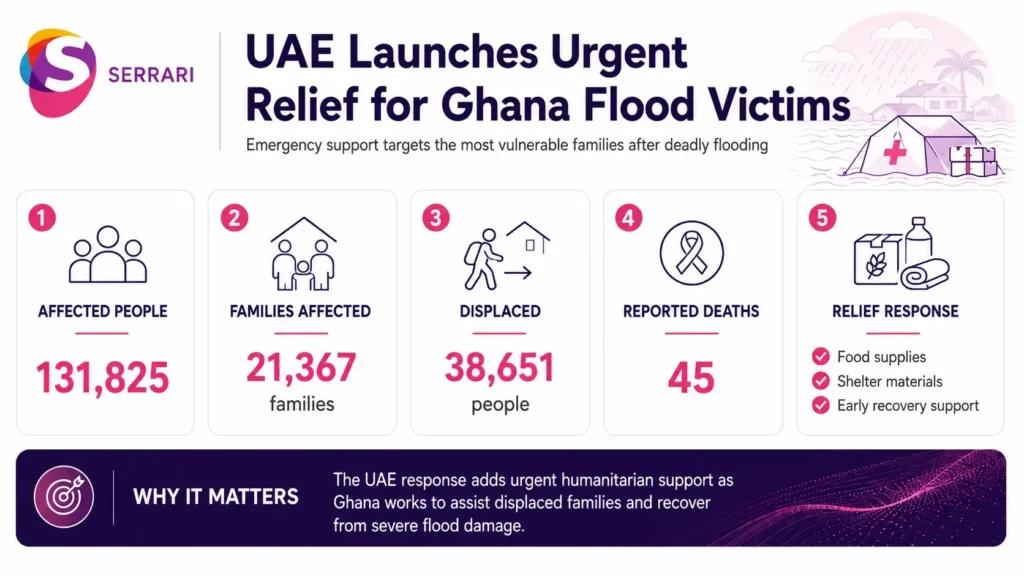
According to the UAE relief announcement, the floods affected 131,825 people from 21,367 families, displaced 38,651 people and caused 45 deaths, with assistance being prioritised for the most vulnerable households.
Key Overview
- The UAE launched an urgent humanitarian response through the UAE Aid Agency.
- The latest announcement recorded 131,825 affected people from 21,367 families.
- Approximately 38,651 people were displaced, while 45 deaths were reported.
- Relief assistance includes essential food and shelter materials.
- UAE teams are coordinating with local partners and Ghanaian authorities.
- The response will also support early recovery and community stabilisation.
UAE Aid Targets Food, Shelter and Immediate Recovery
The UAE Aid Agency is coordinating with partners in Ghana to deliver essential supplies to families facing the most urgent needs. Dr Tareq Ahmed Al Ameri, chairman of the agency, said the response reflects the UAE’s commitment to acting quickly during natural disasters and humanitarian emergencies.
Food support is intended to help households whose livelihoods, supplies and access to local markets were disrupted by flooding. Shelter materials will assist displaced residents and families whose homes were damaged or rendered unsafe.
The operation also extends beyond immediate relief. UAE teams plan to support early recovery and stabilisation, which may involve helping communities restore basic living conditions while Ghanaian agencies continue damage assessments and longer-term rebuilding.
The assistance follows the UAE’s earlier message of solidarity with Ghana, which conveyed condolences to victims’ families and support for people injured or displaced by the disaster.
Flood Assessments Expanded as the Crisis Developed
The humanitarian figures changed considerably as Ghanaian authorities gathered information from additional communities. Initial reporting after the major rainfall event on 29 June focused mainly on Greater Accra and recorded 12 deaths and more than 38,800 affected people.
A briefing by Ghana’s interior minister said emergency agencies were conducting rescues, distributing relief and assessing damage while the number of affected households continued to evolve.
By early July, official and media reports showed that flooding had affected seven regions and displaced tens of thousands of people. The later figures cited by the UAE therefore represent a broader assessment than the first reports released immediately after the heaviest rainfall.
The Ghanaian government’s national response included a National Security Council review and the work of a Post-Flood Mitigation Task Force coordinating response, recovery and resilience measures.
Context is everything. Stay ahead of shifting trends with today’s market updates, and uncover emerging opportunities using the Serrari Group Market Index and Marketplace. Then, take control of your own financial future by exploring our Money & Life Reset Transformation Blueprint ™ to build stronger habits, create better systems, and design a path toward lasting wealth.
Heavy Rain Overwhelmed Communities and Infrastructure
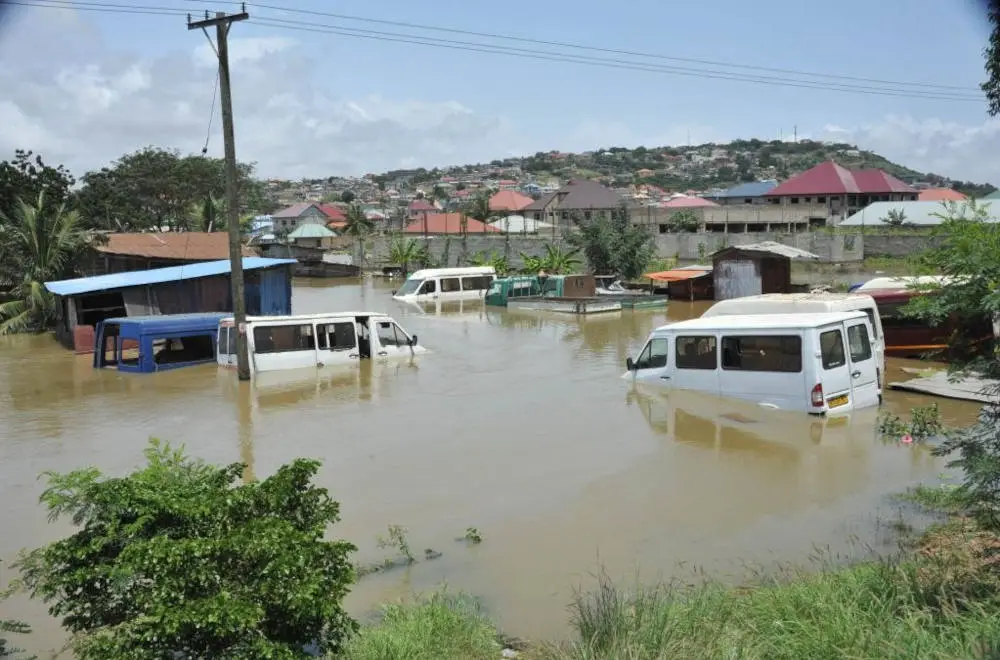
Torrential rainfall flooded roads, homes and businesses, particularly in Accra and surrounding areas. Emergency teams rescued hundreds of people as rising water blocked transport routes and entered residential neighbourhoods.
Early reporting on the disaster described widespread flooding in the capital and continuing rescue operations, while the final scale of deaths and displacement was still being established.
Ghana recorded exceptionally intense rainfall during June, increasing pressure on drainage channels and waterways. Flooding was worsened in some areas by blocked drains, development in wetlands and the limited capacity of urban infrastructure to absorb sudden downpours.
The country’s Interior Ministry had warned residents against crossing floodwater, stressing that water levels could rise rapidly and that police, fire, military and disaster-management teams had been deployed.
Ghana Moves From Rescue to Recovery
As water levels receded, Ghana shifted towards clearing debris, restoring damaged communities and reducing public-health risks. The Ghana Armed Forces was assigned a central role in the nationwide post-flood recovery operation, working with government agencies and local authorities.
Recovery needs remain substantial. Displaced families require safe accommodation, food, clean water and essential household materials, while damaged roads, drainage systems and public facilities need assessment and repair.
Flooding can also create secondary health threats through contaminated water, disrupted sanitation and increased exposure to waterborne disease. Rapid distribution of shelter and essential supplies is therefore important even after the immediate rescue phase ends.
Relief Highlights Ghana’s Wider Flood Resilience Challenge
The UAE intervention adds international support to Ghana’s domestic response, but the disaster also reinforces the need for stronger long-term flood protection.
Improved drainage, enforcement against building in waterways, better waste management and more effective early-warning systems could reduce future losses. Ghana’s weather authorities regularly issue heavy-rain and flash-flood alerts, but warnings must be matched by resilient infrastructure and practical evacuation planning.
For affected families, the immediate priority remains food, shelter and the restoration of safe living conditions. The UAE’s emergency response should help address those urgent needs while Ghana continues the more difficult work of reconstruction and preparation for future extreme rainfall.
Sources: Emirates News Agency / UAE Ministry of Foreign Affairs / Ghana News Agency / Reuters / Ghana Armed Forces / Ghana Ministry of the Interior / Ghana Meteorological Agency
Your financial future isn’t something you wait for—it’s something you build.
The real question is: when do you begin?
Move beyond simply staying informed.
Navigate the markets with clarity—track trends through the Serrari Group Market Index, uncover opportunities in the Serrari Marketplace, and build practical knowledge with our Curated Wealth Builder Platform.
Stay connected to what truly matters.
Get daily insights on macro trends and financial movements across Kenya, Africa, and global markets—delivered through the Serrari Newsletter.
Growth opens doors.
Advance your career through professional programs including ACCA, HESI A2, ATI TEAS 7 , HESI EXIT , NCLEX – RN and NCLEX – PN, Financial Literacy!🌟—designed to move you forward with confidence.
See where money is flowing—clearly and in real time.
Track Money Market Funds, Treasury Bills, Treasury Bonds, Green Bonds, and Fixed Deposits, alongside global and African indexes, key economic indicators, and the evolving Crypto and stablecoin landscape—all within Serrari’s Market Index.