















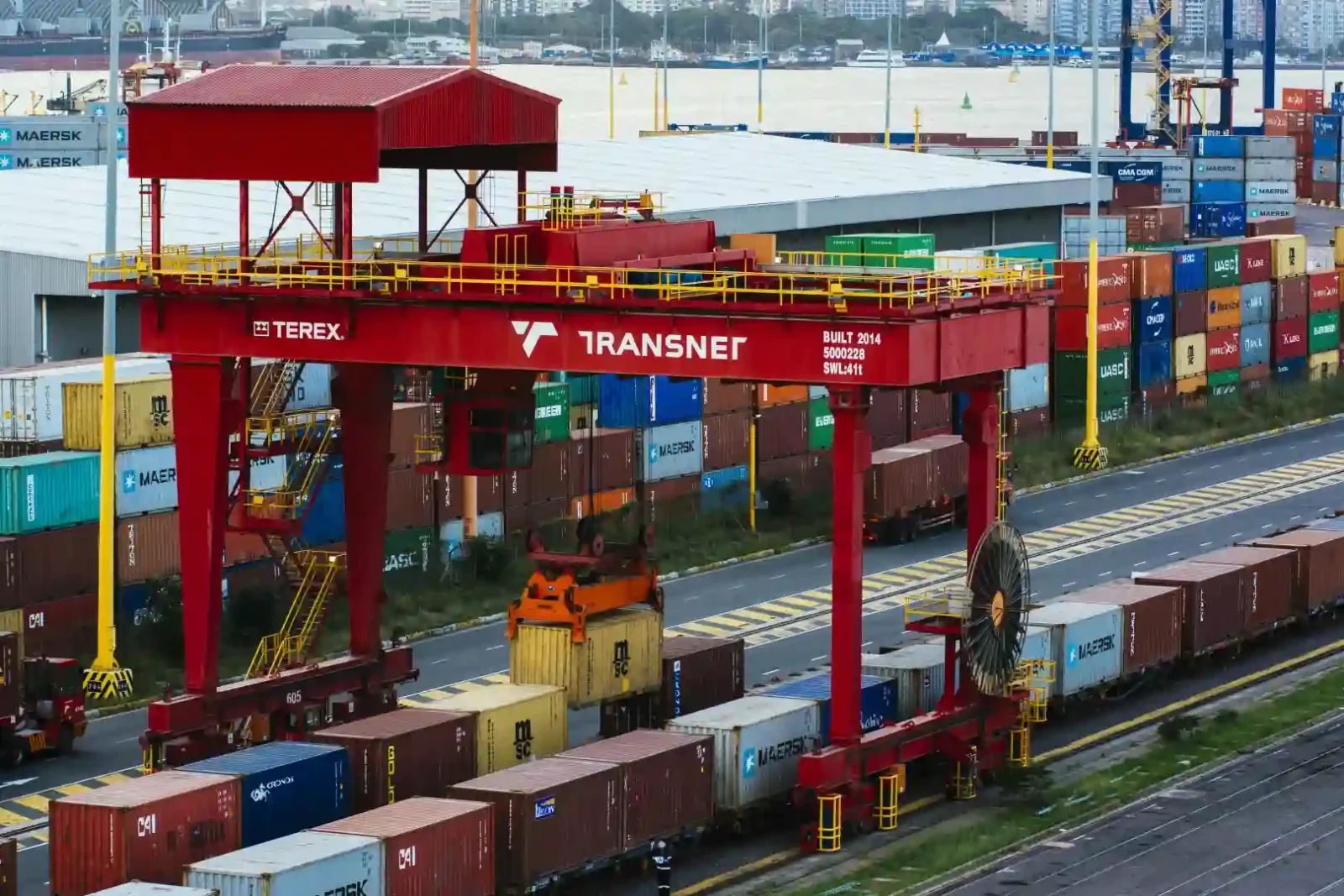
South Africa’s state-owned freight logistics company Transnet has signed a €300 million ($346 million / R5.8 billion) loan agreement with France’s Agence française de développement (AFD) to fund a wide-ranging programme targeting the decarbonisation of the country’s freight sector. The sustainability-linked financing — part of France’s €1 billion commitment to South Africa’s Just Energy Transition Partnership (JETP) — will support the rehabilitation of 550 kilometres of rail along key freight corridors, preparation for 30MW of renewable energy procurement, and diversification into green hydrogen and transition minerals logistics. Disbursement is conditional on Transnet meeting agreed milestones spanning operational modernisation, climate resilience, and governance reform.
Markets move fast; don’t get left behind. We’ve paired the Serrari Group Market Index with a curated Marketplace and a comprehensive Wealth Builder Platform to ensure you have the data—and the skills—to act on it.
Key Takeaways
- Loan Size: €300 million ($346M / R5.8 billion) from AFD, structured as a sustainability-linked instrument with milestone-based disbursement.
- Rail Rehabilitation: 550km along the Cape and Container corridors to improve reliability and shift freight from road to rail.
- Energy Targets: Procurement of 30MW of renewable energy; a broader target to purchase 300 GWh of renewable electricity annually (20% of Transnet’s needs).
- Green Hydrogen: A complementary €7 million EU grant will support Transnet’s green hydrogen strategy across rail, ports, pipelines, and facilities.
- Transition Minerals: The programme includes diversification into transition minerals logistics as coal volumes decline.
- JETP Context: The loan forms part of France’s contribution to the Just Energy Transition Partnership announced at COP26 in 2021.
- Rail Reform: The deal arrives alongside Transnet’s historic opening of its rail network to 11 private train operating companies for the first time.
A Landmark Deal for Freight Decarbonisation
Transnet, which manages South Africa’s rail, port, and pipeline infrastructure, has signed a €300 million loan agreement with the Agence française de développement (AFD) that aims to overhaul the country’s freight logistics while reducing the carbon intensity of its operations. The deal, announced on 5 May 2026, funds the “Transnet Freight Decarbonisation and Corporate Sustainability Programme” — a broad initiative covering rail rehabilitation, port modernisation, renewable energy procurement, and expansion into green hydrogen logistics.
The agreement is structured as a sustainability-linked loan, meaning that disbursement of funds is conditional on Transnet achieving a series of mutually agreed milestones. These include the rehabilitation of 550 kilometres of rail along the Cape and Container corridors, preparation for the procurement of 30MW of renewable energy, business diversification into green hydrogen and transition minerals as coal volumes decline, and strengthening of environmental, social, and governance capacity across the organisation.
“Transnet remains committed to modernising its rail and port infrastructure and operations to improve service quality, reliability and competitiveness, while advancing sustainable growth as part of its Reinvent for Growth strategy,” said Michelle Phillips, Group Chief Executive of Transnet. “This funding will assist in achieving these objectives by enhancing energy efficiency and accelerate reforms.”
Unlike traditional project-based financing where loan proceeds are allocated to specific investments, the AFD agreement gives Transnet flexibility to deploy funds across the entire programme. This structure, according to the AFD, allows the company to respond dynamically to evolving operational needs while maintaining alignment with both its economic competitiveness and decarbonisation objectives.
A Partnership Rooted in the Just Energy Transition
The Transnet loan sits within a larger framework of international cooperation on climate finance. It forms part of France’s €1 billion commitment to South Africa’s Just Energy Transition Partnership (JETP), a landmark deal forged at the COP26 climate summit in Glasgow in November 2021. The JETP was agreed between South Africa and an International Partners Group comprising France, Germany, the United Kingdom, the United States, and the European Union, with a collective pledge to mobilise an initial $8.5 billion to support the country’s shift away from coal dependence.
The JETP was the marquee announcement of COP26, positioned as a new model for helping middle-income, fossil fuel-dependent nations transition to cleaner energy while managing the social and economic consequences. South Africa’s investment plan, endorsed at COP27 in November 2022, identified three priority sectors: electricity, new energy vehicles, and green hydrogen. The total investment need outlined in the plan was $98 billion — far exceeding the initial $8.5 billion commitment, which has since risen to $9.3 billion as Denmark and the Netherlands joined the partnership.
The AFD has been implementing France’s JETP contribution since 2021, and the Transnet loan deepens a bilateral relationship that dates back to 2009, when AFD financed the expansion of the Cape Town Container Terminal.
“We are particularly pleased with this operation as it reflects the shared priorities of both institutions. Transnet is a strategic actor in South Africa’s low-carbon transition, and it is a key enabler to the competitiveness of the economy,” said Marie-Hélène Loison, AFD’s regional director for Southern Africa. “The investments in freight rail recovery, port modernisation and transition minerals export corridors are a demonstration that South Africa’s economic competitiveness and decarbonisation goals are inseparable.”
The Rail Crisis: Why 550km of Rehabilitation Matters
The rehabilitation of 550 kilometres of rail is arguably the most consequential element of the programme. South Africa’s freight rail system has been in a state of protracted decline. Rail volumes dropped to 152 million tonnes in 2023/2024, down from a peak of 226 million tonnes in 2017/2018. Chronic underinvestment, equipment shortages, labour disruptions, and persistent cable theft and vandalism have eroded service reliability, pushing freight that should be on rail onto the country’s already congested road network.
The consequences are severe. National logistics costs run at approximately 11.6% of GDP, substantially higher than the 8-9% typical of developed economies. When measured against transportable GDP — excluding the services sector — the figure is even more stark, breaching 50%. Estimates suggest that road congestion and freight inefficiencies cost the South African economy roughly R450 million daily.
The shift from rail to road has been particularly damaging on the Gauteng-Durban corridor, where heavy truck traffic has accelerated deterioration of the N3 highway and increased road accidents. For the mining sector, which relies on rail to move bulk commodities like coal, iron ore, manganese, and chrome to export ports, the rail decline has constrained production and export competitiveness.
The AFD-funded rehabilitation targets the Cape and Container corridors specifically — routes critical for containerised freight and general cargo that are essential to South Africa’s broader trade infrastructure. By improving reliability on these lines, the programme aims to make rail a more competitive alternative to road, reversing a trend that has persisted for more than a decade.
Context is everything. While you follow today’s updates, use the Serrari Group Market Index and Marketplace to spot emerging shifts. Need to sharpen your edge? Our Wealth Builder Platform turns these insights into a professional-grade strategy.
Opening the Network: Private Operators Enter the Fray
The AFD loan arrives at a pivotal moment in South Africa’s freight logistics story. Transnet is simultaneously executing the most significant structural reform in its history: opening its rail network to private train operating companies (TOCs) for the first time since the network was centralised under Transnet in 1990.
In August 2025, Transport Minister Barbara Creecy announced that 11 of 25 applicants had been approved to operate on the Transnet network, with conditional access granted across 41 routes and six major freight corridors. The new operators are projected to add 20 million tonnes of freight annually from the 2026/27 financial year, supporting the government’s target of raising total rail volumes to 250 million tonnes per year by 2029.
The reform implements a 2022 National Rail Policy that keeps track and signalling infrastructure in state hands while allowing third-party operators to run trains on the network — a model used across Europe and North America. Transnet is also separating its rail infrastructure management from its train operations division, creating a more transparent access framework for new entrants.
Among the incoming operators is the UAE-based African Rail Company (ARC), which is raising approximately $170 million to purchase locomotives and wagons. Operations on the first corridors are expected to launch between the third quarter of 2026 and the first quarter of 2027, with most operators targeting coal, iron ore, manganese, and containerised freight.
Legal experts at ENS Africa have estimated that the reforms could unlock over R100 billion in new private rail investments over the next decade, while the South African government has described the initiative as one of the most important interventions for economic growth currently underway.
The AFD loan and the rail liberalisation programme are complementary but distinct. The loan focuses on infrastructure rehabilitation and decarbonisation under Transnet’s direct control, while the TOC framework creates conditions for private capital and operational capacity to supplement what the state-owned company can deliver on its own. Together, they represent a two-pronged effort to restore South Africa’s freight rail system to functionality.
Green Hydrogen and Transition Minerals: Positioning for a Post-Coal Economy
Beyond rail rehabilitation, the AFD programme includes provisions for Transnet to diversify into green hydrogen and transition minerals logistics — a strategic pivot as coal export volumes are expected to decline over the coming decades.
South Africa holds approximately 80% of the world’s platinum group metals (PGMs), which are critical inputs for hydrogen fuel cells and electrolysers. The country’s Green Hydrogen Commercialisation Strategy, released in 2023, envisions South Africa capturing a 4% share of the global hydrogen market by 2050, leveraging its abundant renewable energy resources, PGM reserves, and existing infrastructure — including Transnet’s extensive pipeline network.
Complementing the AFD loan, the European Union is providing a €7 million grant to help Transnet advance its green hydrogen strategy across rail, ports, pipelines, and facilities. The grant will fund feasibility studies, impact assessments, pilot projects, and technical assistance — helping Transnet position itself within the emerging hydrogen value chain.
“Through our investment strategy Global Gateway, the EU is supporting concrete investments in South Africa’s green hydrogen economy. With its central role in rail, ports and pipelines, Transnet is essential to building a credible and scalable hydrogen ecosystem,” said Jozef Síkela, EU Commissioner for International Partnerships, when the partnership was first announced at the G20 Summit in Johannesburg in November 2025.
The transition minerals component is equally important. As global demand for battery metals, manganese, and other minerals used in clean energy technologies accelerates, South Africa’s freight logistics system will need to accommodate new commodity flows even as traditional coal volumes contract. The AFD programme’s focus on building export corridor capacity for transition minerals reflects a recognition that decarbonisation and economic competitiveness are, as AFD’s Loison put it, “inseparable.”
Broader Transport Overhaul: A National Priority
The Transnet-AFD deal does not exist in isolation. The South African government has placed transport infrastructure at the centre of its 2026 economic recovery strategy. In its budget framework, the government allocated significant capital to rail modernisation, including R5.8 billion for rolling stock renewal and funding for a 25-year concession of the Richards Bay dry bulk terminal.
Transnet is also advancing major port partnerships, including a 25-year concession for the Durban Container Terminal Pier 2 with International Container Terminal Services, Inc. (ICTSI), and preparing to bring its container corridor to market under a long-term private-sector concession.
These initiatives collectively aim to reverse more than a decade of logistics underperformance. South Africa’s economy narrowly avoided recession in 2023 partly due to transport bottlenecks, and freight inefficiencies have been widely cited as one of the most significant structural constraints on growth, particularly in the mining and manufacturing sectors.
The AFD loan adds an international dimension to this domestic reform agenda, linking infrastructure investment to climate commitments and providing access to concessional financing terms that might not be available through commercial markets. For Transnet — which carries a R130 billion debt pile and has struggled with creditworthiness — the sustainability-linked structure offers a path to capital that is tied to measurable reform milestones rather than collateral alone.
What Comes Next
The success of the programme will ultimately depend on execution. Transnet has set ambitious targets — rehabilitating 550 kilometres of rail, procuring 30MW of renewable energy, and building out transition minerals corridors — but the company’s track record on delivering large-scale projects has been mixed. Cable theft, rolling stock shortages, and institutional capacity constraints remain persistent challenges.
The milestone-based disbursement structure provides a degree of accountability that traditional project finance does not, requiring Transnet to demonstrate tangible progress before accessing tranches of funding. Whether this mechanism proves sufficient to drive the pace and quality of reform that South Africa’s freight system needs will become clearer over the next 12 to 18 months as the first disbursement conditions come due.
For now, the deal represents one of the most significant international interventions in South Africa’s freight infrastructure in years — a recognition that the country’s logistics crisis is not merely a domestic operational problem, but a strategic bottleneck with implications for climate policy, trade competitiveness, and the viability of Africa’s largest industrial economy.
Your financial future isn’t something you wait for—it’s something you build.
The real question is: when do you begin?
Move beyond simply staying informed.
Navigate the markets with clarity—track trends through the Serrari Group Market Index, uncover opportunities in the Serrari Marketplace, and build practical knowledge with our Curated Wealth Builder Platform.
Stay connected to what truly matters.
Get daily insights on macro trends and financial movements across Kenya, Africa, and global markets—delivered through the Serrari Newsletter.
Growth opens doors.
Advance your career through professional programs including ACCA, HESI A2, ATI TEAS 7 , HESI EXIT , NCLEX – RN and NCLEX – PN, Financial Literacy!🌟—designed to move you forward with confidence.
See where money is flowing—clearly and in real time.
Track Money Market Funds, Treasury Bills, Treasury Bonds, Green Bonds, and Fixed Deposits, alongside global and African indexes, key economic indicators, and the evolving Crypto and stablecoin landscape—all within Serrari’s Market Index.