The Development Bank of Southern Africa (DBSA) has committed R300 million to the Africa Finance Corporation’s (AFC) $750 million Infrastructure Climate Resilient Fund (ICRF), in a deal signed at the Africa We Build Summit in Nairobi. The ICRF, managed by AFC Capital Partners, is designed to embed climate resilience into African infrastructure at every stage from planning through operation. The fund has already secured a $253 million anchor commitment from the Green Climate Fund — its largest equity investment in Africa to date — alongside the European Investment Bank, the Nigeria Sovereign Investment Authority, and several African pension funds. Through blended finance and first-loss de-risking, the ICRF is expected to mobilise up to $3.7 billion in total financing for 10 to 12 transformative infrastructure projects across the continent.
Markets move fast; don’t get left behind. We’ve paired the Serrari Group Market Index with a curated Marketplace and a comprehensive Wealth Builder Platform to ensure you have the data—and the skills—to act on it.
Key Takeaways
- Fund Size: $750 million, managed by AFC Capital Partners.
- DBSA Commitment: R300 million (approximately $16 million), announced at the Africa We Build Summit in Nairobi on April 24, 2026.
- Green Climate Fund: $253 million in junior first-loss equity — its single largest equity investment in Africa.
- European Investment Bank: $52.48 million committed in February 2025.
- Other Investors: Nigeria Sovereign Investment Authority (NSIA), multiple African pension funds.
- Total Mobilisation Target: Up to $3.7 billion in total financing through blended finance structures.
- Portfolio: 10 to 12 climate-resilient infrastructure projects across Africa, spanning renewable energy, transport, digital infrastructure, and industrial development.
- Climate Context: Africa loses an estimated 2–5% of GDP annually to climate shocks, with adaptation needs reaching up to $50 billion per year.
African Institutions Align Behind Climate Resilience
The Africa Finance Corporation (AFC) announced in late April that the Development Bank of Southern Africa (DBSA) has joined as a key investor in its $750 million Infrastructure Climate Resilient Fund (ICRF). The agreement, signed at AFC’s Africa We Build Summit in Nairobi, brings one of Southern Africa’s most prominent development finance institutions into a vehicle that is positioning climate-resilient infrastructure as a distinct and investable asset class on the continent.
DBSA confirmed it would invest R300 million in the fund — a commitment that, while modest relative to the fund’s overall size, carries strategic significance. It signals that African institutional capital is flowing into adaptation finance alongside the international development banks and multilateral climate funds that have traditionally dominated the space.
“Africa does not have the luxury of waiting. Climate shocks are outpacing adaptation finance, and vulnerable communities continue to bear the greatest burden,” said Boitumelo Mosako, Chief Executive of DBSA. “This partnership with the Africa Finance Corporation sends a clear signal that development finance institutions are pooling their mandates, capital, and risk appetite to achieve what neither institution can accomplish alone.”
What the ICRF Is Built to Do
The ICRF was established to address a specific and growing problem: the systemic risks that climate change poses to Africa’s infrastructure. Rising temperatures, shifting rainfall patterns, increased flooding, and extreme weather events are damaging existing assets and jeopardising new projects across the continent. The fund’s response is to embed climate resilience into infrastructure at every stage of its lifecycle — from planning and design through construction and long-term operation.
Managed by AFC Capital Partners (ACP), AFC’s asset management subsidiary, the ICRF targets investment in four core sectors: renewable energy, transport and logistics, digital infrastructure, and industrial development. These sectors are considered central to enabling low-carbon economic growth while strengthening the resilience of Africa’s economic systems against climate shocks.
The fund’s investment framework is built around rigorous climate risk screening. Each project undergoes assessment across both physical risks — such as exposure to extreme weather events — and transition risks linked to emissions pathways, regulatory shifts, and governance standards. This approach ensures that resilience is integrated as a design principle rather than added as an afterthought.
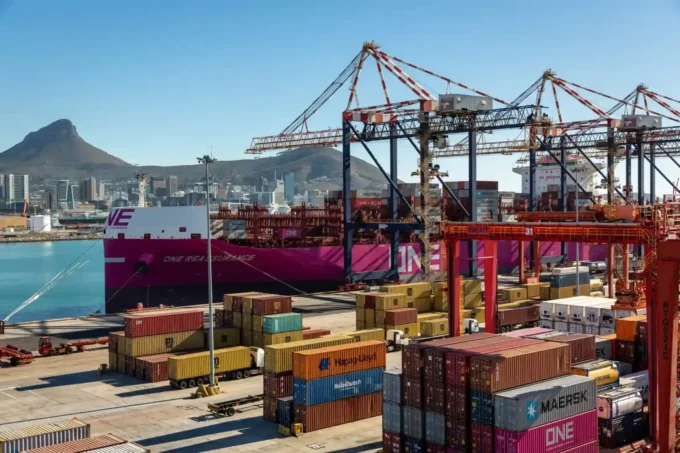
The ICRF aims to build a diversified portfolio of 10 to 12 transformative infrastructure projects across the continent. Among the projects already in its pipeline is the Lobito Corridor, a critical trade and logistics route linking Angola, the Democratic Republic of Congo, and Zambia. AFC is the lead developer of the corridor, working alongside partners including the European Union, the US government, the African Development Bank, and the governments of the three countries involved. The corridor is expected to facilitate the efficient transport of critical minerals, agricultural goods, and other commodities while being developed with climate resilience standards at its core.
The Anchor Investor: Green Climate Fund’s Largest African Equity Bet
The ICRF’s foundational capital comes from the Green Climate Fund (GCF), which committed $253 million in junior first-loss equity — the single largest equity investment it has made in Africa. The GCF and AFC signed the project agreement in October 2023, with the GCF structured to play a catalytic role: providing first-loss capital that absorbs downside risk, offering technical assistance for due diligence and climate resilience monitoring, and effectively de-risking projects to attract private and institutional capital that would not otherwise participate.
This blended finance architecture is central to the fund’s strategy. Climate adaptation projects in Africa have historically struggled to attract private capital because the financial returns from resilience measures — reinforced drainage systems, flood-resistant foundations, elevated power lines, heat-tolerant materials — are often indirect and long-term. By layering concessional capital beneath commercial investment, the ICRF structure addresses this barrier, creating a risk-return profile that pension funds and institutional investors can accept.
In February 2025, the European Investment Bank committed $52.48 million to the fund, aligning the investment with its own Climate Bank Roadmap. The Nigeria Sovereign Investment Authority (NSIA) and at least two private African pension funds have also committed capital, though specific amounts from these participants have not been publicly disclosed.
Through this blended finance approach, AFC Capital Partners expects to mobilise up to $3.7 billion in total financing — roughly five times the fund’s headline size — by leveraging additional co-investment and project-level debt alongside the equity committed to the ICRF itself.
Context is everything. While you follow today’s updates, use the Serrari Group Market Index and Marketplace to spot emerging shifts. Need to sharpen your edge? Our Wealth Builder Platform turns these insights into a professional-grade strategy.
The Scale of the Problem: 2–5% of GDP Lost Annually
The urgency driving the ICRF is quantifiable. Africa loses an estimated 2% to 5% of GDP annually to climate-related shocks, while adaptation financing needs on the continent are estimated at up to $50 billion per year. The continent is considered the world’s most climate-vulnerable region despite contributing relatively little to global emissions.
The infrastructure dimension of this vulnerability is particularly acute. As the Green Climate Fund’s project documentation notes, climate change is threatening both existing infrastructure and crucial yet-to-be-built assets in sub-Saharan Africa — a region already characterised by infrastructure that is low in quantity, quality, and accessibility. Flooding damages roads and bridges. Heatwaves strain power grids. Shifting precipitation patterns undermine water systems. The cumulative economic cost compounds year after year, eroding growth and deepening inequality.
“ICRF is our response to a defining challenge — ensuring Africa’s infrastructure is built to withstand the growing impacts of climate change,” said Samaila Zubairu, President and CEO of AFC. “With the continent losing an estimated 2% to 5% of GDP annually to climate shocks and adaptation needs reaching up to $50 billion each year, the urgency is clear.”
The Africa Global Funds reporting on the DBSA commitment noted that this financing initiative is part of a broader shift in how infrastructure is planned and financed in Africa — with increasing emphasis on long-term resilience and sustainability rather than cost-minimised construction that leaves assets exposed to climate risks.
DBSA’s Strategic Mandate
For DBSA, the ICRF commitment aligns with its mandate to drive infrastructure-led development, support regional integration, and mobilise private sector investment across Southern Africa. The bank has been expanding its climate finance activities as part of a broader strategic pivot toward green and resilient development.
DBSA’s participation is significant beyond the capital it deploys. As a South African development finance institution with deep knowledge of Southern African markets, regulatory environments, and infrastructure needs, DBSA brings institutional capabilities that complement AFC’s pan-African platform and the GCF’s climate expertise. The combination of these three institutions creates a structure with geographic reach, sectoral depth, and climate-specific risk assessment capacity that none possesses individually.
DBSA itself recently received a credit rating upgrade from Moody’s, with its long-term foreign-currency issuer rating raised to Ba2 from Ba3 — a signal of improving institutional strength that may also benefit the ICRF’s overall credit profile as it seeks additional investors.
AFC: The Platform Behind the Fund
The Africa Finance Corporation, established in 2007 and headquartered in Lagos, has built itself into one of the continent’s leading infrastructure investment platforms. With operations spanning 36 African countries, AFC combines project development, financial advisory, and direct investment across energy, natural resources, transport, logistics, telecommunications, and industrial sectors.
AFC Capital Partners, the asset management arm that manages the ICRF, was created to channel institutional capital into African infrastructure through fund structures — a model designed to attract pension funds, sovereign wealth funds, and other long-term investors that might not invest directly in individual African infrastructure projects but are willing to allocate capital through professionally managed vehicles with defined risk parameters.
The ICRF represents ACP’s inaugural offering and its most ambitious undertaking. The fund’s structure — with GCF providing first-loss equity, the EIB and DBSA providing institutional credibility, and AFC contributing pipeline and project development expertise — is designed to demonstrate that climate-resilient infrastructure can deliver risk-adjusted returns competitive with conventional infrastructure investment.
What Comes Next
The fund’s near-term focus will be on deploying capital into its pipeline of 10 to 12 projects. The Lobito Corridor is the most prominent project identified so far, but the portfolio will span multiple geographies and sectors. Each project will need to pass the fund’s climate risk screening framework, integrating resilience measures from design through operation.
The broader ambition extends beyond the fund itself. By establishing climate-resilient infrastructure as a recognised asset class in African capital markets, the ICRF aims to shift how institutional investors — particularly African pension funds and sovereign wealth funds — think about infrastructure allocation. If the fund delivers on its return targets while demonstrating measurable climate resilience outcomes, it could catalyse a broader reallocation of capital toward adaptation-focused infrastructure across the continent.
For now, the DBSA commitment reinforces a pattern of growing African institutional alignment around the climate-infrastructure nexus. In a continent where adaptation finance has historically been dominated by international development agencies and multilateral funds, the participation of DBSA, NSIA, and African pension funds represents a meaningful shift — African capital being deployed, through African institutions, to climate-proof African assets.
The question is whether $750 million — even leveraged to $3.7 billion — can match the scale of the challenge. With adaptation needs estimated at $50 billion annually and infrastructure deficits running into the hundreds of billions, the ICRF is not a solution by itself. But as a demonstration of what blended finance, institutional alignment, and climate-integrated investment design can achieve, it may be one of the most consequential infrastructure initiatives on the continent today.
Your financial future isn’t something you wait for—it’s something you build.
The real question is: when do you begin?
Move beyond simply staying informed.
Navigate the markets with clarity—track trends through the Serrari Group Market Index, uncover opportunities in the Serrari Marketplace, and build practical knowledge with our Curated Wealth Builder Platform.
Stay connected to what truly matters.
Get daily insights on macro trends and financial movements across Kenya, Africa, and global markets—delivered through the Serrari Newsletter.
Growth opens doors.
Advance your career through professional programs including ACCA, HESI A2, ATI TEAS 7 , HESI EXIT , NCLEX – RN and NCLEX – PN, Financial Literacy!🌟—designed to move you forward with confidence.
See where money is flowing—clearly and in real time.
Track Money Market Funds, Treasury Bills, Treasury Bonds, Green Bonds, and Fixed Deposits, alongside global and African indexes, key economic indicators, and the evolving Crypto and stablecoin landscape—all within Serrari’s Market Index.