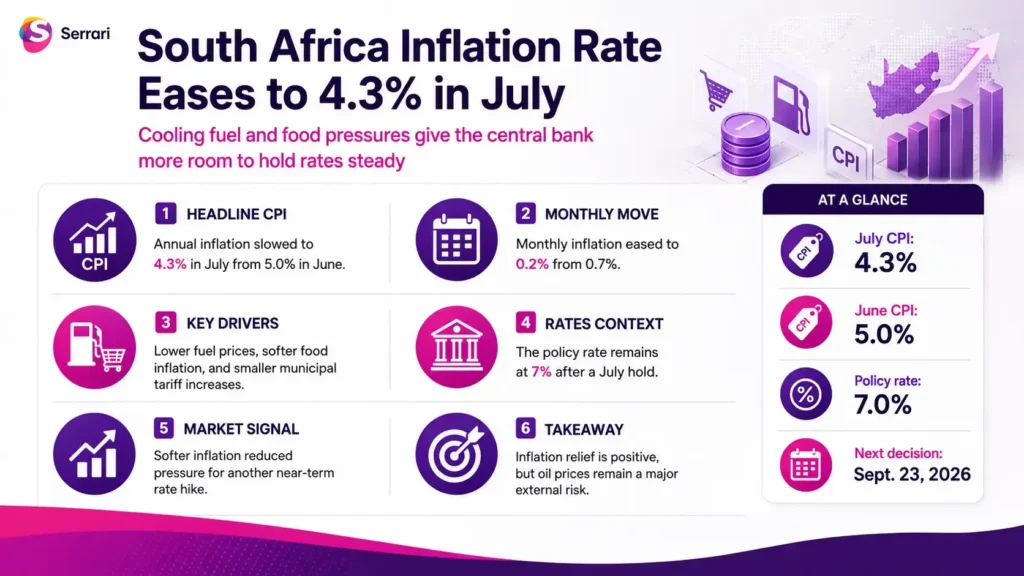
South Africa’s annual consumer inflation slowed to 4.3% in July, down from 5.0% in June and marking the first decline in five months. Monthly inflation also eased to 0.2% from 0.7%, with lower fuel prices, softer food inflation and smaller municipal tariff increases helping reverse part of June’s sharp acceleration. The softer print came in below market expectations and strengthens the case for the central bank to remain cautious rather than immediately tightening policy again.
Key Overview
- Headline inflation fell to 4.3% year on year in July from 5.0% in June.
- Monthly inflation slowed to 0.2% from 0.7%.
- The July reading was below the 4.5% median forecast in a market survey.
- Petrol prices fell 7.1% and diesel prices 11.7% between June and July.
- The policy rate remains at 7% after a 25-basis-point increase in May and a hold in July.
- The next monetary policy decision is scheduled for September 23, 2026.
Fuel and Food Costs Drive the July Slowdown
The July inflation print provided a sharp contrast to June, when higher fuel costs pushed annual inflation to 5.0%. Official price data show that the moderation was driven by weaker food inflation, smaller annual municipal tariff increases and a substantial decline in fuel prices.
Petrol prices dropped 7.1% between June and July, while diesel prices fell 11.7%. That helped pull annual fuel inflation down to 20.6% from 34.3% in June, reducing one of the largest sources of pressure on household transport costs.
Food and non-alcoholic beverage inflation also softened to 0.9% year on year, its lowest level in more than 16 years. Lower inflation in cereals and meat contributed to the decline, offering some relief to households after several years in which food prices had been a major source of pressure on disposable incomes.
Municipal tariffs also rose by less than they did during the comparable adjustment period in 2025. Because municipalities typically implement annual tariff increases in July, smaller increases across several categories helped limit the seasonal jump in consumer prices.
Softer Inflation Gives the Central Bank More Flexibility
The lower-than-expected reading arrives after the central bank held its policy rate at 7% in July, following a 25-basis-point increase in May. Four policymakers backed the July hold while two preferred another quarter-point increase.
That decision reflected a difficult balance. Inflation remained above the 3% target, but policymakers judged that the existing stance was sufficiently restrictive while they assessed the effects of volatile oil prices, weak domestic growth and rising inflation expectations.
July’s 4.3% reading gives policymakers more evidence that the earlier energy shock is easing. It was also below the 4.5% median forecast from economists in a survey conducted ahead of the release, reducing the immediate pressure for another rate increase.
However, the inflation outlook is not yet settled. The central bank has warned that services inflation and measures of underlying price pressure remain elevated, while renewed instability in the Middle East could lift global oil prices again and feed back into South African transport and production costs.
Context is everything. Stay ahead of shifting trends with today’s market updates, and uncover emerging opportunities using the Serrari Group Market Index and Marketplace. Then, take control of your own financial future by exploring our Money & Life Reset Transformation Blueprint ™ to build stronger habits, create better systems, and design a path toward lasting wealth.
Oil Prices Remain the Main External Risk
South Africa imports most of its fuel requirements, leaving consumer prices highly exposed to changes in international crude prices and the rand exchange rate. The sharp July reduction in local fuel prices reflected a temporary retreat in global oil costs after earlier conflict-related increases.
That relief may prove short-lived if geopolitical tensions keep oil prices elevated. The central bank’s July assessment included an adverse scenario in which oil averages $100 a barrel in 2026, requiring tighter monetary policy than under its baseline forecast.
This explains why softer July inflation does not automatically translate into lower interest rates. Policymakers are trying to return inflation sustainably toward 3%, rather than respond to a single favourable monthly print that could be reversed by another energy shock.
Markets Welcome the Softer Inflation Print
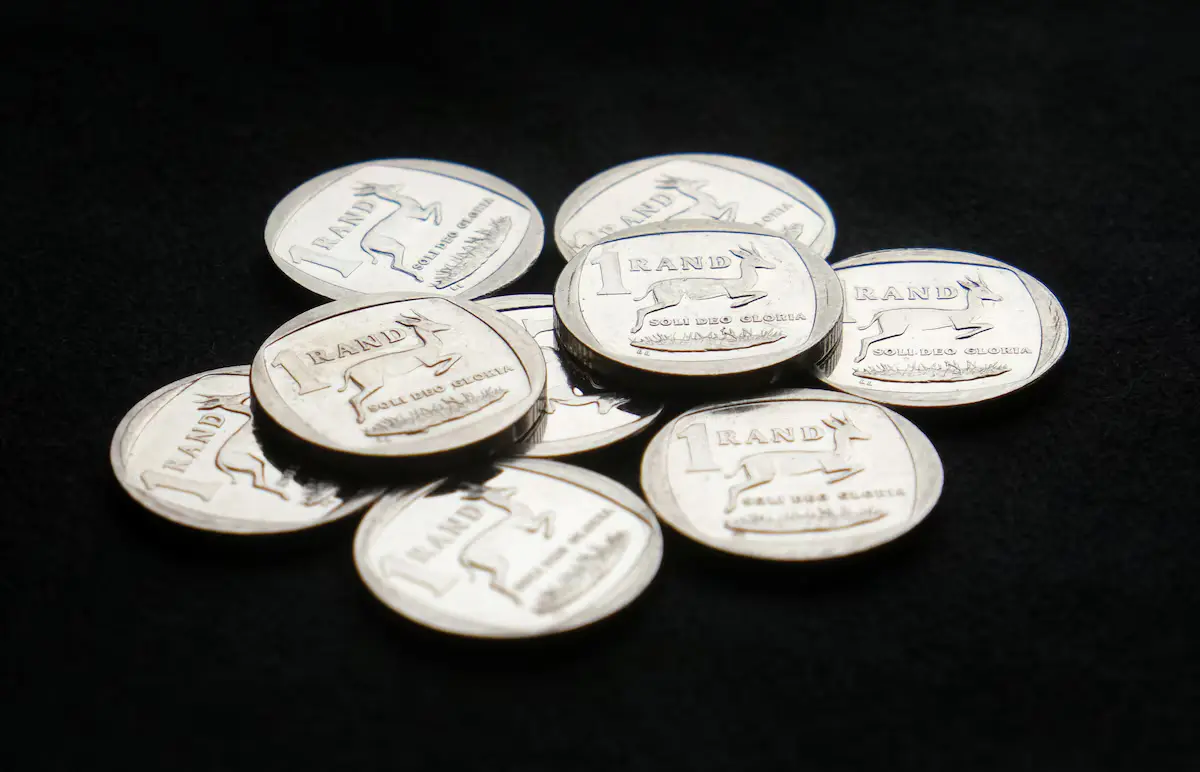
The rand strengthened after the inflation release, while government bonds also gained as investors reassessed the risk of further near-term monetary tightening. In afternoon trading on August 19, the currency was about 0.7% stronger at roughly 16.15 per US dollar.
The market response reflects the importance of the July number for the interest-rate outlook. With headline inflation now materially below June’s two-year high, investors have more reason to expect the central bank to wait for additional evidence before deciding whether another hike is necessary.
The next policy announcement is scheduled for September 23. By then, policymakers will have another inflation reading and additional information on oil prices, the rand, inflation expectations and domestic growth. For households and businesses, July’s slowdown provides welcome relief, but the durability of that improvement will depend heavily on global energy markets and whether underlying domestic price pressures continue to stabilise.
Sources: BusinessDay / Statistics South Africa / South African Reserve Bank / Reuters
Your financial future isn’t something you wait for—it’s something you build.
The real question is: when do you begin?
Move beyond simply staying informed.
Navigate the markets with clarity—track trends through the Serrari Group Market Index, uncover opportunities in the Serrari Marketplace, and build practical knowledge with our Curated Wealth Builder Platform.
Stay connected to what truly matters.
Get daily insights on macro trends and financial movements across Kenya, Africa, and global markets—delivered through the Serrari Newsletter.
Growth opens doors.
Advance your career through professional programs including ACCA, HESI A2, ATI TEAS 7 , HESI EXIT , NCLEX – RN and NCLEX – PN, Financial Literacy!🌟—designed to move you forward with confidence.
See where money is flowing—clearly and in real time.
Track Money Market Funds, Treasury Bills, Treasury Bonds, Green Bonds, and Fixed Deposits, alongside global and African indexes, key economic indicators, and the evolving Crypto and stablecoin landscape—all within Serrari’s Market Index.