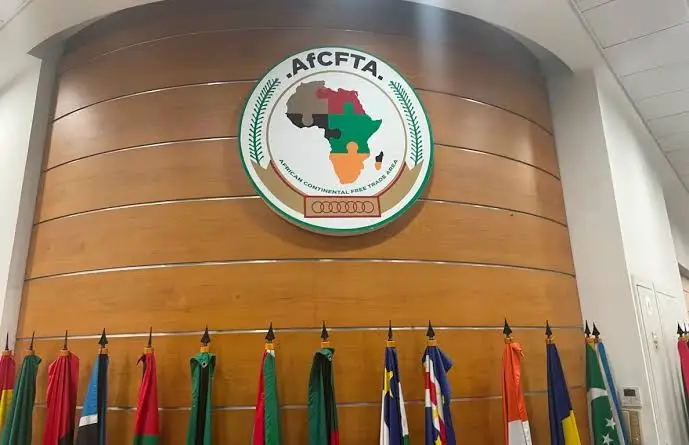
Somalia has become the 50th State Party to the African Continental Free Trade Area (AfCFTA), completing its formal ratification and gaining a role in the continent’s trade integration framework. The country deposited its ratification instrument at African Union headquarters in Addis Ababa on September 4, 2026. The milestone was highlighted again at the October regional trade discussions, but practical tariff preferences will depend on further customs preparations.
Key Overview
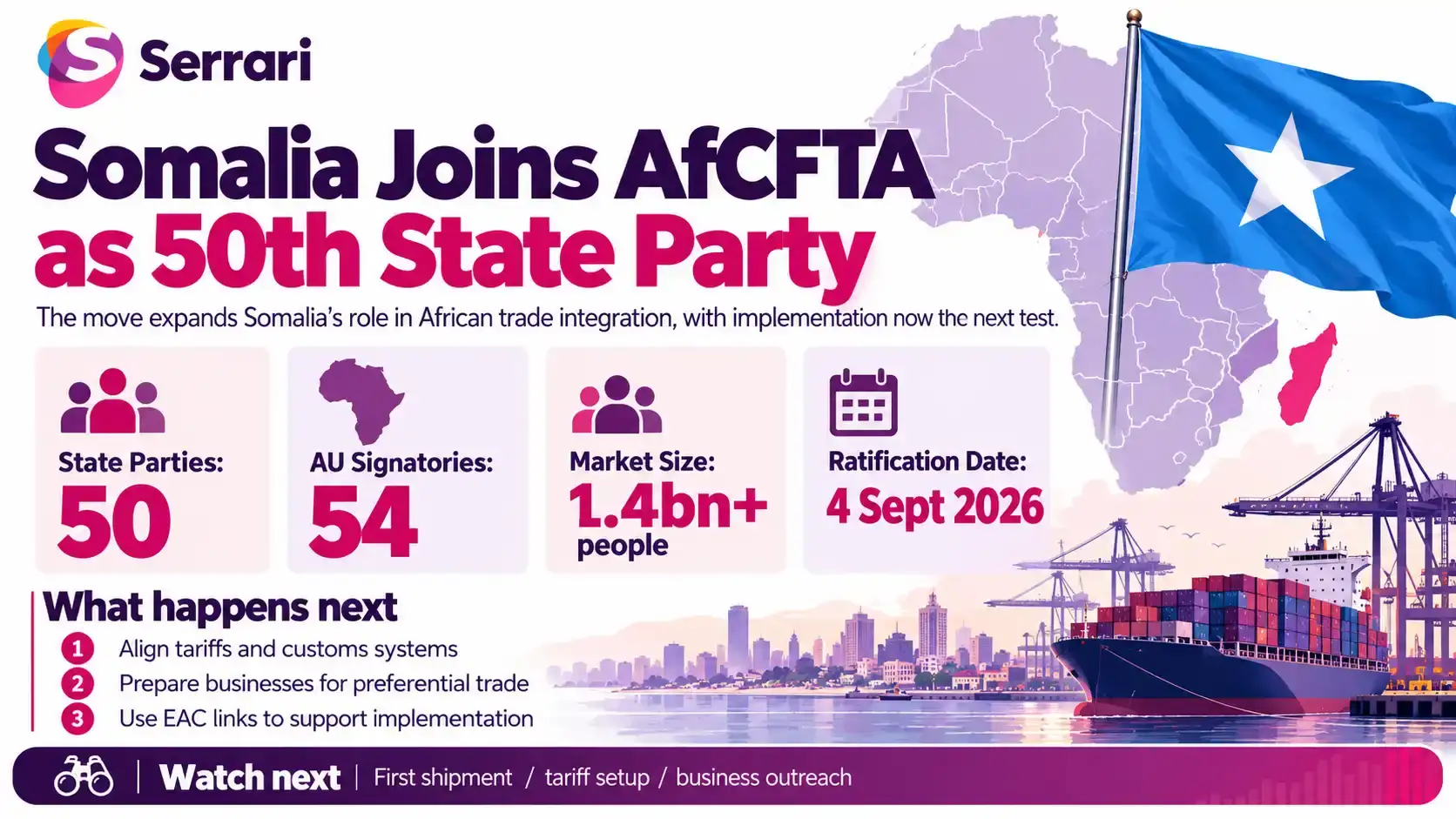
- Somalia became the AfCFTA’s 50th State Party on September 4, 2026, following parliamentary approval and presidential assent.
- Fifty African Union members have ratified the agreement, while 54 have signed it.
- The trade framework covers a continental market of more than 1.4 billion people, although participation does not automatically make every shipment duty-free.
- Somalia must complete customs, tariff-system and certification steps before businesses can fully use preferential trade arrangements.
- Membership builds on Somalia’s entry into the East African Community (EAC) in March 2024.
Somalia Completes a Trade Agreement Eight Years in the Making
Somalia first signed the AfCFTA agreement on March 21, 2018, when African leaders adopted it in Kigali. Eight years later, its formal accession as a State Party was completed when Commerce and Industry Minister Gamal Mohamed Hassan submitted the ratification instrument to the African Union Commission. The document had received national parliamentary approval and President Hassan Sheikh Mohamud’s assent.
The official confirmation of State Party status distinguishes the September deposit from the October announcement. The legal milestone occurred in September; the more recent discussions drew renewed attention to its significance for African integration.
Somalia can now take part in implementation institutions and negotiations under the agreement. For local companies, the potential benefit is access to preferential trading arrangements with other participating countries, provided products meet the applicable rules of origin and documentation requirements.
Context is everything. Stay ahead of shifting trends with today’s market updates, and uncover emerging opportunities using the Serrari Group Market Index and Marketplace. Then, take control of your own financial future by exploring our Money & Life Reset Transformation Blueprint ™ to build stronger habits, create better systems, and design a path toward lasting wealth.
What the Agreement Could Mean for Somali Businesses
The AfCFTA aims to reduce trade barriers and improve cross-border market access for African goods and services. For Somalia, this could create openings for exporters, manufacturers, logistics operators and service providers seeking customers beyond traditional regional markets.
Yet tariff preferences are not automatic. According to the implementation reference note, Somalia is covered by the EAC’s consolidated tariff concessions for the principal 90% category, while other commitments are still being finalized. Customs authorities must transpose the electronic tariff book and configure their systems before the first qualifying preferential shipment can be processed.
A national implementation strategy was validated in Mogadishu in November 2023, and a committee has been established to coordinate work. These preparations matter as much as ratification itself: firms will need clear tariff information, certificates of origin and predictable border procedures to turn market access into actual sales.
East African Integration Provides a Regional Foundation
Somalia’s continental participation follows its admission as the EAC’s eighth Partner State on March 4, 2024. Regional economic communities are central to AfCFTA implementation because they already coordinate tariff schedules, customs arrangements and trade rules among their members.
Combining EAC integration with the wider African framework could help Somali enterprises develop regional supply relationships. However, transport costs, financing constraints and administrative capacity could limit near-term gains unless the agreements are matched by operational improvements.
Next Test Is the First Preferential Shipment
The AfCFTA Secretariat has committed to helping Somalia demonstrate its first shipment under the agreement from start to finish. That practical milestone will provide a clearer indication of readiness than the number of ratifications alone.
For Somalia, the priority is now to convert legal membership into functioning customs processes, informed businesses and reliable cross-border transactions. The broader opportunity is significant, but meaningful trade growth will be measured in completed shipments and commercial partnerships rather than treaty signatures.
Sources: AfCFTA Secretariat / East African Community / Trade Law Centre / The EastAfrican
Your financial future isn’t something you wait for—it’s something you build.
The real question is: when do you begin?
Move beyond simply staying informed.
Navigate the markets with clarity—track trends through the Serrari Group Market Index, uncover opportunities in the Serrari Marketplace, and build practical knowledge with our Curated Wealth Builder Platform.
Stay connected to what truly matters.
Get daily insights on macro trends and financial movements across Kenya, Africa, and global markets—delivered through the Serrari Newsletter.
Growth opens doors.
Advance your career through professional programs including ACCA, HESI A2, ATI TEAS 7 , HESI EXIT , NCLEX – RN and NCLEX – PN, Financial Literacy!🌟—designed to move you forward with confidence.
See where money is flowing—clearly and in real time.
Track Money Market Funds, Treasury Bills, Treasury Bonds, Green Bonds, and Fixed Deposits, alongside global and African indexes, key economic indicators, and the evolving Crypto and stablecoin landscape—all within Serrari’s Market Index.