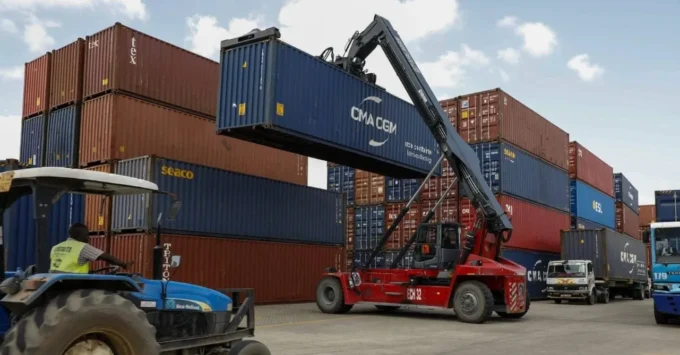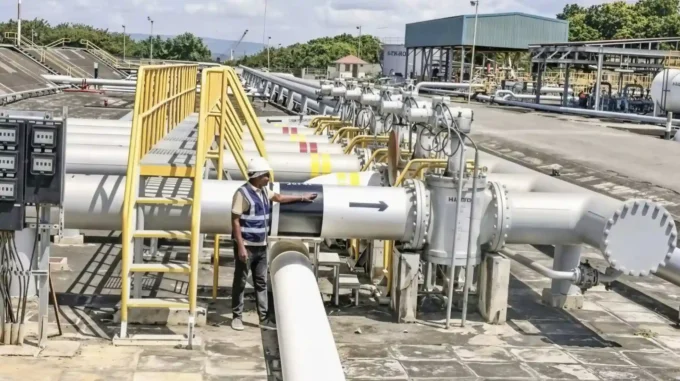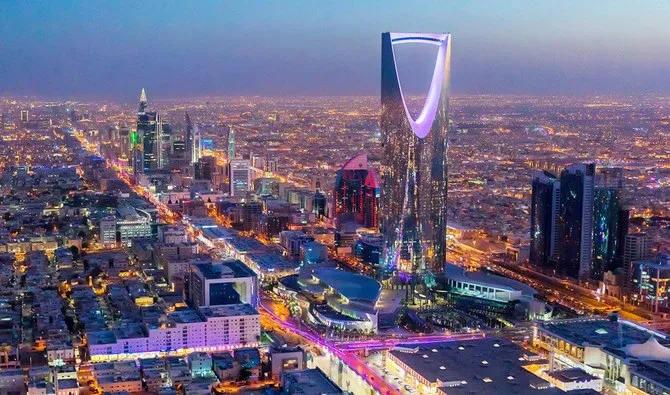
Saudi Arabia’s investment ecosystem contributed 30% to nominal GDP by the end of 2025, according to data released by the General Authority for Statistics. The milestone, which was originally set as a target for 2030 under the National Investment Strategy, has been reached five years ahead of schedule. Foreign direct investment inflows increased fivefold from SR28 billion in 2017 to SR133 billion in 2025, while total FDI stock nearly doubled to reach SR1.1 trillion. Gross fixed capital formation more than doubled over the same period, rising from SR672 billion to SR1.442 trillion. The figures reflect the cumulative impact of Vision 2030’s economic diversification agenda, anchored by the Public Investment Fund’s transformation into one of the world’s largest sovereign wealth funds, sweeping regulatory reforms, and the deployment of hundreds of billions of dollars into new sectors ranging from tourism and entertainment to advanced manufacturing and artificial intelligence. However, the Kingdom still faces structural challenges — including a fiscal breakeven oil price above current market levels, scaled-back megaproject budgets, and an annual FDI target of $100 billion by 2030 that remains far from reach.
Markets move fast; don’t get left behind. We’ve paired the Serrari Group Market Index with a curated Marketplace and a comprehensive Wealth Builder Platform to ensure you have the data—and the skills—to act on it.
Key Overview
- Investment-to-GDP ratio: 30% of nominal GDP by end of 2025, hitting the National Investment Strategy’s original 2030 target five years early
- FDI inflows: Rose fivefold from SR28 billion (2017) to SR133 billion (2025)
- FDI stock: Reached SR1.1 trillion ($293 billion) in 2025, up 119% from 2017
- GDP growth: Overall economic output expanded from SR2.7 trillion (2017) to SR4.8 trillion (2025)
- Gross fixed capital formation: More than doubled from SR672 billion to SR1.442 trillion
- Non-oil share of GDP: Non-oil activities now account for 55% of real GDP
- PIF assets: Grew from approximately SR500 billion in 2015 to more than SR3.47 trillion by 2025
- 2030 FDI target: $100 billion in annual inflows — still a significant stretch from current levels
The 30% Milestone: Ahead of Schedule
When Saudi Arabia’s Crown Prince Mohammed bin Salman launched the National Investment Strategy in 2021, it set an explicit goal: raise the investment contribution to GDP from 22% in 2019 to 30% by 2030. The strategy projected that more than $3.19 trillion would be injected into the national economy through investment activity over the decade, with the Shareek programme contributing $1.3 trillion, the Public Investment Fund providing $799 billion, and the remaining $1 trillion generated by investments facilitated by the strategy itself.
Reaching the 30% threshold in 2025 — five years ahead of the original timeline — represents one of the clearest quantitative successes of Vision 2030’s economic programme. The Ministry of Investment released GASTAT data confirming the milestone alongside several other indicators that collectively illustrate the scale of transformation underway.
The Kingdom’s overall economic output expanded from SR2.7 trillion in 2017 to SR4.8 trillion by 2025, a near-doubling in nominal terms that reflects both oil revenue cycles and the deliberate expansion of non-oil economic activity. Non-oil activities now account for 55% of real GDP, while the private sector contributes 51% — a structural shift that the annual Vision 2030 report describes as marking a more sustainable economic model.
Gross fixed capital formation — a measure of investment in physical assets such as infrastructure, machinery, and buildings — more than doubled over the same period, rising from SR672 billion to SR1.442 trillion. This metric is particularly significant because it captures the tangible deployment of capital into productive capacity, not merely financial flows.
Foreign Direct Investment: Fivefold Growth With a Long Way to Go
The FDI numbers are among the most striking. Annual inflows increased fivefold, from SR28 billion in 2017 to SR133 billion in 2025. Total FDI stock reached SR1.1 trillion ($293 billion), having grown 119% since 2017 according to the annual Vision 2030 report.
The acceleration was particularly pronounced in the fourth quarter of 2025. GASTAT data showed that net FDI inflows surged 90% year-on-year to SR48.4 billion ($12.9 billion) in Q4, while inward FDI flows reached SR50.6 billion, a 29% increase compared to the same quarter in 2024. Earlier in the year, Q1 2025 net inflows had reached SR22.2 billion, a 44% annual increase.
The breadth of source countries has also expanded. Investment Monitor reported that revised 2024 figures showed FDI inflows of $31.7 billion, a 24% increase from the previous year, with inflows from the US and Germany more than tripling compared to 2023 and Hong Kong’s contribution surging tenfold. The UAE remained the top source of FDI for the fourth consecutive year.
Despite this progress, the Kingdom’s ultimate target — reaching $100 billion in annual FDI by 2030 — remains a significant stretch. At $35.5 billion (SR133 billion) in annual inflows in 2025, Saudi Arabia would need to roughly triple its current performance in the next four years. Experts who track these figures closely note that while the trajectory is strongly positive, particularly in high-growth sectors aligned with diversification goals, the gap between actual and targeted FDI still requires sustained acceleration in regulatory reform, sector-specific incentive structures, and the successful execution of anchor projects that draw in foreign co-investors.
The PIF Engine: Scale and Recalibration
No discussion of Saudi investment is complete without the Public Investment Fund. Originally established in 1971 as a passive vehicle for managing state equity holdings, PIF has been transformed into one of the world’s most active sovereign wealth funds and the primary engine of domestic economic transformation.
Assets under management grew from approximately SR500 billion in 2015 to more than SR3.47 trillion by 2025 — a sixfold expansion that reflects both organic portfolio growth and strategic asset transfers, including successive stakes in Saudi Aramco. Between 2021 and 2025, the fund contributed roughly one-third of the Kingdom’s real non-oil GDP growth, with its share of non-oil GDP rising from 4% to 10%.
PIF portfolio companies collectively spent approximately SR590 billion during the 2021-2025 period, with local content expenditure alone reaching SR207 billion in 2024. The fund also served as a magnet for foreign capital: from 2021 through Q3 2025, PIF portfolio companies attracted approximately SR57 billion in foreign direct investment across real estate, automotive, logistics, telecommunications, and advanced technology.
The fund has now entered a new strategic phase. The 2026-2030 strategy, endorsed by the PIF Board of Directors chaired by Crown Prince Mohammed bin Salman, signals a shift from rapid expansion toward value maximisation, operational efficiency, and ecosystem integration. PIF has reorganised its investments into three core portfolios: a Vision Portfolio focused on developing competitive domestic ecosystems, a Strategic Portfolio managing key national assets, and a Financial Portfolio targeting sustainable returns across global markets.
This recalibration is partly driven by fiscal realities. As CNBC reported, PIF recorded an $8 billion writedown on megaprojects in 2025, with the total value of construction contracts awarded falling nearly 60% from 2024 levels. Aramco’s reduced dividend payout translated into a decline of at least $6 billion in income for the fund. In response, PIF approved a minimum 20% reduction in spending across its portfolio, with some project budgets cut by as much as 60%.
The key question, as J. Awan Capital noted, is whether this recalibration will improve project bankability and attract greater private sector participation — or whether it signals a structural downshift in the pace of transformation spending.
Context is everything. While you follow today’s updates, use the Serrari Group Market Index and Marketplace to spot emerging shifts. Need to sharpen your edge? Our Wealth Builder Platform turns these insights into a professional-grade strategy.
Vision 2030 at the Decade Mark: Progress and Pressure Points
The investment data arrives as Saudi Arabia prepares to enter what it describes as the third phase of Vision 2030. The annual report for 2025 showed that 309 of 390 indicators had achieved their interim goals, yielding a 93% completion threshold. Of 1,290 initiatives, 225 have been fully implemented and 935 are on track.
Several headline metrics have exceeded expectations. Tourism welcomed 122 million visitors in 2025, far surpassing the original 100 million target that was not expected to be reached until 2030. Female labour force participation reached 36.2%, beating the 35.5% target. The number of SMEs surpassed 1.7 million, employing 8.8 million people with a 22.9% contribution to GDP. Saudi Arabia also achieved first place globally in cybersecurity rankings and third in the global AI index.
Yet challenges persist. The IMF estimates Saudi Arabia’s fiscal breakeven oil price at approximately $90 per barrel, while Brent crude averaged $75-80 through 2025, creating recurring fiscal deficits. Non-oil exports stand at 25.2% of non-oil GDP against a 2024 target of 35%, indicating that the export dimension of diversification is progressing more slowly than domestic investment and consumption.
PwC’s Saudi Economy Watch 2025 noted that while non-oil fiscal revenues have more than doubled since 2017, oil market conditions remain an important factor influencing non-oil activity. The report argued that the next phase of diversification must place greater emphasis on how growth is generated, directing capital toward activities that raise productivity, generate scalable exports, and attract private investment that can endure with lower reliance on the oil cycle.
Sector-Specific Investment Drivers
The composition of investment flowing into the Kingdom has shifted markedly toward sectors aligned with long-term diversification objectives.
Technology and digital infrastructure represent the most capital-intensive frontier. Saudi Arabia has committed over $100 billion to AI, data centre, and digital infrastructure since 2023, anchored by PIF-backed HUMAIN, which targets the world’s third-largest AI capability. A $2.7 billion contract for the 480MW Hexagon data centre in Riyadh was awarded in January 2026.
In the automotive sector, PIF’s 2026-2030 strategy targets production of 285,000 vehicles annually, contributing to a national goal of 500,000 vehicles. The PIF-backed electric vehicle brand Ceer and a $500 million joint venture with Hyundai Motor Group are central to this ambition.
Energy diversification continues at scale. PIF will contribute 44.5 GW toward a national target of 100 GW in renewable energy capacity. In hydrocarbons, Aramco and BlackRock’s Global Infrastructure Partners announced an $11 billion investment in the Jafurah midstream gas network, which will supply power for manufacturing and large-scale data centres.
Mining has also re-emerged as a diversification pillar. At the Future Minerals Forum in January 2025, the Minister of Industry and Mineral Resources said the Kingdom would promote exploration across 5,000 sq. km of mineralised belts, positioning mining as the third pillar of the industrial economy.
Financial market reform is facilitating broader capital participation. The Capital Market Authority opened the Tadawul stock exchange to all categories of foreign investors in February 2026, bringing international holdings to over SR590 billion ($157 billion). IPO activity on the main exchange raised a combined $2.8 billion in the first half of 2025 across six listings, led by low-cost carrier flynas.
Outlook: Growth Amid Headwinds
The IMF has revised Saudi Arabia’s 2026 growth forecast to 3.1%, reflecting the effects of regional geopolitical tensions and oil production adjustments under OPEC+ commitments. However, growth is expected to recover to 4.5% in 2027, reinforcing the Kingdom’s position among the stronger-performing G20 economies.
Finance Minister Mohammed Al-Jadaan has emphasised the Kingdom’s ability to sustain economic stability through continued structural reforms and diversified export routes. The 2026 budget reflects an ongoing balancing act between continued investment in transformation projects and the need for fiscal discipline in a lower oil price environment.
The investment-to-GDP milestone is a clear marker of momentum. But the harder questions lie ahead: whether the pace of FDI growth can reach the $100 billion annual target, whether PIF’s recalibration from expansion to execution will accelerate or constrain private sector participation, and whether the structural shift away from oil dependency can survive sustained commodity price weakness. The numbers announced this week suggest the foundation has been laid. What gets built on it will define whether Vision 2030 delivers on its central promise of a post-oil Saudi economy.
Your financial future isn’t something you wait for—it’s something you build.
The real question is: when do you begin?
Move beyond simply staying informed.
Navigate the markets with clarity—track trends through the Serrari Group Market Index, uncover opportunities in the Serrari Marketplace, and build practical knowledge with our Curated Wealth Builder Platform.
Stay connected to what truly matters.
Get daily insights on macro trends and financial movements across Kenya, Africa, and global markets—delivered through the Serrari Newsletter.
Growth opens doors.
Advance your career through professional programs including ACCA,HESI A2,ATI TEAS 7,HESI EXIT ,NCLEX – RNandNCLEX – PN, Financial Literacy!🌟—designed to move you forward with confidence.
See where money is flowing—clearly and in real time.
Track Money Market Funds, Treasury Bills, Treasury Bonds, Green Bonds, and Fixed Deposits, alongside global and African indexes, key economic indicators, and the evolving Crypto and stablecoin landscape—all withinSerrari’s Market Index.