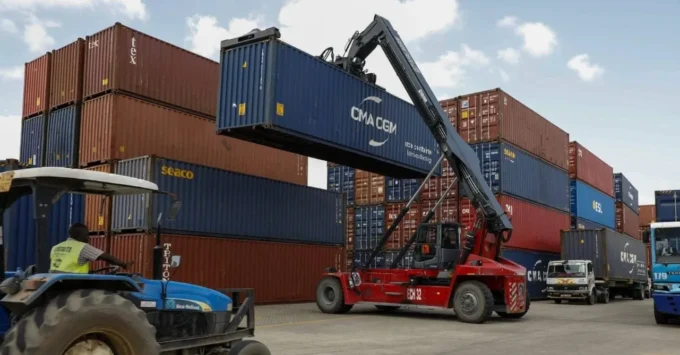
China and Mozambique have signed a comprehensive agreement that weaves together defence cooperation, large-scale geological surveying, and industrial investment to unlock one of Africa’s most resource-rich and conflict-affected frontiers. Announced following talks between President Xi Jinping and Mozambican President Daniel Chapo in Beijing, the deal centres on Mozambique’s vast Rovuma Basin gas reserves — more than 5 trillion cubic metres of natural gas — alongside largely untapped deposits of graphite, lithium, and rare earth elements in the country’s northern provinces. China will conduct detailed geological mapping of these mineral resources, invest in local processing infrastructure, and provide security assistance to stabilise the insurgency-hit Cabo Delgado region where most of the resources are concentrated. The agreement represents Beijing’s most integrated resource-access model in Africa to date, combining extraction, processing, infrastructure, market access, and military cooperation into a single framework. It also deepens the rivalry between China and the United States over Mozambique’s critical minerals, with Washington simultaneously moving to acquire a 20% stake in the country’s largest graphite mine.
Markets move fast; don’t get left behind. We’ve paired the Serrari Group Market Index with a curated Marketplace and a comprehensive Wealth Builder Platform to ensure you have the data—and the skills—to act on it.
Key Overview
- Gas reserves: More than 5 trillion cubic metres (180 trillion cubic feet) of natural gas discovered in the Rovuma Basin
- Critical minerals: Geological survey will target graphite, lithium, and rare earth deposits in northern Mozambique
- Chinese investment model: Full-package approach combining resource mapping, infrastructure, industrial processing, market access, and security cooperation
- Security component: China will support counterterrorism efforts through training, equipment, and joint exercises in insurgency-affected Cabo Delgado
- US competition: The DFC plans to convert a $31 million loan into equity in Syrah Resources for a ~20% stake in the Balama graphite mine
- LNG projects: Over $50 billion in foreign investment committed to three flagship LNG projects in the Rovuma Basin
- Chinese stakes: China National Petroleum Corporation (CNPC) holds a 20% stake in the Rovuma LNG project
The Deal: Resources, Security, and Industrial Integration
The agreement was announced in a joint statement following talks in Beijing between President Xi Jinping and President Daniel Chapo. It is structured not as a single transaction but as a comprehensive framework spanning multiple sectors and timelines.
At its core is a large-scale geological survey targeting high-value deposits of graphite, lithium, and rare earth elements across Mozambique’s resource-rich northern provinces. These minerals are essential inputs for the global green energy transition — graphite for battery anodes, lithium for energy storage, and rare earths for electric motors, wind turbines, and advanced electronics. Northern Mozambique’s deposits remain largely underexplored due to a combination of security constraints, infrastructure deficits, and limited geological data.
The initiative will be supported through platforms such as the China-Africa Geoscience Cooperation Centre and the Belt and Road International Geoscience Education and Training Centre — institutional mechanisms that give Beijing a structural advantage in translating geological data into investment decisions.
Beyond mapping, China has committed to funding local processing infrastructure, a critical distinction from traditional extraction-focused deals. Under the framework, Chinese investment will help Mozambique establish processing plants that move the country up the industrial value chain, reducing dependence on raw material exports. The agreement also includes expanded agricultural cooperation, with China offering zero-tariff market access and a “green channel” for Mozambican agricultural products, alongside joint work in irrigation, logistics, and seed development.
President Xi signalled the strategic intent explicitly, stating that China is willing to “explore new paths for cooperation in infrastructure and comprehensive energy and mineral development.”
Mozambique’s Gas Frontier: Scale and Stalled Ambition
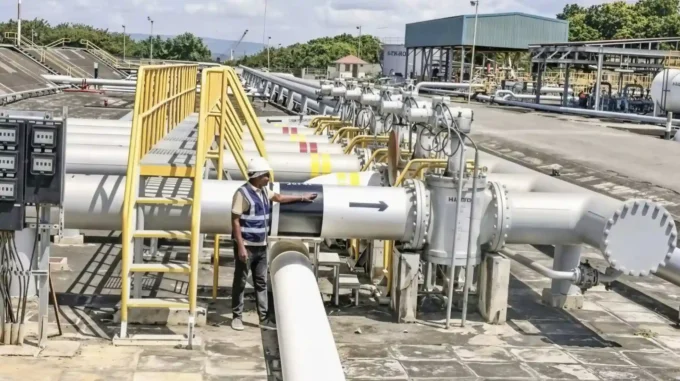
The energy dimension of the partnership centres on the Rovuma Basin, located offshore the Cabo Delgado province in northern Mozambique. The basin holds more than 180 trillion cubic feet of natural gas, making Mozambique one of the world’s most significant recent gas discoveries and a potential top-tier LNG exporter.
Three flagship projects are planned for the basin. The Mozambique LNG project, led by TotalEnergies, is valued at approximately $24 billion. The Rovuma LNG project, operated by a joint venture of Eni, ExxonMobil, and China National Petroleum Corporation (CNPC), carries an estimated value exceeding $30 billion. The Coral Sul FLNG platform, operated by Eni, began production in 2022 as Mozambique’s first operational offshore LNG facility.
China’s existing stake in the Rovuma Basin is substantial. CNPC holds a 20% interest in the Rovuma LNG project through Mozambique Rovuma Venture (MRV), alongside Eni and ExxonMobil at 40% each. The deepwater Area 4 concession, where the Rovuma LNG project is located, holds more than 85 trillion cubic feet of natural gas.
However, development has been severely disrupted by the Cabo Delgado insurgency. TotalEnergies declared force majeure on its onshore project in 2021 after escalating violence, and the Rovuma LNG final investment decision has been delayed to 2026 due to ongoing security concerns. The new China-Mozambique security agreement is directly aimed at addressing this barrier.
The Security Dimension: Protecting Strategic Assets
Northern Mozambique, particularly Cabo Delgado province, has been affected by a violent Islamist insurgency since 2017 that has displaced more than a million people, killed thousands, and disrupted major energy and mining projects. The insurgency, linked by US officials to an ISIS affiliate, exploited deep-rooted poverty and marginalisation in one of Mozambique’s most economically deprived regions — despite the area sitting atop vast gas, graphite, and gemstone deposits.
Under the new agreement, China has pledged to support Mozambique’s counterterrorism efforts through training, equipment, and joint military exercises. The security cooperation is designed to stabilise regions critical to gas and mining operations, creating the conditions for investment to proceed.
This approach mirrors China’s broader strategy across the continent, where security assistance is increasingly bundled with resource access agreements. For Mozambique, the appeal is clear: international energy companies have conditioned their investment decisions on improved security, and without stabilisation in Cabo Delgado, tens of billions of dollars in LNG projects remain on hold.
Context is everything. While you follow today’s updates, use the Serrari Group Market Index and Marketplace to spot emerging shifts. Need to sharpen your edge? Our Wealth Builder Platform turns these insights into a professional-grade strategy.
Critical Minerals: A US-China Battleground
Mozambique’s mineral wealth has placed the country at the centre of an intensifying competition between the United States and China for control of critical mineral supply chains.
Mozambique currently supplies nearly 10% of the world’s graphite, a figure expected to rise to approximately 15% by the end of the decade. The Balama mine in Cabo Delgado, operated by Australian-listed Syrah Resources, is one of the world’s largest natural graphite deposits outside China, with estimated reserves of 110 million metric tons of graphite ore and a projected mine life of 50 years.
The US has moved aggressively to secure its position. In March 2026, the DFC announced plans to convert a $31 million loan into equity in Syrah Resources, targeting a roughly 20% stake that would make Washington the company’s second-largest shareholder. The agency will also inject an additional $15 million into Twigg Exploration and Mining Limitada, the local unit operating the Balama mine. DFC CEO Ben Black framed the move in national security terms: “In today’s era of global competition, economic security is national security.”
The investment builds on a US-Australia critical minerals supply agreement signed by President Trump and Prime Minister Albanese in October 2025, targeting $8.5 billion in joint projects.
But China’s approach in Mozambique is fundamentally different in scope and structure. Where the US strategy is centred on securing positions in specific supply chain nodes — a mine here, a processing plant there — Beijing is offering what amounts to a full-package model: resource mapping, infrastructure development, industrial processing, market access, and security cooperation bundled into a single strategic framework. The geological survey alone gives China first-mover advantage in identifying deposits that Western companies may not even know exist.
As the Peterson Institute for International Economics noted in a December 2024 analysis, US efforts to diversify critical mineral supply chains away from China often involve substituting familiar risks for murkier ones in frontier markets. The Balama mine’s eight-month shutdown following Mozambique’s disputed 2024 election — which triggered events of default on both DFC and Department of Energy loans — illustrates the fragility of these alternative supply chains.
China, by contrast, is attempting to manage the political and security risks directly, through defence cooperation and high-level diplomatic engagement.
Mozambique’s Strategic Calculus
For Mozambique, the agreement with China addresses multiple interlocking challenges simultaneously. The country possesses abundant mineral reserves including graphite, vanadium, titanium, tantalum, lithium, and rare earth metals, but lacks the infrastructure, security environment, and processing capacity to capitalise on them.
President Chapo, who took office following contested elections, faces the immediate task of restoring investor confidence while managing an economy that remains among the poorest in the world. The Cabo Delgado insurgency has not only displaced populations and destroyed communities but has also frozen tens of billions of dollars in committed investment. Energy companies have conditioned their return on demonstrable improvements in security — something Mozambique’s own military has struggled to deliver despite assistance from Rwanda and the Southern African Development Community.
China’s offer fills multiple gaps: geological expertise to identify what lies beneath the ground, capital to build the infrastructure needed to extract and process it, market access for agricultural and mineral exports, and security assistance to protect the zones where development will take place.
The risk for Mozambique is one familiar across Africa’s resource-rich states: that comprehensive dependence on a single external partner limits future negotiating leverage and concentrates strategic vulnerability. The experience of the Democratic Republic of Congo’s infrastructure-for-minerals deal with Chinese companies, which Congolese civil society groups argue has resulted in substantial financial losses and continued imbalances, offers a cautionary precedent.
What This Means for Africa’s Resource Politics
The China-Mozambique agreement is significant beyond its bilateral dimensions. It represents the most integrated version yet of Beijing’s evolving resource-access model in Africa — one that combines hard security, geological science, industrial development, and trade policy into a single strategic package.
For other African nations sitting on critical mineral deposits, the deal sets a benchmark for what China is willing to offer. It also raises the stakes for Western governments, which have historically relied on market-driven approaches and are now scrambling to match the scope of China’s state-led engagement.
The competition over Mozambique’s resources is ultimately a proxy for a larger contest: who will control the supply chains that power the global energy transition. With graphite, lithium, and rare earths concentrated in a handful of countries — many of them in Africa — the continent’s resource politics will only grow more consequential. Beijing’s comprehensive approach in Mozambique suggests it intends to set the terms.
Your financial future isn’t something you wait for—it’s something you build.
The real question is: when do you begin?
Move beyond simply staying informed.
Navigate the markets with clarity—track trends through the Serrari Group Market Index, uncover opportunities in the Serrari Marketplace, and build practical knowledge with our Curated Wealth Builder Platform.
Stay connected to what truly matters.
Get daily insights on macro trends and financial movements across Kenya, Africa, and global markets—delivered through the Serrari Newsletter.
Growth opens doors.
Advance your career through professional programs including ACCA,HESI A2,ATI TEAS 7,HESI EXIT ,NCLEX – RNandNCLEX – PN, Financial Literacy!🌟—designed to move you forward with confidence.
See where money is flowing—clearly and in real time.
Track Money Market Funds, Treasury Bills, Treasury Bonds, Green Bonds, and Fixed Deposits, alongside global and African indexes, key economic indicators, and the evolving Crypto and stablecoin landscape—all withinSerrari’s Market Index.