














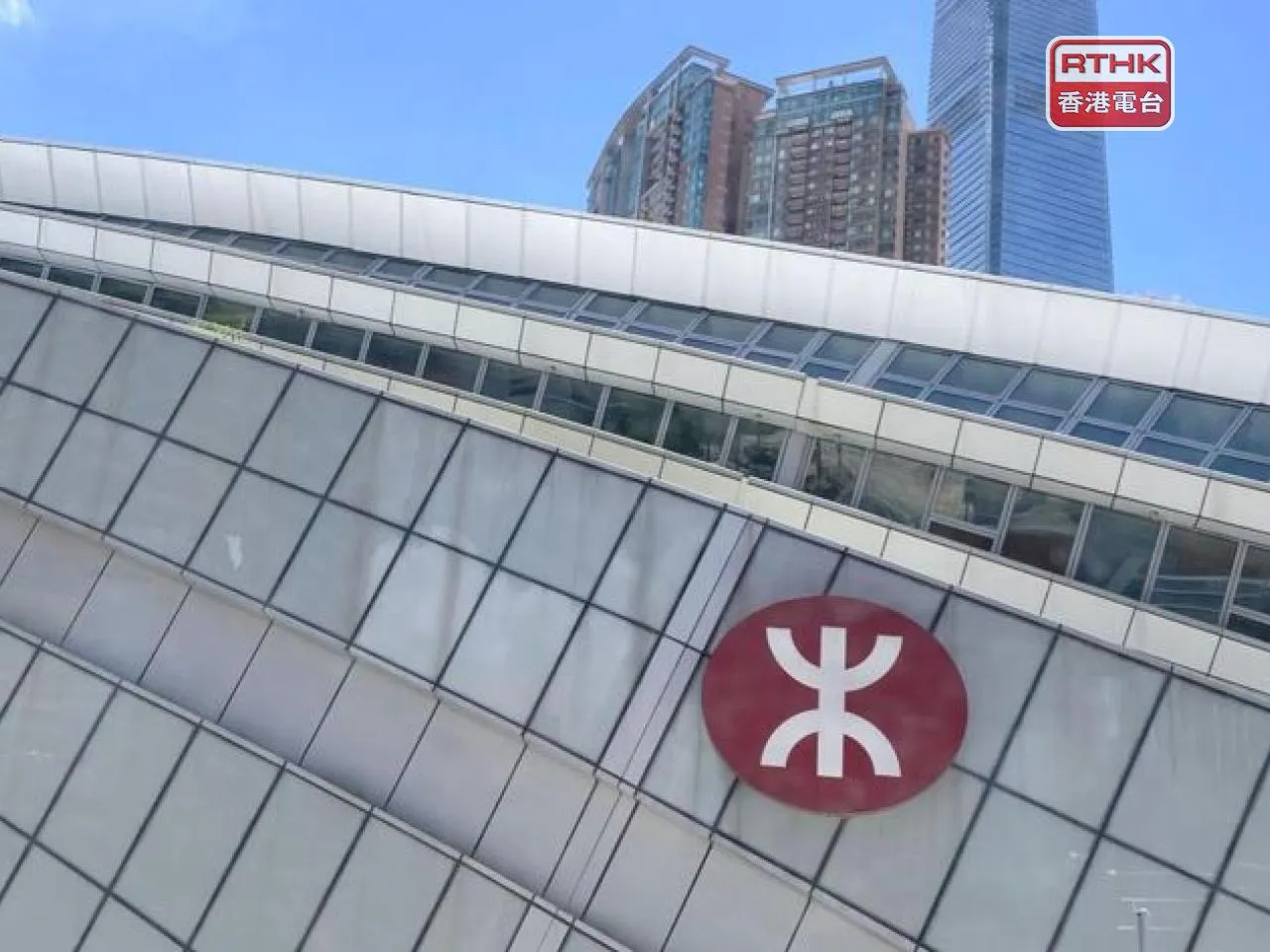
The MTR Corporation has sold HK$18.8 billion (approximately US$2.4 billion) in green bonds — setting a Hong Kong dollar-denominated issuance record and marking the rail giant’s first publicly offered bond in the local currency market. The triple-tranche offering comprised a five-year tranche of more than HK$8.3 billion priced at 2.88%, a ten-year tranche of HK$7.5 billion at 3.30%, and a landmark HK$3 billion thirty-year tranche at 4.00% — each representing the largest for their respective tenor in the Hong Kong dollar market. The overall order book exceeded HK$60 billion, more than three times the total issue size, reflecting exceptional investor demand. Combined with MTR’s inaugural Australian dollar green bond issuance of A$2 billion (HK$11.22 billion) in January, the corporation has now raised HK$30 billion in green financing in 2026 alone. The proceeds are intended to bridge a seven to ten-year funding gap for the construction of multiple new rail lines across Hong Kong, covering upfront engineering and construction costs while the corporation waits six to seven years for returns from property development. The transaction was led by Bank of China, Crédit Agricole CIB, HSBC, Standard Chartered Bank, and UBS, and the HK$3 billion thirty-year tranche has been specifically highlighted as adding meaningful depth to the long end of the Hong Kong dollar benchmark yield curve.
Key Overview
- Issuer: MTR Corporation — Hong Kong’s semi-privatised rail operator
- Total Issuance: HK$18.8 billion (approximately US$2.4 billion) — a Hong Kong dollar-denominated record and MTR’s first publicly offered local currency bond
- Triple Tranche Structure: 5-year (HK$8.3bn at 2.88%), 10-year (HK$7.5bn at 3.30%), 30-year (HK$3bn at 4.00%) — each the largest for their respective tenor
- Order Book: Exceeded HK$60 billion — more than three times the total issue size
- 2026 Total Raised: HK$30 billion, including A$2 billion (HK$11.22 billion) in inaugural Australian dollar green bonds in January
- Purpose: Bridge a 7–10 year funding gap for construction of multiple new Hong Kong rail lines
- Financial Context: Debt represents less than 10% of MTR’s ~HK$200 billion market cap; annual interest of max HK$700 million easily covered by profits exceeding HK$10 billion
- Joint Leads: Bank of China, Crédit Agricole CIB, HSBC, Standard Chartered Bank, and UBS
- Market Signal: The 30-year tranche sets a strong benchmark at the long end of the Hong Kong dollar yield curve
Markets move fast; don’t get left behind. We’ve paired the Serrari Group Market Index with a curated Marketplace and a comprehensive Wealth Builder Platform to ensure you have the data—and the skills—to act on it.
A Record That Rewrites the Hong Kong Bond Market
There are bond transactions that raise capital, and there are bond transactions that reshape the market in which they occur. MTR Corporation’s HK$18.8 billion green bond offering sits firmly in the second category. By simultaneously setting a Hong Kong dollar-denominated issuance record, launching the corporation’s first publicly offered local currency bond, and establishing new benchmark sizes across the five-, ten-, and thirty-year tenors, the transaction has altered the reference points against which Hong Kong dollar bond markets will be measured for years to come.
The numbers are striking by any standard. An order book exceeding HK$60 billion — more than three times the total issue size — signals not merely adequate demand but exceptional investor appetite for a credit of MTR’s quality at the yields on offer. The HK$3 billion thirty-year tranche, singled out by HSBC’s Eugene Ng as adding depth to the Hong Kong dollar market by setting a strong benchmark at the long end of the yield curve, is particularly significant: long-dated bonds are the lifeblood of institutional investors with long-duration liabilities, and a credible, liquid benchmark at the thirty-year point is a contribution to market infrastructure that extends well beyond the financing needs of any single issuer.
For MTR, the transaction is also a strategic milestone. The corporation has historically funded itself primarily through bank loans and private placements, and its entry into the public Hong Kong dollar bond market as a first-time issuer — with a record-breaking transaction — is a statement of intent about its approach to capital markets going forward. Combined with January’s inaugural Australian dollar green bond of A$2 billion, MTR has raised HK$30 billion in green financing in 2026 alone, establishing itself as one of the most active and ambitious green bond issuers in the Asia-Pacific region.
Historical Context: MTR Corporation and Hong Kong’s Infrastructure Finance Story
The MTR Corporation occupies a unique position in Hong Kong’s economic and social landscape — and understanding that position is essential for appreciating both the financial structure of the current bond transaction and the broader significance of MTR’s capital markets ambitions.
MTR was incorporated in 1975 as the Mass Transit Railway Corporation, a government-owned entity established to develop and operate Hong Kong’s urban rail network. The construction of the original MTR network — which opened its first sections in 1979 — was one of the most significant infrastructure investments in Hong Kong’s post-war history, creating the backbone of the mass transit system that would allow Hong Kong’s extraordinarily dense urban population to move through the city with a speed and reliability that continues to define its competitive advantage as a global business hub.
The corporation’s partial privatisation in 2000 — through an initial public offering that placed approximately 23% of the company’s shares with public investors while retaining the majority with the Hong Kong government — created a distinctive governance structure that has profoundly shaped its financial model. As a semi-privatised corporation with a commercial mandate, MTR is expected to generate returns for its shareholders, but as an entity majority-owned by the Hong Kong government with a social infrastructure mandate, it is also expected to expand and maintain a rail network that serves the public interest.
The financial model that MTR developed to reconcile these potentially conflicting mandates is one of the most studied and most replicated in urban transport economics: the Rail plus Property model. Under this framework, the Hong Kong government grants MTR the development rights to land above and around new rail stations at prices that reflect pre-development values. MTR then develops or co-develops residential, commercial, and retail properties at these sites, using the profits from property development to cross-subsidise the capital costs of rail construction. The model has allowed MTR to build and expand its network without relying on direct government subsidies in the way that most urban rail operators globally depend on — and it has been studied and adapted by transit authorities in cities from Beijing to Singapore to London.
The Rail plus Property model’s financial logic is precisely what gives the current green bond transaction its specific character. As former KCR chairman Michael Tien explained, the corporation raises debt to bridge a seven to ten-year funding gap: it must cover upfront engineering and construction costs for new rail lines immediately, but the returns from property development — which are the primary source of capital cost recovery — do not materialise for six to seven years after construction begins. Debt financing bridges this temporal mismatch, and the tenor distribution of the current bond offering — five, ten, and thirty years — reflects the range of timeframes over which different aspects of this funding gap need to be addressed.
The merger of MTR Corporation with the Kowloon-Canton Railway Corporation in 2007 significantly expanded the network that MTR operates, adding the East Rail, West Rail, and Ma On Shan lines to its portfolio and dramatically increasing both the operational complexity and the capital investment requirements of the combined entity. Subsequent expansion programmes — including the construction of the Shatin to Central Link, various new stations and extensions, and the current pipeline of new lines — have maintained a high and sustained level of capital expenditure that the Rail plus Property model must continue to fund.
The Green Bond Framework: Sustainability Meets Infrastructure Finance
The green bond designation of MTR’s HK$18.8 billion issuance is not merely a marketing overlay on an otherwise conventional infrastructure bond. It reflects a deliberate commitment by the corporation to align its capital markets activity with a sustainability framework that specifies how the proceeds will be used and how environmental performance will be reported.
Green bonds in the infrastructure sector — particularly in the transport category — have a well-established rationale. Mass transit systems, by substituting rail travel for private car journeys, deliver measurable reductions in carbon emissions, urban air pollution, road congestion, and energy consumption per passenger kilometre relative to the automobile travel they displace. In a dense urban environment like Hong Kong, where road capacity is severely constrained and the environmental cost of car travel is high, the marginal environmental benefit of additional rail capacity is particularly significant.
MTR’s green bond framework — which governs the use of proceeds, project selection criteria, reporting obligations, and third-party verification — gives institutional investors with ESG mandates the assurance they require to include the bonds in their portfolios. The framework aligns with internationally recognised green bond principles, including those published by the International Capital Market Association, which have become the de facto standard for green bond issuance in Asian capital markets.
The combination of Hong Kong government backing — through the government’s majority shareholding — and a credible green bond framework creates a uniquely attractive proposition for the institutional investors who form the core of the order book. Sovereign-linked credits with green labels command premium pricing relative to conventional corporate bonds in the current environment, and the oversubscription of MTR’s order book at more than three times the issue size confirms that this premium is substantial and genuine.
The thirty-year tenor of the largest benchmark-setting tranche is particularly well suited to the green bond context. The environmental benefits of rail infrastructure — reduced emissions, reduced energy consumption, reduced road congestion — accrue over the full operational life of the assets being financed, which extends well beyond thirty years. Matching the tenor of the financing instrument to the duration of the environmental benefit is both financially logical and consistent with the long-term perspective that sustainable finance frameworks encourage.
The Pricing and Structure: Reading the Market Signal
The triple-tranche structure and the pricing of each tranche carry significant information about the state of Hong Kong’s debt capital markets and the appetite of institutional investors for MTR’s credit at different points on the yield curve.
The Five-Year Tranche: HK$8.3 Billion at 2.88%
The largest tranche by size — more than HK$8.3 billion — was priced at a 2.88% coupon for a five-year maturity. This is the most liquid point on any issuer’s yield curve, and the size of the five-year tranche reflects both the depth of institutional demand for short-dated, high-quality Hong Kong dollar bonds and MTR’s need for near-term funding to cover construction costs that will be incurred within the next several years. The 2.88% coupon, in the context of current Hong Kong interest rates, reflects the premium credit quality of the issuer — an entity majority-owned by the Hong Kong government with a track record of strong profitability and conservative financial management.
The Ten-Year Tranche: HK$7.5 Billion at 3.30%
The ten-year tranche at 3.30% serves a different investor constituency — pension funds, insurance companies, and other long-duration liability managers who require assets with maturities extending beyond the five-year horizon. The size of HK$7.5 billion at this tenor, described as the largest ten-year Hong Kong dollar bond to date, reflects the growing depth of institutional demand for medium-duration fixed income in the currency. The 42 basis points of additional yield over the five-year tranche compensates investors for the additional duration risk of the longer maturity.
The Thirty-Year Tranche: HK$3 Billion at 4.00%
The thirty-year tranche at 4.00% is the most significant in terms of its market infrastructure contribution, even if it is the smallest in size. Hong Kong dollar bonds at the thirty-year point have been rare — the market has historically lacked the issuer quality and investor depth to support a liquid benchmark at this tenor. MTR’s HK$3 billion issuance changes this by establishing a credible reference point at the long end of the Hong Kong dollar yield curve. Eugene Ng of HSBC’s description of this tranche as adding depth by setting a strong benchmark at the long end is precisely accurate — the existence of a liquid, well-priced thirty-year MTR bond gives other issuers and investors a reference from which to price similarly rated, similarly structured long-dated credits. This is the definition of a market benchmark, and its absence has been a genuine limitation on the development of Hong Kong’s local currency bond market.
The Financial Logic: Why MTR Can Comfortably Service This Debt
The financial sustainability of the HK$18.8 billion issuance is underwritten by the robust financial profile of MTR Corporation itself. Michael Tien’s analysis is instructive: the debt raised represents less than 10% of MTR’s market capitalisation of approximately HK$200 billion — a conservative leverage ratio by any measure. The annual interest payments, at a maximum of HK$700 million across all tranches, are comfortably covered by the corporation’s annual profits, which exceed HK$10 billion.
This financial context is important for bond investors assessing credit risk. An entity that generates HK$10 billion in annual profits and is servicing HK$700 million in annual interest charges has a debt service coverage ratio of more than fourteen times — an extraordinary level of financial cushion that places the credit risk of these bonds at the very low end of the investment-grade spectrum. The combination of government backing, strong profitability, a dominant market position in Hong Kong’s essential transit infrastructure, and the cross-subsidy from property development creates a credit profile that is, by emerging market standards, exceptionally robust.
The seven to ten-year funding gap that the bonds are intended to bridge — between the upfront capital costs of rail construction and the eventual returns from property development — is a well-understood and well-managed feature of MTR’s business model rather than a sign of financial stress. The corporation has navigated this funding gap successfully across multiple capital investment cycles, and the current bond issuance is the latest expression of a capital management strategy that has been developed and refined over decades.
The Australian Dollar Dimension: Building a Multi-Currency Green Bond Programme
The HK$18.8 billion issuance did not occur in isolation — it is the second major green bond transaction of 2026 for MTR, following the January issuance of A$2 billion in inaugural Australian dollar green bonds. Together, the two transactions have raised HK$30 billion in green financing in a single year, establishing MTR as one of the most prolific green bond issuers in the Asia-Pacific region and signalling a deliberate strategy of building a multi-currency capital markets presence.
The Australian dollar issuance is significant for several reasons. It diversifies MTR’s funding base beyond Hong Kong dollar and other regional currencies, accessing the deep pool of Australian superannuation fund capital that is actively seeking high-quality, green-labelled infrastructure assets. It establishes a new investor relationship with Australian institutional investors who may not previously have had significant exposure to MTR credit. And it demonstrates the corporation’s ability to access capital markets in multiple currencies — a capability that provides flexibility in future funding exercises and reduces dependence on any single capital market.
The sequence of Australian dollar bonds in January followed by Hong Kong dollar bonds in April is likely a deliberate programme construction strategy — establishing the credit in a new currency first, building investor familiarity, and then executing a flagship transaction in the home currency market that benefits from the momentum and credibility of the earlier issuance. The combined HK$30 billion raised in 2026 provides the corporation with substantial funding for its capital programme while the order book dynamics of both transactions suggest that additional issuance capacity remains available if required.
Context is everything. While you follow today’s updates, use the Serrari Group Market Index and Marketplace to spot emerging shifts. Need to sharpen your edge? Our Wealth Builder Platform turns these insights into a professional-grade strategy.
Risks to Consider
MTR’s green bond issuance is supported by a credit profile of exceptional strength, but several risks warrant consideration from investors and market observers.
Construction and project execution risk is inherent in any major infrastructure programme. The new rail lines for which the bond proceeds are intended — covering upfront construction costs — involve complex engineering, significant land acquisition, and coordination with multiple government departments and contractors. Cost overruns, delays, or technical complications are risks that can affect the financial returns from the property development programme that is expected to repay the capital invested.
Property market sensitivity is a structural feature of MTR’s Rail plus Property model. The returns from property development — the primary source of capital cost recovery — depend on Hong Kong’s property market remaining sufficiently robust to generate the development margins that the model requires. A sustained downturn in Hong Kong residential or commercial property values could compress these margins and extend the timeframe for capital recovery, affecting the corporation’s financial flexibility.
Interest rate risk is a consideration for the long-dated tranches of the bond. The thirty-year tranche, in particular, represents a commitment to a fixed 4.00% coupon over an extended period. If Hong Kong interest rates rise significantly from current levels, the mark-to-market value of the bond for investors who need to sell before maturity will decline, and the corporation’s future borrowing costs could be higher than those locked in today.
Geopolitical risk remains a background consideration for any Hong Kong-based institution. The evolving relationship between Hong Kong and mainland China, and between Hong Kong’s financial markets and international capital, continues to influence the investment environment in ways that require monitoring by international investors in Hong Kong dollar bonds.
Challenges Ahead
Several structural challenges will shape the development of MTR’s capital markets programme and the broader Hong Kong dollar bond market in the coming years.
Developing secondary market liquidity for the new benchmark tranches — particularly the thirty-year — is essential for realising the full market infrastructure value of the issuance. A bond that trades actively in the secondary market provides ongoing price discovery and serves as a genuine reference point for other issuers. Building this liquidity requires active market-making from the joint lead managers and the ongoing engagement of a diverse and active investor base.
The pipeline of capital investment required for Hong Kong’s rail network expansion is substantial, and the funding requirements over the coming decade are likely to exceed what the current issuance can cover alone. MTR will need to return to capital markets — in Hong Kong dollars, Australian dollars, and potentially other currencies — on a regular basis, and each subsequent transaction will need to be managed in a way that preserves the pricing quality and investor relationships established by the current landmark issuance.
Maintaining the integrity and credibility of the green bond framework over the life of the bonds requires sustained investment in environmental data collection, reporting, and third-party verification. Investors who purchase bonds on the basis of green label commitments have ongoing expectations about reporting and accountability that must be met.
Looking Ahead: Hong Kong’s Bond Market and the Infrastructure Finance Opportunity
MTR’s HK$18.8 billion green bond transaction is a landmark moment for Hong Kong’s local currency bond market — a market that has historically been overshadowed by the city’s equity market and by the US dollar and renminbi bond markets that are also active in the jurisdiction.
The establishment of new benchmarks across the five-, ten-, and thirty-year tenors by an issuer of MTR’s credit quality provides reference points that other issuers — government agencies, utilities, property developers, and eventually corporate borrowers — can use to price their own Hong Kong dollar bonds. This benchmark-setting function is one of the most important contributions that a flagship transaction can make to market development, and its effects compound over time as the market deepens around the new reference points.
The green bond dimension of the transaction reinforces Hong Kong’s ambitions to position itself as a sustainable finance hub for the Asia-Pacific region — a strategic objective that the Hong Kong Monetary Authority and the Securities and Futures Commission have been actively pursuing through regulatory frameworks, incentive programmes, and market development initiatives. A record-breaking green bond from one of the city’s most iconic institutions contributes to this ambition in a way that is both financially substantial and symbolically powerful.
For MTR itself, the successful execution of this transaction confirms the validity of its multi-currency, multi-tenor capital markets strategy and provides the funding foundation for the next phase of Hong Kong’s rail network expansion. The seven to ten-year funding gap that the bonds are designed to bridge is a feature of a business model that has worked reliably for decades — and the willingness of global institutional investors to subscribe more than three times the available bonds is confirmation that the market shares the confidence in that model that the corporation’s own track record justifies.
Your financial future isn’t something you wait for, it’s something you build.
The real question is: when do you begin?
Move beyond simply staying informed.
Navigate the markets with clarity—track trends through the Serrari Group Market Index, uncover opportunities in the Serrari Marketplace, and build practical knowledge with our Curated Wealth Builder Platform.
Stay connected to what truly matters.
Get daily insights on macro trends and financial movements across Kenya, Africa, and global markets—delivered through the Serrari Newsletter.
Growth opens doors.
Advance your career through professional programs includingACCA,HESI A2,ATI TEAS 7,HESI EXIT ,NCLEX – RNandNCLEX – PN,Financial Literacy!🌟—designed to move you forward with confidence.
See where money is flowing—clearly and in real time.
Track Money Market Funds, Treasury Bills, Treasury Bonds, Green Bonds, and Fixed Deposits, alongside global and African indexes, key economic indicators, and the evolving Crypto and stablecoin landscape—all withinSerrari’s Market Index.