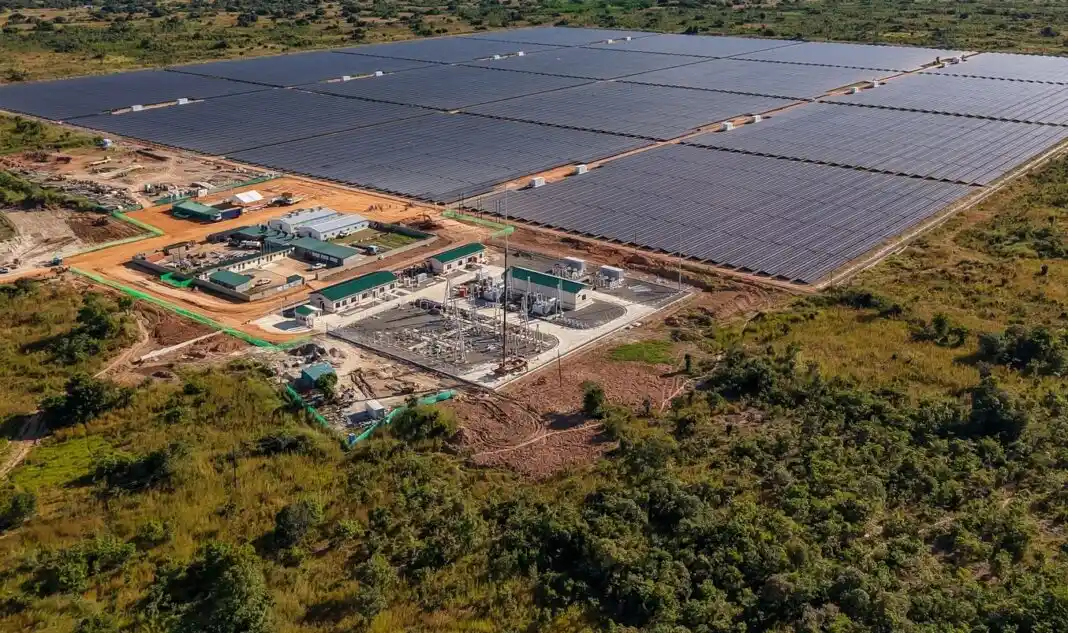
Zambia has launched its largest hybrid renewable energy project, combining a 250 MWp solar plant with a 600 MWh battery storage system to strengthen grid reliability and support energy diversification.
Led by Globeleq, the project aims to reduce reliance on hydropower, improve peak demand management, and accelerate Zambia’s transition to a more resilient and low-carbon energy system.
Key Overview
- Zambia launches largest hybrid solar and battery project
- 250 MWp solar PV + 150 MW / 600 MWh battery storage system
- Developed by Globeleq in partnership with Leopard Investment Company
- Estimated investment of ~$315–350 million
- Supports grid stability and energy diversification
A Landmark Hybrid Renewable Energy Project
Globeleq, one of Africa’s leading independent power producers, has launched construction of Zambia’s largest hybrid renewable energy project—the Leopards Hill Solar and Battery Project. The development combines a 250 MWp solar photovoltaic (PV) plant with a 150 MW / 600 MWh battery energy storage system (BESS), marking a major milestone in the country’s energy transition and its shift toward more resilient, low-carbon power systems.
The scale and integrated nature of the project position it among the most significant hybrid renewable developments on the continent. By combining generation and storage in a single asset, it reflects a growing trend toward flexible energy infrastructure capable of addressing both supply variability and rising electricity demand.
The project is located near Kyindu Ranch in Chongwe District, approximately 25 kilometers southeast of Lusaka, and is being developed in partnership with Leopard Investment Company. Its proximity to existing grid infrastructure, including the Leopards Hill substation, enhances its efficiency and reduces the need for extensive transmission upgrades.
This development represents a critical step toward diversifying Zambia’s energy mix and strengthening national grid stability. It also highlights the increasing role of private sector participation in the country’s energy sector, particularly in delivering large-scale infrastructure projects.
The launch event was officiated by Hakainde Hichilema, alongside key government officials and international partners. Their presence underscores the project’s strategic importance not only as an energy initiative but also as a catalyst for economic growth, industrial development, and investment attraction.
Beyond its immediate impact, the project signals growing investor confidence in Zambia’s energy market, supported by policy reforms and improved regulatory frameworks that have enhanced project bankability after years of delays.
Markets move fast; don’t get left behind. We’ve paired the Serrari Group Market Index with a curated Marketplace and a comprehensive Wealth Builder Platform to ensure you have the data—and the skills—to act on it.
Integrating Solar Power with Large-Scale Storage
At the core of the Leopards Hill project is the integration of large-scale solar generation with advanced battery storage technology, creating a hybrid system designed for both efficiency and reliability. The 250 MWp solar PV installation will generate substantial volumes of clean electricity, while the 150 MW / 600 MWh BESS—equivalent to approximately four hours of storage—will enable energy to be stored and dispatched strategically based on demand patterns.
This hybrid configuration addresses one of the most significant challenges associated with renewable energy: intermittency. Solar generation is inherently variable, depending on sunlight availability, but the inclusion of battery storage allows excess energy produced during peak generation periods to be stored and used when production declines.
As a result, the project can deliver a more consistent and reliable power supply, effectively smoothing fluctuations and reducing dependence on backup generation sources. This capability is particularly valuable in markets where grid stability is a concern and demand patterns are evolving.
The battery system will also provide essential ancillary services, including frequency regulation and voltage control, which are critical for maintaining grid stability. These services help balance supply and demand in real time, ensuring that the power system operates within safe and efficient parameters.
In addition, the integration of storage enhances the overall economic value of the project by enabling time-shifting of electricity supply—allowing power to be delivered during peak demand periods when prices and system needs are highest. This makes hybrid projects increasingly attractive from both operational and investment perspectives.
Supporting Grid Stability and Energy Diversification
Zambia’s electricity system has historically relied heavily on hydropower, which accounts for more than 80% of national generation capacity. While hydropower is a renewable resource, it is highly dependent on water availability and therefore vulnerable to climate variability, particularly prolonged droughts that can significantly reduce generation output.
This reliance has exposed the country to periods of power shortages and supply instability, highlighting the need for a more diversified and resilient energy mix. The Leopards Hill project directly addresses this challenge by introducing a combination of solar generation and battery storage, reducing dependence on a single energy source.
By diversifying the energy mix, the project enhances resilience against climate-related risks while improving overall energy security. It also supports the integration of additional renewable capacity in the future, as storage systems help manage variability and maintain grid balance.
According to President Hakainde Hichilema, the project represents a critical step toward stabilizing the national grid and advancing Zambia’s long-term energy strategy. He emphasized the importance of adopting a holistic approach to energy development—one that encourages investment, leverages multiple energy sources, and supports sustainable economic growth.
The initiative also aligns with Zambia’s broader goal of expanding installed generation capacity to 10,000 MW, a target that reflects both rising electricity demand and the need to support industrialization, particularly in energy-intensive sectors such as mining.
More broadly, the project demonstrates how hybrid renewable systems can play a central role in modernizing power infrastructure, providing not only clean energy but also the flexibility and reliability required for a stable and future-ready electricity system.
Investment, Partnerships, and Market Impact
The Leopards Hill project is expected to require an investment of approximately $350 million, reflecting both its large scale and its strategic importance within Zambia’s evolving energy landscape.
The development is being co-led by Globeleq and Leopard Investment Company, combining international project development expertise with local ownership and land stewardship. Globeleq itself is backed by major development finance institutions, including British International Investment and Norfund, providing strong financial support and enhancing the project’s credibility among investors.
This blend of local and international partnership is particularly important in emerging markets, where risk-sharing and institutional backing can play a decisive role in unlocking capital for large infrastructure projects. It also reflects a broader trend of blended finance models being used to accelerate energy transition investments across Africa.
Beyond its direct impact on energy supply, the project is expected to generate meaningful economic benefits. During peak construction, it is projected to create between 200 and 250 jobs, supporting local employment and skills development. Once operational, the project will continue to provide long-term employment opportunities, particularly in operations, maintenance, and technical services.
Globeleq has identified Zambia as a key growth market and is actively expanding its footprint in the country. Its existing portfolio includes a majority stake in the Lunsemfwa Hydro Power Company, which provides access to regional power markets, as well as the 56 MWp Kafue Solar project, currently nearing financial close under the GET FiT Zambia programme.
At a broader level, Globeleq’s African portfolio spans approximately 1,885 MW of installed capacity across 18 countries, with an additional pipeline of projects under construction and development. This positions the company as a major player in the continent’s energy transition, particularly in scaling renewable energy and hybrid power solutions.
Context is everything. While you follow today’s updates, use the Serrari Group Market Index and Marketplace to spot emerging shifts. Need to sharpen your edge? Our Wealth Builder Platform turns these insights into a professional-grade strategy.
Strengthening Infrastructure Through Policy and Reform
The advancement of the Leopards Hill project also reflects significant improvements in Zambia’s policy and regulatory environment, which have helped enhance investor confidence and project viability.
According to stakeholders, a series of legislative and policy reforms have played a critical role in improving the project’s bankability. These reforms have addressed key barriers that previously delayed the project for nearly a decade, enabling it to move forward toward implementation.
A major milestone in this process is the signing of a grid connection agreement (GCA) between Globeleq and ZESCO, Zambia’s national utility. This agreement secures access to the transmission network and ensures that electricity generated by the project can be reliably integrated into the national grid.
Such agreements are essential for large-scale renewable projects, as they provide clarity on grid access, capacity allocation, and operational coordination—key factors that influence both technical feasibility and financial viability.
Environmental and social considerations have also been carefully addressed through comprehensive impact assessments. The project is located entirely on private land adjacent to existing infrastructure, minimizing the need for land acquisition and eliminating the requirement for resettlement. This approach supports responsible development practices while reducing potential social risks.
Additionally, the project has undergone updated environmental assessments following earlier studies conducted between 2016 and 2018, ensuring compliance with current regulatory standards and reinforcing its environmental credibility.
Africa’s Growing Energy Storage Market
The Leopards Hill project comes at a pivotal moment for energy storage deployment across Africa, where the sector is experiencing rapid and transformative growth.
According to the Africa Solar Industry Association (AFSIA), installed battery storage capacity on the continent has expanded significantly in recent years. After remaining relatively stagnant at modest levels through 2022, capacity began to accelerate in 2023 and surged sharply in 2024, marking a clear inflection point for the industry.
This rapid growth reflects a broader shift in how energy systems are being designed across the continent. As renewable energy capacity increases, storage is becoming an essential component for managing variability, improving reliability, and enabling higher penetration of clean energy sources.
Large-scale projects such as Leopards Hill signal a transition from small-scale pilot initiatives to utility-scale deployments capable of delivering meaningful system-wide impact. They demonstrate the commercial viability of hybrid renewable systems that combine generation with storage to provide both energy and grid services.
Comparable developments across the continent include South Africa’s Red Sands battery project and Egypt’s Abydos battery system, both of which highlight the growing pipeline of hybrid energy infrastructure. Together, these projects illustrate how Africa is increasingly embracing energy storage as a key enabler of its energy transition.
Outlook: A Catalyst for Energy Transition in Southern Africa
The Leopards Hill Solar and Battery Project represents a transformative step in Zambia’s energy transition, combining large-scale renewable generation with advanced storage to create a more resilient, flexible, and future-ready power system.
In the near term, attention will be focused on achieving financial close—currently targeted for 2026—and advancing construction activities. The construction phase is expected to take between 18 and 24 months, requiring careful coordination across engineering, procurement, and regulatory processes to ensure timely delivery.
Successful execution will be critical in realizing the project’s anticipated benefits, including improved grid stability, increased generation capacity, and reduced reliance on climate-sensitive hydropower resources.
Over the longer term, the project has the potential to serve as a model for similar developments across Southern Africa and other emerging markets. By demonstrating how hybrid renewable systems can address both energy access and grid reliability challenges, it provides a blueprint for future infrastructure investments.
As demand for reliable, affordable, and sustainable electricity continues to grow, projects like Leopards Hill are expected to play an increasingly central role in shaping the region’s energy future. They not only support economic growth and industrial development but also contribute to broader climate resilience and decarbonization objectives.
Ultimately, the project underscores the importance of integrating technology, policy, and investment to build modern energy systems capable of meeting the challenges of the 21st century.
Your financial future isn’t something you wait for—it’s something you build.
The real question is: when do you begin?
Move beyond simply staying informed.
Navigate the markets with clarity—track trends through the Serrari Group Market Index, uncover opportunities in the Serrari Marketplace, and build practical knowledge with our Curated Wealth Builder Platform.
Stay connected to what truly matters.
Get daily insights on macro trends and financial movements across Kenya, Africa, and global markets—delivered through the Serrari Newsletter.
Growth opens doors.
Advance your career through professional programs including ACCA,HESI A2,ATI TEAS 7,HESI EXIT ,NCLEX – RNandNCLEX – PN, Financial Literacy!🌟—designed to move you forward with confidence.
See where money is flowing—clearly and in real time.
Track Money Market Funds, Treasury Bills, Treasury Bonds, Green Bonds, and Fixed Deposits, alongside global and African indexes, key economic indicators, and the evolving Crypto and stablecoin landscape—all withinSerrari’s Market Index.