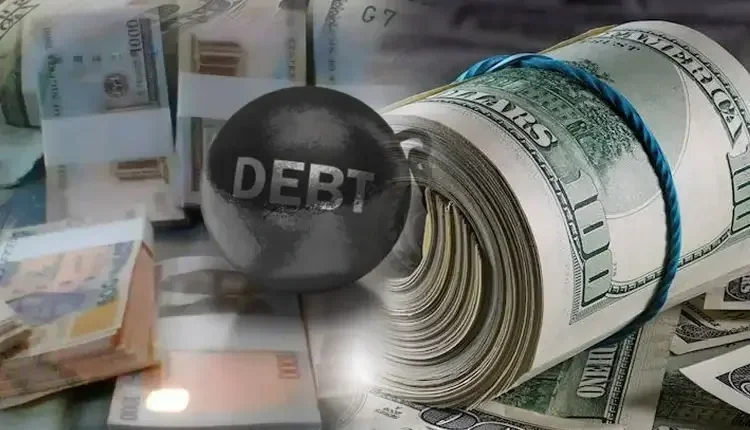
In a startling disclosure that underscores the severity of Nigeria’s fiscal challenges, the Debt Management Office (DMO) has revealed that the Federal Government has officially tapped into the Unclaimed Funds Trust Fund (UFTF) to the tune of N100 billion (approximately $74.1 million). This move, authorized under the controversial Finance Act 2020, involves the utilization of dormant bank account balances and unclaimed shareholder dividends to plug budget deficits. As of December 31, 2025, these funds have been converted into “UFTF FGN Securities,” effectively turning private citizen assets into public debt. While the government maintains the legal right to manage these “idle” funds, the development has ignited a firestorm of criticism from economists, civil rights groups, and capital market operators who view it as a symptom of a government running out of conventional borrowing options.
Key Overview
- The Debt Milestone: The N100 billion UFTF borrowing contributes to a massive domestic debt stock of N80.49 trillion.
- Legal Mechanism: The Finance Act 2020 mandates that dividends unclaimed for six years and bank accounts dormant for ten years be transferred to the Federation Account as a sub-fund.
- Stakeholder Concerns: Critics argue the move undermines investor confidence and poses significant transparency risks regarding the speed of refunds to rightful owners.
- Fiscal Context: Conventional instruments like FGN Bonds (N63.63 trillion) and Treasury Bills (N13.85 trillion) remain the primary drivers of debt, but the UFTF represents a shift toward “unconventional” extraction.
- Economic Outlook: Analysts are calling for a “state of emergency” on borrowing, urging the government to pivot from debt-dependency toward industrialization and export-led growth.
Markets move fast; don’t get left behind. We’ve paired the Serrari Group Market Index with a curated Marketplace and a comprehensive Wealth Builder Platform to ensure you have the data—and the skills—to act on it.
The Deepening Vault: Analyzing Nigeria’s Unconventional Raid on Private Assets
The landscape of Broad Street in Lagos, once the buzzing heart of West African capitalism, now stands as a backdrop to an increasingly desperate fiscal narrative. Nigeria’s Debt Management Office (DMO) recently confirmed what many financial watchdogs had feared: the Federal Government has begun actively drawing down on the life savings and investment returns of its citizens to stay afloat. The utilization of N100 billion from the Unclaimed Funds Trust Fund (UFTF) marks a significant escalation in the government’s pursuit of liquidity amidst a backdrop of dwindling oil revenues and a weakening naira.
The Anatomy of the UFTF: Legal Loophole or Fiscal Necessity?
The Unclaimed Funds Trust Fund was not a sudden invention but a calculated legislative move embedded within the Finance Act of 2020. At its core, the law allows the government to “borrow” funds from two primary sources:
- Dormant Bank Balances: Accounts that have shown no activity for a period of ten years or more.
- Unclaimed Dividends: Profit distributions to shareholders of publicly listed companies that remain uncollected for six years or more.
The logic presented by the Ministry of Finance and the DMO is that these funds are “idle” and should be put to use for the benefit of the nation rather than sitting in the vaults of commercial banks or the ledgers of registrars. However, the shift from “custodian” to “borrower” is a fine line that many believe the Federal Government has now crossed. By listing these funds as “UFTF FGN Securities,” the state has effectively issued an IOU to its own citizens, promising that the money will be available if and when a claimant comes forward.
The Numbers Behind the Crisis
While N100 billion might seem like a drop in the bucket compared to the total domestic debt of N80.49 trillion, its symbolic weight is immense. It represents approximately 0.12% of the domestic debt, but it is the nature of the debt that causes alarm.
To put the broader debt profile in perspective:
- FGN Bonds: N63.63 trillion (79.06%) — The backbone of institutional lending.
- Nigerian Treasury Bills (NTBs): N13.85 trillion (17.21%) — Short-term liquidity instruments.
- Promissory Notes: N1.54 trillion — Obligations to contractors and creditors.
- UFTF Securities: N100 billion — Direct extraction from private dormant assets.
The Securities and Exchange Commission (SEC) has estimated that unclaimed dividends in the Nigerian capital market exceed N215 billion. This means the government has already tapped into nearly half of the available pool of unclaimed investor wealth.
Context is everything. While you follow today’s updates, use the Serrari Group Market Index and Marketplace to spot emerging shifts. Need to sharpen your edge? Our Wealth Builder Platform turns these insights into a professional-grade strategy.
The Confidence Gap: Transparency and the Refund Mechanism
The most vocal opposition comes from capital market operators and civil society groups. The primary concern is not just the act of borrowing, but the complexity of the refund process. In theory, a shareholder who discovers a ten-year-old dividend can still claim it. In practice, they must now navigate a bureaucratic labyrinth involving the SEC, the DMO, and the Central Bank of Nigeria (CBN).
“These are not ordinary market borrowings where a bank or an institution willingly lends to the state for a yield,” noted a senior analyst at a prominent Lagos-based investment firm. “This is the government taking possession of private property. It raises fundamental questions about the sanctity of private ownership and the transparency of the Nigerian financial system.”
The SEC has attempted to mitigate these concerns by issuing circulars to registrars, warning them not to treat old dividends as “statute-barred”—meaning they don’t simply vanish after a period of time. Yet, the reality of reclaiming funds from a government currently struggling with a high debt-service-to-revenue ratio remains a daunting prospect for the average Nigerian.
A “State of Emergency” on Borrowing
The disclosure has prompted renewed calls for a total overhaul of Nigeria’s fiscal strategy. Financial experts argue that the government’s reliance on debt is no longer sustainable. With debt pressure mounting, the cost of servicing these obligations is eating into the funds needed for infrastructure, education, and healthcare.
The “state of emergency” proposed by some economists suggests that the government must stop looking for new ways to borrow and start looking for ways to produce. Nigeria’s potential as a lender—given its vast natural resources, solid minerals, and agricultural land—remains a distant dream as long as the fiscal focus remains on consumption and debt repayment.
The Global Perspective: Is Nigeria Following a Dangerous Path?
International financial observers often look at “wealth taxes” or “unclaimed asset laws” in developed nations as a point of comparison. However, the difference in Nigeria is the lack of a robust fiscal buffer. When the UK or the US manages unclaimed assets, it is done within a system of extreme surplus and institutional trust. In Nigeria, where the debt-to-GDP ratio is a constant source of anxiety, the utilization of these funds is seen less as “efficient management” and more as “survivalist accounting.”
The National Debt Management Framework (2023–2027) was supposed to provide a roadmap for debt sustainability. However, the inclusion of UFTF as a core component of the domestic debt stock suggests that the roadmap is being rewritten by the reality of empty coffers.
The Role of the SEC and the CBN
The DMO does not act alone in this. The collaboration between the DMO, the CBN, and the SEC is intended to provide a system of checks and balances. The SEC’s role is particularly crucial as the protector of investors. By directing companies and registrars to file periodic compliance reports, the SEC is attempting to keep a paper trail of every kobo moved into the UFTF.
Despite these safeguards, the fear remains that once these funds are absorbed into the “FGN Securities” pool, they become subject to the same volatility as the rest of the nation’s debt. If the government faces a liquidity crunch, will the “dormant account owner” be the first or the last to be paid?
The Social Cost of Fiscal Fragility
Beyond the balance sheets, there is a human element to this story. Many “dormant” accounts belong to the estates of the deceased, whose families may not yet know the assets exist. Others belong to Nigerians in the diaspora who intend to return to those savings. By converting these liquid assets into long-term government debt instruments, the state is effectively locking away the private wealth of its citizens to fund current administrative costs.
Investor advocates argue that this policy could discourage long-term savings and investment. If citizens fear that an inactive account or a forgotten dividend will be “borrowed” by the state, they may be more likely to move their capital into offshore assets or informal sectors, further depriving the Nigerian economy of much-needed formal liquidity.
Conclusion: The Path Toward Economic Sovereignty
The DMO’s report is a wake-up call. The N100 billion borrowed from the UFTF is a symptom of a deeper malady: a productive sector that has been neglected in favor of rent-seeking and debt accumulation.
For Nigeria to move from a perennial borrower to an economic powerhouse, the focus must shift. The Lagos-based economist’s plea is clear: the country must ask when it will become a lender. This requires:
- Industrialization: Moving from exporting raw materials to finished goods.
- Tax Efficiency: Broadening the tax base rather than increasing the burden on the few.
- Fiscal Discipline: Drastically reducing the cost of governance at all levels.
- Transparency: Ensuring that the UFTF is not a “black hole” but a temporary custody arrangement with clear, fast-tracked refund protocols.
As the debt pressure continues to mount in 2026, the use of dormant accounts and unclaimed dividends will remain a contentious and highly scrutinized pillar of Nigeria’s financial landscape. The government’s ability to manage these funds without eroding public trust will be the ultimate test of its fiscal integrity.
Your financial future isn’t something you wait for—it’s something you build.
The real question is: when do you begin?
Move beyond simply staying informed.
Navigate the markets with clarity—track trends through the Serrari Group Market Index, uncover opportunities in the Serrari Marketplace, and build practical knowledge with our Curated Wealth Builder Platform.
Stay connected to what truly matters.
Get daily insights on macro trends and financial movements across Kenya, Africa, and global markets—delivered through the Serrari Newsletter.
Growth opens doors.
Advance your career through professional programs including ACCA, HESI A2, ATI TEAS 7 , HESI EXIT , NCLEX – RN and NCLEX – PN, Financial Literacy!🌟—designed to move you forward with confidence.
See where money is flowing—clearly and in real time.
Track Money Market Funds, Treasury Bills, Treasury Bonds, Green Bonds, and Fixed Deposits, alongside global and African indexes, key economic indicators, and the evolving Crypto and stablecoin landscape—all within Serrari’s Market Index.