
















Saudi Aramco has resumed crude oil loadings at its Ras Tanura export terminal after nearly four months of disruption caused by conflict in the Gulf. The restart comes as shipping activity through the Strait of Hormuz gradually returns to normal following an interim agreement between the United States and Iran, allowing major Middle Eastern producers to increase exports and restore oil supplies to global markets.
Key Overview
- Saudi Aramco resumed crude loadings at Ras Tanura after nearly four months.
- The terminal had suspended operations during the Gulf conflict.
- Exports were diverted to the Red Sea port of Yanbu.
- Gulf oil producers are increasing exports as shipping conditions improve.
- Oil prices declined as global supply expectations strengthened.
Saudi Aramco Restarts Crude Exports from Ras Tanura
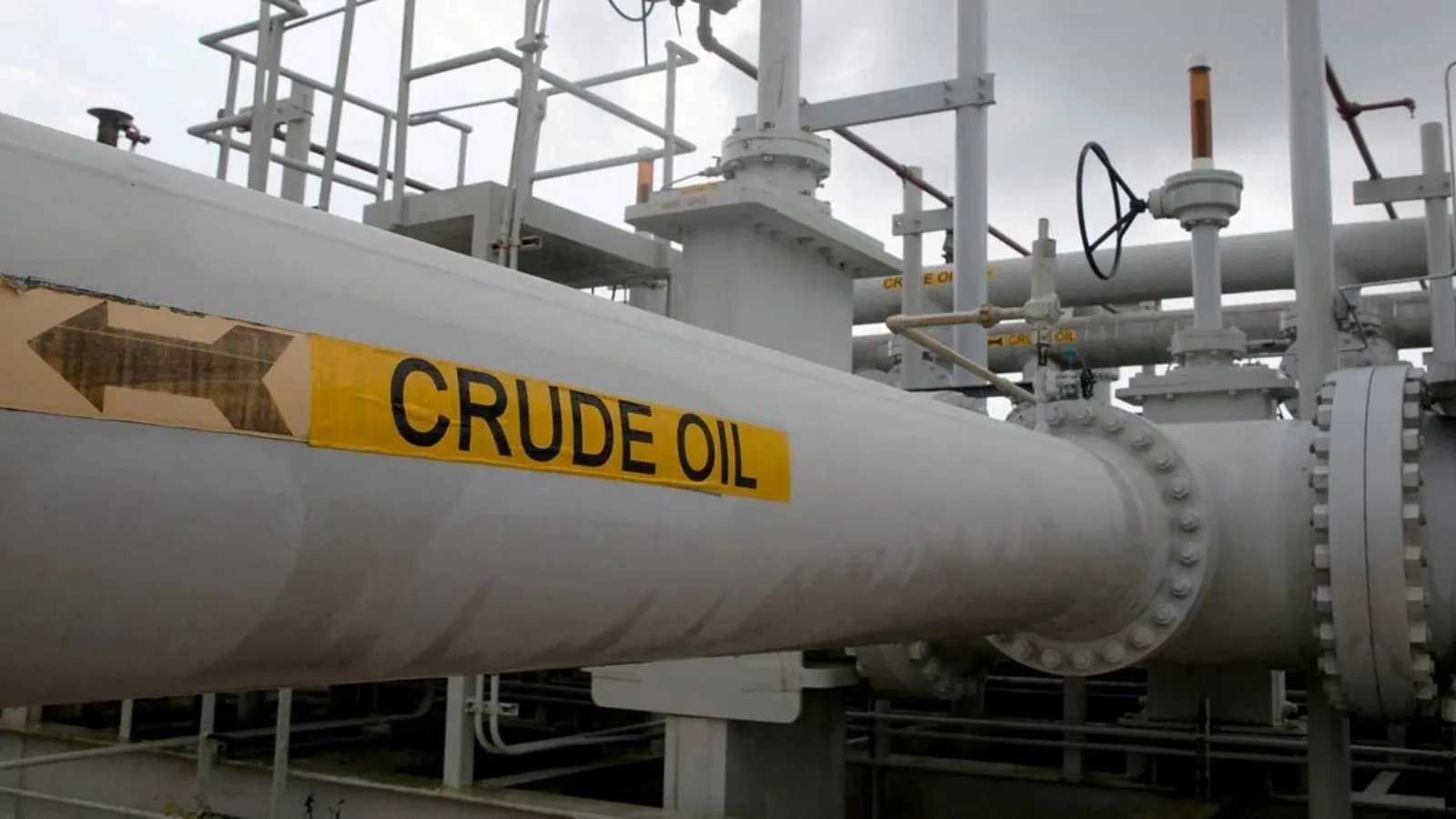
Saudi Aramco has resumed crude oil loadings at its Ras Tanura export terminal after a near four-month halt, signalling a gradual recovery in Gulf energy exports following recent regional conflict.
Shipping data showed that crude cargoes began loading on Friday at the world’s largest oil export terminal after operations were disrupted during the conflict involving Iran, Israel and the United States.
The resumption comes as producers across the Middle East increase oil and gas exports following an interim agreement between the United States and Iran that led to the reopening of the Strait of Hormuz, one of the world’s most important energy shipping routes.
Exports Resume as Shipping Activity Improves
Shipping data showed that two Very Large Crude Carriers (VLCCs) operated by Saudi shipping company Bahri were loading crude oil at Ras Tanura.
Another VLCC was approaching the terminal, while a fourth vessel remained nearby awaiting loading.
Each VLCC is capable of transporting approximately 2 million barrels of crude oil, allowing Saudi Arabia to quickly increase export volumes as shipping conditions improve.
Saudi Aramco declined to comment on the restart of loading operations.
Conflict Forced Export Diversions
The interruption to exports followed the closure of shipping routes through the Strait of Hormuz during the regional conflict.
According to shipping data, Saudi Aramco last loaded a cargo from Ras Tanura on March 8, with the shipment destined for China.
Following the disruption, the company diverted exports to its Yanbu export terminal on the Red Sea after vessels were unable to safely enter or leave the Gulf.
The temporary shift highlighted the importance of alternative export infrastructure during periods of geopolitical instability.
Ras Tanura Plays Central Role in Saudi Exports
Located on Saudi Arabia’s eastern Gulf coast, Ras Tanura is the Kingdom’s largest crude oil export terminal.
Before the conflict, the facility exported more than 5 million barrels of crude oil per day.
The complex also houses Saudi Arabia’s largest domestic refinery, capable of processing around 550,000 barrels per day, which was temporarily shut as a precaution during the conflict.
The reopening of Ras Tanura marks an important step toward restoring Saudi Arabia’s normal export operations.
Regional Oil Supply Continues Recovering
Saudi Arabia is among several Gulf producers increasing production and exports as shipping conditions continue to improve.
Iraq’s State Oil Marketing Organization (SOMO) and Qatar have recently issued crude tenders, joining Kuwait and the United Arab Emirates in expanding exports.
Iran has also accelerated crude exports following the temporary easing of certain U.S. sanctions.
Shipping data showed additional oil tankers entering the Gulf to load Iranian crude as regional export activity continues to recover.
Meanwhile, tankers carrying UAE crude continued transiting the Strait of Hormuz, reflecting improving confidence in shipping conditions despite ongoing security concerns.
Context is everything. Stay ahead of shifting trends with today’s market updates, and uncover emerging opportunities using the Serrari Group Market Index and Marketplace. Then, take control of your own financial future by exploring our Money & Life Reset Transformation Blueprint ™ to build stronger habits, create better systems, and design a path toward lasting wealth.
Security Risks Still Remain
Although exports have resumed, concerns over maritime security have not completely disappeared.
A vessel operated by Taiwan’s Evergreen Marine was reportedly struck by an unidentified object while transiting the Strait of Hormuz.
Following the incident, the United Kingdom Maritime Trade Operations (UKMTO) agency temporarily suspended naval escort operations in the area.
Two U.S. officials told Reuters that Iran had fired upon the vessel, while Iran’s Persian Gulf Strait Authority stated that ships travelling outside approved routes would not be guaranteed safe passage.
The incident highlights that geopolitical risks continue to influence shipping activity even as exports recover.
Oil Prices Ease as Supply Increases
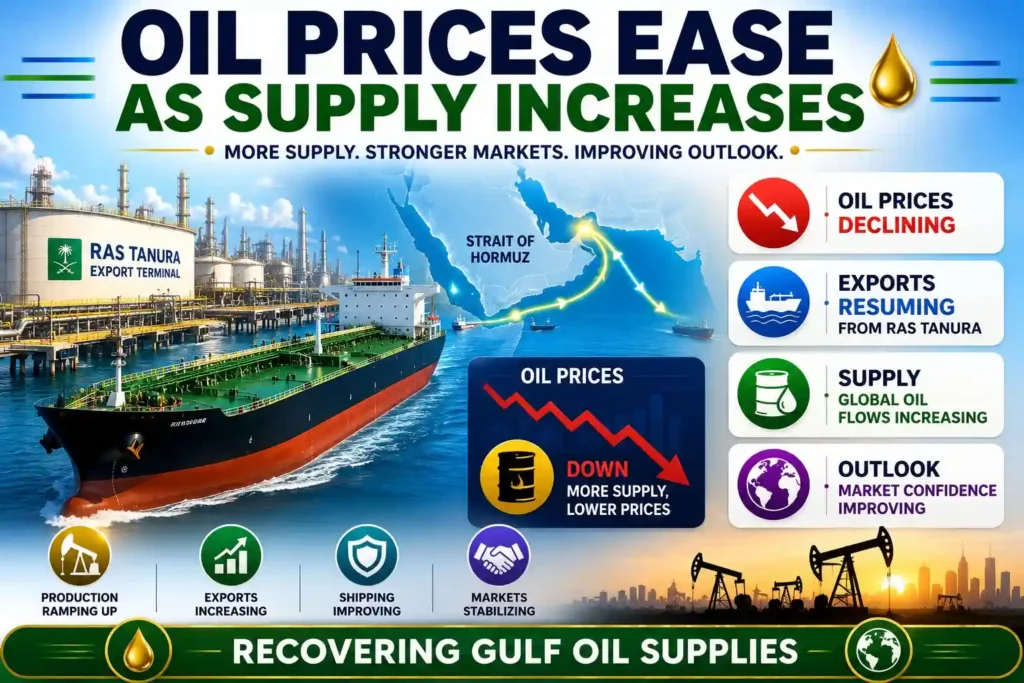
Global oil prices declined by more than $1 a barrel after earlier rising on reports of the vessel attack.
The price decline reflected growing confidence that oil supplies across the Gulf are returning to international markets.
Crude shipments through the Strait of Hormuz have reached their highest levels since the conflict began, increasing expectations of improved global supply.
Analysts also expect Saudi Aramco to reduce its official selling prices for August as competition among regional exporters intensifies.
According to Rystad Energy, shut-in Gulf production has fallen significantly over recent weeks, with supply continuing to recover.
The consultancy estimates that production disruptions have declined from 11.7 million barrels per day to approximately 9.6 million barrels per day and expects a full regional recovery before the end of the year.
Outlook
Saudi Aramco’s return to loading crude at Ras Tanura represents an important milestone in the recovery of Gulf energy exports following months of disruption. As shipping through the Strait of Hormuz continues to improve and regional producers increase production, global oil supplies are expected to strengthen further. However, ongoing security concerns in the Gulf mean energy markets are likely to remain sensitive to geopolitical developments even as export activity gradually returns to normal.
FAQs
1. Why did Saudi Aramco stop loading crude at Ras Tanura?
Operations were disrupted during the regional conflict after shipping through the Strait of Hormuz became unsafe, forcing Saudi Arabia to divert exports to Yanbu.
2. Why is Ras Tanura important?
Ras Tanura is Saudi Arabia’s largest crude oil export terminal and one of the world’s biggest oil export facilities.
3. How much oil can a VLCC transport?
A Very Large Crude Carrier (VLCC) can carry approximately 2 million barrels of crude oil.
4. How has the resumption affected oil markets?
The restart has contributed to improving global oil supply expectations, helping ease oil prices as exports across the Gulf recover.
Sources: CNBC, Oil & Gas Middle East, The Indian Express
Your financial future isn’t something you wait for—it’s something you build.
The real question is: when do you begin?
Move beyond simply staying informed.
Navigate the markets with clarity—track trends through the Serrari Group Market Index, uncover opportunities in the Serrari Marketplace, and build practical knowledge with our Curated Wealth Builder Platform.
Stay connected to what truly matters.
Get daily insights on macro trends and financial movements across Kenya, Africa, and global markets—delivered through the Serrari Newsletter.
Growth opens doors.
Advance your career through professional programs including ACCA, HESI A2, ATI TEAS 7 , HESI EXIT , NCLEX – RN and NCLEX – PN, Financial Literacy!🌟—designed to move you forward with confidence.
See where money is flowing—clearly and in real time.
Track Money Market Funds, Treasury Bills, Treasury Bonds, Green Bonds, and Fixed Deposits, alongside global and African indexes, key economic indicators, and the evolving Crypto and stablecoin landscape—all within Serrari’s Market Index.