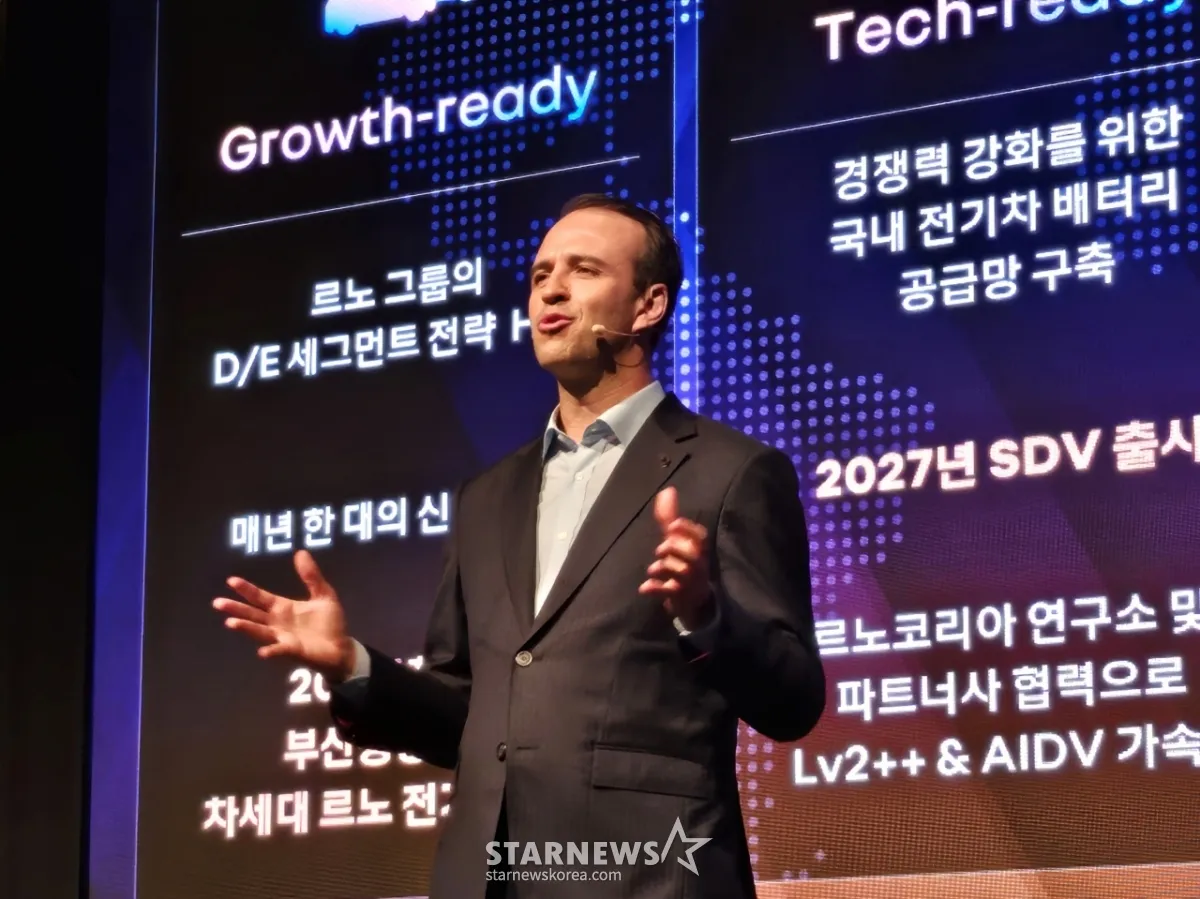
Renault Korea is accelerating its transition to electric and software-defined vehicles, with EV production set for 2028 and annual model launches planned through 2029.
The strategy positions its Busan plant as a global hub while emphasizing AI integration, localized battery production, and reduced reliance on exports.
The roadmap also includes software-defined vehicles by 2027, alongside efforts to shorten development cycles and improve innovation speed.
Overall, the shift reflects a move toward a more technology-driven and resilient business model in a rapidly evolving automotive market.
Key Overview
- EV production to begin in 2028
- 1 new model annually through 2029
- First software-defined vehicle in 2027
- Busan plant becomes global production hub
- Focus on battery localization
- Shift from export-led to balanced growth
- Development cycle reduced to under 2 years
Renault Korea Accelerates EV and Software Strategy Through 2029
Renault Korea has unveiled an ambitious multi-year strategy aimed at accelerating its transition toward electrification and software-driven mobility, positioning its Busan plant as a central hub for next-generation vehicle production under the broader “Future Ready” initiative.
The plan, outlined by CEO Nicolas Paris in Seoul, includes the rollout of at least one new vehicle model annually through 2029, alongside the start of next-generation electric vehicle (EV) production in 2028, marking a structured and phased approach to transformation.
This roadmap reflects a deliberate shift in strategic direction, moving away from traditional volume-driven growth models toward a stronger emphasis on quality, technological advancement, and long-term competitiveness in an increasingly complex and rapidly evolving automotive landscape.
The strategy signals a transition toward a more innovation-led model, where technology and positioning play a central role in future growth.
Markets move fast; don’t get left behind. We’ve paired the Serrari Group Market Index with a curated Marketplace and a comprehensive Wealth Builder Platform to ensure you have the data—and the skills—to act on it.
Busan Plant Positioned as Global Production Hub
At the center of the strategy is the Busan manufacturing facility, which will serve as a key production base for mid- to large-sized vehicles, particularly within Renault Group’s D and E segments.
The plant is expected to play a critical role not only in supporting domestic production, but also in supplying a growing number of international markets, with future EV exports targeted at regions including Latin America, the Middle East, and Oceania. This expanded export footprint reflects the facility’s increasing importance within Renault’s global production network and its ability to serve diverse market demands.
The Busan facility is being repositioned from a regional factory into a globally integrated production hub.
This transformation involves more than just scaling output—it represents a strategic shift toward embedding the plant within a broader, interconnected manufacturing ecosystem that supports global operations.
In addition to manufacturing, the company plans to expand capabilities in design, development, and industrialization of flagship models, strengthening its role within Renault Group’s global operations and enhancing its contribution to future vehicle programs.
This expanded mandate allows the facility to participate more actively in the full vehicle lifecycle, from concept development to production execution, rather than functioning solely as an assembly site.
The integration of engineering, design, and manufacturing functions is becoming a defining feature of modern automotive production hubs.
This broader role highlights the increasing importance of integrated production ecosystems, where manufacturing is closely linked with innovation, engineering, and product development, enabling faster iteration, improved efficiency, and stronger alignment with market needs.
Electrification Push Anchored by 2028 EV Production
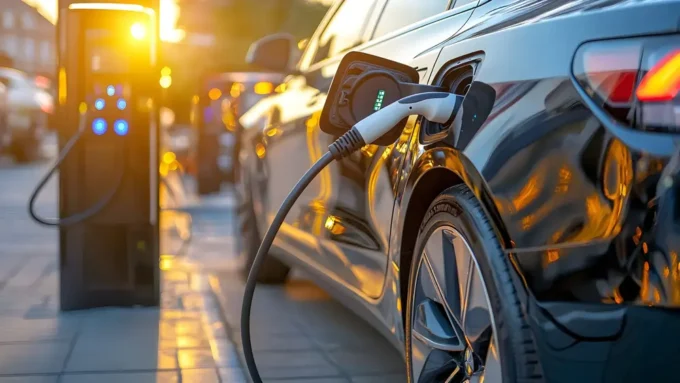
A central pillar of Renault Korea’s strategy is the launch of its first fully electric vehicle in 2028, to be produced at the Busan plant, marking a significant milestone in its transition toward electrified mobility.
This development represents a critical step in aligning the company’s operations with global industry trends, where electrification is becoming a core component of long-term growth strategies.
The move also aligns with the broader strategy of Renault Group to achieve a 50:50 split between hybrid and electric vehicles by 2030, reflecting the accelerating global shift toward low-emission transportation solutions and stricter environmental regulations.
Electrification is no longer a niche segment—it is becoming central to the future of the automotive industry.
To support this transition, the company is prioritizing the development of a localized EV ecosystem, including battery production, which is increasingly viewed as a critical component of cost efficiency, supply chain stability, and long-term competitiveness.
Battery systems represent a significant portion of EV production costs, making localization an important lever for improving margins and reducing exposure to global supply chain disruptions.
Localization of battery supply chains is emerging as a key factor in scaling EV production efficiently and sustainably.
By focusing on local production capabilities, Renault Korea aims to strengthen its operational resilience, reduce dependency on external suppliers, and position itself to respond more effectively to evolving market conditions, regulatory requirements, and shifts in consumer demand.
This approach also supports faster innovation cycles, as closer integration between production and supply chains enables more agile development and deployment of new technologies.
Software-Defined Vehicles and AI Integration
Beyond electrification, Renault Korea is also accelerating its investment in software-defined vehicles (SDVs), with its first model expected to launch in 2027, marking a key step in its broader digital transformation strategy.
These next-generation vehicles will feature Level 2++ autonomous driving capabilities, combining advanced driver-assistance systems with artificial intelligence to deliver enhanced safety, efficiency, and overall driving performance.
AI-powered features such as real-time voice interaction, contextual assistance, and intelligent system responses are expected to significantly improve user experience, enabling vehicles to adapt more dynamically to driver behavior and environmental conditions.
Vehicles are increasingly evolving into software-driven platforms, shifting the industry toward a model of intelligent, connected mobility.
This transition reflects a broader industry trend where value creation is moving beyond hardware into software, data, and digital ecosystems.
At the same time, the company aims to reduce its vehicle development cycle to under two years, allowing for faster product rollouts, quicker integration of new technologies, and improved responsiveness to changing market demands.
Shorter development cycles are becoming critical for maintaining competitiveness in a rapidly evolving automotive landscape.
Context is everything. While you follow today’s updates, use the Serrari Group Market Index and Marketplace to spot emerging shifts. Need to sharpen your edge? Our Wealth Builder Platform turns these insights into a professional-grade strategy.
Market Challenges and Shift Away From Export Dependence
Renault Korea’s strategy is being shaped against a backdrop of increasing global challenges, particularly geopolitical tensions and rising protectionist trade policies, which are making export-driven growth more complex and less predictable.
These external pressures are affecting global supply chains, market access, and cost structures, forcing automakers to rethink traditional production and distribution models.
CEO Nicolas Paris indicated that the company is unlikely to return to previous production levels of around 300,000 units annually, which were largely supported by export demand, highlighting a structural shift in the business environment.
The company is transitioning away from an export-heavy model toward a more balanced and resilient operating strategy.
In response, Renault Korea is placing greater emphasis on domestic market strength, operational flexibility, and long-term sustainability, rather than pursuing volume growth alone.
At the same time, the company is prioritizing quality and premium positioning, aiming to differentiate its offerings and improve margins in an increasingly competitive global automotive market.
The focus is shifting from scale to value, reflecting changing dynamics in both demand and competition.
Recovery Momentum Driven by New Models
Renault Korea’s strategic repositioning is supported by a recent recovery in performance, driven largely by the success of its Grand Koleos SUV, which recorded 40,877 units in sales in 2025 and played a significant role in boosting domestic demand.
This model has contributed to strengthening the company’s presence in key segments, highlighting the importance of product-market fit in driving sales performance.
The launch of the Filante crossover has further supported this recovery, achieving nearly 5,000 units in its first month, indicating strong initial market reception and growing consumer interest.
New product introductions are playing a critical role in rebuilding demand and restoring market momentum.
Together, these models demonstrate how targeted product strategies can support both short-term recovery and longer-term positioning within the market.
Sustained product innovation remains essential for maintaining competitiveness and capturing evolving consumer preferences.
What This Means for the EV and Auto Industry
Renault Korea’s strategy highlights several key global trends that are reshaping the automotive industry and redefining how value is created across the sector.
First, electrification is rapidly becoming a standard across the industry, with automakers accelerating the transition toward electric and hybrid vehicles in response to regulatory pressure, shifting consumer preferences, and the need to reduce emissions.
Second, vehicles are increasingly evolving into software-driven platforms, where digital capabilities, connectivity, and artificial intelligence play a central role in differentiating products and enhancing user experience.
The shift from hardware-focused manufacturing to software-led mobility is transforming how automakers compete.
Third, production strategies are moving toward more localized and resilient models, as companies respond to geopolitical tensions, supply chain disruptions, and changing trade dynamics that are making globalized production systems more complex.
This includes a growing emphasis on regional manufacturing hubs, local supply chains, and reduced reliance on exports to mitigate external risks.
Localization is becoming a strategic priority in building more stable and adaptable automotive operations.
Taken together, these trends point to a broader transformation within the sector, where technological innovation, policy shifts, and global economic dynamics are converging to reshape the future of mobility.
The automotive industry is undergoing a structural shift driven by the intersection of technology, geopolitics, and evolving market demands.
Outlook: A Shift Toward Intelligent, Localized Mobility
Looking ahead, Renault Korea’s trajectory will depend on its ability to effectively execute its strategy while adapting to a rapidly changing global environment.
In the short term, the company is expected to focus on expanding its product lineup, strengthening market presence, and preparing for the rollout of its first software-defined vehicle (SDV) in 2027.
Execution in the near term will be critical in building momentum and establishing credibility in new technology segments.
Over the medium term, the start of EV production in 2028 represents a major milestone, marking a tangible shift toward electrification and signaling the company’s progress in transforming its manufacturing and product strategy.
This phase will also test the effectiveness of its localized EV ecosystem and production capabilities.
In the long term, Renault Korea aims to position itself as a technology-driven mobility provider, where success will be defined not only by vehicle sales, but also by its ability to integrate software, electrification, and operational efficiency into a cohesive business model.
Future competitiveness will depend on the ability to combine technology integration, adaptability, and consistent execution.
Ultimately, the company’s strategy reflects a broader industry direction, where intelligent, connected, and locally anchored mobility solutions are becoming central to long-term growth and resilience.
Your financial future isn’t something you wait for—it’s something you build.
The real question is: when do you begin?
Move beyond simply staying informed.
Navigate the markets with clarity—track trends through the Serrari Group Market Index, uncover opportunities in the Serrari Marketplace, and build practical knowledge with our Curated Wealth Builder Platform.
Stay connected to what truly matters.
Get daily insights on macro trends and financial movements across Kenya, Africa, and global markets—delivered through the Serrari Newsletter.
Growth opens doors.
Advance your career through professional programs including ACCA, HESI A2, ATI TEAS 7 , HESI EXIT , NCLEX – RN and NCLEX – PN, Financial Literacy!🌟—designed to move you forward with confidence.
See where money is flowing—clearly and in real time.
Track Money Market Funds, Treasury Bills, Treasury Bonds, Green Bonds, and Fixed Deposits, alongside global and African indexes, key economic indicators, and the evolving Crypto and stablecoin landscape—all within Serrari’s Market Index.