The Polkadot Community Foundation has proposed a new strategic mandate for the network’s decentralised autonomous organisation (DAO), shifting its focus towards attracting real users rather than prioritising ecosystem size and total value locked. The proposal also calls for permissionless DOT-backed stable-value assets, known as dotStables, including dotUSD, and a user-focused product platform. The referendum remains under consideration.
Key Overview
- Proposal: DOT DAO Strategy Mandate, submitted to Polkadot OpenGov on 12 October 2026.
- Main priority: User acquisition and practical product adoption.
- Stablecoin strategy: Support for DOT-backed dotStables, including dotUSD.
- Product platform: A proposed user-facing ecosystem with mobile-first and freemium features.
- Governance status: The proposal remains in preparation and has not been approved.
Polkadot Considers a New Growth Strategy
The Polkadot Community Foundation (PCF) has submitted a proposal seeking to redirect the network’s strategy towards prioritizing user acquisition over ecosystem size and total value locked (TVL).
Filed on 12 October 2026 as the DOT DAO Strategy Mandate, the proposal aims to align the decentralised organisation behind shared priorities for adoption, stable-value assets and a new product platform. It argues that attracting more real users should take precedence over expanding the number of products, integrations or the amount of capital locked into the ecosystem.
The proposed shift would also change how Polkadot measures progress. Rather than concentrating mainly on competing with other blockchain networks, the strategy seeks to make its products more useful to everyday users, including those accustomed to conventional web and mobile applications.
The proposal is a strategic framework rather than a detailed technical implementation plan. If approved, Polkadot’s Fellowship and other funded entities would be expected to align their work with the mandate.
DOT-Backed dotStables and dotUSD Take Centre Stage
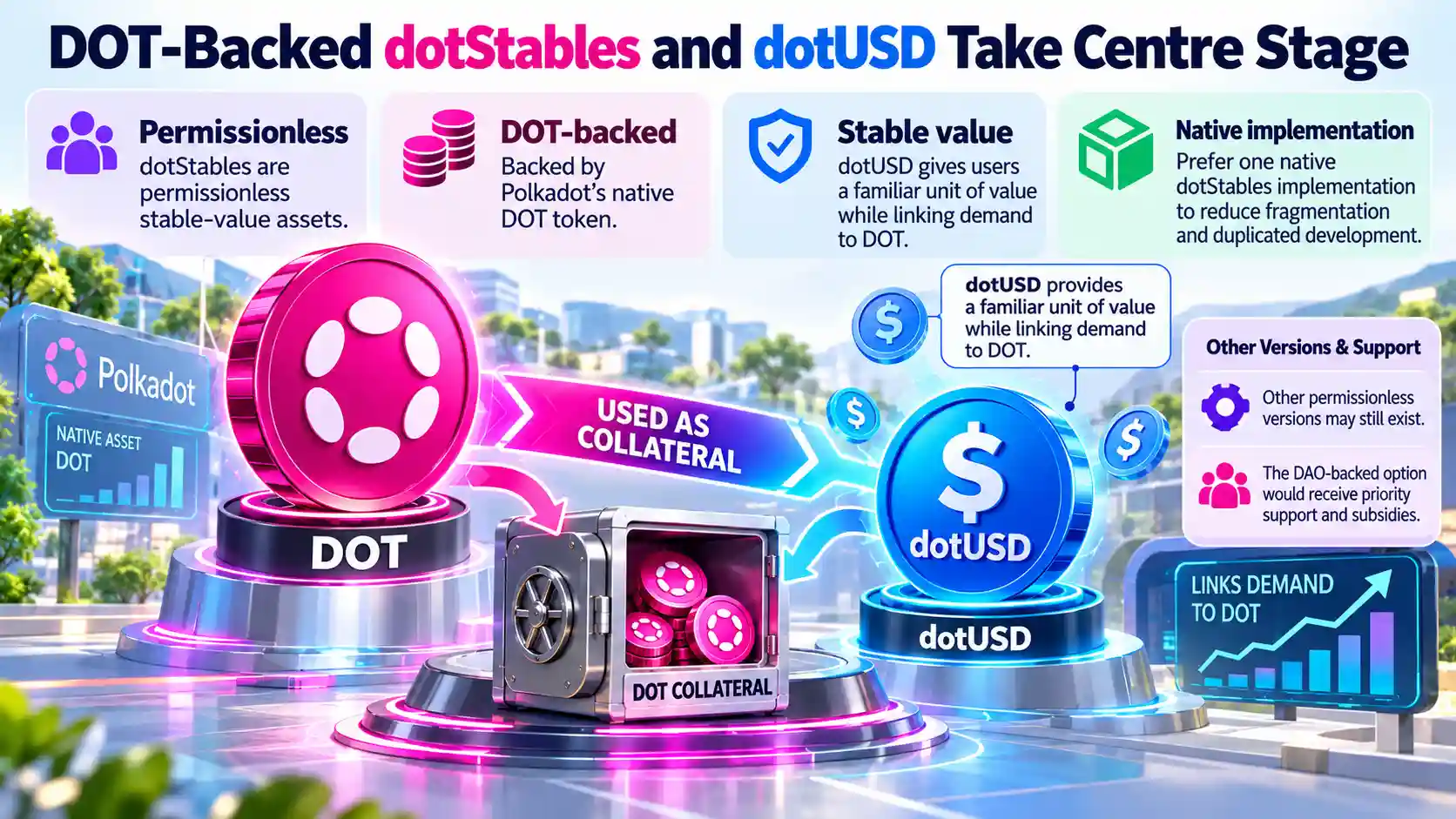
A central element of the proposal is the development and support of dotStables, permissionless stable-value assets backed by Polkadot’s native DOT token. The concept includes dotUSD, which is intended to provide users with a more familiar unit of value while linking demand for the stable-value asset to demand for DOT.
The proposal describes a model inspired by Liquity, a protocol known for collateralised borrowing. Under the proposed design, DOT would serve as collateral, with additional features adapted to Polkadot’s ecosystem.
The strategy calls for a single native dotStables implementation to reduce fragmentation and duplicated development efforts. Other permissionless versions would not be prohibited, but the DAO-backed option would receive priority support and subsidies.
This is a proposed design direction, not confirmation that every feature is already operational. The existing dotUSD rollout has also prompted discussion about its collateral structure, with concerns raised over the use of USDT reserves rather than native DOT collateral. The proposed model and the current implementation should therefore not be treated as identical.
A Product Platform Designed Around Users
The mandate also proposes a Polkadot Product Platform intended to connect users directly with useful products and services. Its potential areas include data storage, logistics and other applications built around the network.
The platform would aim to combine the convenience of conventional digital services with features associated with decentralised applications. Proposed features include freemium access, mobile-first design, privacy protections and self-custody, allowing users to retain control over their digital assets.
The plan also calls for incentives to be distributed directly to individual users through on-chain rules rather than through outside organisations. Per-person limits would help govern how these incentives are allocated.
A proposed identity system called Individuality would support free usage tiers without relying on centralised identity checks. These features are intended to lower barriers to participation while preserving user control.
The broader goal is to make Polkadot applications easier to discover and use, rather than relying primarily on technical infrastructure or ecosystem expansion to attract participants.
Context is everything. Stay ahead of shifting trends with today’s market updates, and uncover emerging opportunities using the Serrari Group Market Index and Marketplace. Then, take control of your own financial future by exploring our Money & Life Reset Transformation Blueprint ™ to build stronger habits, create better systems, and design a path toward lasting wealth.
Governance Approval Remains Outstanding
The proposal was submitted through Polkadot OpenGov, where DOT holders can participate in on-chain governance. It was still in the preparation stage at the time of reporting, with no votes cast and no decision period underway.
The outcome will determine whether the proposed mandate becomes a binding strategic direction for entities receiving DAO support. Until approval, the priorities and implementation requirements remain proposals rather than adopted obligations.
The strategy also introduces practical questions around execution, including how user growth will be measured, how incentives will be funded and how the stable-value assets will manage collateral risks.
DOT Price Faces Market Pressure
The proposal has emerged alongside volatility in Polkadot’s native token. At the time of one market update, DOT was trading at approximately $1.163, down 8.14% for the day.
The market commentary also highlighted debate over dotUSD’s collateral arrangements and selling pressure in the token. However, a simultaneous price decline does not establish that the DAO proposal or stablecoin developments caused the move.
For investors, the distinction between Polkadot’s long-term strategic ambitions and short-term market performance remains important. Adoption, governance outcomes and the practical use of new products will take time to assess.
Outlook
Polkadot’s proposed strategy signals an effort to make user adoption the central measure of progress. Its focus on dotStables and a more accessible product platform could shape how the ecosystem allocates resources if the mandate is approved.
The immediate milestones are the governance decision, clarification of dotUSD’s collateral model and the development of products that attract sustained usage. Until those steps progress, the proposal represents a potential direction for Polkadot rather than a completed transformation.
Frequently Asked Questions
1. What is Polkadot’s new DAO strategy proposal?
It is a proposed mandate asking the DOT DAO to prioritise user acquisition and practical product adoption over ecosystem size and total value locked.
2. What are dotStables?
They are proposed permissionless stable-value assets backed by DOT, with dotUSD identified as a key example.
3. Has the proposal been approved?
No. It remains in the preparation stage of Polkadot OpenGov and has not yet reached a vote.
4. Why is dotUSD’s collateral model important?
The proposed model relies on DOT collateral, while concerns have been raised about the use of USDT reserves in the existing rollout. Collateral design affects how a stable-value asset manages its backing and associated risks.
Your financial future isn’t something you wait for—it’s something you build.
The real question is: when do you begin?
Move beyond simply staying informed.
Navigate the markets with clarity—track trends through the Serrari Group Market Index, uncover opportunities in the Serrari Marketplace, and build practical knowledge with our Curated Wealth Builder Platform.
Stay connected to what truly matters.
Get daily insights on macro trends and financial movements across Kenya, Africa, and global markets—delivered through the Serrari Newsletter.
Growth opens doors.
Advance your career through professional programs including ACCA, HESI A2, ATI TEAS 7 , HESI EXIT , NCLEX – RN and NCLEX – PN, Financial Literacy!🌟—designed to move you forward with confidence.
See where money is flowing—clearly and in real time.
Track Money Market Funds, Treasury Bills, Treasury Bonds, Green Bonds, and Fixed Deposits, alongside global and African indexes, key economic indicators, and the evolving Crypto and stablecoin landscape—all within Serrari’s Market Index.