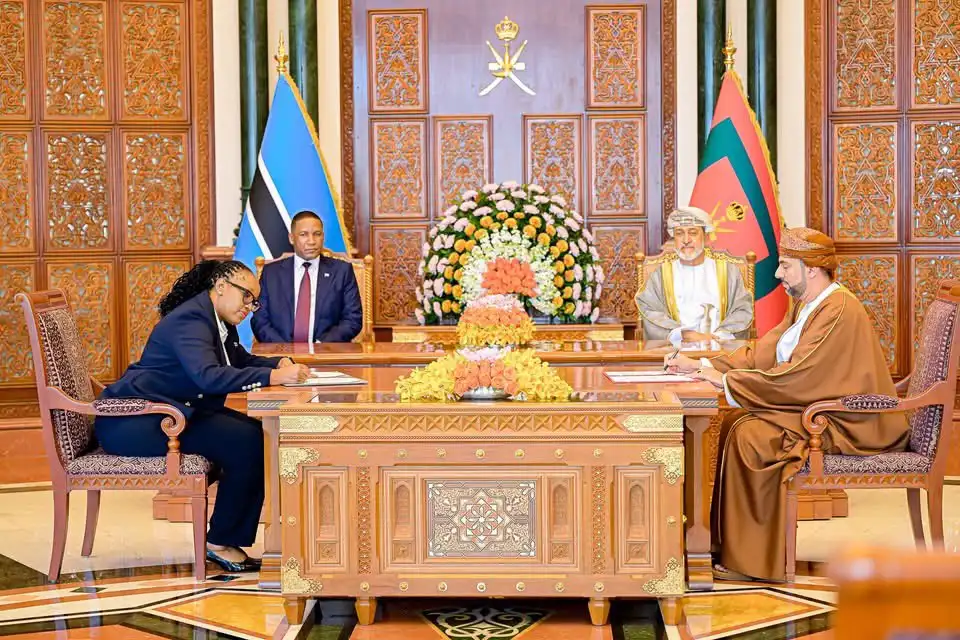
Duma Gideon Boko and Haitham bin Tarik have signed major agreements covering renewable energy, mining, and fuel infrastructure.
The highlight is a 500MW solar plant with 500MW battery storage, expected to double Botswana’s generation capacity and support its 50% clean energy target by 2030.
The deals signal a broader shift toward energy security, economic diversification, and regional energy leadership.
Key Overview
- Botswana & Oman sign multi-sector cooperation agreements
- Includes 500MW solar + 500MW battery storage project
- Project to double Botswana’s power capacity
- Supports 50% renewable energy target by 2030
- Part of broader 3,000MW energy cooperation framework
- Agreements cover mining, fuel storage, and infrastructure
- Focus on critical minerals (copper, gold, graphite, iron ore)
- Strengthens energy security and supply chains
- Signals growing economic diplomacy between both nations
Botswana and Oman Deepen Strategic Energy Partnership
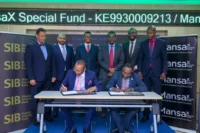
A decisive shift is underway as Duma Gideon Boko, during an official visit to Oman, met with Haitham bin Tarik at Al Barakah Palace to advance a series of high-impact agreements aimed at reshaping Botswana’s energy and broader economic landscape.
The meeting, held in Muscat, culminated in the signing of multiple cooperation agreements spanning renewable energy, mining, and infrastructure—marking a significant and strategic step forward in economic ties between the two nations.
This engagement reflects a deepening of diplomatic and economic relations, with both countries aligning their priorities around long-term growth, energy security, and sustainable development.
The discussions also highlighted a shared vision of leveraging cross-border partnerships to unlock investment opportunities, diversify economic activity, and accelerate the transition toward cleaner energy systems.
Officials emphasized that these agreements form part of a broader strategy to strengthen bilateral cooperation, not only through project development but also through knowledge exchange, institutional collaboration, and long-term capital flows.
The partnership signals a shift toward integrated economic diplomacy, where energy, infrastructure, and resource development are pursued in a coordinated manner.
Markets move fast; don’t get left behind. We’ve paired the Serrari Group Market Index with a curated Marketplace and a comprehensive Wealth Builder Platform to ensure you have the data—and the skills—to act on it.
500MW Solar Project Anchors Clean Energy Transition
At the centre of the agreements is a landmark 500MW solar photovoltaic project, supported by an equally significant 500MW battery energy storage system (BESS), to be developed in Maun.
The project, being implemented by O-Green—a subsidiary of the Oman Investment Authority—represents one of the largest renewable energy investments in Botswana’s history and a defining milestone in the country’s energy transition journey.
This flagship project is expected to double Botswana’s effective electricity generation capacity once operational, significantly expanding the country’s energy supply base.
Beyond its scale, the integration of battery storage is particularly critical. It will enable the storage of excess solar energy during peak generation periods and its deployment during periods of lower output or higher demand, thereby ensuring a more stable and reliable energy system.
The combination of solar generation and storage transforms intermittent renewable energy into a dependable, round-the-clock power solution.
The initiative is the first to move into implementation under a broader 3,000MW energy cooperation framework agreed between the two countries in November 2025, marking a transition from strategic planning to tangible execution.
This shift from planning to implementation signals a major acceleration in Botswana’s clean energy ambitions and project delivery capacity.
Advancing Energy Security and Economic Independence
The solar and storage project is closely aligned with Botswana’s national target of sourcing 50% of its electricity from sustainable sources by 2030, a goal that reflects the country’s commitment to reducing emissions and strengthening energy resilience.
President Boko described the agreements as strategically significant, emphasizing their role in moving the country toward greater energy self-sufficiency and reducing reliance on imported electricity.
Energy independence is emerging as a central pillar of Botswana’s long-term economic strategy.
The long-term vision extends beyond self-sufficiency, with ambitions to position Botswana as a potential energy exporter within the region. By expanding its generation capacity and improving grid reliability, the country could play a more active role in regional energy markets.
The transition from energy importer to exporter represents a fundamental shift in Botswana’s economic positioning.
In addition to environmental benefits, the project is expected to enhance energy reliability, reduce exposure to external supply disruptions, and support industrial growth by providing a more stable and predictable energy supply.
Reliable energy infrastructure is critical for unlocking industrial development and long-term economic growth.
Overall, the initiative reflects a broader transformation in Botswana’s energy strategy—one that integrates sustainability, security, and economic development into a unified vision for the future.
Expanding Into Critical Minerals and Mining Cooperation
Beyond renewable energy, the agreements extend strategically into the mining sector, with a clear focus on unlocking Botswana’s vast mineral potential and positioning the country within the global supply chain for energy transition materials.
A cooperation agreement between Minerals Development Oman and Exploration Investment Company Botswana will support geological assessments, data exchange, and the joint development of mineral resources.
This collaboration reflects a growing recognition that the energy transition is not only about power generation, but also about securing the raw materials that enable it.
The partnership specifically targets critical minerals such as copper, gold, graphite, and iron ore—resources that are increasingly essential for technologies including batteries, renewable energy systems, and electric vehicles.
Demand for these minerals is rising rapidly, driven by global decarbonisation efforts and the expansion of clean energy infrastructure.
By strengthening exploration and development capabilities, Botswana is positioning itself as a key supplier of these strategic resources, potentially unlocking new revenue streams and attracting further investment into the mining sector.
This move enhances Botswana’s role in global value chains while supporting long-term economic diversification.
Context is everything. While you follow today’s updates, use the Serrari Group Market Index and Marketplace to spot emerging shifts. Need to sharpen your edge? Our Wealth Builder Platform turns these insights into a professional-grade strategy.
Strengthening Fuel Infrastructure and Supply Chains
Infrastructure development also forms a critical pillar of the partnership, particularly in the area of fuel supply and storage, which remains essential for energy security during the transition to cleaner energy systems.
OQ Group signed an agreement with Botswana Oil to explore cooperation in fuel supply and storage infrastructure.
This includes the potential development of coastal import facilities and inland strategic petroleum reserves, designed to improve the efficiency and resilience of fuel distribution networks across Botswana and the surrounding region.
Strengthening fuel infrastructure is essential for ensuring reliable energy access, particularly in economies that still rely on fossil fuels for key sectors.
These projects aim to enhance fuel security, reduce exposure to external supply disruptions, and create a more stable and predictable energy supply chain.
The initial phase of the collaboration will focus on feasibility studies, including technical, commercial, and regulatory assessments, laying the groundwork for future large-scale infrastructure investments.
Early-stage planning and assessment are critical for ensuring that large infrastructure projects are both viable and sustainable in the long term.
A Broader Strategy of Economic Diplomacy
According to officials from the Oman Investment Authority, the agreements reflect a broader strategy of economic diplomacy—one that seeks to build long-term international partnerships while attracting investment into priority sectors.
Since the establishment of diplomatic ties in July 2025, the relationship between Botswana and Oman has progressed rapidly, evolving from initial engagement to active collaboration across multiple industries, including energy, mining, and infrastructure.
This rapid progression highlights the growing importance of strategic partnerships in driving economic growth and development.
The partnership demonstrates how cross-border cooperation can be leveraged to address shared challenges, including energy security, economic diversification, and sustainable development.
Economic diplomacy is increasingly becoming a key tool for advancing both national interests and global climate objectives.
By aligning investment, policy, and development goals, both countries are creating a framework for long-term collaboration that extends beyond individual projects.
This integrated approach positions the partnership as a model for future international cooperation in the energy transition.
What This Means for Energy and Investment
The Botswana–Oman agreements highlight several important structural trends that are shaping the future of energy systems, investment flows, and economic development strategies, particularly across emerging markets.
First, large-scale renewable energy projects are increasingly being integrated with storage solutions, reflecting the growing need for reliability and flexibility in modern power systems. The combination of solar generation with battery storage ensures that energy can be supplied consistently, even when generation fluctuates.
This shift marks a transition from standalone renewable projects to fully integrated energy systems capable of supporting national grids at scale.
Second, energy partnerships are expanding well beyond traditional power generation to include mining, infrastructure, and supply chain development. This broader scope reflects a more holistic understanding of the energy transition, where clean energy deployment is closely linked to resource availability, logistics, and industrial capacity.
The energy transition is becoming increasingly interconnected, spanning multiple sectors rather than operating in isolation.
Third, countries are leveraging international partnerships as a strategic tool to accelerate development, attract capital, and reduce investment risks. By collaborating with established global players, nations like Botswana can access technical expertise, financing, and project execution capabilities that might otherwise take years to build domestically.
Cross-border partnerships are emerging as a key enabler of faster and more efficient energy transition.
Taken together, these trends point toward the rise of integrated, multi-sector partnerships as a powerful model for advancing both energy transition and economic growth.
Investment is increasingly flowing toward platforms and partnerships that combine scale, diversification, and long-term strategic alignment.
Outlook: A New Energy Future for Botswana
Looking ahead, the agreements signal the beginning of a transformative phase for Botswana’s energy and broader economic landscape, with implications that extend well beyond individual projects.
In the short term, the immediate focus will be on implementing the flagship solar and battery storage project, alongside advancing feasibility studies for fuel infrastructure and mining initiatives. This phase will be critical in translating agreements into tangible outcomes on the ground.
Early execution will play a key role in building momentum and investor confidence.
Over the medium term, successful delivery of these initial projects could unlock additional investments under the broader 3,000MW cooperation framework, accelerating renewable energy deployment and expanding infrastructure development across the country.
Scaling from initial projects to a broader pipeline will be essential for sustaining long-term growth.
In the long term, Botswana has the potential to emerge as a regional energy hub, supported by a diversified energy mix that includes renewable generation, storage capacity, and strengthened supply chains for both energy and critical minerals.
This transition could reposition Botswana from an energy importer to a strategic player in regional energy markets.
Beyond energy, the integration of resource development, infrastructure investment, and international partnerships is expected to drive broader economic transformation, creating new industries, jobs, and revenue streams.
The alignment of clean energy, resource development, and infrastructure investment is positioning Botswana for long-term resilience, competitiveness, and sustainable growth.
Your financial future isn’t something you wait for—it’s something you build.
The real question is: when do you begin?
Move beyond simply staying informed.
Navigate the markets with clarity—track trends through the Serrari Group Market Index, uncover opportunities in the Serrari Marketplace, and build practical knowledge with our Curated Wealth Builder Platform.
Stay connected to what truly matters.
Get daily insights on macro trends and financial movements across Kenya, Africa, and global markets—delivered through the Serrari Newsletter.
Growth opens doors.
Advance your career through professional programs including ACCA, HESI A2, ATI TEAS 7 , HESI EXIT , NCLEX – RN and NCLEX – PN, Financial Literacy!🌟—designed to move you forward with confidence.
See where money is flowing—clearly and in real time.
Track Money Market Funds, Treasury Bills, Treasury Bonds, Green Bonds, and Fixed Deposits, alongside global and African indexes, key economic indicators, and the evolving Crypto and stablecoin landscape—all within Serrari’s Market Index.