















Octopus Energy and CATL have formed a joint venture called Swaptopus to develop battery-swapping infrastructure for electric trucks across Europe. The partnership aims to reduce charging downtime, support more than 300,000 electric trucks, and accelerate freight decarbonization through a network of battery-swapping mega-hubs.
Key Overview
- Octopus Energy and CATL formed Swaptopus.
- The venture focuses on electric truck battery swapping.
- The first UK hub is planned for 2027.
- More than 30 hubs are planned across Europe by 2035.
- The network could support over 300,000 trucks.
- Battery swaps can take only a few minutes.
- The project could unlock over £30 billion in investment.
- The initiative targets freight sector decarbonization.
New Venture Targets Freight Electrification
Octopus Energy and Chinese battery manufacturer CATL have announced a new joint venture called Swaptopus to accelerate the electrification of freight transport across Europe.
The partnership was unveiled during the Energy Tech Summit in London and aims to deploy a network of battery-swapping stations that allow electric trucks to replace depleted batteries within minutes instead of waiting for lengthy charging sessions.
The initiative addresses one of the biggest challenges facing electric heavy-duty transport: vehicle downtime.
Battery Swapping Offers Faster Turnaround
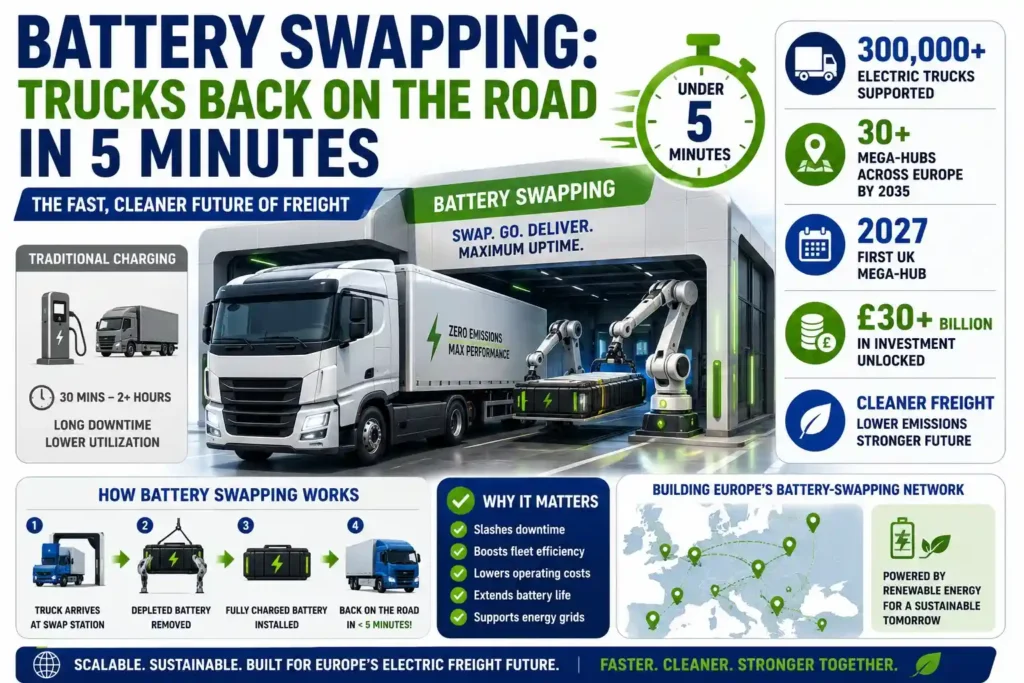
Battery swapping allows drivers to exchange discharged battery packs for fully charged units at dedicated stations.
Instead of waiting for charging, trucks can return to the road in just a few minutes.
The companies believe the technology can make electric freight operations more competitive with diesel trucks by minimizing downtime and improving vehicle utilization.
According to CATL, swapping a battery can take less than five minutes, making the process comparable to refueling conventional trucks.
First Mega-Hubs Planned in the UK
The first battery-swapping mega-hub is expected to open in the United Kingdom in 2027.
The companies plan to build more than 30 additional hubs across Europe by 2035.
Each hub is expected to contain multiple battery-swapping stations capable of serving thousands of electric trucks every day.
The large-scale infrastructure approach differs from standalone swapping stations by creating centralized freight charging and energy facilities.
Supporting More Than 300,000 Electric Trucks
Swaptopus aims to support more than 300,000 electric trucks once the network is fully operational.
The companies estimate that the initiative could unlock more than £30 billion of private investment in Europe.
By reducing charging times and improving operational efficiency, battery swapping may help accelerate the adoption of electric trucks in commercial fleets.
The network could also reduce Europe’s dependence on imported oil while increasing the use of domestically generated renewable electricity.
CATL Brings Experience From China
CATL already operates large battery-swapping networks in China and plans to continue expanding the technology.
The company aims to establish:
- 1,000 swapping stations in China by 2025.
- 10,000 stations within three years.
Europe is viewed as the next major market for the technology.
CATL will contribute battery technology, battery management systems, and operational experience to the joint venture.
Context is everything. Stay ahead of shifting trends with today’s market updates, and uncover emerging opportunities using the Serrari Group Market Index and Marketplace. Then, take control of your own financial future by exploring our Money & Life Reset Transformation Blueprint ™ to build stronger habits, create better systems, and design a path toward lasting wealth.
Octopus Provides Energy Expertise
Octopus Energy will provide:
- Energy supply services.
- Trading capabilities.
- Flexibility services.
- Customer support.
- Energy management technology.
The company also plans to use its software and energy expertise to optimize battery charging and energy usage.
This could help lower operating costs while improving the efficiency of the battery-swapping network.
Lower Costs for Fleet Operators
One of the advantages of battery swapping is the possibility of separating battery ownership from vehicle ownership.
Fleet operators may avoid purchasing batteries, which often represent the most expensive component of electric trucks.
Additional benefits include:
- Lower upfront vehicle costs.
- Reduced charging downtime.
- Improved battery lifecycle management.
- Slower battery degradation.
- Centralized maintenance.
The companies believe these benefits could make electric trucks more cost-competitive with diesel vehicles.
Supporting Europe’s Energy Transition
Road freight accounts for approximately 7% of global carbon dioxide emissions, making it one of the hardest transport sectors to decarbonize.
Battery-swapping infrastructure could help accelerate emissions reductions by addressing operational concerns that currently limit electric truck adoption.
The companies are also exploring vehicle-to-grid and battery-to-grid technologies that could allow batteries to support electricity grids during periods of high demand.
This could transform electric truck batteries into distributed energy storage assets.
Outlook
The Swaptopus partnership represents a major effort to overcome one of the biggest barriers to electric freight adoption: charging time. By combining CATL’s proven battery-swapping technology with Octopus Energy’s energy management and trading expertise, the companies aim to create a practical and scalable solution for large-scale electric trucking across Europe.
If successful, the network could support hundreds of thousands of electric trucks, attract billions of pounds in private investment, and contribute significantly to Europe’s transition toward cleaner freight transportation and lower transport emissions. The expansion of battery-swapping infrastructure could also improve fleet efficiency, reduce vehicle downtime, and make electric heavy-duty transport increasingly competitive with conventional diesel trucks, helping accelerate the decarbonization of one of the most challenging sectors in the transport industry.
FAQs
1. What is Swaptopus?
Swaptopus is a joint venture between Octopus Energy and CATL that will build battery-swapping infrastructure for electric trucks across Europe.
2. How long does battery swapping take?
Battery swapping can take less than five minutes, allowing trucks to return to the road much faster than conventional charging.
3. When will the first battery-swapping hub open?
The first UK battery-swapping mega-hub is expected to open in 2027.
4. How many electric trucks could the network support?
The companies estimate the network could support more than 300,000 electric trucks across Europe.
Sources: EV Infrastructure News, electrive, CnEVPost
Your financial future isn’t something you wait for—it’s something you build.
The real question is: when do you begin?
Move beyond simply staying informed.
Navigate the markets with clarity—track trends through the Serrari Group Market Index, uncover opportunities in the Serrari Marketplace, and build practical knowledge with our Curated Wealth Builder Platform.
Stay connected to what truly matters.
Get daily insights on macro trends and financial movements across Kenya, Africa, and global markets—delivered through the Serrari Newsletter.
Growth opens doors.
Advance your career through professional programs including ACCA, HESI A2, ATI TEAS 7 , HESI EXIT , NCLEX – RN and NCLEX – PN, Financial Literacy!🌟—designed to move you forward with confidence.
See where money is flowing—clearly and in real time.
Track Money Market Funds, Treasury Bills, Treasury Bonds, Green Bonds, and Fixed Deposits, alongside global and African indexes, key economic indicators, and the evolving Crypto and stablecoin landscape—all within Serrari’s Market Index.