National Savings and Investments (NS&I) has relaunched its Green Savings Bonds with an improved interest rate of 3.82% AER over three years. While the increase reflects a more competitive offering compared to previous issues, the product still lags behind leading market rates offered by private banks.
The bonds are designed not only as a savings product but also as a mechanism to fund government-backed green projects, including renewable energy, clean transport, and environmental initiatives. This dual purpose positions them as a hybrid financial instrument—combining stable returns with sustainability impact.
However, the trade-off between lower returns and environmental contribution raises a key question for investors: whether the value of supporting green initiatives outweighs the opportunity cost of higher interest rates available elsewhere.
Key Overview
- NS&I relaunches Green Savings Bonds at 3.82% AER (3-year fixed)
- Previous issue offered 2.95% AER
- Minimum investment: £100, maximum: £100,000
- Funds are locked for three years (no early withdrawal)
- Bonds fund renewable energy, transport, and environmental projects
- Still below market rates (some offer 4.5%+)
- Backed by UK Treasury (100% secure)
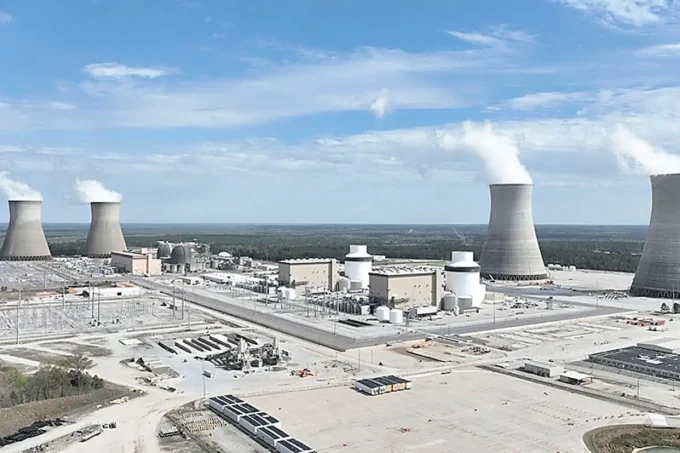
- Updated framework now includes nuclear energy projects
- Appeals to investors seeking impact + safety over maximum returns
- Highlights trade-off between returns and sustainability impact
National Savings and Investments (NS&I) has relaunched its Green Savings Bonds with a revised fixed interest rate of 3.82% AER over a three-year term, representing a clear increase from the previous issue’s rate of 2.95%.
This latest issue, which became available in April 2026, reflects a deliberate adjustment aimed at improving the product’s attractiveness to savers while maintaining its core purpose of supporting environmentally focused government initiatives.
The previous issue of the bonds had been withdrawn from general sale in November 2025, after which the updated version was introduced with a higher return. This progression highlights how NS&I is responding to changing market conditions and evolving saver expectations by revisiting and refining its offerings.
At the same time, the increase in the interest rate underscores the broader dynamics within the savings market, where institutions continuously adjust their products in response to competition and shifts in interest rate environments.
While the improved rate signals a step forward in making the bonds more appealing than before, it also illustrates the ongoing challenge of balancing competitive returns with the unique positioning of government-backed, purpose-driven savings products.
Markets move fast; don’t get left behind. We’ve paired the Serrari Group Market Index with a curated Marketplace and a comprehensive Wealth Builder Course to ensure you have the data—and the skills—to act on it.
A Savings Product With a Sustainability Purpose
Green Savings Bonds are structured to serve a dual function—providing savers with a fixed and predictable financial return while simultaneously contributing to environmental and sustainability initiatives across the UK.
Funds raised through these bonds are allocated to projects that support renewable energy development, cleaner transportation systems, and a range of environmental programs aimed at reducing emissions and promoting sustainability.
These projects are financed under the UK Government’s Green Financing Framework, which provides the structure for how funds are raised and deployed. The framework was updated in November 2025 to broaden its scope, including nuclear energy projects alongside other green investments.
This connection between individual savings and national environmental projects creates a direct link between financial decisions and sustainability outcomes, allowing savers to play a role—however small—in supporting the transition to a lower-carbon economy.
At the same time, the bonds retain the characteristics of a government-backed savings product, offering a combination of stability, transparency, and defined returns that may appeal to those seeking both financial security and environmental contribution.
How the Bonds Work
The structure of the Green Savings Bonds is designed to be simple and accessible, but it includes specific terms and conditions that define how the product operates.
Investors are required to deposit a minimum of £100, making the bonds accessible to a wide range of savers, while the maximum investment limit is set at £100,000 per person for each issue. This range allows both smaller and larger investors to participate within clearly defined limits.
The bonds are issued with a fixed term of three years, during which the invested funds are locked in and cannot be withdrawn early. This means that investors must be prepared to commit their savings for the full duration of the term, as there is no option for early access to the funds.
This lock-in feature is a key aspect of the product and is particularly relevant for savers who may need flexibility or liquidity, as it requires careful consideration before investing.
In exchange for this commitment, investors receive a guaranteed fixed interest rate, ensuring that returns are predictable and not subject to market fluctuations. This level of certainty can be especially appealing in periods of economic uncertainty or changing interest rate conditions.
Overall, the structure reflects a balance between accessibility, stability, and defined terms, offering a straightforward savings option with a clear environmental purpose.
Safety Versus Returns: The Core Trade-Off
One of the defining features of products offered by National Savings and Investments (NS&I) is their high level of safety. As a government-backed institution, NS&I provides 100% protection on savings, meaning that all funds invested are fully guaranteed by HM Treasury. This makes its products among the safest available in the UK savings market.
This level of security is particularly appealing in times of economic uncertainty, where savers may prioritize capital protection and stability over higher, but potentially riskier, returns. The assurance that funds are fully protected can provide significant peace of mind, especially for more risk-averse investors.
However, this strong emphasis on safety often comes with a trade-off in terms of returns.
Despite the increase in the interest rate to 3.82% AER, the Green Savings Bonds still fall below the highest rates currently available in the market. Competing fixed-term savings products are offering returns of 4.5% or more, creating a noticeable gap in potential earnings over the same period.
This difference in returns becomes more significant over larger investment amounts and longer timeframes, making it an important consideration for savers evaluating their options.
As a result, the product presents a clear decision point for investors: whether to prioritize the security and environmental purpose of a government-backed bond, or to seek higher financial returns through alternative providers.
Context is everything. While you follow today’s updates, use the Serrari Group Market Index and Marketplace to spot emerging shifts. Need to sharpen your edge? Our Wealth Builder Course turns these insights into a professional-grade strategy.
Competitive Pressure From Other Banks
The broader savings market in the UK remains highly competitive, with banks and financial institutions actively offering attractive rates to attract deposits.
Within this environment, several providers are offering more competitive returns on fixed-term savings products, particularly for three-year bonds similar to NS&I’s offering.
For example, institutions such as Tandem Bank are offering 4.56% AER rates for comparable three-year fixed products, creating a clear and measurable difference in potential returns for savers.
This competitive gap highlights the challenge facing NS&I as it seeks to position its Green Savings Bonds within a market where interest rates are a key driver of consumer choice.
At the same time, NS&I operates with a different objective compared to private banks, as its products are designed not only to attract savings but also to support government financing needs and broader policy goals.
This places the institution in a unique position, where it must balance its role as a secure, government-backed savings provider with the need to remain relevant and appealing in a market shaped by competitive interest rates.
For many savers, the final decision may come down to individual priorities—whether they place greater value on maximizing returns or on contributing to government-backed green initiatives while maintaining a high level of security.
Who Are These Bonds For?
The Green Savings Bonds are likely to appeal to a specific group of savers who are comfortable with the product’s structure and motivated by a combination of financial security and environmental impact.
These investors are typically willing to lock away their funds for a fixed three-year period without access, in exchange for a guaranteed return and the knowledge that their savings are contributing to government-backed sustainability projects.
For this segment, the appeal lies not only in the stability of returns but also in the opportunity to support initiatives such as renewable energy and environmental programs, aligning their financial decisions with broader values.
The fully guaranteed nature of the investment further enhances its attractiveness for those who prioritize safety and predictability over higher, but potentially less secure, returns.
However, for savers whose primary objective is to maximize interest earnings, alternative products in the market may offer more competitive returns.
This distinction highlights the increasingly segmented nature of the savings market, where products are tailored to different investor preferences—ranging from those focused on returns, to those prioritizing security, and others seeking a balance between financial outcomes and environmental impact.
Expanding the Role of Green Finance
The relaunch of Green Savings Bonds also reflects a broader and continuing trend toward the expansion of green finance, both within the UK and across global financial markets.
As governments and financial institutions increasingly integrate sustainability into their funding strategies, products like these are playing a growing role in connecting individual savings with large-scale environmental objectives. By embedding sustainability into savings products, institutions are creating new and accessible pathways for individuals to participate in climate action without requiring specialized knowledge or direct investment in complex financial instruments.
In this context, Green Savings Bonds serve as a bridge between everyday savers and national sustainability initiatives, allowing individuals to contribute to environmental goals through relatively simple and familiar financial products.
These instruments also complement other forms of green financing, such as sovereign green bonds, government-backed funding programs, and private sector investments in renewable energy and infrastructure. Together, they contribute to the development of a more diversified and resilient financial ecosystem that supports the transition to a lower-carbon economy.
As the demand for sustainable investment options continues to grow, products like Green Savings Bonds are likely to play an increasingly important role in broadening participation in green finance and aligning capital flows with environmental priorities.
Outlook: The Future of Green Savings and Investor Choices
Looking ahead, the future of Green Savings Bonds will likely depend on how effectively they balance two key factors: financial returns and environmental impact.
In the short term, the increase in the interest rate to 3.82% AER may help attract renewed interest from savers, particularly those who value the combination of security, simplicity, and the opportunity to support environmentally focused projects. For these investors, the appeal lies not only in the guaranteed return but also in the broader purpose associated with their savings.
Over the medium term, however, the level of demand may be influenced by competitive pressures within the savings market. With alternative products offering higher returns, Green Savings Bonds may face limitations in attracting investors who prioritize yield above all else, unless further adjustments are made to improve competitiveness.
In the long term, the role of green savings products is expected to expand as sustainability becomes an increasingly central factor in financial decision-making. As awareness grows and more investors seek to align their financial choices with environmental and social values, demand for such products is likely to increase.
Ultimately, the relaunch of NS&I’s Green Savings Bonds highlights a broader and evolving shift within the financial landscape:
Investing is no longer defined solely by returns—it is increasingly shaped by impact, responsibility, and the pursuit of long-term value.
Your financial future isn’t something you wait for—it’s something you build.
The real question is: when do you begin?
Move beyond simply staying informed.
Navigate the markets with clarity—track trends through the Serrari Group Market Index, uncover opportunities in the Serrari Marketplace, and build practical knowledge with our Curated Wealth Builder Course.
Stay connected to what truly matters.
Get daily insights on macro trends and financial movements across Kenya, Africa, and global markets—delivered through the Serrari Newsletter.
Growth opens doors.
Advance your career through professional programs including ACCA, HESI A2, ATI TEAS 7 , HESI EXIT , NCLEX – RN and NCLEX – PN, Financial Literacy!🌟—designed to move you forward with confidence.
See where money is flowing—clearly and in real time.
Track Money Market Funds, Treasury Bills, Treasury Bonds, Green Bonds, and Fixed Deposits, alongside global and African indexes, key economic indicators, and the evolving Crypto and stablecoin landscape—all within Serrari’s Market Index.