
















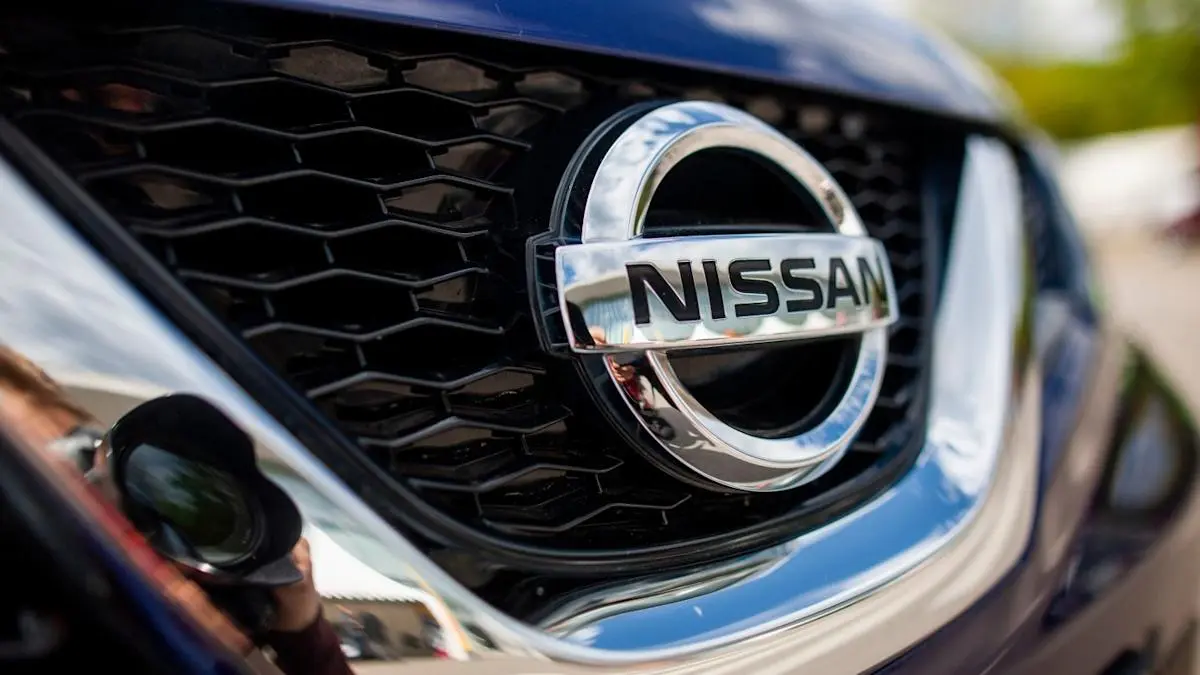
Nissan Motor Co. is making a decisive pivot in its African manufacturing strategy. The Japanese automaker is channelling $45 million into expanding its Egyptian production facility west of Cairo, aiming to increase output by roughly a third and position the country as a regional export hub for African, Middle Eastern, and European markets. The investment arrives as Nissan simultaneously exits nearly 60 years of vehicle manufacturing in South Africa, having agreed to sell its historic Rosslyn plant near Pretoria to Chinese automaker Chery. The dual move — expansion in one country, divestment in another — reflects the broader pressures bearing down on the company: an estimated $4.2 billion net loss for the fiscal year ending March 2026, a global restructuring plan that will eliminate 20,000 jobs and shutter seven factories worldwide, and an intensifying race among automakers to establish cost-efficient footholds across Africa’s fragmented but growing automotive market.
Markets move fast; don’t get left behind. We’ve paired the Serrari Group Market Index with a curated Marketplace and a comprehensive Wealth Builder Platform to ensure you have the data—and the skills—to act on it.
Key Overview
- Investment: $45 million to expand Nissan’s production plant in Giza, west of Cairo
- Output target: At least 10,000 additional vehicles annually, lifting total production from approximately 30,000 to 40,000 units per year
- Localisation: More than 50% of components to be sourced domestically in Egypt
- Cumulative investment in Egypt: Approximately $276 million to date
- South Africa exit: Rosslyn plant sold to Chery SA; transaction expected to close mid-2026
- Global restructuring: 20,000 job cuts and seven plant closures worldwide under the Re:Nissan plan
- Projected losses: Net loss of ¥650 billion (~$4.2 billion) for the fiscal year ending March 2026
- Egypt’s broader automotive context: Multiple global manufacturers, including Volkswagen, General Motors, and Geely, are expanding operations in Egypt
A Strategic Retreat From South Africa
Nissan’s presence in South Africa stretches back to 1961, making the Rosslyn plant one of the company’s longest-running international manufacturing operations. For decades, the facility contributed to South Africa’s position as the continent’s most industrialised automotive hub — a sector that currently accounts for 22.6% of the country’s manufacturing output and approximately 5.3% of GDP, employing around 115,000 people directly in manufacturing roles.
That era is now ending. In January 2026, Nissan announced that it had reached an agreement to sell the Rosslyn plant and its adjacent stamping facility to Chery SA, the South African subsidiary of Chinese automaker Chery Automobile. The transaction, expected to close in mid-2026 pending regulatory approvals, includes the land, buildings, and associated production assets.
Nissan Africa president Jordi Vila framed the sale as a last resort that prioritised workforce preservation. In an interview with Independent Online, Vila explained that after the NP200 model’s production run ended, the plant could no longer remain financially viable within Nissan’s global network. The company spent a year searching for a buyer willing to invest long-term and retain the workforce, ultimately settling on Chery because of its commitment to keep the majority of employees. Of the roughly 800 workers at Rosslyn, approximately 700 will be offered employment by Chery on substantially similar terms and conditions.
Nissan will remain in South Africa as a sales and distribution brand, with plans to launch new models including the Tekton and Patrol. However, the loss of the manufacturing footprint carries real economic consequences. Vehicle assembly operations generate multiplier effects across local supply chains, logistics networks, and component manufacturers — effects that vanish when production moves elsewhere.
Why Egypt: Cost, Location, and Export Access
Egypt’s appeal as Nissan’s new African production anchor rests on a combination of lower operating costs, strategic geography, and increasingly favourable government policy.
The country’s position at the intersection of Africa, the Middle East, and Europe means that a single production base in Egypt can reach more than 1.5 billion consumers across three major trade blocs, including the European Union through existing agreements, Arab markets through the Greater Arab Free Trade Agreement, and the rest of Africa through the African Continental Free Trade Area. For a company seeking to distribute efficiently without duplicating production infrastructure, that geographic advantage is significant.
Nissan’s Africa managing director Mohamed AbdelSamad told Bloomberg that the $45 million expansion will add a new production line at the company’s Giza plant, west of Cairo, lifting annual output by approximately 10,000 vehicles — a roughly 30% increase from the current capacity of around 30,000 units. More than half of the components used in the expanded production will be manufactured locally, a deliberate strategy to reduce exposure to global supply chain disruptions.
The localisation push is also practical. Egypt has been recovering from a prolonged foreign currency shortage after securing what has been characterised as a combined international support package worth approximately $57 billion from the UAE, the IMF, the World Bank, and the European Commission. The country is now pushing a manufacturing-led recovery plan aimed at narrowing persistent trade deficits and expanding non-oil exports. For Nissan, building vehicles with domestically sourced components reduces currency risk and aligns with Egyptian government incentives designed to promote local industrial development.
Nissan has already invested approximately $276 million in Egypt and has exported more than 25,000 vehicles from the country over the past three years, with Libya emerging as a key destination. The December 2024 signing of a $45 million investment deal to manufacture a third vehicle model, witnessed by Prime Minister Mostafa Madbouly, underscored the Egyptian government’s active courtship of automotive investment.
Nissan’s Global Restructuring: The Re:Nissan Plan
The Egypt expansion and South Africa exit do not occur in isolation. They are part of a sweeping corporate transformation that ranks among the most aggressive restructuring efforts in the global automotive industry.
Under the Re:Nissan plan announced in May 2025, the company is consolidating its vehicle production plants from 17 to 10 by fiscal year 2027, cutting 20,000 jobs — roughly 15% of its global workforce — and targeting cost savings of 500 billion yen (approximately $3.7 billion). The restructuring follows a devastating financial period: Nissan posted a net loss of 671 billion yen (approximately $5 billion) for the fiscal year ending March 2025, attributed to declining sales in the United States and China, trade tensions, and operational inefficiencies.
For the current fiscal year ending March 2026, the company projects a net loss of ¥650 billion (~$4.2 billion), citing non-cash accounting charges and ongoing restructuring costs. The plan includes closing Nissan’s flagship Oppama plant in Japan and its historic CIVAC facility in Mexico, selling the company headquarters building, and reducing global production capacity from 5 million to 4 million units.
CEO Ivan Espinosa, who took the helm after more than two decades with the company, has acknowledged the short-term financial pain of restructuring while expressing confidence that the company can return to operating profitability by the end of fiscal year 2026. The strategy hinges on restoring margins, reducing break-even volumes, and concentrating investment in regions and models that offer viable growth.
Within this context, Egypt represents one of the few areas where Nissan is actively expanding rather than contracting. The company views North Africa as a strategically located manufacturing base that can serve multiple markets at a lower cost than its previous South African operations. The shift is a calculated reallocation of limited resources toward the most efficient production geography available.
Context is everything. While you follow today’s updates, use the Serrari Group Market Index and Marketplace to spot emerging shifts. Need to sharpen your edge? Our Wealth Builder Platform turns these insights into a professional-grade strategy.
Egypt’s Emerging Automotive Ecosystem
Nissan is not alone in recognising Egypt’s potential. The country’s automotive sector has attracted a wave of investment from global manufacturers positioning for long-term growth in Africa.
In December 2025, Volkswagen announced a $240 million plan to expand electric vehicle manufacturing in Egypt, initially using existing production facilities before building a dedicated factory in East Port Said. In November 2025, the Mansour Group began construction on the MAC Automotive plant, a $150 million facility targeting annual production of 100,000 units within five years. Chinese manufacturers have also moved aggressively: Jetour committed $123 million to an assembly facility, while Geely launched its first factory in the MENA region in Egypt in January 2025.
General Motors’ chair and managing director for Egypt and Africa, Sharon Nishi, described 2025 as an exceptional year for Egypt’s automotive sector, with growth reaching nearly 56%. She expects growth to normalise at around 15% in 2026, signalling a transition toward sustainable expansion.
The Egyptian government has been actively supporting this trajectory. The formation of the Supreme Council for Automotive Industry, combined with investment incentives and the Automotive Industry Development Program, has created a policy framework designed to transform Egypt from a consumption-driven market into a manufacturing and export hub. In the first nine months of 2025, Egyptian car and auto component exports reached $891 million and were projected to exceed $1 billion by year-end.
The African Continental Free Trade Area adds another dimension. Once automotive trade rules are fully implemented, manufacturers with production bases in Egypt would gain preferential access to a continental market of 1.4 billion people. For Nissan, which has signalled its interest in benefiting from any future extension of the AfCFTA into the automotive industry, this represents a strategic hedge — a production base that grows more valuable as trade barriers decline.
What South Africa Loses — and What Comes Next
South Africa’s automotive sector remains formidable. Seven global OEMs — BMW, Ford, Isuzu, Mercedes-Benz, Nissan, Toyota, and Volkswagen — currently maintain production operations in the country, supported by more than 500 component manufacturers and duty-free export access to the EU, UK, and African markets. The South African Automotive Masterplan 2035 sets an ambitious target of producing 1% of global vehicle output, or approximately 1.4 million units annually.
But the sector is under growing pressure. US tariffs, EU emissions regulations, rising labour costs, and persistent unemployment at 33.2% all weigh on the industry’s competitiveness. The National Association of Automotive Component and Allied Manufacturers recorded 12 company closures over the past two years, affecting roughly 4,000 workers. Nissan’s exit from manufacturing adds another data point to concerns about whether South Africa can sustain its position as Africa’s automotive capital.
The Chery acquisition of the Rosslyn plant provides some cushion. The Chinese automaker gains access to government subsidies and export credits tied to local production under South Africa’s Automotive Production Development Programme, and the factory will continue contributing to the domestic manufacturing base. But the symbolic weight of losing a 60-year Nissan manufacturing presence is difficult to overstate.
A Continent-Wide Reshuffling
Nissan’s dual move — investment in Egypt, divestment from South Africa — reflects a broader reshuffling of automotive production across the African continent. The dynamics driving this shift include cost arbitrage, proximity to growth markets, government incentive competition, and the slow but steady integration of African trade through the AfCFTA.
For Nissan, the bet is straightforward. Egypt offers lower costs, stronger export geometry, and an aligned government policy environment at a moment when the company can afford no wasted capital. South Africa, despite its deeper industrial base and established supplier networks, presented viability challenges that Nissan’s weakened balance sheet could no longer absorb.
Whether Egypt delivers on the promise that both Nissan and its government are banking on will depend on sustained policy consistency, infrastructure investment, and the pace at which continental trade rules materialise. What is already clear is that Africa’s automotive map is being redrawn — and the companies and countries that position themselves most effectively for the next decade of demand growth will define who builds the cars that an increasingly urbanised continent will drive.
Your financial future isn’t something you wait for—it’s something you build.
The real question is: when do you begin?
Move beyond simply staying informed.
Navigate the markets with clarity—track trends through the Serrari Group Market Index, uncover opportunities in the Serrari Marketplace, and build practical knowledge with our Curated Wealth Builder Platform.
Stay connected to what truly matters.
Get daily insights on macro trends and financial movements across Kenya, Africa, and global markets—delivered through the Serrari Newsletter.
Growth opens doors.
Advance your career through professional programs including ACCA,HESI A2,ATI TEAS 7,HESI EXIT ,NCLEX – RNandNCLEX – PN, Financial Literacy!🌟—designed to move you forward with confidence.
See where money is flowing—clearly and in real time.
Track Money Market Funds, Treasury Bills, Treasury Bonds, Green Bonds, and Fixed Deposits, alongside global and African indexes, key economic indicators, and the evolving Crypto and stablecoin landscape—all withinSerrari’s Market Index.















Comments are closed.