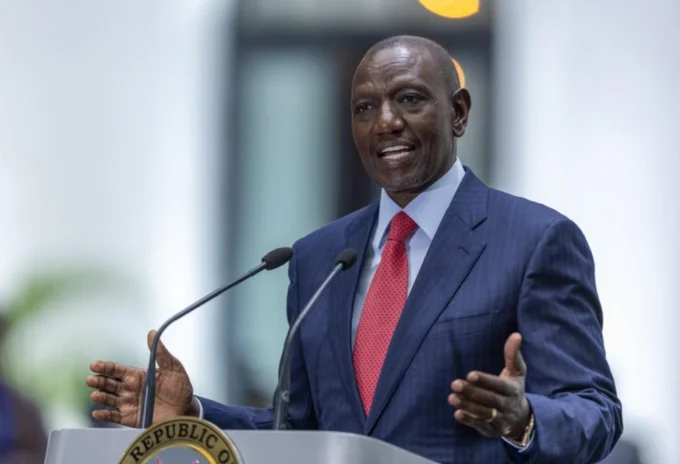
Kenya’s pursuit of a new IMF-supported lending programme has hit a significant obstacle. The International Monetary Fund has suspended ongoing funding negotiations after the Kenyan government failed to submit formal comments on a draft governance and corruption diagnostic report that was shared with President William Ruto’s administration. Outgoing IMF African Department Director Abebe Aemro Selassie confirmed that the draft cannot advance to the Fund’s Executive Board without Nairobi’s input. The pause comes at a particularly difficult moment for Kenya: external debt repayments to the IMF are projected to nearly triple in 2026 compared to the previous year, domestic borrowing has surged past Ksh7 trillion for the first time, and the country’s previous $3.6 billion IMF programme expired in April 2025 without the completion of its ninth review — after Kenya failed to meet 11 of 16 performance conditions. The stalled governance report now stands as the single most visible barrier between Kenya and a successor programme that both sides have been negotiating for months.
Markets move fast; don’t get left behind. We’ve paired the Serrari Group Market Index with a curated Marketplace and a comprehensive Wealth Builder Platform to ensure you have the data—and the skills—to act on it.
Key Overview
- Stalled process: IMF has shared a draft governance and corruption diagnostic report with Kenya; government has not yet submitted formal comments
- Funding at stake: Kenya is seeking a successor IMF programme focused on fiscal stability and debt sustainability after the previous $3.6 billion arrangement expired without completion
- Debt pressure: Kenya is projected to repay approximately Ksh47.9 billion to the IMF in 2026, up from Ksh17.6 billion in 2025
- Total public debt: Ksh12.4 trillion as of early 2026, with a debt-to-GDP ratio projected to reach 71.6% in 2026
- Previous programme failure: Kenya failed to meet 11 of 16 performance conditions under the expired EFF/ECF programme, forfeiting approximately $850 million in final disbursements
- Regional outlook: IMF projects Sub-Saharan African growth to slow from 4.5% in 2025 to 4.3% in 2026, driven by Middle East conflict spillovers
- Governance context: IMF conducted a governance diagnostic mission in June 2025, covering tax administration, fiscal management, and anti-corruption frameworks
The Governance Report at the Heart of the Delay
The governance diagnostic assessment that now blocks progress is not an ordinary IMF exercise. Kenya formally requested the assessment in late 2024, becoming one of approximately 15 countries globally to seek such a review, following pressure from Western governments that urged the diagnostic as a condition for unlocking delayed disbursements under the previous lending programme.
The IMF dispatched a technical assistance mission to Kenya in June 2025, led by Rebecca Sparkman, the Fund’s Chief of Fiscal Affairs, following a preliminary scoping visit in March of that year. Over a two-week engagement, the team met with government officials across public financial management, tax policy, revenue administration, the mining sector, the judiciary, the Central Bank, financial sector oversight, and anti-money laundering units. They also consulted with civil society organisations, private sector representatives, and international development partners.
The mission was comprehensive by design. Under the IMF’s 2018 Framework for Enhanced Engagement on Governance, the diagnostic examines macro-economically critical governance weaknesses and corruption vulnerabilities across core state functions. It is explicitly not a corruption audit — the Fund has been careful to make this distinction — but rather a structured assessment that identifies systemic risks and proposes a sequenced, prioritised reform plan.
The draft report was expected to be shared with Kenyan authorities before the end of 2025. As of late April 2026, the IMF confirmed it had done so, but the Kenyan government has not returned its comments. Outgoing African Department Director Abebe Aemro Selassie was direct about the consequences: the report cannot be presented to the IMF’s Executive Board or published until Kenya responds.
In March 2026, Kenya’s Director of Public Prosecutions Renson Ingonga publicly affirmed the government’s commitment to implementing recommendations from the diagnostic report, linking the reforms to broader national efforts to be removed from the grey list of jurisdictions under increased monitoring for anti-money laundering deficiencies. But the formal written response the IMF requires has not materialised.
A Troubled History With the IMF
The current impasse must be understood against the backdrop of Kenya’s recent record with IMF programmes. The previous $3.6 billion lending arrangement — comprising an Extended Fund Facility and Extended Credit Facility — was approved in April 2021 to help Kenya recover from the economic fallout of the COVID-19 pandemic, while supporting fiscal discipline, debt sustainability, and governance reforms.
That programme expired in April 2025 without the completion of its ninth and final review. Kenya failed to meet 11 of 16 performance conditions agreed with the Fund, including targets for revenue collection, budget consolidation, restrictions on the use of the fuel stabilisation fund, and structural reforms such as the restructuring of Kenya Airways. The IMF subsequently withheld approximately Ksh109.7 billion ($850 million) in funding tied to the final review.
The failure was not solely technical. Kenya’s government faced severe public backlash over proposed tax hikes linked to IMF conditions, culminating in widespread protests that forced the administration to shelve or significantly scale back several revenue measures. That political reality created a gap between what the IMF expected and what Nairobi could deliver domestically — a tension that has not fully resolved.
Since then, the two sides have been engaged in sustained negotiations toward a successor arrangement. The National Treasury confirmed in January 2026 that discussions would resume in February, and an IMF staff mission visited Nairobi from February 24 to March 4, 2026, to begin laying the groundwork for a new programme. Treasury Principal Secretary Dr. Chris Kiptoo confirmed that the proposed arrangement was expected to run approximately three years, focusing on medium-term financing and fiscal stability.
Those talks continued at the IMF-World Bank Spring Meetings in April, where Kenyan officials — including Finance Cabinet Secretary John Mbadi, PS Kiptoo, and Central Bank Governor Kamau Thugge — met with IMF Managing Director Kristalina Georgieva and Deputy Managing Director Nigel Clarke. The IMF reaffirmed its support for Kenya through policy advice, technical assistance, and potentially financial support. Just days later, the governance report delay surfaced publicly, casting uncertainty over the timeline for any formal agreement.
The Fiscal Pressure Bearing Down on Nairobi
The timing of the stall could hardly be worse for Kenya’s public finances. Treasury projections indicate that IMF repayments alone will reach approximately Ksh47.9 billion in 2026, a sharp increase from the Ksh17.6 billion repaid in 2025. Monthly repayment obligations are expected to average about Ksh4 billion, creating an uneven and heavy burden that tightens available fiscal space for government spending and development priorities.
The broader debt picture is equally concerning. Kenya’s total public debt stood at Ksh12.4 trillion as of early 2026, with the IMF projecting the debt-to-GDP ratio at 71.6% in 2026 and 72.4% in 2027 — well above the statutory anchor of 55% that Kenya is legally required to achieve by 2028 under the Public Finance Management Amendment Act 2023.
Domestic borrowing has become the primary source of deficit financing, with domestic debt surging past Ksh7 trillion for the first time in February 2026. This milestone was reached in just 14 months after crossing the Ksh6 trillion mark, reflecting intensified government reliance on local markets amid limited access to cheaper external financing. Banks alone held approximately Ksh2.36 trillion of domestic debt by January 2026, deepening the linkage between sovereign risk and the domestic financial sector.
The National Treasury has outlined plans to borrow more than Ksh1 trillion in the 2026/27 financial year to bridge a budget deficit estimated at 4.9% of GDP. The borrowing plan includes net external financing of Ksh241.8 billion and net domestic borrowing of Ksh775.8 billion. Ordinary revenues have also fallen short, dropping by 2.9% against targets — a sharp contrast to the 10.1% growth recorded in the previous year.
In this environment, an IMF programme would serve multiple purposes beyond direct financial support. It would anchor fiscal credibility, send a signal to international investors and credit markets, and potentially unlock additional financing from other development partners and multilateral lenders. Without it, Kenya faces higher borrowing costs and reduced access to concessional funding at precisely the moment it can least afford either.
Context is everything. While you follow today’s updates, use the Serrari Group Market Index and Marketplace to spot emerging shifts. Need to sharpen your edge? Our Wealth Builder Platform turns these insights into a professional-grade strategy.
Kenya as a Market Access Country in a Volatile Environment
Part of what makes Kenya’s fiscal situation distinctive is its evolving classification. As Selassie noted in his April 17 statement, Kenya is transitioning toward becoming a market access country — one that finances itself primarily through international capital markets rather than concessional lending from multilateral institutions.
This shift has practical consequences. Kenya successfully raised Ksh290 billion through a Eurobond issuance aimed at refinancing two major bonds maturing in 2028 and 2032, demonstrating continued access to international markets. Moody’s upgraded Kenya’s sovereign rating to B3 with a stable outlook in January 2026, citing reduced near-term default risk, stronger foreign exchange reserves, and progress on Eurobond liability management.
But market access is a double-edged sword. Selassie emphasised that international capital markets have become “very, very volatile,” meaning that Kenya cannot rely on commercial borrowing alone. Without the policy anchor and credibility that an IMF programme provides, the cost of market borrowing rises, and investor sentiment can shift rapidly — particularly in a global environment clouded by the Middle East conflict and broader geopolitical uncertainty.
Finance Cabinet Secretary John Mbadi has acknowledged this dynamic. He confirmed that Kenya’s 2026 budget does not include IMF funding, reflecting a deliberate approach to avoid dependency, but he has also stressed that any IMF funds secured would help ease domestic financial pressures and signal reform commitment to broader markets.
Regional Headwinds Add to the Challenge
Kenya’s domestic fiscal difficulties are compounded by a regional economic environment that is itself under strain. The IMF’s April 2026 Regional Economic Outlook for Sub-Saharan Africa, titled “Hard-Won Gains Under Pressure,” projects regional growth easing from 4.5% in 2025 to 4.3% in 2026.
The downgrade is driven primarily by the war in the Middle East, which has pushed fuel and fertiliser prices higher, disrupted trade routes and supply chains, and reduced tourist arrivals across the region. Median inflation is expected to rise from 3.4% in 2025 to approximately 5% in 2026. A sharp decline in official development assistance is also compounding fiscal pressures, particularly in low-income and fragile states.
In his remarks launching the outlook, Selassie described the aid reduction as potentially structural rather than cyclical, noting that past aid shocks involved donors cutting back and then returning, while the current trajectory appears more permanent. For countries like Kenya that are transitioning away from concessional finance toward market borrowing, the combination of declining aid, rising commodity costs, and volatile capital markets creates a particularly challenging environment.
Within this broader context, East Africa is projected to outperform other sub-regions in 2026, with reformers such as Ethiopia, Uganda, and Rwanda leading growth. Kenya’s own economy expanded by an estimated 5% in 2025 and is projected to grow by 5.3% in 2026, according to Treasury forecasts — a respectable performance that nevertheless masks the underlying fiscal vulnerabilities that the governance report delay has brought into sharper focus.
What Happens Next
The path forward depends almost entirely on how quickly the Kenyan government responds to the draft governance diagnostic. The IMF has made clear that no board consideration or publication of the report can occur without Kenya’s formal input. And without board consideration, the framework for a new lending programme remains incomplete.
There has been no public indication from the Kenyan government as to when it will submit its response, or what specific concerns, if any, are causing the delay. The governance diagnostic covers sensitive terrain — tax administration, public financial management, anti-corruption frameworks, and institutional integrity — and the political implications of its findings could be significant in a country where corruption remains a deeply contentious issue and where the next general elections are on the horizon.
The IMF, for its part, has consistently framed its engagement as collaborative rather than punitive. The diagnostic is designed to produce a sequenced reform plan that both sides can work from, not a one-off judgment. But the longer the silence from Nairobi persists, the more the delay itself becomes a signal — to investors, to development partners, and to Kenya’s domestic political landscape.
What is already clear is that Kenya needs the programme more than the programme needs Kenya. With debt repayments accelerating, domestic borrowing surging, revenue targets slipping, and global conditions deteriorating, the fiscal arithmetic makes the case for IMF support hard to ignore. The governance report is the key that could unlock that support. Whether Nairobi chooses to turn it — and how quickly — will shape the country’s fiscal trajectory for years to come.
Your financial future isn’t something you wait for—it’s something you build.
The real question is: when do you begin?
Move beyond simply staying informed.
Navigate the markets with clarity—track trends through the Serrari Group Market Index, uncover opportunities in the Serrari Marketplace, and build practical knowledge with our Curated Wealth Builder Platform.
Stay connected to what truly matters.
Get daily insights on macro trends and financial movements across Kenya, Africa, and global markets—delivered through the Serrari Newsletter.
Growth opens doors.
Advance your career through professional programs including ACCA,HESI A2,ATI TEAS 7,HESI EXIT ,NCLEX – RNandNCLEX – PN, Financial Literacy!🌟—designed to move you forward with confidence.
See where money is flowing—clearly and in real time.
Track Money Market Funds, Treasury Bills, Treasury Bonds, Green Bonds, and Fixed Deposits, alongside global and African indexes, key economic indicators, and the evolving Crypto and stablecoin landscape—all withinSerrari’s Market Index.