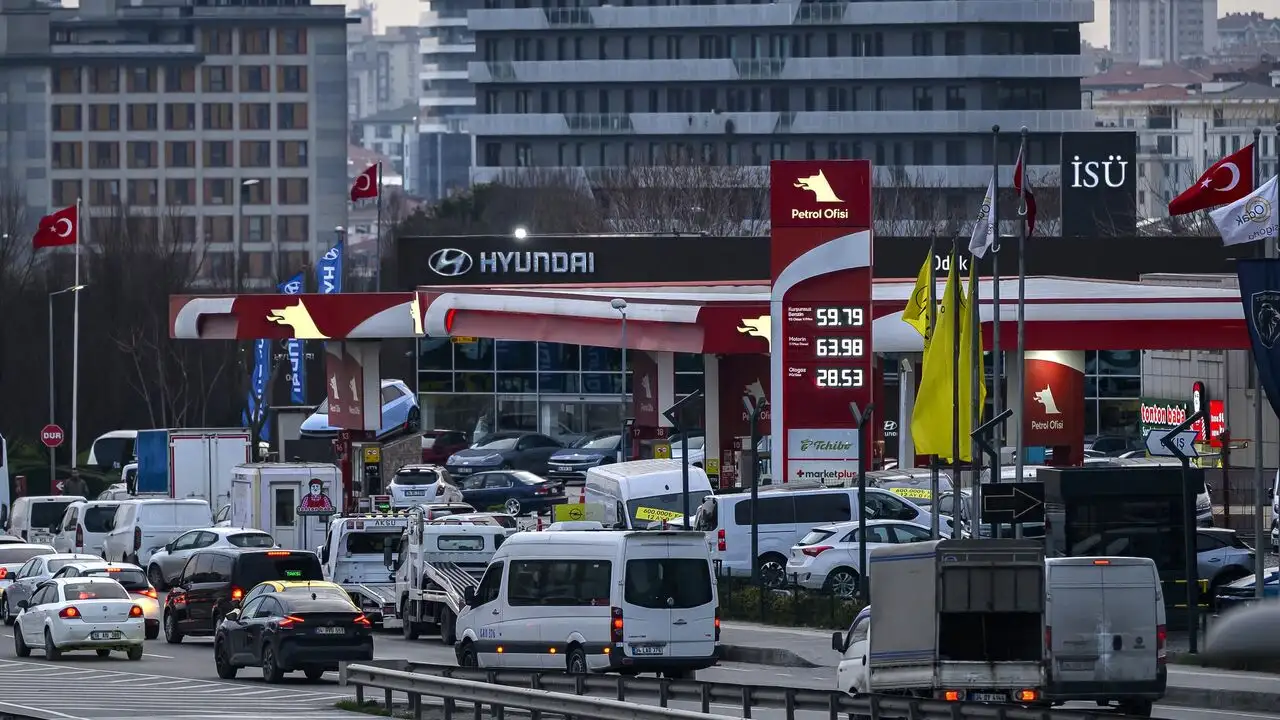
The fallout from the Iran war has pushed Turkey’s financial system into acute stress, with commercial loan interest rates surging from a pre-war range of 36-41% to as high as 52%, while deposit rates have climbed from 35-38% to 42-45%. The Central Bank of the Republic of Turkey (CBRT) has drained nearly 2 trillion lira ($45 billion) in liquidity from the market, lifted its overnight funding rate to approximately 40% despite holding the official policy rate at 37%, and undertaken $44 billion in foreign exchange sales since the conflict began. Total reserves have fallen by $55 billion, forcing policymakers to consider deploying the country’s $135 billion gold stockpile through swap operations to sustain the lira defence. Commercial lending has become restricted to a “limited and selective” basis, while domestic gold-buying by Turkish residents — triggered by a sharp drop in global bullion prices — has accelerated deposit outflows and compelled banks to raise rates to maintain required lira deposit ratios. With annual inflation at 31.5% and energy prices continuing to climb, analysts warn that a rate hike from the current 37% policy rate may become unavoidable.
Key Overview
- Commercial loan rates: Surged from 36-41% to above 50% (up to 52%)
- Deposit rates: Climbed from 35-38% to 42-45%
- Policy rate: Held at 37% (March 2026 meeting)
- Overnight funding rate: Raised to ~40% (up ~300 basis points)
- Liquidity drained from market: ~2 trillion lira ($45 billion)
- Central bank forex sales since war: $44 billion
- Total reserves decline: $55 billion
- Gold reserves (mid-March): ~$134 billion (640 tonnes)
- Foreign-exchange reserves (March 19): $53.6 billion
- Annual inflation (February 2026): 31.5%
- CBRT’s 2026 inflation forecast: 16% year-end
- Lira rate: Near historic lows at ~44.36 per dollar
Markets move fast; don’t get left behind. We’ve paired the Serrari Group Market Index with a curated Marketplace and a comprehensive Wealth Builder Course to ensure you have the data—and the skills—to act on it.
War Shock Reverses Turkey’s Hard-Won Monetary Progress
Turkey’s central bank had been one of the emerging world’s more compelling turnaround stories. After years of unorthodox monetary policy under President Recep Tayyip Erdoğan — which saw inflation peak at 85.5% in October 2022 — the appointment of market-friendly officials including Governor Fatih Karahan and Finance Minister Mehmet Şimşek ushered in a period of aggressive rate hikes and gradual disinflation. The benchmark rate was raised to a two-decade peak of 50% in March 2024, and by late 2025, inflation had fallen to a four-year low near 31%. Five consecutive rate cuts followed, bringing the policy rate down to 37% by January 2026.
Then war erupted in the Middle East.
The onset of the Iran conflict has fundamentally altered Turkey’s monetary trajectory. At its March 2026 meeting, the CBRT held the benchmark rate steady at 37%, pausing its easing cycle for the first time after five consecutive cuts. The decision was unanimous among analysts surveyed by Bloomberg, reflecting a stark shift in expectations from just weeks earlier when markets had anticipated continued reductions.
But the official rate tells only part of the story. The real tightening has happened through backdoor channels — and its impact on the banking sector has been severe.
The Mechanics of a Shadow Tightening
While the CBRT kept its headline one-week repo rate at 37%, it simultaneously suspended one-week repo auctions, effectively forcing banks to borrow at the higher overnight rate. This technical manoeuvre lifted the lira interbank overnight reference rate by approximately 300 basis points to nearly 40%, creating a substantial gap between the official policy rate and the actual cost of funding in the banking system.
Combined with the draining of almost 2 trillion lira — equivalent to roughly $45 billion — in liquidity from the market, these measures have transmitted an aggressive tightening impulse through the financial system that far exceeds what the headline rate suggests.
According to two banking sources speaking to Reuters, commercial loan interest rates that stood at 36-41% before the war have surged to more than 50% this week, with some reaching as high as 52%. Deposit rates have jumped from 35-38% to between 42% and 45% over the same period. One banker described commercial lending as now being conducted in a “limited and selective manner” — a polished way of saying that credit has effectively been rationed.
The Gold-Buying Paradox
An unusual dynamic has intensified the pressure on deposit rates. The sharp decline in global gold prices — bullion has fallen from around $5,419 on March 2 to approximately $4,380 — has prompted Turkish domestic residents to buy gold, viewing the dip as a purchasing opportunity. Turkey has a deeply embedded cultural affinity for gold, and citizens have historically turned to bullion as a store of value during periods of economic uncertainty.
This gold-buying spree has created deposit outflows from the banking system. As lira left bank accounts and flowed toward gold purchases, lenders found themselves under pressure to maintain the regulatory ratio requirements for lira deposits — a framework that has been central to Turkey’s “liraisation” strategy aimed at reducing dollarisation in the economy. Banks have responded by aggressively lifting deposit rates to attract and retain lira funding, pushing them toward the 45% level.
Context is everything. While you follow today’s updates, use the Serrari Group Market Index and Marketplace to spot emerging shifts. Need to sharpen your edge? Our Wealth Builder Course turns these insights into a professional-grade strategy.
A Reserve Position Under Strain
The CBRT’s defence of the lira has come at an enormous cost. Since the start of the conflict, the central bank’s forex sales have totalled $44 billion, with total reserves falling by $55 billion, according to banking sources cited by Reuters.
Central bank data paints a sobering picture. Foreign-exchange reserves stood at $53.6 billion on March 19, down from $65.7 billion at the end of February — a decline of more than $12 billion in less than three weeks. State-owned lenders have also been selling reserves to buy local currency. This heavy intervention has kept the lira’s decline relatively contained at around 1% over the past month, holding near 44.36 per dollar, but the currency is at historic lows.
The reserve depletion is even more dramatic when viewed against Turkey’s position just weeks before the war. In his February 2026 inflation report briefing, Governor Karahan had noted that gross reserves had climbed to $208 billion as of early February, up from $184 billion in late October 2025 — a build-up that had been celebrated as proof that the orthodox policy framework was working. Much of that progress has now been eroded.
Gold: The Last Line of Defence
With foreign-currency reserves under severe pressure, Turkey has turned to its most substantial asset: gold. The CBRT holds approximately 640 tonnes of gold worth over $135 billion — making bullion by far the largest component of Turkey’s reserve portfolio. Around $30 billion of that gold is held at the Bank of England, which could be mobilised for foreign exchange intervention purposes without logistical constraints, according to JPMorgan economist Fatih Akcelik.
Bloomberg reported that the CBRT has been preparing an expanded toolkit that includes gold-for-foreign currency swap transactions in the London market. Governor Karahan himself confirmed in an interview with state-owned Anadolu Agency that it is a “natural choice” to turn to gold-based transactions to support liquidity during such conditions.
Analysis from SPINN Consulting revealed that Turkey executed a massive gold reserve drawdown totalling $17.97 billion during the week of March 13-20 alone — the largest single-week reduction in the bank’s recent history. Of that decline, approximately 55% was driven by falling gold prices, while 45% reflected deliberate physical divestment of roughly 49 metric tons. Separately, P.A. Turkey reported that the CBRT deployed approximately 60 tonnes of gold through sales and swap operations in the two weeks following the war’s outbreak.
However, a Brookings fellow warned that Turkey is effectively “back in crisis”, arguing that the lira’s apparent resilience is misleading because it has been sustained entirely by massive central bank intervention. He noted that even after selling and swapping 50 tons of gold worth about $8 billion, official foreign exchange reserves rose by only roughly $5 billion after adjusting for valuation effects — meaning reserve losses were still continuing.
Energy Dependence: Turkey’s Structural Vulnerability
Turkey’s acute sensitivity to the Iran war stems from a fundamental structural weakness: the country imports nearly all of its oil and gas. Higher energy prices directly widen the current account deficit, increase import costs, feed through to domestic inflation, and intensify pressure on the currency.
ING analysts estimated that a 10% increase in oil prices translates into a 1.1-percentage-point rise in Turkish consumer-price inflation. With global energy prices spiralling since the conflict began, this pass-through effect threatens to unwind months of disinflation progress.
Annual inflation rose to 31.5% in February 2026, up from a four-year low of 30.65% in January. While the monthly figure of 2.96% was broadly in line with expectations, the reversal in the annual trend — driven primarily by food prices and several non-food categories including transport and catering — complicates the CBRT’s narrative that disinflation remains on track.
The central bank’s official year-end inflation forecast of 16%, published before the war, now appears increasingly difficult to achieve. The IMF had already expressed scepticism before the conflict, predicting Turkish inflation would end 2026 at 23%. ING has since revised its own forecast upward to 25%, citing elevated food inflation and ongoing pressure from energy prices.
Credit Restrictions and Economic Impact
The central bank has also moved to tighten credit conditions beyond interest rates. Banking sources told Reuters that the CBRT has removed some exceptions to credit growth restrictions — a step that may further limit lira credit growth. This follows a pattern of using macroprudential tools alongside monetary policy to control demand-side inflation pressures.
For Turkish businesses already struggling with borrowing costs above 50%, the combination of rate increases and credit rationing represents a significant constraint on economic activity. Small and medium enterprises, which form the backbone of the Turkish economy, are particularly vulnerable. The squeeze comes at a time when the government’s Medium-Term Programme had projected 3.8% GDP growth for 2026, a target that looks increasingly ambitious given the monetary tightening now underway.
The Istanbul stock market has also shed 8.3% over the past month, with the banking index falling particularly sharply. An exodus of carry traders saw $3 billion exit Turkish bonds in the week ending March 13 alone, as foreign investors sought safer havens.
The Rate Hike Question
Some analysts now anticipate the CBRT could be forced to hike its main interest rate from 37% if energy prices continue to rise and threaten the disinflation path further. Such a move would represent a painful reversal for a central bank that had only recently begun easing monetary conditions after an extended tightening cycle.
İris Cibre of Phoenix Consultancy told AGBI that if domestic demand shifts toward foreign currency, the central bank will have no choice but to raise rates to make lira assets more attractive. Such a scenario would deliver a further blow to industry and small businesses already struggling under the weight of borrowing costs that have effectively doubled since the war began.
For now, the CBRT appears to be relying on its shadow tightening — the combination of liquidity drainage, elevated overnight rates, credit restrictions, and massive reserve intervention — to avoid a formal rate hike. But with reserves declining rapidly, gold being deployed at unprecedented scale, and inflation threatening to reaccelerate, Turkey’s policymakers face an increasingly narrow path between defending the currency, maintaining disinflation progress, and avoiding a full-blown economic contraction.
Your financial future isn’t something you wait for—it’s something you build.
The real question is: when do you begin?
Move beyond simply staying informed.
Navigate the markets with clarity—track trends through the Serrari Group Market Index, uncover opportunities in the Serrari Marketplace, and build practical knowledge with our Curated Wealth Builder Course.
Stay connected to what truly matters.
Get daily insights on macro trends and financial movements across Kenya, Africa, and global markets—delivered through the Serrari Newsletter.
Growth opens doors.
Advance your career through professional programs including ACCA, HESI A2, ATI TEAS 7 , HESI EXIT , NCLEX – RN and NCLEX – PN, Financial Literacy!🌟—designed to move you forward with confidence.
See where money is flowing—clearly and in real time.
Track Money Market Funds, Treasury Bills, Treasury Bonds, Green Bonds, and Fixed Deposits, alongside global and African indexes, key economic indicators, and the evolving Crypto and stablecoin landscape—all within Serrari’s Market Index.