















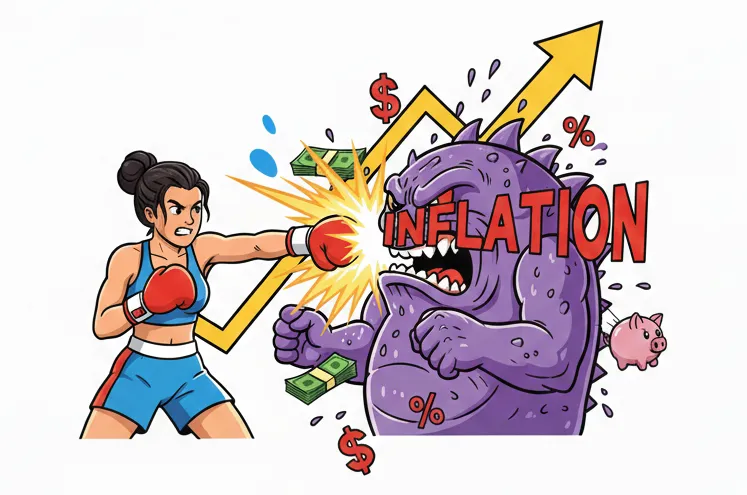
Inflation is a silent financial force that affects every one of us. It is the steady rise in the prices of goods and services over time, which quietly erodes the purchasing power of money. In simple terms: KSh 1,000 today will not buy the same basket of groceries, transport, and data in five years if inflation keeps running — even at single-digit levels.
Understanding inflation is critical to protecting your wealth, making smarter financial decisions, and maintaining your standard of living. This guide explains what inflation is, how it is measured, what causes it, how to calculate your own personal inflation rate, and the practical strategies you can use to grow wealth faster than prices rise. For the direct Serrari overview, see understand inflation and how to beat it.
Markets move fast; don’t get left behind. Pair the Serrari Group Market Index with a curated Serrari Marketplace and the comprehensive Wealth Builder Course to make sure you have the data — and the skills — to act on what you see.
What Is Inflation?

Inflation is the sustained increase in the average price level of goods and services across an economy. When inflation rises, each unit of currency buys fewer goods and services than it did before.
- Moderate inflation (roughly 2–5%) is considered healthy — it encourages spending and investment rather than hoarding cash.
- High inflation (above target) erodes savings, disrupts budgeting, and can push central banks to tighten policy.
- Hyperinflation destroys money’s value rapidly and is usually tied to currency crises or extreme fiscal imbalances.
- Debt holders with fixed-rate loans can benefit modestly — the real value of what they owe falls as prices rise — though that rarely makes debt a “good” strategy.
Kenya’s current backdrop is a useful anchor. Headline inflation has spent most of the past year inside the Central Bank of Kenya’s 5±2.5% target — climbing to 4.1% in July 2025, hitting 4.6% in September, and easing to 4.5% in November 2025 as transport costs surged despite stable fuel prices. That window of sub-target inflation is why CBK has been able to run an aggressive rate-cutting cycle — though as Serrari’s piece on CBK halting rate cuts as oil prices pose a warning highlights, the cycle is now turning cautious.
How Inflation Is Measured
| Measure | What It Tells You |
| Consumer Price Index (CPI) | Headline measure. Tracks price changes in a standard basket of goods and services used by households. In Kenya, released monthly by KNBS. |
| Core Inflation | Strips out food and energy (the most volatile items) to show the underlying trend — used by central banks to set rates. |
| Producer Price Index (PPI) | Prices at the factory gate; an early warning signal for consumer inflation 3–6 months ahead. |
| Wholesale Price Index (WPI) | Prices in B2B wholesale trade — relevant for business buyers and pricing decisions. |
| GDP Deflator | Economy-wide price adjustment across everything produced domestically — broader than CPI. |
What Causes Inflation?
Inflation typically comes from two broad forces, and real-world episodes often blend both.

1. Demand-Pull Inflation
Occurs when aggregate demand for goods and services outstrips supply. Common causes include:
- Strong economic growth and rising consumer spending
- Expansionary government spending and transfers
- Consumer expectations of higher future prices (self-fulfilling)
- Loose monetary policy — low rates that encourage borrowing
2. Cost-Push Inflation
Occurs when production costs rise and businesses pass them on to consumers. Common causes include:
- Rising wages
- Higher raw material or energy costs (e.g., oil, gas, fertiliser)
- Supply chain disruptions and logistics bottlenecks
- Currency depreciation that raises import prices
- Higher taxes, levies, or regulatory costs
Kenya’s recent inflation story has been heavily cost-push — food prices, transport, and occasional fuel shocks. Serrari’s piece on inflation easing in September amid high food prices and the latest EPRA fuel price review unpack the exact drivers.
Context is everything. While you follow today’s updates, use the Serrari Group Market Index and the Serrari Marketplace to spot emerging shifts. Need to sharpen your edge? The Wealth Builder Course turns these insights into a professional-grade strategy.
Calculating Inflation

The standard inflation rate formula is:
Inflation Rate (%) = ((CPI₁ − CPI₀) / CPI₀) × 100
Worked example: if Kenya’s CPI moved from 125.0 to 130.6, the year-on-year inflation rate is ((130.6 − 125.0) / 125.0) × 100 = 4.48%. That is close to the November 2025 reading.
Personal Inflation — Why Your Number Is Different

Your personal inflation rate often differs from the official CPI, because the CPI basket is an average and your spending is not. If 40% of your monthly outlay is rent and rent is rising faster than the headline, your real experience is more painful than the national number suggests.
How to calculate your personal inflation rate:
- List your regular expense categories — groceries, housing, transport, healthcare, leisure, etc.
- Assign a weight to each, based on what share of your spending it represents.
- Track prices month to month for a representative basket inside each category.
- Multiply the % change in each category by its weight, then sum across categories.
Worked Example (Kenyan Household)
| Item | Weight | Month 1 Price (KSh) | Month 2 Price (KSh) | Price Δ | Weighted Δ |
| Groceries | 30% | 30,000 | 32,000 | +6.67% | +2.00% |
| Housing / Rent | 40% | 50,000 | 51,500 | +3.00% | +1.20% |
| Transport / Fuel | 15% | 10,000 | 11,000 | +10.00% | +1.50% |
| Healthcare | 10% | 5,000 | 5,200 | +4.00% | +0.40% |
| Leisure / Subscriptions | 5% | 3,000 | 3,000 | 0.00% | 0.00% |
| Your personal inflation | 100% | — | — | — | +5.10% |
In this example the household is experiencing personal inflation of about 5.1% — well above headline CPI of 4.5%, driven mainly by groceries and transport. Track yours over time on your personal finance dashboard and plug the leaks using Serrari’s 7 ways to stop silent money leaks.
Nominal vs Real Returns — The Most Important Distinction
Inflation is why you cannot judge an investment by its nominal return alone. What matters is the real return — the return above inflation.
- Nominal return: the headline % your investment earned
- Real return: nominal return – inflation rate
- Example: A 12% MMF yield in a 4.5% inflation environment is a 7.5% real return. A 4% savings account in the same environment is a –0.5% real return — you are losing purchasing power.
Serrari’s coverage of Fixed Deposit returns outpacing inflation for 15 months and the deeper tactical guide Fixed Deposit strategies in Kenya 2025–2026 show how to hunt for real returns in the current rate environment.
10 Strategies to Beat Inflation

1. Invest in high-return assets
Stocks, real estate, and certain bonds have historically outperformed inflation over long periods. For an onboarding walk-through, see Investing Explained and Investing Basics for Kenyan investors.
2. Favour dividend-growing stocks
Companies that consistently raise dividends provide income that rises over time — a direct offset for rising cost of living.
3. Hold real assets
Real estate, gold, and selected commodities tend to maintain purchasing power better than cash during inflationary shocks. Kenyan investors can access listed property exposure through Serrari’s coverage of Kenya’s REIT surge.
4. Use inflation-aware fixed-income strategies
Treasury Bonds, Treasury Bills, and Fixed Deposits can produce strong real yields when inflation cools. See How Treasury Bonds work in Kenya and the Kenya Money Market Funds yield comparator.
5. Diversify globally
Inflation is not uniform across countries. A global equity allocation spreads exposure across currencies and economic regimes. Serrari’s practical guide on accessing global index funds from Kenya is the place to start.
6. Maximise retirement and tax-advantaged contributions
Private pension contributions in Kenya are tax-deductible up to KES 20,000/month — one of the best risk-adjusted moves any earner can make. See Serrari’s best private pension fund in Kenya.
7. Grow your income faster than prices
The biggest variable in anyone’s financial life is income. Build skills, pursue certifications (ACCA, HESI, professional finance courses), negotiate annual raises, and look for inflation-adjusted contract terms. Income growth compounds across your whole financial life.
8. Minimise expensive debt
High-interest debt (credit cards, mobile loans, shop credit) erodes purchasing power faster than inflation. Pay it down aggressively before loading up on investments.
9. Budget and track expenses
A 5% real raise looks meaningless if 5% is leaking through unnecessary subscriptions and impulse spending. Use a simple budget and a single personal finance dashboard to see where every shilling goes.
10. Negotiate and optimise contracts
Rent, gym memberships, insurance, and vendor contracts are negotiable more often than people think. Ask for inflation-capped escalation clauses, or switch providers and bank the savings into investments.
Inflation-Beating Assets and Access (Kenya)
| Asset / Strategy | How It Fights Inflation | Kenyan Access |
| Equities (Stocks) | Profits and dividends tend to rise with prices over time | NSE-listed stocks via licensed brokers; global index funds via offshore platforms |
| Real Estate & REITs | Rents and property values rise broadly with inflation | Direct property; NSE-listed REITs (Acorn I-REIT / D-REIT, ALP I-REIT); Vuka fractional investing |
| Treasury Bonds | Fixed coupons above inflation generate positive real yields when inflation cools | CBK DhowCSD from KSh 50,000 minimum |
| Money Market Funds | Track short-term rates; yields typically outpace single-digit inflation | Sanlam, CIC, Britam, NCBA, etc. |
| Fixed Deposits | Higher rates during tight policy cycles can produce real returns | Licensed banks and microfinance institutions; compare terms carefully |
| Gold & Commodities | Tend to hold value during high-inflation and currency-stress periods | Gold bullion, commodity ETFs via international brokers |
| Global Diversification | Reduces concentration in a single currency and inflation regime | Global index funds accessible from Kenya |
| Dividend-growth stocks | Income that grows with earnings offsets rising cost of living | Quality NSE dividend payers and global dividend ETFs |
For how these assets fit together, see Serrari’s how to balance your investment portfolio in Kenya 2026 and the seven-pillar smart wealth management Kenya 2026 framework.
Protect Your Take-Home Pay
Beating inflation is not only about investing better — it is about losing less of what you already earn. Three habits compound fast:
- Build a 3–6 month emergency fund in a high-yield MMF so you never sell investments at the wrong time
- Automate savings through Pay Yourself First before lifestyle creep absorbs the money
- Anchor the whole plan in Serrari’s financial triangle and wider financial safety net
Bottom Line: Knowledge Plus Action Beats Inflation
Inflation reduces money’s value — but with the right combination of knowledge, planning, and consistent execution, it is a force you can stay ahead of. Invest wisely, grow your income, minimise debt, budget with discipline, and review your plan against real returns (not just headline numbers).
Key takeaway: do not just track inflation — take proactive steps to grow your wealth faster than prices rise. Anchor local positioning in the Kenyan Economic & Market Outlook and global positioning in the Global Markets Outlook.
Your financial future is not something you wait for — it is something you build. The real question is: when do you begin?
FAQ: Inflation and How to Beat It
What is a healthy level of inflation?
Most central banks target around 2–3% in developed markets, and Kenya’s CBK targets 5% ± 2.5%. Inside that band, inflation supports growth; above it, it starts to erode purchasing power meaningfully and usually triggers rate hikes.
How is inflation different from cost of living?
Inflation measures the change in prices across a broad basket of goods and services. Cost of living is the actual amount you need to maintain a standard of living in a specific place and lifestyle. Personal inflation is the bridge between the two.
What’s the best single investment to beat inflation?
There is no single answer. Over long horizons, diversified equities have historically led. For Kenyan investors, a balanced mix of equities, Treasury Bonds, REITs, and MMFs usually delivers solid real returns. See how to balance your investment portfolio in Kenya 2026.
Do Fixed Deposits still beat inflation in Kenya?
They can — especially during tighter monetary cycles. Serrari’s reporting on Fixed Deposit returns outpacing inflation shows when the arithmetic works. Compare rates actively and avoid locking in just before a cutting cycle begins.
Is real estate a good inflation hedge in Kenya?
Generally yes, because rents and property values tend to rise with inflation over time, and Kenya’s REIT market has become more accessible. Read Serrari’s Kenya’s REIT surge and factor in location, liquidity, and transaction costs.
How does inflation affect my pension and retirement plan?
A pension is a long-duration inflation-exposed liability. Plan for 30+ years of rising costs by topping up NSSF with a private pension and high-quality equity exposure. Serrari’s best private pension fund in Kenya helps you pick a credible provider.
How often should I review my inflation-beating plan?
At least annually, and after any big macro shift — CBK rate decisions, major fuel price moves, or food supply shocks. A monthly glance at your personal inflation vs. your portfolio’s yield on your personal finance dashboard keeps you ahead.
Stay Connected, Keep Growing
Move beyond simply staying informed. Navigate the markets with clarity — track trends through the Serrari Group Market Index, uncover opportunities in the Serrari Marketplace, and build practical knowledge with the curated Wealth Builder Guide.
Stay connected to what truly matters. Get daily insights on macro trends and financial movements across Kenya, Africa, and global markets — delivered through the Serrari Newsletter on the Serrari Group homepage.
Growth opens doors. Advance your career through professional programs on Serrari Ed, including ACCA prep courses and the Financial Literacy special offer — designed to move you forward with confidence.
See where money is flowing — clearly and in real time. Track Money Market Funds, Treasury Bills, Treasury Bonds, Green Bonds, and Fixed Deposits, alongside global and African indexes, key economic indicators, and the evolving crypto and stablecoin landscape — all within Serrari’s Market Index.