Most businesses do not fail because of a lack of effort. They fail because of a lack of direction. Revenue without strategy creates chaos; activity without structure drains cash. A strong business strategy paired with a disciplined operating plan is what transforms ambition into financial performance — and keeps a growing company from out-running its own capacity.
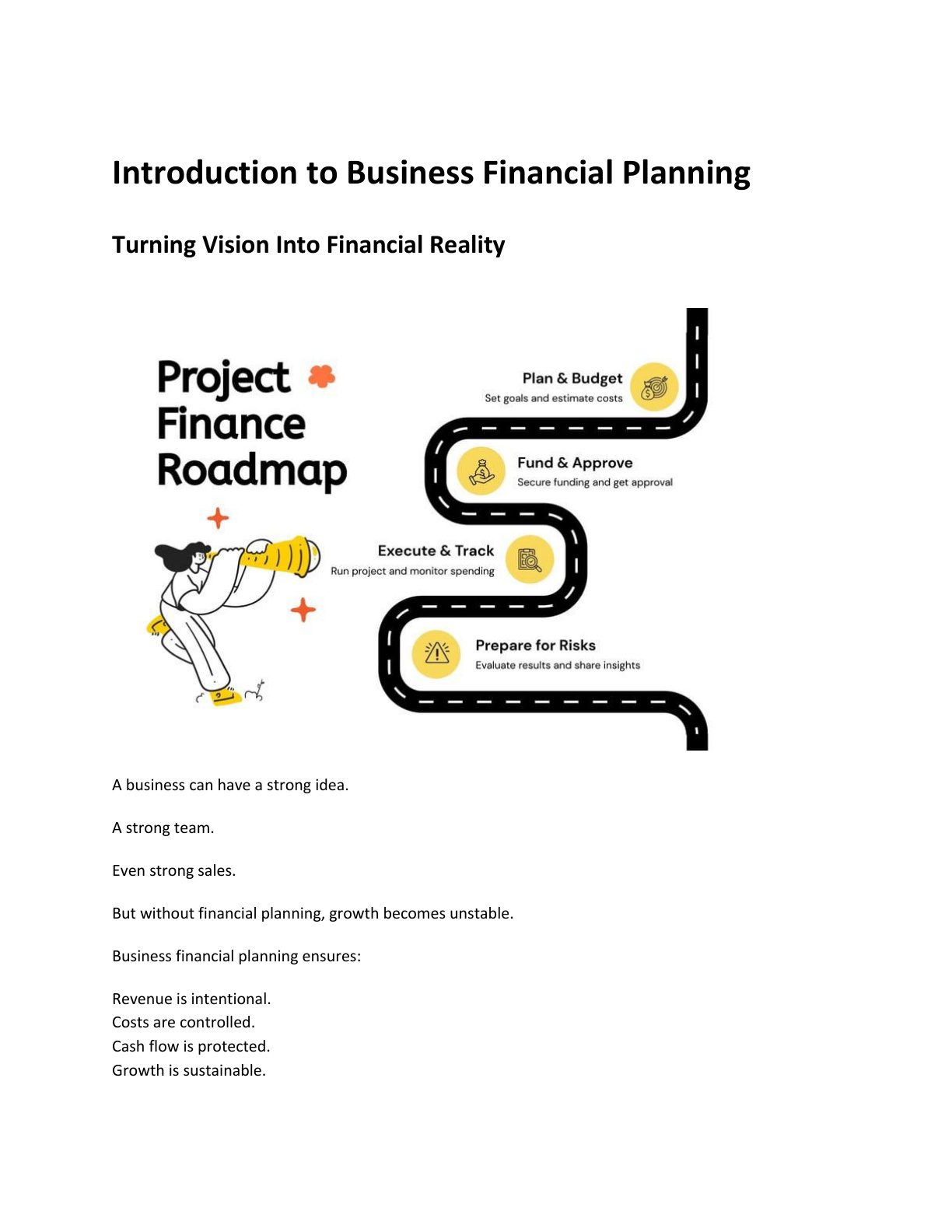
This guide explains what a business strategy really is, why an operating plan matters, how both combine to drive financial growth, and the specific elements every Kenyan and African SME needs in place. It builds on Serrari’s direct anchor resources — intro to business financial planning to maximize profit and the practical sample tools and templates for smart financial planning — plus the structured lesson on introduction to business financial planning on Serrari Ed.
Markets move fast; don’t get left behind. Pair the Serrari Group Market Index with a curated Serrari Marketplace and the comprehensive Wealth Builder Course to make sure you have the data — and the skills — to act on what you see.
What You’ll Learn
- What a business strategy really is
- Why an operating plan matters
- How both drive financial growth
- The key elements every business needs
- How to diagnose gaps in your own business today
What Is a Business Strategy?
A business strategy answers one core question: how will this business win? It is not a mission statement or a slogan — it is a coherent set of choices about where to play and how to compete.
A well-defined business strategy specifies:
- Target market — exactly who you serve and why
- Competitive advantage — what you do better or differently than the rest
- Revenue model — how the business actually earns money
- Pricing position — value-for-money, premium, or cost leader
- Growth approach — organic vs partnership-led vs acquisitive
Without strategy, every decision becomes reactive. With strategy, every decision aligns with long-term growth.
What Is an Operating Plan?

An operating plan turns strategy into daily execution. It is the bridge between what you intend and what actually happens in the next 30, 60, 90, and 365 days. A disciplined operating plan defines:
- Monthly revenue targets
- Cost controls and approval limits
- Cash-flow projections — ideally a 13-week rolling forecast
- Team responsibilities and accountabilities
- Key performance indicators (KPIs) and the cadence for reviewing them
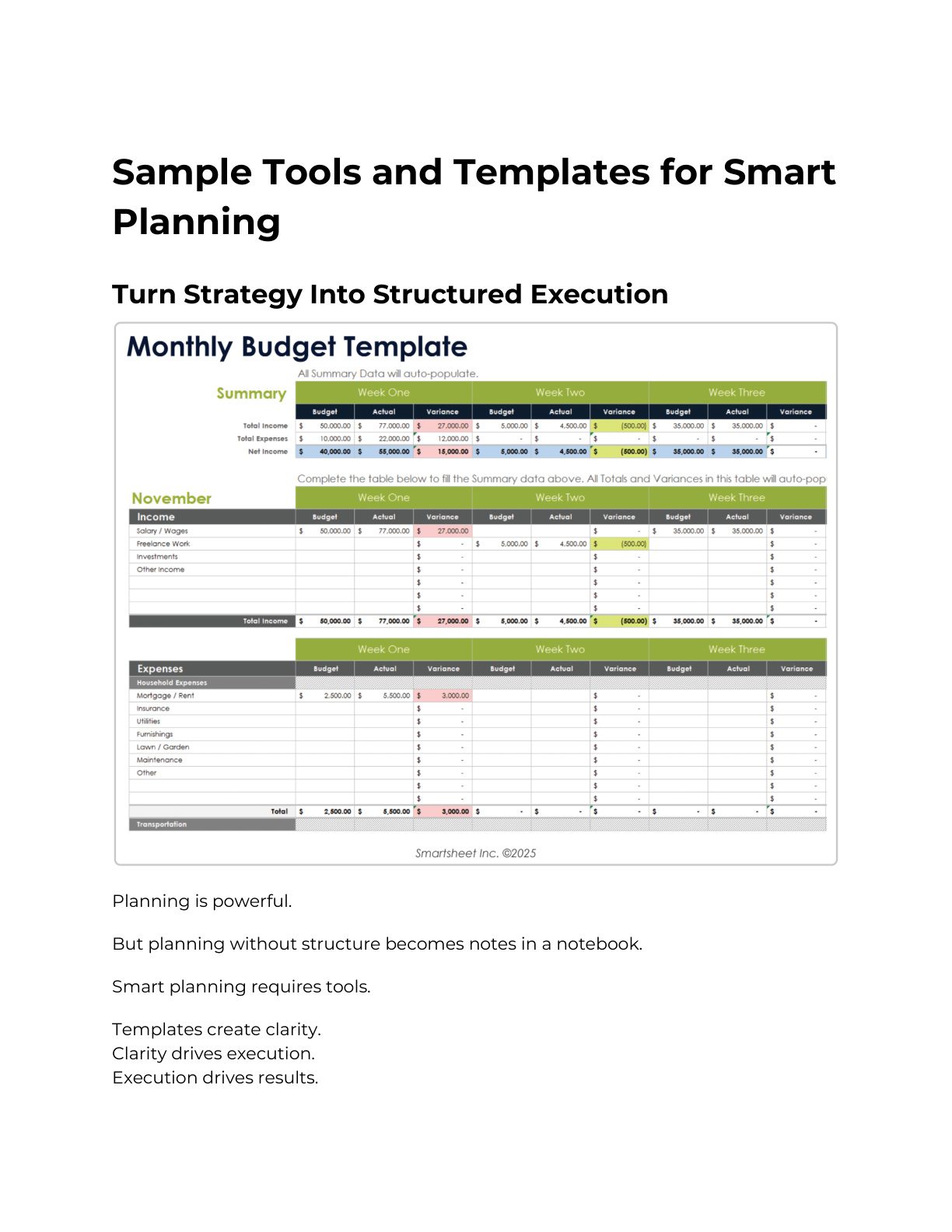
If strategy is vision, the operating plan is execution. Serrari’s sample tools and templates for smart financial planning gives you starting points for budgets, cash-flow sheets, and balanced scorecards.
Context is everything. While you follow today’s updates, use the Serrari Group Market Index and the Serrari Marketplace to spot emerging shifts. Need to sharpen your edge? The Wealth Builder Course turns these insights into a professional-grade strategy.
Why Strategy + Operating Plan Drive Financial Growth
1. Clarity improves capital allocation
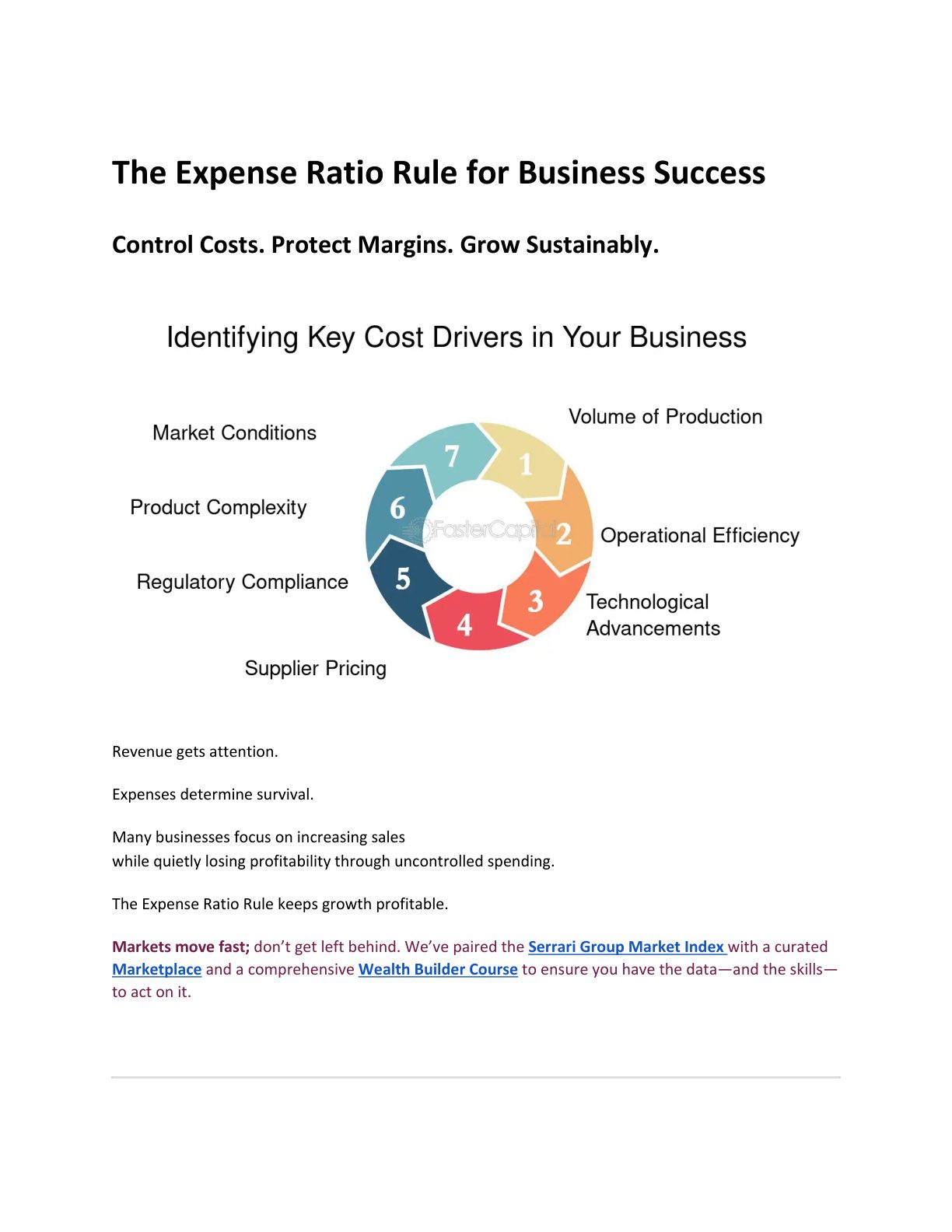
When strategy is clear, marketing spend becomes intentional, hiring becomes focused, and investments align with growth goals. Capital stops leaking into pet projects, one-off discounts, and reactive operations. Pair that with disciplined investment and capital allocation and the expense ratio rule for business success benchmark, and the cost base stays sensible as the business scales.
2. Predictability improves cash flow
An operating plan brings revenue forecasting, expense planning, and liquidity management together. Predictability reduces financial shocks, makes lender and investor conversations easier, and gives founders the nervous system to take calculated risks. For funding that backs the plan, see business financing options.
3. Accountability increases performance
When targets are defined, teams measure progress, leadership reviews outcomes, and adjustments happen quickly. Measurement improves margins. Plug 7 ways to stop silent money leaks before they become structural — they are usually the fastest margin win in any SME.
The Financial Impact of No Strategy
The cost of operating without a strategy is not dramatic on any one day — it builds quietly over time. Without strategy you get:
- Random expansion — new products, markets, and locations with no clear rationale
- Inconsistent pricing that trains customers to wait for discounts
- Overspending on non-core activities that do not drive retention or referral
- Cash-flow instability — bills arrive before revenue does
- Poor scaling decisions — hiring too early, outsourcing too late, or vice versa
The result: growth becomes unstable. Revenue goes up, profit goes sideways, and the founder spends more time fire-fighting than leading.
Strategy vs Execution: How They Fit Together
| Dimension | Business Strategy | Operating Plan |
| Horizon | Long-term direction (1–5 years) | Short-term execution (days, weeks, quarters) |
| Core question | How will this business win? | How will this business perform this quarter? |
| Primary focus | Market and competitive positioning | Operations, cash flow, and delivery |
| Outputs | Target market, value proposition, revenue model, pricing, growth path | Revenue targets, cost structure, cash flow forecast, KPIs, review cycle |
| Guides | Investment, hiring, and expansion decisions | Day-to-day performance management |
| Without it… | Random growth, inconsistent pricing, unstable scaling | Missed targets, cash-flow shocks, avoidable losses |
Both are required. One without the other creates imbalance: strategy without execution is wishful thinking; execution without strategy is a hamster wheel.
The 10 Core Elements: Strategy and Operating Plan

| 5 Core Elements of a Strong Business Strategy | 5 Core Elements of a Strong Operating Plan |
| 1. Clear target market (who exactly you serve and why) | 1. Monthly and quarterly revenue targets |
| 2. Defined value proposition (why customers choose you) | 2. Expense structure and unit-economics |
| 3. Sustainable competitive advantage (what others can’t easily copy) | 3. Rolling cash-flow projection (13-week + 12-month) |
| 4. Revenue growth plan (channels, pricing, retention) | 4. KPI tracking at company, department, and team level |
| 5. Cost management discipline aligned with the stage of growth | 5. Review cycle — monthly ops, quarterly strategy |
Without these, growth lacks foundation. With them — and a personal finance dashboard for the founder plus an operational dashboard for the business — decisions become repeatable.
Operating Plan KPI Starter Menu
Pick a small, high-leverage set of KPIs for your stage. Five to seven is usually enough; too many metrics dilute attention.
| Category | KPI | Why It Matters |
| Revenue | Monthly Recurring Revenue (MRR) / Monthly Revenue | Measures the predictable top line you can actually plan against |
| Profitability | Gross margin % | Tells you how much each sale contributes before operating costs |
| Profitability | EBITDA or Operating Margin | Core business profitability before financing and tax |
| Liquidity | Cash runway (months) | How long the business can operate at current burn |
| Liquidity | Days Sales Outstanding (DSO) | How fast receivables turn into cash |
| Customer | CAC : LTV ratio | Ratio of customer acquisition cost to lifetime value — 1:3 is a healthy floor |
| Customer | Churn / Retention % | Signals product-market fit and service quality |
| People | Revenue per employee | Indicates operating leverage and productivity |
| Efficiency | Expense ratio / Rule-of-40 | Keeps spending aligned with growth stage |
Quick Business Self-Assessment
Ask yourself honestly:
- Do we have clear monthly and quarterly revenue targets that every leader knows?
- Is our cost structure aligned with our stage of growth, or are we carrying last year’s spend?
- Do we run a disciplined monthly business review with real data, not anecdotes?
- Does every department understand the strategy — and how their KPIs support it?
- Do we have 3–6 months of operating cash as a buffer against shocks?
If any answer is “no”, financial inefficiency almost certainly exists. Bring in structured help through Serrari Advisory, and systemise your daily discipline using the My Serrari App for financial discipline.
The Serrari Business Growth Formula

Clear Strategy + Structured Operating Plan + Financial Discipline + KPI Monitoring + Continuous Adjustment = Sustainable Business Growth
Each component multiplies the others. Strategy without KPIs is directionless. KPIs without strategy are noisy. Financial discipline without adjustment is rigid. Adjustment without strategy is random. Put them together and growth stops being an accident and starts being a system.
The Operator’s Cadence
A useful rhythm for Kenyan and African SMEs, scaled to your business size:
- Daily: cash position, sales-to-target check, key operational incidents
- Weekly: revenue pipeline, rolling 13-week cash forecast, top-five issues
- Monthly: full management accounts, KPI review, variance analysis, action items
- Quarterly: strategy check-in — is the plan still the right plan?
- Annually: full strategy refresh, budget, and multi-year capital allocation
Align the plan with the wider macro environment by reading Serrari’s Kenyan Economic & Market Outlook and Global Markets Outlook at each strategy check-in.
Risk Management Inside the Operating Plan
A serious operating plan anticipates downside. Build in explicit controls for the exposures that can interrupt cash flow or destroy customer trust — guided by Serrari’s financial risk management, risk management tools, and insurance and risk protection.
- Payroll and statutory compliance — factor NSSF, SHIF/SHA, PAYE, and the Affordable Housing Levy into hiring cost. See critical statutory payments and deductions in Kenya
- Receivables and credit risk — track DSO, enforce credit limits, and avoid over-concentration in one customer
- Key-person and WIBA cover — protect the business against loss of critical people and workplace accidents
- Founder personal finance — keep the owner’s life funded independently via Serrari’s financial triangle, a strong financial safety net, and a proper emergency fund
Deploying Idle Business Cash
A well-run operating plan usually produces more cash than the business needs day to day. Park the buffer where it earns real returns without sacrificing liquidity:
- Short-term: high-yield Money Market Funds for operating buffers
- Medium-term: Fixed Deposits and Treasury Bonds in Kenya for reserves you don’t need in the next 12 months
- Payments infrastructure: integrate mobile money smartly using Serrari’s using M-Pesa for business in Kenya guide
Tying the Business Plan to the Founder’s Personal Plan
Many SME failures are as much personal finance failures as business failures. Pay yourself consistently, even modestly, by applying Pay Yourself First to founder compensation. Keep personal and business finances separate. Revisit timeless wealth lessons often to stay grounded during growth cycles. Use For Small Business hub and For Individuals hub as ongoing reference hubs.
The Bottom Line
Businesses do not grow by accident. They grow by alignment — direction, execution, review, and adjustment, repeated over and over. Strategy without execution is theatre; execution without strategy is exhaustion. A clear plan, followed with discipline and adjusted with evidence, is how financial success becomes repeatable.
Your financial future is not something you wait for — it is something you build. The real question is: when do you begin?
FAQ: Business Strategy and Operating Plans
What’s the difference between a business plan and an operating plan?
A business plan is usually a one-time document for funding or strategic direction. An operating plan is a living document that translates strategy into quarterly, monthly, and weekly execution, and is updated continuously.
How often should we update our strategy?
Review every quarter and do a deeper refresh annually — or whenever the macro environment, competition, or customer behaviour changes materially. The plan itself can be stable; the choices within it should evolve.
How many KPIs should we track?
Five to seven at the leadership level. More than ten dilutes attention and dulls accountability. Push detail down into department-level dashboards.
Do small Kenyan businesses really need a formal operating plan?
Especially small businesses. Cash flow is tighter, margin for error is smaller, and one bad quarter can be existential. Start simple — use Serrari’s sample tools and templates — and build complexity as you grow.
How do I align statutory payments with my operating plan in Kenya?
Model NSSF, SHIF, PAYE, and the Affordable Housing Levy into every payroll cost line, and remit them by the 9th of each month. See critical statutory payments and deductions in Kenya for a full compliance snapshot.
Where should idle business cash sit?
A mix of MMFs for short-term liquidity, Fixed Deposits for medium-term reserves, and Treasury Bonds for anything longer — balanced against your cash-flow forecast. Compare yields via the Kenya Money Market Funds yield comparator.
When should a Kenyan SME hire a financial advisor or CFO-for-hire?
As soon as financial complexity (multiple revenue lines, external funding, inventory, payroll above 10 people, cross-border trade) exceeds what the founder can carry. Serrari Advisory can provide fractional support without the cost of a full-time CFO.
Stay Connected, Keep Growing
Move beyond simply staying informed. Navigate the markets with clarity — track trends through the Serrari Group Market Index, uncover opportunities in the Serrari Marketplace, and build practical knowledge with the curated Wealth Builder Guide.
Stay connected to what truly matters. Get daily insights on macro trends and financial movements across Kenya, Africa, and global markets — delivered through the Serrari Newsletter on the Serrari Group homepage.
Growth opens doors. Advance your career through professional programs on Serrari Ed, including ACCA prep courses and the Financial Literacy special offer — designed to move you forward with confidence.
See where money is flowing — clearly and in real time. Track Money Market Funds, Treasury Bills, Treasury Bonds, Green Bonds, and Fixed Deposits, alongside global and African indexes, key economic indicators, and the evolving crypto and stablecoin landscape — all within Serrari’s Market Index.